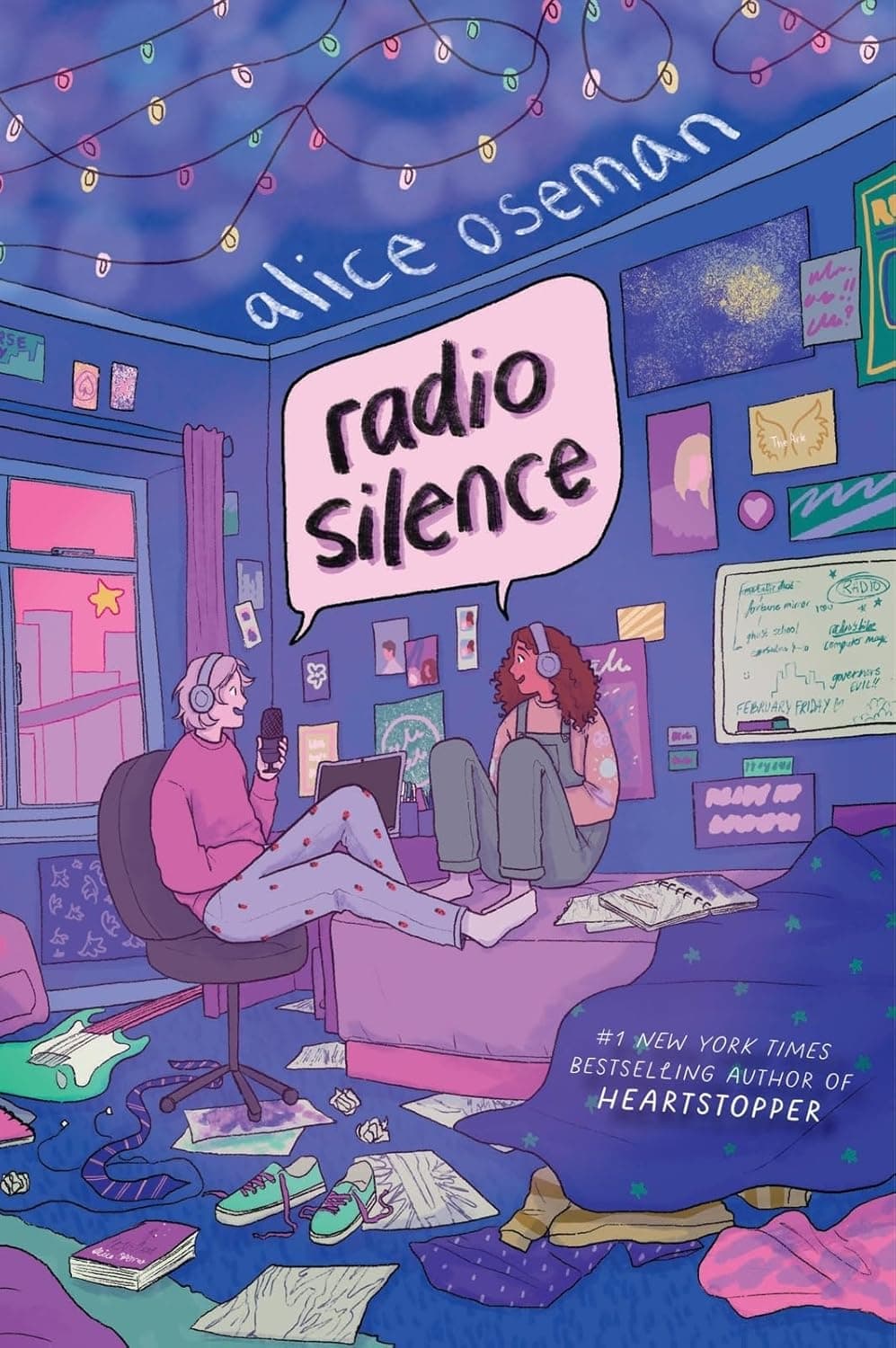
Alice Oseman’s Radio Silence traces the messy, hopeful path of teenagers pushed to be perfect while secretly trying to be themselves. School rankings, anonymous podcasts, and bedroom sanctuaries collide to show how identity, friendship, and the internet can both save and scar. For a chapter-by-chapter plot overview, see the Full Book Summary.
Major Themes
The Pressure of Academia and the Education System
The novel’s sharpest critique targets an education culture that equates grades with worth, treating elite university admissions as the only valid future. Frances’s and Aled’s lives become performances calibrated for applications, until interviews, breakdowns, and burnout expose how hollow the pursuit can be. Their refusal to keep playing—Frances choosing art college and Aled walking away from university—reframes success as self-definition, a core thread in the book’s Coming of Age story. For more, see The Pressure of Academia and the Education System.
Identity and Authenticity
Radio Silence maps the gap between the persona demanded by institutions and the self nurtured in private and online. “School Frances” is spotless and strategic, while the real Frances—artist, fangirl, meme-lover—hides in fear of rejection; Aled’s secret identity as “Radio” lets him voice what his real life suppresses. As trust grows, private selves come into the light: weird clothes appear at school, and “Radio” steps onstage. Explore Identity and Authenticity.
Platonic Friendship and Love
The book prizes the transformative force of non-romantic love. Frances and Aled build an intimate, life-saving bond grounded in creativity, honesty, and care—explicitly not romance—culminating in Aled’s confession, “I’m platonically in love with you.” Their partnership models a kind of steadiness that outlasts crushes and expectations. Read more on Platonic Friendship and Love.
The Power and Dangers of Fandom and Internet Culture
Online spaces offer belonging and a megaphone—and also exposure and harm. Universe City connects misfits and gives Aled a voice, while the “ghost school” episode’s viral reach brings prestige, scrutiny, and disciplinary fallout. When fandom turns invasive—doxxing, entitlement, threats—the same platform that sustained Aled becomes unbearable. See The Power and Dangers of Fandom and Internet Culture.
Supporting Themes
Abusive Family Dynamics
Carol Last’s control—emotional manipulation, destruction of safe spaces, punitive “discipline”—shows how psychological abuse erodes identity and autonomy. Her actions drive secrecy, fear, and collapse, intensifying the book’s mental-health stakes and pushing characters to seek chosen family. Further explored in Abusive Family Dynamics.
Finding Your Voice and Pursuing Passion
Frances hides her art; Aled hides Universe City. Choosing passion over prestige is the book’s ethical pivot, arguing that fulfillment requires aligning work with self rather than with admissions metrics. See Finding Your Voice and Pursuing Passion.
LGBTQ+ Identity and Representation
Queer identities are woven into everyday life—Frances is bisexual, Carys is gay, Daniel is gay, and Aled’s demisexuality is treated with nuance—normalizing a spectrum of experiences without sensationalism. This normalization broadens who gets to be centered in coming-of-age narratives. Details on LGBTQ+ Identity and Representation.
Mental Health and Well-being
Anxiety, depression, and burnout are depicted as rational responses to pressure and abuse, not private failings. The novel validates reaching out, setting boundaries, and building communities that make survival—and then joy—possible. Learn more in Mental Health and Well-being.
Theme Interactions
-
Pressure of Academia → suffocates → Finding Your Voice
“Study machine” culture forces Frances and Aled to closet their art and audio work; their arc is the unlearning of prestige as purpose. -
Platonic Friendship → enables → Identity and Authenticity
The trust between Frances and Aled is the bridge from compartmentalization to integration: private selves become public selves. -
Abusive Family Dynamics → amplifies → Mental Health and Well-being
Carol’s control escalates Aled’s anxiety and depression, showing how toxic homes can turn ambition into harm. -
Fandom/Internet Culture ↔ Identity and Authenticity
Online anonymity protects authentic expression, but visibility erodes privacy; the same platform that nurtures a voice can endanger it. -
Platonic Friendship → reorders → Romance and Success Myths
By centering friendship as “love,” the novel challenges YA expectations that romance or rankings define a meaningful life.
Character Embodiment
Frances Janvier
As Frances Janvier, she personifies the conflict between academic performance and authentic identity. Her Cambridge-centric persona cracks under interview failure and public fallout from the “ghost school” episode, catalyzing a turn toward art college and open self-expression. Her journey stitches together the major strands: pressure, identity, passion, and the saving grace of platonic love.
Aled Last
Aled Last embodies both the liberating and perilous sides of internet creativity. As “Radio,” he finds voice and community; under Carol’s control and fandom’s intrusion, he unravels. His friendship with Frances provides the safety to name his needs, leave university, and rebuild a life aligned with who he is.
Daniel Jun
Daniel Jun reflects the costs of measuring worth by grades and status. His rivalry with Frances and strained romantic history with Aled expose how perfectionism and secrecy corrode connection, while his eventual honesty participates in the book’s broader move toward authenticity.
Carys (February) Last
Carys Last reclaims selfhood by renaming herself February and escaping abuse, dramatizing the radical act of reinventing identity when home is unsafe. Her leave-taking models an alternate, non-academic path that prioritizes survival and chosen community.
Raine Sengupta
Raine Sengupta represents pragmatic rebellion against prestige culture, embracing apprenticeships and work that fit her values. She widens the novel’s map of success beyond university, reinforcing the pursuit of passion over pedigree.
Carol Last
Carol Last is the novel’s most human antagonist, a conduit for abusive family dynamics and academic coercion. Her destruction of Aled’s room—the sanctuary of his authentic self—symbolizes how control targets identity itself.
Radio Silence ultimately argues that your worth is not a grade and your truest love might be a friend who sees you. Find your people, make your art, and step into the light when you are ready. For lines that crystallize these ideas, see the Quotes page.