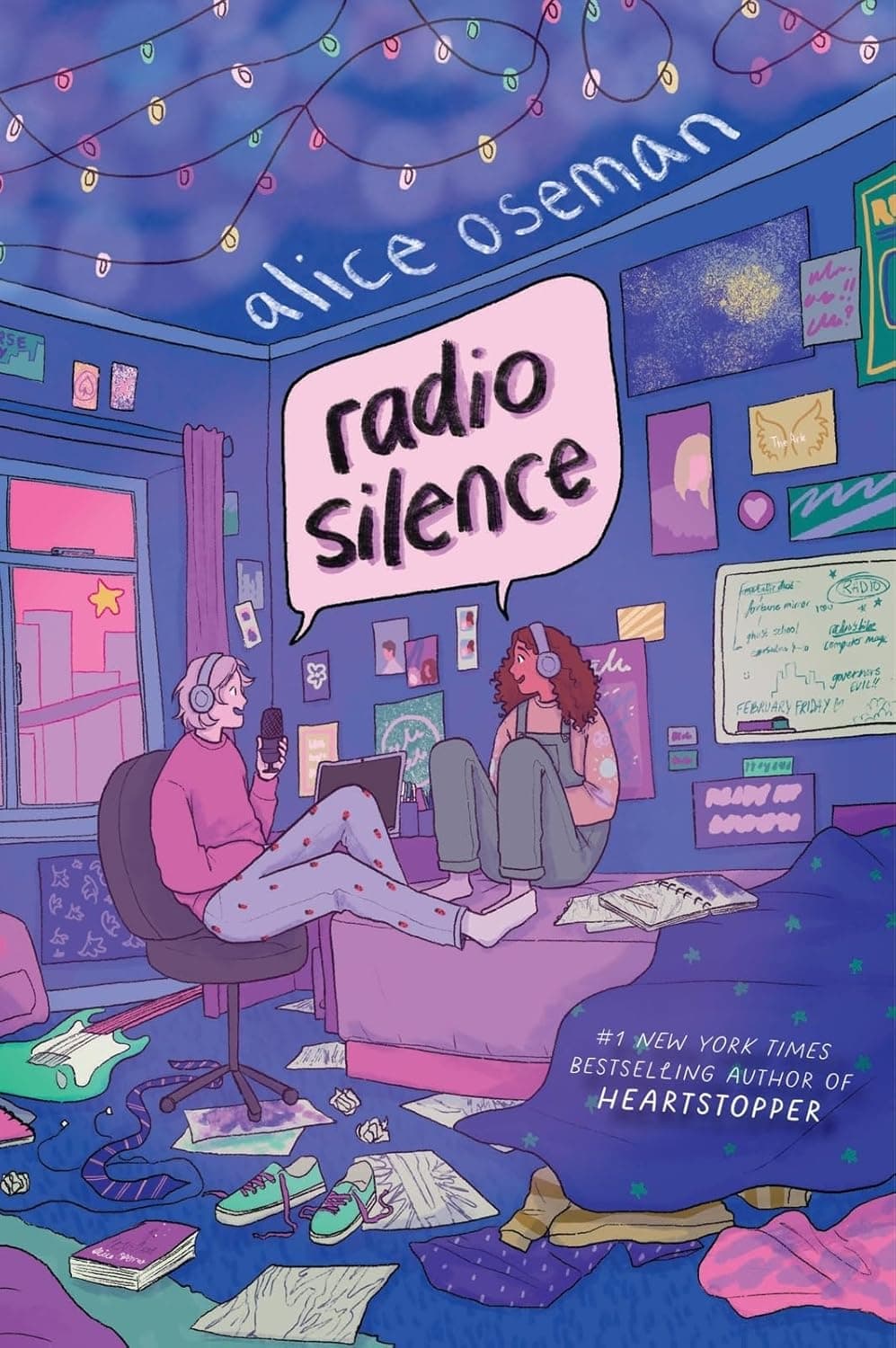
Aled Last
Quick Facts
- Role: Co-protagonist; anonymous creator and narrator of the podcast Universe City
- First appearance: Early at Sixth Form, known as Daniel’s quiet best friend
- Key relationships: Frances Janvier (platonic soulmate), Daniel Jun (childhood friend, later romantic partner), Carol Last (abusive mother), Carys Last (twin sister), Raine Sengupta (friend and ally)
Who They Are
Aled Last is a soft-spoken teenager split between two selves: the “normal,” nervous boy everyone sees at school, and “Radio,” the fearless, imaginative voice behind Universe City. His life is a study in masks—performing academic compliance for his mother while building an audio world that speaks, often in code, to the parts of him he’s forced to hide. Aled embodies the pressure cooker of The Pressure of Academia and the Education System and the ache of living a life that makes sense to everyone but you, until he risks collapsing that divide and choosing art—and himself—over expectation. His arc becomes a vivid meditation on Identity and Authenticity.
Aled’s physicality mirrors his inner life. Early on he looks lost and ill-at-ease—plain clothes that seem chosen by Daniel, round eyes, soft hair, and the energy of someone trying not to be noticed. As he trusts Frances, his style brightens into UFO jumpers, a Babar-back denim jacket, and lime green plimsolls with purple laces. His hair (grown long against his mother’s wishes, later dyed pastel pink and green-grey) becomes an assertion of self; its forced cutting and his dramatic weight loss at university chart the cost to his Mental Health and Well-being.
Personality & Traits
Aled’s temperament is quiet, observant, and intensely empathetic. He is conflict-avoidant not because he lacks conviction, but because he has learned that visibility invites punishment. The podcast is where his courage concentrates; there, he transforms anxiety into myth, loneliness into signal, and fear into narrative structure.
- Shy and introverted: Speaks barely above a whisper, keeps to his room, and stays offstage socially—even as his voice is the literal stage of Universe City.
- Intensely creative: Writes, scores, and performs a complex sci‑fi podcast that encodes his feelings about Carys and home into the figure of “February Friday,” turning private pain into worldbuilding.
- Anxious and insecure: Hides his clothes and hair and keeps Radio secret for fear of being “weird” or disappointing his mother and Daniel; the viral “Ghost School” episode triggers a spiral of exposure and shame.
- Loyal and kind-hearted: Climbs out of his window after midnight to help Frances with maths revision; maintains a long, complicated loyalty to Daniel despite silence and distance.
- Conflict-avoidant: Ghosts calls and texts when frightened—his go-to “safety” strategy that ironically endangers the relationships he most values.
- Vulnerable yet resilient: Survives emotional abuse from his mother (including the forced haircut and the killing of his dog, Brian), and—supported by friends—reclaims his life, art, and voice.
- Queer identity: His demisexuality reframes past miscommunications with Daniel and places his story within LGBTQ+ Identity and Representation, emphasizing intimacy and trust over performance.
Character Journey
Aled begins as a spectral presence defined by others—Daniel’s nervous shadow and his mother’s project—while his true self lives in the anonymity of “Radio.” Trusting Frances with Universe City cracks that isolation; as his wardrobe brightens and his hair grows, the inner world peeks into daylight. Public exposure annihilates that progress: the viral, drunken “Ghost School” episode and subsequent doxxing make his private art feel stolen, and he withdraws—ending the podcast, cutting off friends, and submitting to a university path he never wanted. Abuse culminates in Brian’s death, driving Aled toward total collapse.
The rescue at the station reroutes his fate. With Frances, Carys, Daniel, and Raine at his side, he chooses to step off the train—literally and figuratively—refusing his mother’s control. He leaves university, confronts his abuser, explains his demisexuality to Daniel, and reconciles. In performing Universe City live—gloves and suit, Radio and Aled fused—he stops compartmentalizing. The boy who whispered learns to broadcast, on his own terms.
Key Relationships
-
Frances Janvier: Frances is the first person to see all of Aled—awkward boy and brilliant creator—and love him platonically, creating a sanctuary for honesty and creativity. Their friendship operates as a counter-argument to compulsory romance and a testament to Platonic Friendship and Love: intimacy without romance can be life-saving.
-
Carol Last: Aled’s mother weaponizes academics and control, policing his hair, clothes, schedule, and friendships. Her escalating abuses (the kitchen-scissor haircut, Brian’s death) crystallize Abusive Family Dynamics and show how perfectionism can become violence; resisting her is the hinge of Aled’s liberation.
-
Daniel Jun: Their long history is tender and tense—two boys who care deeply, but misread silence and desire. Aled’s inability to articulate demisexuality and Daniel’s insecurities create painful distance; their reconciliation, built on clearer language and mutual patience, honors a bond that predates the labels.
-
Carys Last: Her absence haunts Aled’s every episode; Universe City is a beacon aimed at her, with “February Friday” as her echo. When she returns, she validates the reality of their mother’s abuse and helps Aled translate grief into action.
Defining Moments
Aled’s turning points are small acts that change everything—confessions in alleyways, midnight windows, and one decisive step off a train.
- The Reveal outside Johnny R’s: Drunk and trembling, he quotes Universe City and admits, “I’m Radio.” Why it matters: the first time he invites someone into the secret self; trust becomes the engine of his growth.
- The Maths Lesson: He climbs out his window to help Frances revise, which leads to discovering she’s “Toulouse.” Why it matters: confirms their creative partnership and shows how care—not romance—anchors their intimacy.
- The “Ghost School” episode goes viral: A birthday recording is exposed to the world without his consent. Why it matters: public attention feels like violation, reinforcing his fear that visibility equals danger and pushing him into retreat.
- The Haircut: Carol hacks off his hair with kitchen scissors. Why it matters: literal erasure of identity; the scene externalizes coercive control and foreshadows further harm.
- The Confrontation at the Station: After learning Brian is dead, Aled moves to leave with his mother; Frances, Carys, Daniel, and Raine intercept him. Why it matters: the novel’s fulcrum—Aled chooses himself, his friends, and a future not dictated by fear.
- The Live Show: He performs Universe City onstage in a suit and gloves. Why it matters: integration of selves; art no longer requires anonymity to be safe.
Essential Quotes
“I am Universe City,” he said. … “I’m Radio,” he said. “I’m Radio Silence. I make Universe City.”
This confession collapses the wall between Aled and Radio. By claiming authorship aloud, he turns secret into identity, risking rejection to gain connection—especially with Frances, whose acceptance reframes his fear of being “weird” into a badge of selfhood.
“Sometimes I think if nobody spoke to me, I’d never speak again.”
Aled’s silence isn’t emptiness; it’s survival. The line captures how abuse trains him to disappear, and how friendship must first offer presence—someone to speak to—before it can invite him to speak.
“I just … want to be special.”
This vulnerable admission explains Universe City’s urgency: he creates not for prestige, but to prove to himself he has a spark beyond grades. The desire becomes healthy when it’s met with recognition from friends rather than extraction by family or fandom.
“I hate being at university. I hate it. I hate everything about it. I’m going insane.”
University symbolizes the life chosen for him. Naming his hatred is a radical step toward autonomy; it clears the path to leaving and rejects the myth that academic success cures pain.
“I think that’s the case for some people … But asexuality means … erm … someone who doesn’t feel, like, sexually attracted to anyone... And some people just feel like they’re … like … partly asexual, so … they only feel sexually attracted to people who they know really, really well. People they have, like, an emotional connection with.”
Aled’s hesitant explanation of demisexuality models the courage of imperfect language. By articulating how intimacy works for him, he repairs his connection with Daniel and claims a place within queer experience on terms that fit his life.