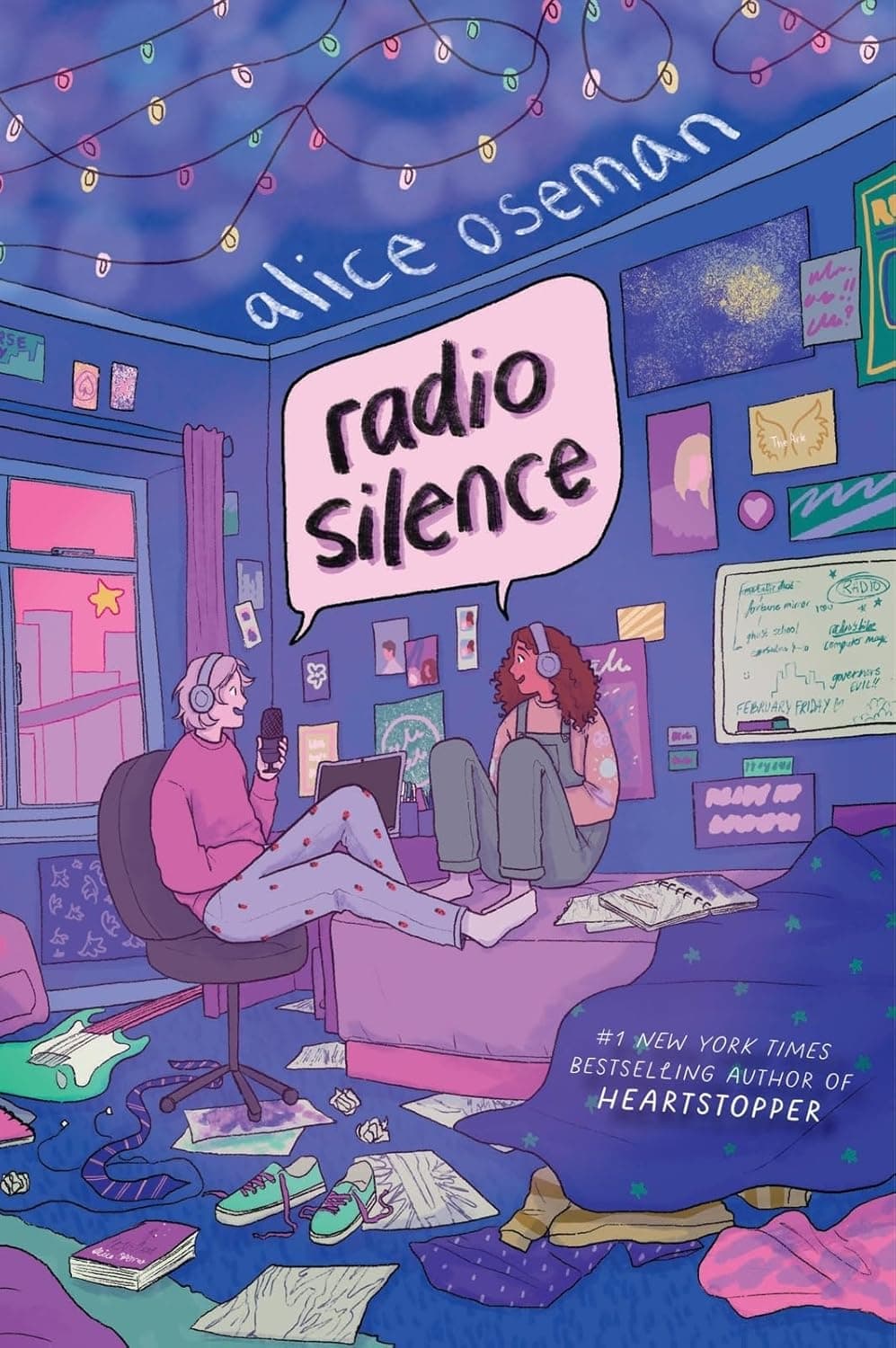
Frances Janvier
Quick Facts
- Role: Protagonist and first-person narrator; 17-year-old Head Girl and top student whose online alias is “Toulouse”
- First appearance: Opening chapter; lives next door to Aled Last
- Public vs private: “School Frances” (ruthlessly academic) versus “Real Frances” (creative, fandom-obsessed artist)
- Key relationships: Aled Last; her mum; Raine Sengupta; Carys Last; Daniel Jun
- Creative life: Becomes the official artist for the podcast Universe City
Who They Are
At first glance, Frances Janvier is a model student—Head Girl, destined for Cambridge, admired for her work ethic. But that’s only the mask she calls “School Frances,” a persona built to survive and excel in an education system that equates worth with grades. Secretly, she’s “Real Frances,” an online fan artist (“Toulouse”) whose drawings for Universe City make her feel alive. Her story threads together Identity and Authenticity, the suffocating Pressure of Academia and the Education System, and the expansive possibilities of Platonic Friendship and Love.
Her appearance mirrors that split identity. Frances is mixed-race (white mother, Ethiopian father), with corkscrew-curly hair and freckles. “School Frances” keeps to a sixth-form suit and plain clothes to blend in; as “Real Frances” emerges, she embraces patterned leggings (Monsters, Inc., Teenage Mutant Ninja Turtles), oversized jumpers with burgers or Simpsons characters, and customized denim—an outward sign that she’s allowing her private self to exist in the daylight. Everything cracks open when she discovers her quiet neighbor, Aled Last, is the anonymous creator of Universe City. Their friendship lets her be seen—fully—and forces her to ask what a good life actually looks like.
Personality & Traits
Frances’s core tension is between the identity she performs to feel safe and successful and the creative, weird, joyful version of herself she hides. As the novel peels back her defenses, her humor, loyalty, and stubborn self-sufficiency start to outshine the achievement narrative that once defined her.
- Academically driven, to a fault: She builds her self-worth on grades and prestige, convinced Cambridge equals happiness. Her early narration catalogs achievements as if reciting proof that she deserves to exist.
- Creative and passionate: As “Toulouse,” drawing for Universe City is “the only thing I enjoyed.” Accepting the official artist role validates her artistry and destabilizes her belief that only academic success counts.
- Socially anxious and self-deprecating: Frances isolates herself, fearing people only like “School Frances.” She calls herself “sad” and “boring,” a defensive habit that protects her from rejection but deepens her loneliness.
- Loyal, with quiet courage: She will cross the country to help a friend. When Aled spirals, she turns fear into action—organizing, planning, and ultimately showing up when it matters most.
- Witty and dry: With her mum and Aled, her sarcasm becomes a safe intimacy—proof she can be sharp, funny, and warm when she feels accepted.
- Evolving style as self-acceptance: Moving from uniform-like suits to wild leggings and graphic jumpers isn’t cosmetic; it’s character development you can see.
Character Journey
Frances starts with a script: ace exams, be Head Girl, go to Cambridge, secure a “good job,” be happy. Working on Universe City with Aled fractures that script. For the first time, her creativity isn’t a guilty secret; it’s meaningful work, and its joy exposes how hollow her goals feel. The Cambridge interview—stilted, performative, and passionless—becomes a necessary failure, forcing her to admit she doesn’t want the life she’s engineered. Losing the Head Girl title strips away another badge of identity, leaving her to locate worth beyond institutional praise.
After Aled’s identity is exposed and he lashes out, Frances endures isolation that could have driven her back to “School Frances.” Instead, she acts. She tracks down Carys, confronts an abusive situation, and chooses friendship over reputation and security. By the end, she rejects offers she once worshiped and applies to art college—an unglamorous, honest choice that fits her. Frances’s arc is a contemporary Coming of Age that reframes success as living in alignment with your values—a blueprint for Finding Your Voice and Pursuing Passion.
Key Relationships
-
Aled Last: Frances’s platonic soulmate and creative partner. Their bond is built on safety—late-night conversations, art-making, and mutual unmasking. The friendship survives anger and exposure because it’s grounded in the belief that the other deserves to be fully themselves.
-
Frances's Mum: The novel’s compass of unconditional support. She values Frances’s happiness over prestige and keeps gently redirecting her away from performance and toward desire, making home a place where “Real Frances” can exist.
-
Raine Sengupta: From peripheral schoolmate to true ally. Raine sees the quirky, creative Frances and treats her as normal, not scandalous—then brings levelheaded bravery to the plan to find Carys Last and help Aled.
-
Carys Last: A charged, unresolved figure from Frances’s past. Their intense friendship and Frances’s ill-timed kiss leave a residue of shame; finding Carys gives Frances a chance to repair a fracture in herself as well as in Aled’s life.
-
Daniel Jun: An academic rival turned complicated friend. Their connection—competition, empathy, and different ways of caring for Aled—shows how ambition can harden people in similar, isolating ways.
Defining Moments
Frances’s turning points chart a move from performance to authenticity. Each step involves risk: embarrassment, failure, lost status, and the possibility of losing people she loves.
- Receiving the Twitter message from “Radio”: The creator of Universe City asks her to be the official artist. Why it matters: It collapses the wall between secret passion and public life, inviting Frances to value her art as real work.
- The Cambridge interview: A sterile conversation with two “old white men” exposes her lack of genuine interest. Why it matters: Failure here liberates her from a future she never chose and forces a radical re-evaluation of her goals.
- The fight with Aled after his exposure: He accuses her of manipulation and fandom overreach. Why it matters: The rupture strips Frances of her emotional anchor, compelling her to act from conviction rather than approval.
- Finding Carys and rescuing Aled: Frances organizes a cross-country effort to remove Aled from an abusive situation. Why it matters: She proves to herself that her love is active, not abstract—and that she can be brave without institutional permission.
- Choosing art college over Cambridge: She declines the conventional prestige path. Why it matters: It’s the visible culmination of her internal shift—success redefined on her terms.
Essential Quotes
I was clever.
I was the top student in my year.
I was going to Cambridge, and I was going to get a good job and earn lots of money, and I was going to be happy. This mantra reads like a spell against uncertainty. Frances lists achievements as guarantees of future happiness, revealing how thoroughly she has outsourced identity to external validation—and setting up the novel’s work of dismantling that belief.
School Brainiac and Head Girl Frances Janvier Exposed as Fandom Freak. This imagined headline crystallizes her fear of being “found out.” The contempt in “fandom freak” shows how she’s internalized a hierarchy that devalues creativity and joy, making her own passion feel shameful.
They only like School Frances though. Not Real Frances. A knife-precise diagnosis of imposterhood. Frances believes affection is contingent on performance, which justifies her self-erasure and explains why genuine friendship (with Aled, later Raine) feels miraculous.
“You can live with me and we’ll get joint shifts at the village post office and we’ll make Universe City together,” I said, “and we’ll be happy.” This fantasy is ordinary on purpose: happiness as stability, shared work, and art—no prestige required. It reframes success as mutual survival and creative companionship, the exact opposite of her earlier careerist script.
I feel like myself when I’m with you. And … that version of me … doesn’t want to study books for three more years just because other people are and school told me that I should … That version of me doesn’t want to get a desk job just for the money. That version of me wants to do what I want. Here, language catches up to identity. Frances names the difference between socialized desire and authentic desire, turning a private feeling into a public decision—and clearing space for the life she chooses next.