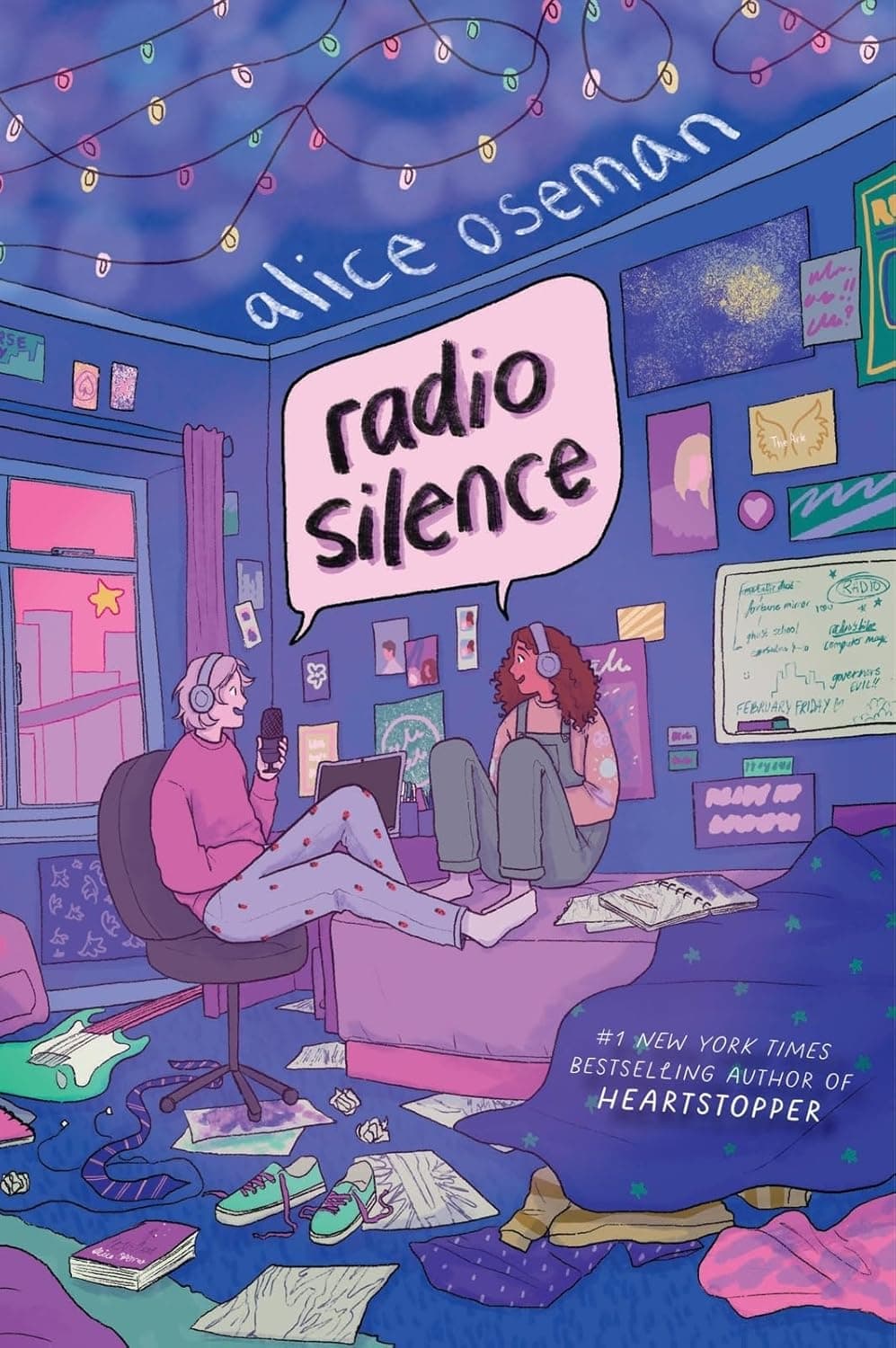
Opening
Two years before the main story, Frances Janvier watches smoke rise where her school should be and realizes how fragile a “future” can be. Now seventeen and Head Girl, she performs the role of perfect student even as an anonymous YouTube podcast, Universe City, becomes the place where she actually feels alive. These chapters launch her struggle between a public image shaped by Identity and Authenticity and the relentless Pressure of Academia and the Education System.
What Happens
Prologue: FUTURES
On a quiet train platform, fifteen-year-old Frances drowsily follows her friend Carys Last’s gaze and sees a black cloud blooming over their town—right where the school stands. Carys coolly observes, “Well, I guess the school burned down... Seven-year-old Carys’s wish came true,” her detachment both unsettling and magnetic.
Frances’s panic spikes. Her GCSE sketchbook is in her locker. University applications, coursework, the years of work—she sees it all turning to ash. Carys doesn’t care who caused it: “The end result is the same.” The moment hardwires Frances’s belief that academic achievement is everything and frames Carys as a rebellious counterpoint to that worldview.
Chapter 1: SUMMER TERM (a)
Two years later, Frances is Head Girl, waiting backstage at parents’ evening. Her reputation—“ruthless study machine,” “consistent high achiever,” future Cambridge hopeful—is a curated performance she knows how to sell. She even won the Head Girl election by pretending not to care, because indifference looked effortlessly cool.
She hasn’t written a speech. It doesn’t matter; she knows the formula adults want to hear and plans to improvise. Watching Daniel Jun, the self-serious Head Boy and her supposed rival, she calls them “shining gods of academia.” The line is a joke to her—and dead serious to him.
Chapter 2: THE NARRATOR
Fifteen minutes earlier, in a hallway, Frances’s mum frets that Frances is improvising again, reminding her of the time she rambled about Game of Thrones. Frances shrugs it off—she knows the script: “I’m clever, I’m going to university, blah blah blah grades success happiness.” Inside, she admits being clever is her “primary source of self-esteem,” and that she is “a very sad person.”
She distracts herself with a plan: go home and listen to the new episode of Universe City. She’s in love with the narrator’s soft, anonymous voice and secretly posts fan art under the alias “Toulouse.” When Frances’s Mum asks why she wanted to be Head Girl, Frances says, “Because I’m good at it,” while thinking the real answer: because universities love it. Her hidden fandom hints at Finding Your Voice and Pursuing Passion and the pull of The Power and Dangers of Fandom and Internet Culture.
Chapter 3: DYING, BUT IN A GOOD WAY
Speech done, Frances checks her phone. The official Universe City account follows her. A DM from “Radio,” the creator, praises her Toulouse art and asks her to become the show’s official artist. Frances goes breathless—“dying, but in a good way”—then instantly clamps down. She can’t tell anyone at school; they’d brand her a “Fandom Freak.”
Her reaction catches the eye of Aled Last, Daniel’s best friend and Carys’s quiet twin—and Frances’s neighbor who rides the same train. He’s onstage to talk about university and is visibly terrified. As he stumbles through it, Frances feels a rush of empathy that underlines Mental Health and Well-being and the beginnings of Loneliness and Connection—the anonymous intimacy she feels online versus the isolation of school.
Chapter 4: DO WHAT YOU WANT
In the car, Frances blurts her news. Her mum’s first instinct is caution: scams, exploitation, time drains. Frances folds and says she’ll turn it down—she has Year 13, coursework, Cambridge interviews.
Then her mum pivots. She tells Frances she works too hard and that this is rare. “Do what you want,” she says—permission to choose joy. Frances, buoyed by that trust, drafts her acceptance to Radio in the passenger seat. She chooses art alongside school, not instead of it.
Character Development
Frances’s double life—polished prodigy versus passionate fan artist—finally collides with a real choice. Around her stand three mirrors: Daniel’s brittle ambition, Aled’s anxious vulnerability, and the memory of Carys’s rebellious detachment. Her mum quietly tilts the balance toward a fuller self.
- Frances Janvier: Performs perfection, admits her self-worth hinges on grades, and takes her first risk by accepting the Universe City role under her alias.
- Aled Last: Introduced as gentle, frightened, and overwhelmed by public speaking; his visible panic opens a channel of empathy with Frances.
- Frances’s Mum: Not just proud—perceptive and protective. She recognizes burnout and nudges Frances toward a healthier balance.
- Daniel Jun: The earnest, competitive face of academic prestige; a foil for Frances’s wry, performative compliance.
- Carys Last: A flashback presence whose cool detachment from school foreshadows a different way to measure a life.
Themes & Symbols
These chapters stage the tug-of-war between performance and truth. Frances treats achievement as identity, relying on grades to guarantee worth. That posture cracks when an opportunity asks her to be publicly, creatively herself. The novel uses school rituals (speeches, elections, prestige talk) to expose how easily a life becomes a script—and how hard it is to speak in your own voice when the world rewards the performance.
At the same time, the internet becomes both sanctuary and risk. Under Toulouse, Frances finds community, creative energy, and an anonymous intimacy she can’t access in school corridors. Yet the secrecy isolates her—she’s ecstatic and can’t tell anyone. Aled’s strained public talk underscores how mental health pressures thrive in systems that demand constant competence. Universe City itself symbolizes escape and possibility: a self-made world where curiosity and collaboration matter more than admissions metrics.
Key Quotes
“Well, I guess the school burned down... Seven-year-old Carys’s wish came true.”
Carys punctures the sacred aura of school with gallows humor. Her detachment casts the institution as destructible—and challenges Frances’s belief that education is the only path to a future.
“I’m clever, I’m going to university, blah blah blah grades success happiness.”
Frances recites the script adults want, mocking it even as she relies on it. The line exposes the gap between what she performs and what she feels, and it frames “happiness” as an empty promise tethered to achievement.
“Dying, but in a good way.”
Frances’s reaction to Radio’s DM captures the ecstatic terror of desire. The phrase encapsulates the stakes of choosing passion: joy so intense it feels dangerous.
“Do what you want.”
Her mum’s four words reframe permission and power. Instead of policing risk, she validates it, becoming the counterforce to institutional pressure and catalyzing Frances’s decision.
Why This Matters and Section Significance
These chapters light the fuse of the novel’s central conflict: the life Frances performs versus the life she wants. The Universe City offer is the inciting incident that forces a choice, while her mum’s green light proves she doesn’t have to abandon ambition to make room for joy.
They also map the social terrain that will shape the story—Daniel’s competitive sheen, Aled’s trembling sincerity, and Carys’s rebellious shadow—inviting questions about platonic intimacy, mental health, and what counts as a “real” future. By the end of Chapter 4, Frances has taken her first step toward integrating her identities, setting the stage for deeper connections and a redefined measure of success.