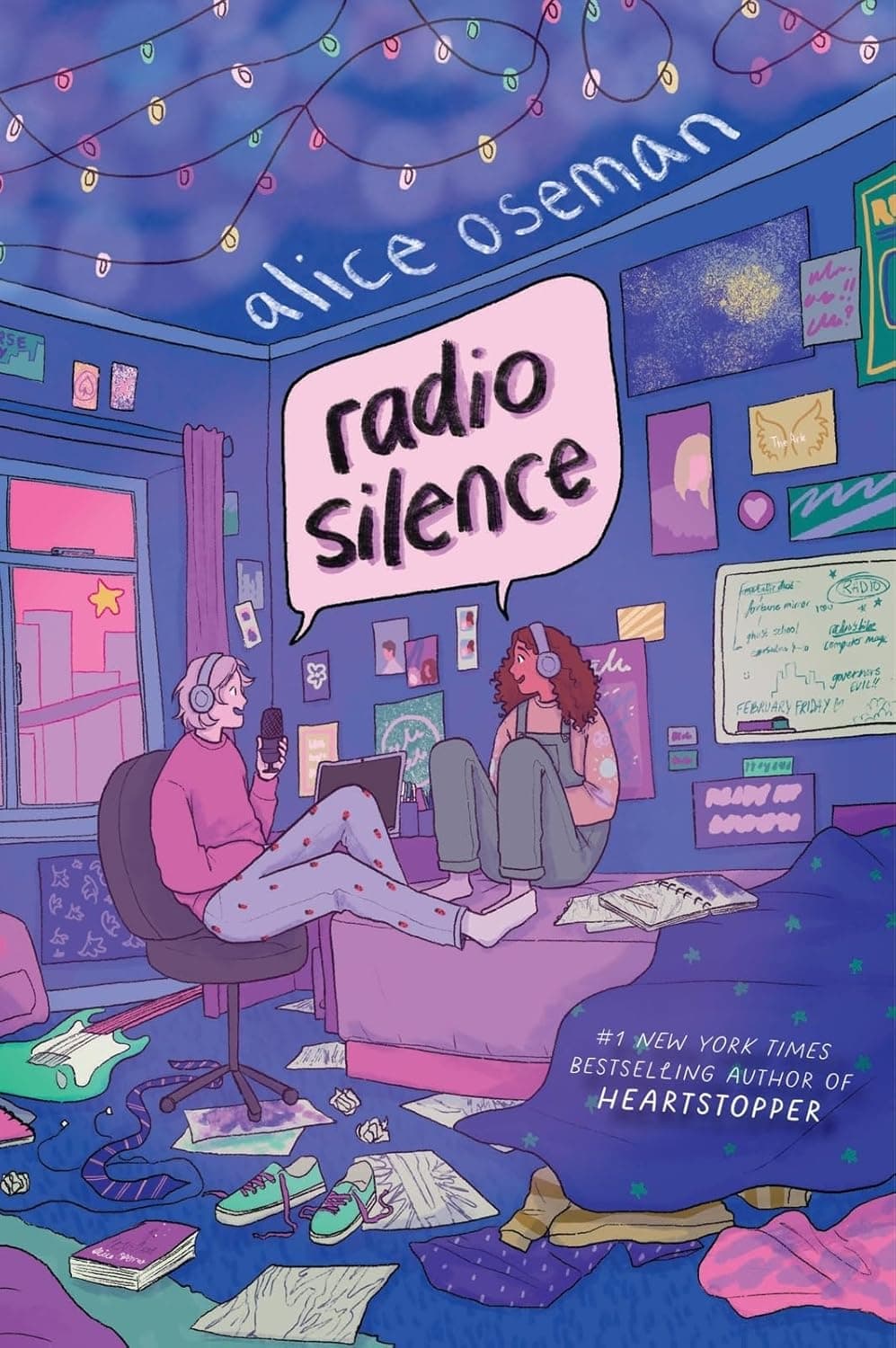
What This Theme Explores
The Pressure of Academia and the Education System interrogates the belief that exam scores and elite universities are reliable measures of worth—or pathways to happiness. The novel asks who benefits when a young person’s identity is reduced to grades, and what is lost when creativity, friendship, and mental health are sacrificed to keep up an image of “success.” It probes how institutions normalize anxiety and burnout while branding anything non-academic as a distraction or failure. Ultimately, it examines whether a life chosen to impress others can ever feel like one’s own.
How It Develops
At first, the academic machine looks natural and inevitable, embodied by Frances Janvier, the school’s perfect product. Head Girl, relentless reviser, and future Cambridge applicant, she defines herself almost exclusively by achievement. Her love for the podcast Universe City is carefully hidden, coded as a guilty pleasure because it does not advance the “real” goal. The world around her rewards this self-abandonment: teachers, titles, and a polished persona reinforce the idea that there is one safe path and one kind of success.
Everything begins to tilt when Frances meets Aled Last and starts creating art for Universe City. Their collaboration is joyful and creatively fulfilling, but Year 13 amplifies the noise of interviews, predicted grades, and institutional surveillance. As Frances’s mum urges her to value happiness over prestige, the school doubles down—punishing her for public creative work and making clear that art is acceptable only as decoration for academic triumph, never as an end in itself. Meanwhile, Aled’s misery at university exposes what the promise of prestige can hide: courses chosen under pressure, identity eroded by parental expectation, and the collapse that follows when there’s no room to be oneself.
The theme culminates in crisis. Frances’s disastrous Cambridge interviews force her to confront the hollowness of the life she’s constructed—she cannot sell a future she doesn’t want. Aled breaks under the strain, and the revelation of his mother’s abuse reveals the most coercive, dehumanizing face of academic ambition. The resolution is not a retreat but a reorientation: Frances chooses art college, Aled leaves university, and both reject the claim that worth is conferred by institutions. Success becomes self-defined, rooted in honest desire and supportive relationships rather than rankings.
Key Examples
-
Frances’s opening credo shows how academic achievement has fused with identity and destiny. “I was clever… I was going to Cambridge… and I was going to be happy.” This equation—grades → university → job → happiness—sounds rational but reads like a script; the novel spends its length testing, and ultimately breaking, that formula.
-
When she’s offered the chance to be the official artist for Universe City, Frances’s first instinct is refusal: it feels irresponsible to prioritize passion over productivity. “I’m just not gonna have time… Cambridge interview prep… there’s no way I’d have time.” The language of scarcity and panic reveals how the system trains students to treat joy as a threat to success.
-
A single exam becomes existential when Frances fears a B in maths will derail everything. “If I get a B… I don’t even know if Cambridge will want to interview me.” The disproportionate stakes expose how institutions convert ordinary setbacks into identity crises, manufacturing constant anxiety.
-
After the “ghost school” episode goes viral, Dr. Afolayan strips Frances of her Head Girl title, condemning her “artistic” pursuits as off-brand. This punishment is ideological: it polices which achievements “count,” enforcing conformity and making clear that creativity without institutional approval is deviance, not merit.
-
In a raw party game confession, Aled says, “Never have I ever wanted to go to university.” The shock of this statement—its unsayability—shows how deeply the university track has been naturalized, and how shame silences dissent until it erupts.
-
During her Cambridge interviews, Frances realizes she has been performing a life she doesn’t want: “English literature has always been my favourite subject. [That’s not true, is it?]… [What absolute bullshit.]” The brackets dramatize the split between persona and self, marking the precise moment the illusion collapses.
Character Connections
Frances Janvier begins as the ideal student prototype and must dismantle the persona she created to survive school. What looks like dedication is revealed as self-erasure: “School Frances” earns applause but cuts her off from creativity, friendship, and fun. Her arc reframes ambition—not as rejection of excellence, but as the insistence that excellence can include joy and art, even if it leads away from prestige.
Aled Last is the most direct casualty of academic coercion, shaped by parental control and public expectation. His secret life as the creator of Universe City is both lifeline and encrypted SOS, an imaginative space where he can articulate what he cannot say aloud. His eventual departure from university is not failure but survival—a reclamation of voice, autonomy, and time.
Daniel Jun mirrors Frances as a “study machine,” but his competitive exterior masks insecurity. He reveals how rivalry and rank become substitutes for self-esteem, leaving students brittle and isolated. His trajectory suggests that the pressure harms not only those who collapse under it, but also those who appear to be thriving.
Carol Last personifies institutional logic taken to an intimate extreme, turning motherhood into a managerial role that measures her children by outputs. Her abuse makes visible what the system often hides: when love is conditional on achievement, the home becomes an extension of the school’s disciplinary power.
Carys Last offers a route out: she refuses the script, leaves, and builds a life at the National Theatre without traditional credentials. Her fulfillment disrupts the myth that university is the only door that opens onto meaning or stability.
R a i n e S e n g u p t a stands outside the pressure cooker and names it. Choosing an apprenticeship and refusing to be defined by grades, she models a pragmatic, values-driven approach to adulthood that refuses to translate self-worth into UCAS points.
Symbolic Elements
Universe City is an allegory of academic entrapment. Its punning title (“university”) and monster-infested landscape mirror how school can feel like a maze designed by others, with escape equated to reclaiming authorship of one’s story.
“School Frances” functions as a costume—sharp suit, muted self—worn to satisfy institutional spectators. When Frances returns to her burger-print jumper and messy authenticity, clothing becomes a visual shorthand for identity reclaimed.
Cambridge University is the novel’s glittering idol: a symbol that concentrates fear and desire. Its eventual rejection becomes a rite of de-enchantment, freeing the characters from chasing prestige as a proxy for purpose.
Aled’s bedroom, with its galaxy ceiling and curated sanctuary, externalizes his inner world—private, expansive, and imaginative. When his mother destroys it, the act is symbolic violence against his identity and a chilling attempt to “standardize” a human being.
Contemporary Relevance
In an era of league tables, spiraling tuition, and skyrocketing youth anxiety, Radio Silence speaks to students who feel treated like applications instead of people. It questions why creative work is relegated to “hobby” status and why institutions outsource worth to rankings. The novel validates nontraditional paths—apprenticeships, art colleges, pausing or leaving university—and argues that sustainability, mental health, and meaning are not luxuries, but essentials. Its most radical claim is also its simplest: a life you choose is more valuable than a life that impresses.
Essential Quote
“English literature has always been my favourite subject. [That’s not true, is it?] I’ve been passionate about studying it at university since I was little. [What absolute bullshit. You’re going to have to sound less like a robot if you want them to believe you.]”
This moment captures the rupture between the performance institutions demand and the truth the self cannot ignore. The bracketed asides stage an internal cross-examination, exposing how the promise of prestige taught Frances to counterfeit desire. By naming the lie, the novel clears space for a different metric of success—one grounded in honesty, care, and chosen work.