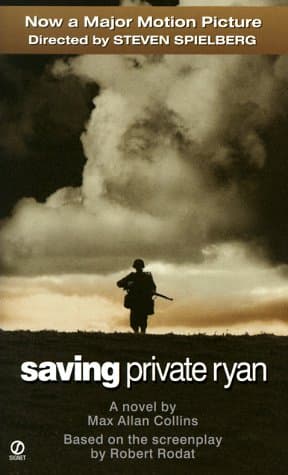
Opening
The squad reaches Ramelle and finally finds the man they’ve been risking everything to save—only to discover a choice more complicated than extraction. Across four chapters, a desperate defense, quiet confessions, and a pulverizing battle fuse into a moral crucible where loyalty, leadership, and sacrifice are tested to the limit.
What Happens
Chapter 16: The Man We Came to Save
Approaching the ruined village, the squad is ambushed by a German half-track and pinned down in a ditch. A bazooka blast ends the threat as American paratroopers sweep in; the soldier who fired the shot introduces himself as Private James Francis Ryan. Relief ripples through the squad—after the blood and miles, they’ve found him at last.
Captain John H. Miller escorts Ryan to the paratroopers’ bridge over the Merderet, where Corporal Henderson briefs him: a small, isolated force must hold the crossing at all costs. Miller pulls Ryan aside and delivers the blow—his three brothers are dead—and then the order: he is to go home. Ryan refuses. These men are “the only brothers I have left,” he insists, and with a German attack looming, he won’t abandon them.
Tension fractures the group. Private Robert Reiben, mourning Wade and Caparzo, tells Ryan that two men died to punch his “ticket home.” Shaken, Ryan says he doesn’t deserve special treatment; his life isn’t worth more than the others’. Miller confers with Sergeant Michael Horvath, who argues that staying to hold the bridge—and then leaving with Ryan—could be “the one decent thing” to salvage from the war. Miller sees both the tactical logic and the moral clarity. He informs Henderson that a tank assault is coming and assumes command.
Chapter 17: Sticky Bombs and a Prayer
Miller consolidates his squad with the paratroopers and sketches a defense. Their meager arsenal—machine guns, mines, a few bazookas, small arms—will have to be enough. He plans to funnel the German armor into a bottleneck, disable the lead tank, and turn it into a barricade, forcing the enemy to fracture into smaller fights as the Americans fall back toward the bridge.
To stop armor, Miller introduces a desperate improvisation from the manual: “sticky bombs”—a sock packed with TNT, fuse attached, slathered in axle grease to stick to tank treads. The men grimace, then get to work, building an assembly line of explosives. Assignments fall into place. Corporal Timothy Upham becomes ammo bearer for the mobile MG teams. Private Stanley Mellish and Henderson dig in with a machine gun. Jackson climbs the church bell tower with his sniper rifle. Miller designates the final fallback at the far end of the bridge—grimly dubbed “the Alamo”—where the last survivor will blow the span if needed. Kill zones, tripwires, and retreat points weave into a fragile web.
Chapter 18: The Calm Before
Silence settles over the ruins as the men brace for impact. In a shattered café, Miller spins a scratchy Edith Piaf record on a rescued Victrola; the melancholy song drifts through the streets. Upham translates the lyrics about lost love while Mellish insists the music sounds happy, a reminder that each man interprets the same world differently to survive.
They talk to keep the fear at bay. Reiben tells a bawdy neighborhood story that wins a few weary smiles. Prompted, Ryan recalls the last time he and his three brothers were together—a near-disaster in the family barn involving a practical joke and a girl—reanimating faces he fears losing to memory. Miller opens up about home: he teaches high school English in Pennsylvania and coaches baseball, listening from his hammock for the crack of a ball through the garage window—a sound that promises a winning season. When Ryan asks about his wife, Miller shields that memory for himself. The rumble of tanks swallows the music. The battle begins.
Chapter 19: The Alamo
German armor and SS infantry crash into Ramelle—two Tigers, two Panzers, and a company of elite troops. The plan works at first. Hawkins mines rip into the initial wave, and a sticky bomb team severs the lead Tiger’s treads, freezing it in the street and fracturing the assault. Combat devolves into savage, close-quarters chaos.
Losses mount. A paratrooper dies when his sticky bomb detonates too soon. Henderson clambers onto the crippled Tiger and drops grenades inside, destroying it; he is cut down moments later. In the bell tower, Jackson’s rifle fells attackers until a Tiger shells the church, killing him in a blast that shakes the town. Mellish fights hand-to-hand with an SS soldier and dies upstairs while a terrified Upham freezes on the stairwell, unable to move.
The survivors fall back to the bridge. The final Tiger crushes defenses and surges forward. Horvath is hit and dies on the span. The Tiger’s cannon blast deafens Miller and scatters the line. On the bridge, Miller is shot twice by the same German soldier he spared earlier in the mission. He fumbles for his pistol, ready for a last stand, when American P-51s scream overhead and obliterate the tank. Reinforcements arrive. Reiben and Upham reach Miller as he fades. Miller fixes his eyes on Ryan and gives his final order: “Earn this.”
Character Development
The section peels back identities and hardens edges as combat strips away pretense and tests loyalty.
- Captain John H. Miller: He chooses purpose over procedure, reframing the mission to defend the bridge and then extract Ryan. His confession—teacher and coach—humanizes him before his final act of leadership and sacrifice. Dying at the hands of the man he once released deepens the story’s moral irony.
- Private James Francis Ryan: No longer a symbol, he asserts agency rooted in duty and loyalty. He refuses evacuation, stands with his unit, and becomes central to the defense his rescuers join.
- Sergeant Michael Horvath: Miller’s compass. He articulates the defense as a chance to salvage decency and fights to the end, his death erasing the team’s bedrock.
- Private Robert Reiben: Bitter and disillusioned, he confronts Ryan, then commits fully to the bridge defense. His survival and care for Caparzo’s letter signal a hard-earned embrace of brotherhood.
- Corporal Timothy Upham: An observer forced into the storm. His paralysis during Mellish’s death marks a devastating failure; killing the freed German later reveals his transformation into a soldier marked by vengeance.
- Private Stanley Mellish: A steady fighter whose banter in the calm contrasts with his brutal, intimate death, underscoring the war’s personal cost.
- Corporal Henderson: A practical, courageous leader whose destruction of the Tiger turns the tide in one sector, even as it costs him his life.
Themes & Symbols
Themes
- The Value of a Single Life vs. The Greater Good: Ryan argues that his life isn’t worth more than anyone else’s, challenging the premise of the mission. Miller transforms the dilemma by tying Ryan’s fate to a strategic necessity—the bridge—so that saving one man and serving the broader objective become the same fight.
- Sacrifice and Redemption: Horvath names the defense their chance to reclaim meaning from chaos. Miller’s death and his charge to Ryan—“Earn this”—recast the squad’s losses as a moral debt the living must honor.
- Leadership and Responsibility: Miller adapts under impossible pressure, unites a broken unit, and chooses a path grounded in both tactical sense and moral conviction rather than blind obedience.
- The Dehumanization of War and Shared Humanity: The shared stories and Piaf’s song briefly restore the men’s individuality before the battle erases it. Upham’s journey—from empathy toward a prisoner to executing that same man—reveals how war corrodes human connection.
Symbols
- The Bridge at Ramelle: A strategic choke point and the story’s moral crossing. Holding it becomes the squad’s final test and the hinge between survival and sacrifice.
- The Church Bell Tower: Sanctuary turned sniper’s nest. Its destruction erases any illusion of divine shelter and signals the triumph of war’s desecrating force.
- Sticky Bombs: Improvised hope. The greasy socks of TNT embody resourcefulness under duress and the thin margin between ingenuity and catastrophe.
Key Quotes
“They’re the only brothers I have left.”
Ryan reframes the mission from an abstract rescue into lived loyalty. His refusal to leave isn’t defiance for its own sake; it anchors the moral conflict, asserting that duty to comrades can outweigh personal salvation.
“We’ll call it the Alamo.”
Miller names the final fallback line, invoking a last-stand myth that both steadies morale and acknowledges likely sacrifice. The name underlines his realism: leadership means preparing men to die well if they must—and to make those deaths count.
“The one decent thing we were able to pull out of this goddamn shithole of a war.”
Horvath gives the defense moral shape, turning a tactical stand into a search for redemption. His words justify staying without romanticizing it, honoring the impulse to salvage meaning from carnage.
“Earn this.”
Miller’s final order compresses the section’s themes into a mandate that follows Ryan beyond the battlefield. It transforms sacrifice into obligation, shifting the story’s weight from the dead to the living who must justify their survival.
Why This Matters and Section Significance
These chapters close the search by refusing a neat rescue. The squad doesn’t just find Ryan; they inherit his fight, binding individual worth to collective purpose. The structure—quiet intimacy before annihilation—intensifies loss and clarifies what’s at stake: memory, duty, and the fragile decency men try to preserve in war.
Miller’s choice to defend the bridge resolves the moral debate in action, not argument. His death at the hands of the freed German exposes the peril of holding onto peacetime ethics in combat, while Upham’s reversal shows how war remakes men in its image. “Earn this” leaves the last word to the future, insisting that survival demands a life lived in payment for the fallen.