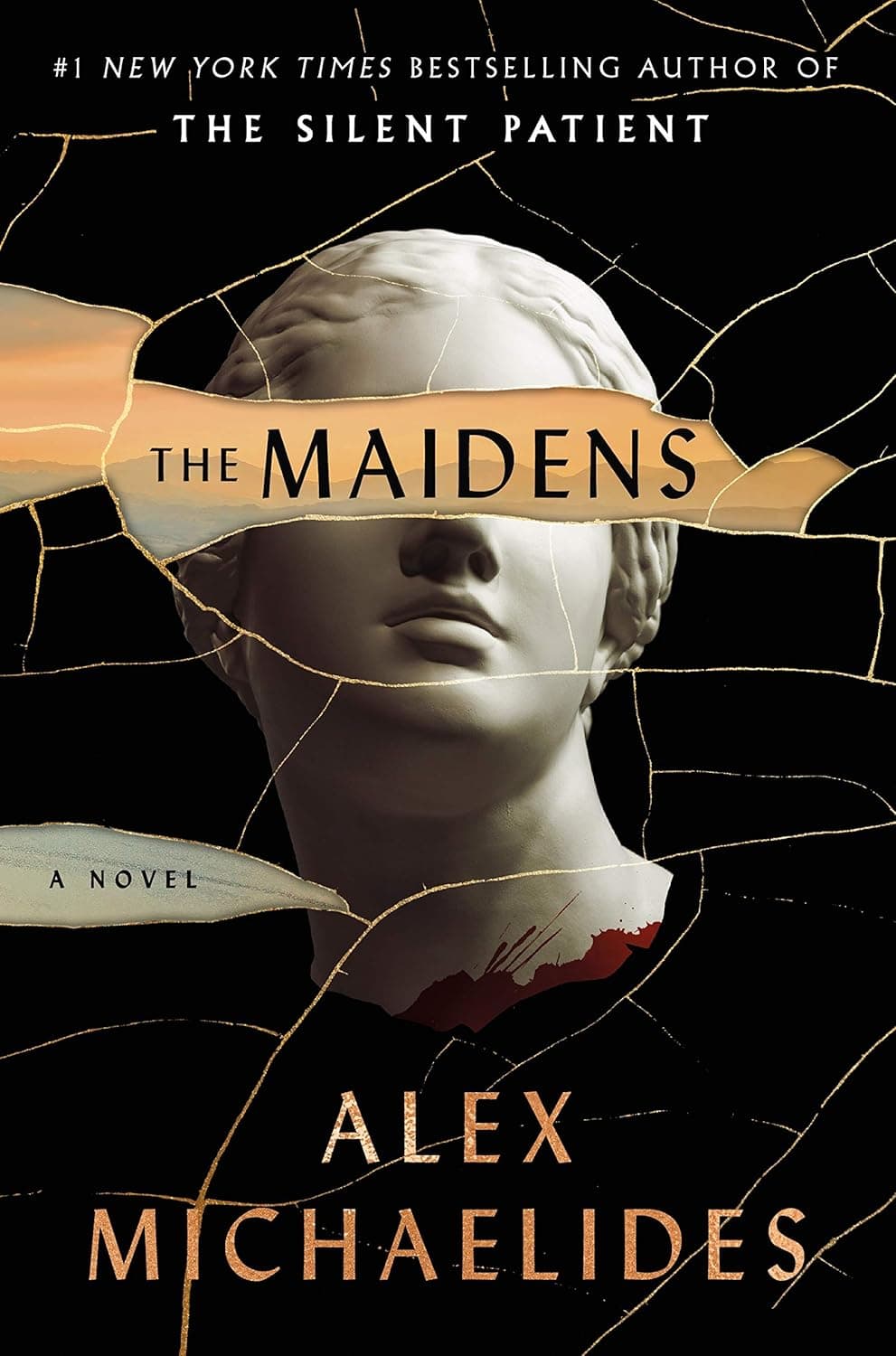
Opening
Still mourning her husband Sebastian, Mariana Andros returns to Cambridge to support her niece Zoe. The college’s beauty collides with dread when police confirm a student’s murder and a celebrated professor enters the frame—only to slip free with an alibi. When the authorities dismiss Zoe’s warning, Mariana resolves to uncover the truth herself.
What Happens
Chapter 11
Mariana arrives at St. Christopher’s College, the city’s corners stinging with memories of Sebastian. Her inner life is steeped in Grief and Loss; she likens herself to Demeter, stalled and hollowed after Persephone’s abduction—a parallel that locks the story into Greek Mythology and Tragedy. Within the college gates, the hum of students and the calm weight of stone briefly soothe her; for a heartbeat, the campus feels safe.
Even that flicker of peace is tethered to duty: Zoe is all she has left. The ancient setting reminds Mariana that countless lives have unfolded here, her sorrow just one strand. That perspective steadies her—just enough to keep moving.
Chapter 12
The calm shatters when police step out of the dean’s office. The body found near the marsh is confirmed as Zoe’s friend Tara Hampton. On her way to find Zoe, Mariana runs into Julian Ashcroft, a former colleague turned TV-famous forensic psychologist whose “prurient delight in madness and death” puts her off.
Julian says the murder is “horribly violent” and speculates about a boyfriend. Mariana knows Tara had none. He invites her for a drink to talk shop; she brushes him aside and heads straight for Zoe.
Chapter 13
Mariana finds Zoe in Eros Court, where a worn statue presides over a small, quiet quad. Zoe collapses into her arms. Their bond—tightened after Mariana and Sebastian “unofficially adopted” Zoe following her parents’ fatal car crash—makes this moment feel like reliving catastrophe, deepening the novel’s focus on Childhood Trauma and Its Consequences.
When Mariana gently confirms Tara’s death, Zoe clutches her tattered zebra and sobs, then blurts, “It’s all my fault she’s dead.” She confesses that Tara had come to her room high and terrified, insisting someone meant to kill her. Pressed for a name, Zoe says Tara feared one of her professors—Edward Fosca.
Chapter 14
Mariana brings Zoe to the dean’s office to speak with Chief Inspector Sadhu Sangha. Through tears, Zoe recounts Tara’s claim: she was sleeping with Fosca; after a fight, she threatened to expose him; he threatened to kill her. The Inspector listens, skeptical.
An hour later, Sangha returns: Fosca has an alibi. He was teaching a seminar with six students at the time of the murder; two have already corroborated it. Sangha dismisses Fosca as a suspect and shifts to Conrad Ellis, a local with a record who argued with Tara. Zoe defends Conrad. Mariana urges the Inspector to trust Zoe’s judgment; he bristles and orders Mariana to stay out of his investigation.
Chapter 15
Under a colonnade, Mariana and Zoe are confronted by Professor Fosca. He’s younger and more dazzling than expected—magnetic, almost Byronic. Skipping over Mariana, he speaks directly to Zoe, professing sorrow and shock. Then he offers a story that flips everything on its head, sharpening the lens of Appearance vs. Reality.
According to Fosca, Tara was failing; he told her she’d need to repeat the year. She became hysterical and aggressive, threatening to destroy his career with false accusations, an angle that suggests Deception and Betrayal. He insists he has never been involved with a student—calling it an “abuse of power.” Calm, reasonable, and poised, he encourages police to focus on Conrad Ellis. After he leaves, Mariana remains unconvinced. She decides to speak to Conrad—and, spotting Julian again, begins to form a plan.
Key Events
- Mariana returns to Cambridge, raw with grief, to support Zoe.
- Police confirm Tara Hampton’s murder.
- Zoe shares Tara’s fear of Professor Edward Fosca.
- Inspector Sangha clears Fosca on the strength of a seminar alibi and turns to Conrad Ellis.
- Fosca confronts Zoe and Mariana, offering a persuasive counter-narrative that paints Tara as vindictive.
- Mariana resolves to investigate on her own, starting with Conrad—and looping in Julian as part of her strategy.
Character Development
Mariana’s grief-stricken poise turns into resolve as she rejects official indifference. Zoe’s vulnerability becomes the spark for action, while Fosca’s charisma complicates truth and motive. Institutional authority, embodied by Sangha, pushes Mariana into the outsider-detective role.
- Mariana Andros: Grieving therapist whose protective instinct overrides deference to authority; pivots from caretaker to investigator.
- Zoe: Fragile, guilt-ridden, and honest about her fear; her confession ignites the central mystery.
- Edward Fosca: A study in duality—compassionate and credible or calculating and lethal; wields moral language to protect himself.
- Inspector Sangha: Efficient and irritable; his dismissal of Zoe’s account hardens the adversarial line between police and Mariana.
- Julian Ashcroft: Media-savvy psychologist whose appetite for dark cases unsettles Mariana, yet may prove useful.
Themes & Symbols
Mariana’s journey is saturated with grief that narrows and sharpens her perception. The campus—timeless stone, teeming life—momentarily steadies her, but loss keeps reframing what she sees. Through Demeter-Persephone echoes, the narrative adopts the shape of a modern tragedy, where a mother-figure searches, too late, for the endangered girl.
The setting’s elegance masks brutality, energizing Appearance vs. Reality. Fosca’s Byronic allure and impeccable alibi clash with Zoe’s raw testimony; both versions can’t be true, and the vacuum between them breeds suspicion. Deception and Betrayal swirl around the power imbalance of professor and student, while Zoe’s backstory deepens the thread of Childhood Trauma and Its Consequences—pain that migrates from past to present, shaping risk, guilt, and choice.
Key Quotes
“It’s all my fault she’s dead.”
Zoe’s confession binds guilt to grief, revealing how trauma distorts responsibility. It also motivates Mariana, transforming sorrow into action and anchoring the emotional stakes of the investigation.
Julian’s “prurient delight in madness and death.”
Mariana’s judgment of Julian frames the ethics of spectacle versus care. It positions her as a protector who distrusts sensationalism—even as she recognizes Julian’s expertise might be tactically useful.
The murder is “horribly violent.”
This blunt description underscores the story’s psychological and physical stakes. It strips away romanticized academia and situates the crime as a rupture that the college’s elegance cannot contain.
Fosca calls student-professor romance an “abuse of power.”
By invoking ethics, Fosca claims the moral high ground while denying Zoe’s account. The phrase operates as both shield and weapon, highlighting how language can be used to conceal—or reveal—abuse.
Why This Matters and Section Significance
Chapters 11–15 establish the novel’s central tension: a seductive suspect with an airtight alibi versus a traumatized witness begging to be believed. Mariana’s clash with the police forces her into the liminal space outside institutional authority, where instinct, myth, and psychology drive the hunt. The result is a sustained unease—Cambridge’s refinement falters, truth fragments, and Mariana steps into danger, compelled by love and loss to chase what lies beneath the surface.