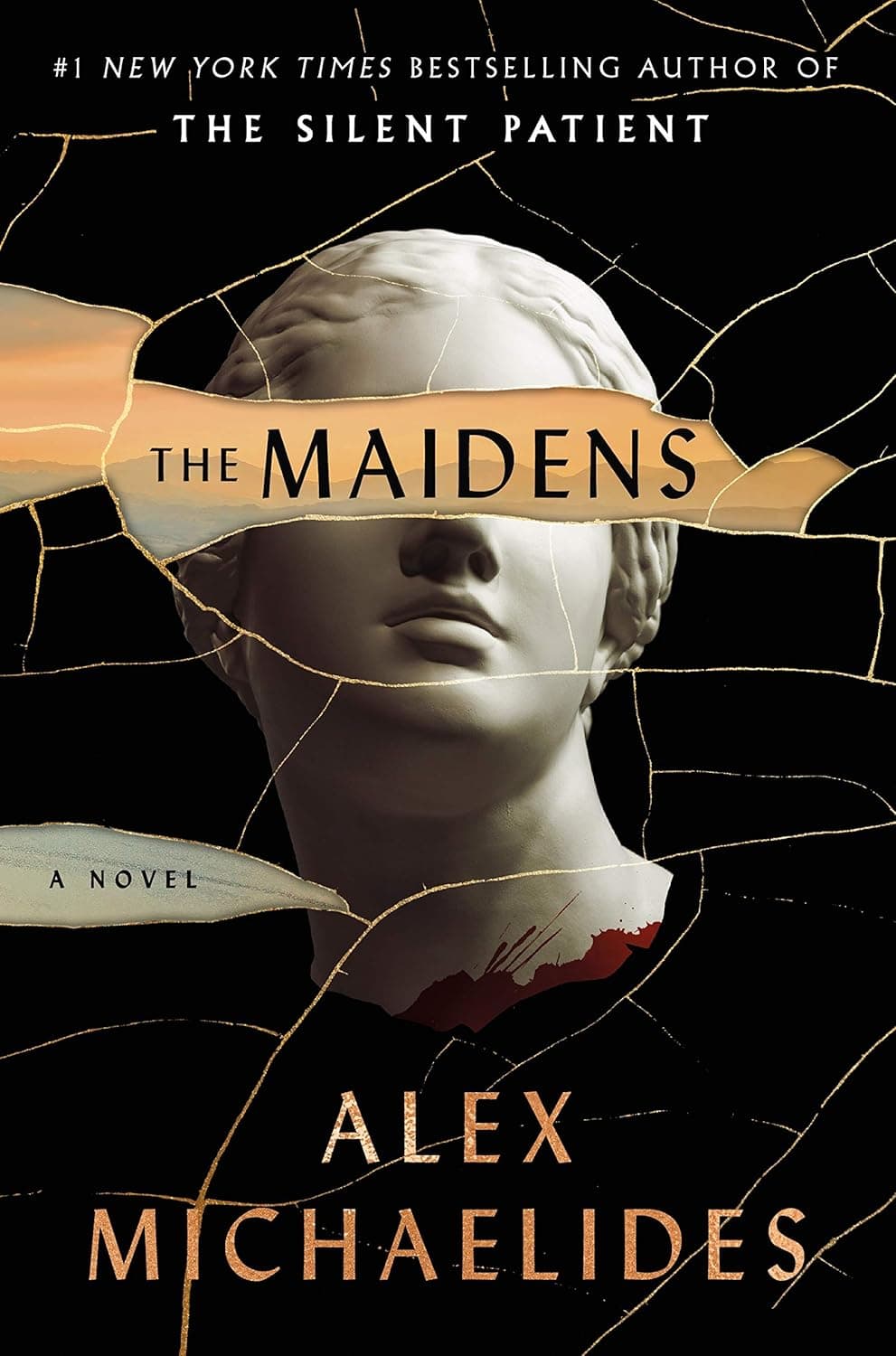
Opening
The narrative pivots into the killer’s mind before snapping back to Cambridge, where suspicion tightens around Professor Fosca, a second body surfaces, and a ritualistic signature emerges. Across these chapters, childhood horror, academic glamour, and mythic imagery collide, sharpening the mystery and escalating the danger to the Maidens.
What Happens
Chapter 36
An unnamed first-person narrator—soon understood to be the killer—recounts a brutal childhood on a farm, shaped by a domineering father and a young, gentle mother who quietly believes “men are not to be trusted.” He grows up amid slaughtering seasons that turn the land into a theatre of death: blood, offal, and screaming animals. His mother hides and drinks; he runs as far as he can to escape the sounds and smell.
At the center of his fear lies the pit, where his father dumps entrails and carcasses—and where he threatens to bury the boy alive if he disobeys or betrays him. The child imagines being swallowed by rot and maggots, the terror searing into his psyche. The chapter maps the origins of a predator—how abuse, fear, and omnipresent death distort perception and breed compulsion—linking directly to Childhood Trauma and Its Consequences.
Chapter 37
Mariana Andros meets Edward Fosca in the Fellows’ Garden. He is silken and confident, yet confrontational: he knows she lied about having the dean’s approval to question his students. He frames the Maidens as an elite, harmless circle designed to help “exceptional minds to flourish,” a textbook performance of Appearance vs. Reality—polish without transparency.
Mariana listens beneath his words, reading the currents of feeling. She senses a controlled, disowned anger, sparked by her unpredictability. As they part, Fosca crosses a boundary and kisses her—an act meant to dominate, not seduce. Mariana reels, furious and newly sure of her suspicion.
Chapter 38
Shaken, Mariana calls Fred. She tells him that his mention of Naxos reopened grief for her husband, Sebastian, who drowned there—part of her ongoing Grief and Loss. Feeling steadier, she brings Fred into the investigation, taking him to Eros Court and showing him Tara Hampton’s room to explain the timeline gap.
Beneath Tara’s window, Mariana spots a cigarette butt with a white filter. Fred identifies it as an American brand—matching what Fosca smokes. He’s also heard rumors of the professor’s “wild” parties. When they puzzle over how the killer could have moved quickly and unseen from college to Paradise, Fred proposes a new route: a punt along the river at night. Their theorizing breaks off when Zoe calls in panic: “It’s happened again.”
Chapter 39
Zoe reports another body. Determined to protect her niece, Mariana refuses to bring her to the scene. She and Fred hurry toward Paradise, the idyllic banks now stained by dread. Police tape and press block the way.
Mariana devises a plan: Fred distracts the cordon while she ducks under. He admits he’s squeamish about corpses but plays his part, and Mariana slips inside.
Chapter 40
A uniform stops her, but Detective Sergeant Julian vouches for her as a “colleague” and leads her to the forensic tent. The pathologist, Kuba, warns of what she’s about to see. The victim is Veronica—another Maiden—her throat slashed from behind, followed by twenty-two postmortem stab wounds. Mariana staggers away to compose herself.
Kuba calls the killing “ritualistic”: precise, controlled, deliberate. In Veronica’s hand lies a pinecone; he confirms one was found with Tara, too. The detail yokes the murders to Fosca’s lecture on the Eleusinian Mysteries and the pull of Greek Mythology and Tragedy. Chief Inspector Sangha arrives, furious to find Mariana inside the cordon.
Character Development
The section deepens psychological profiles while redrawing alliances. Power, performance, and grief drive characters into bolder choices and darker revelations.
- Mariana Andros: Uses clinical listening as her investigative edge, reads Fosca’s concealed rage, and refuses intimidation after the non-consensual kiss. She begins trusting Fred, bringing him into both her past and the case.
- Edward Fosca: Keeps his cultivated aura but lets the mask slip—his need for control surfaces in the aggressive kiss, confirming a pattern of power over others.
- Fred: Shifts from quirky stranger to steady ally, offering practical insight (the punt theory) and emotional ballast.
- The Killer: Gains depth via his own narration—terror, abuse, and immersion in death calcify into ritual and control.
Themes & Symbols
Trauma writes the killer’s script. The farm’s violence, the father’s sadism, and the terror of the pit show how early brutality can warp desire and ritualize control. This is the engine behind methodical killing and the need to master scenes of death that once overwhelmed the child.
Appearance vs. reality governs Cambridge. Fosca’s cultivated brilliance, the exclusivity of the Maidens, and the serenity of the Fellows’ Garden all mask menace. Even Paradise—the river, the punts, the willows—becomes a corridor for secret transit and hidden violence, exposing the campus’s gilded façade.
Greek myth reframes the crimes as ceremony rather than chaos. The pinecone, the precision, and the echo of the Eleusinian Mysteries suggest sacrifice, initiation, and rebirth twisted into homicide. The murders aren’t impulsive; they’re staged with symbolic intent.
- Symbol: The Pinecone — Often tied to Dionysian rites and fertility, it becomes a chilling token of “initiation” left in the victims’ hands, converting life’s emblem into a mark of ritual death.
- Symbol: The Pit — A personal underworld forged in childhood: fear, annihilation, and secrecy concentrated in one place. It prefigures the killer’s adult compulsion to control death and bury truth.
Key Quotes
“Men are not to be trusted.”
The mother’s credo sets the son’s emotional weather: suspicion, fear, and an expectation of harm. It seeds gendered mistrust that later curdles into domination and ritualized violence.
“Exceptional minds to flourish.”
Fosca’s phrase polishes elitism into virtue. It frames exclusion as nurture and cloaks power dynamics—hinting that mentorship may be a pretext for control.
“It’s happened again.”
Zoe’s call collapses denial: the murders form a pattern. The line flips the investigation from anomaly to serial threat and hurls Mariana into action.
“Colleague.”
DS Julian’s word grants Mariana sudden institutional legitimacy. It opens the tent flap—literally and figuratively—letting her see what the police see and tying her fate to the case.
“Ritualistic.”
Kuba’s assessment reclassifies the crime. The precision and recurring symbols shift suspicion toward someone steeped in myth and ceremony rather than passion or impulse.
Why This Matters and Section Significance
These chapters raise the stakes and narrow the field. A second Maiden is dead, confirming a serial killer with a ceremonial signature. Conrad Ellis falls away as a suspect, forcing a reset of police assumptions. Meanwhile, evidence and symbolism increasingly point to Fosca: the cigarette brand beneath Tara’s window, the mythic framework he teaches, and a temperament that prizes control.
Equally crucial is the narrative design: the killer’s first-person chapter supplies psychological context that makes the murders feel inevitable—a compulsion born of terror and ritualized to reclaim power. The clash of trauma, academic theatre, and Greek ritual becomes the lens through which every clue must now be read.