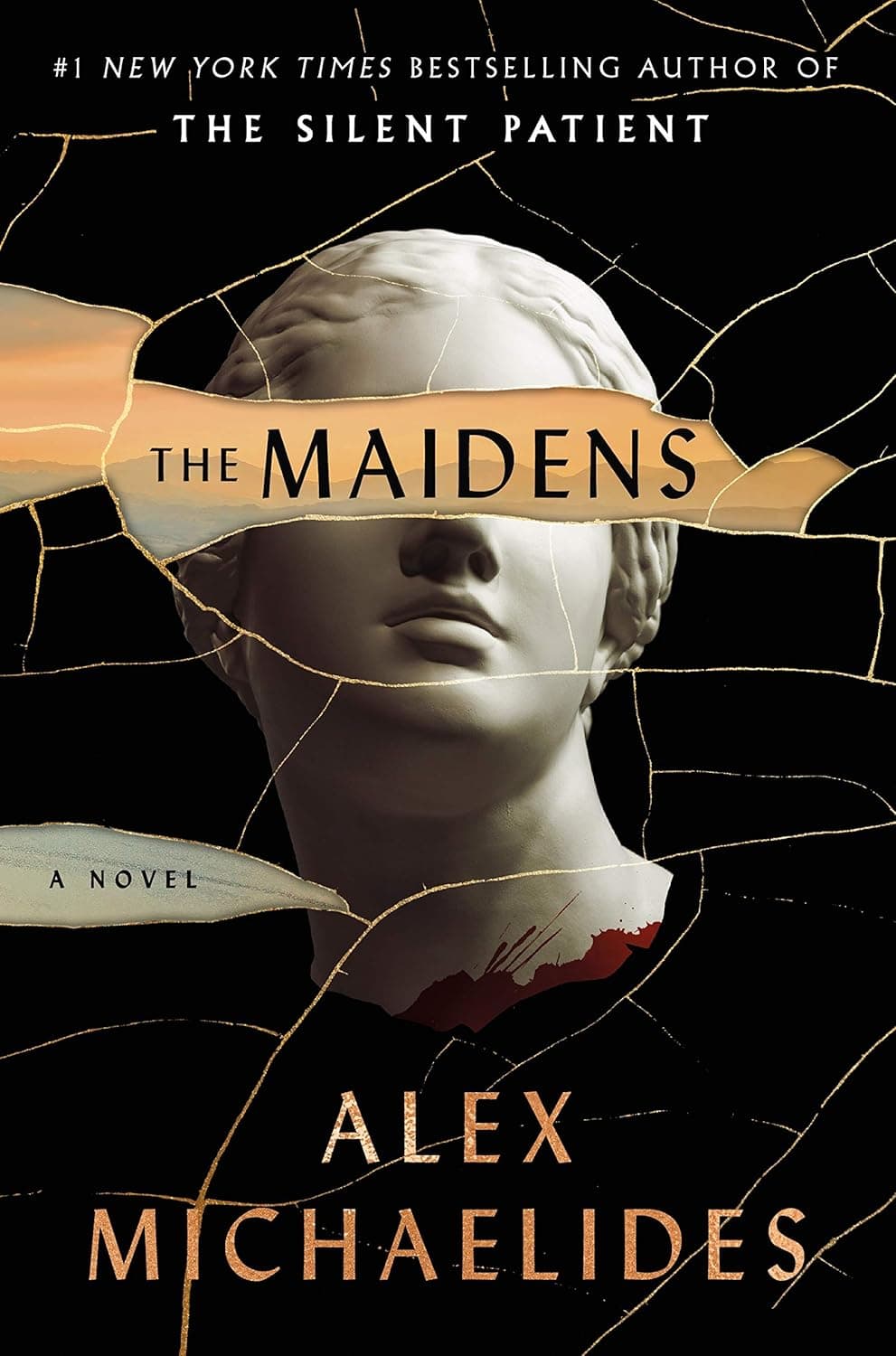
Opening
Panic ripples through Cambridge as a second student turns up dead, and the investigation explodes into a media circus. While Mariana Andros pushes past police lines and personal boundaries, the novel slips into the killer’s mind, reframing the violence through the cold logic of tragedy. Clues at a campus theater point back toward Edward Fosca—and toward a ritual that reads like a script.
What Happens
Chapter 41
At the riverside where Veronica Drake’s body is found, Mariana arrives with Julian, a police psychologist, and informs the exhausted Chief Inspector Sangha that Veronica, like Tara Hampton, belongs to Fosca’s elite circle, The Maidens. Sangha bristles at her interference and threatens to arrest her if she trespasses again. Julian smooths things over, promising it won’t happen.
Leaving the scene, Julian sympathizes—then asks Mariana for a drink. She refuses when she spots Fred waiting and blurts out that he’s a friend of her niece, Zoe. Julian sees the lie, tightens, and walks off. Mariana recoils at her own dishonesty; the lie hints at feelings for Fred she won’t face and forces her to ask what else she’s hiding from herself.
Chapter 42
News breaks that Veronica is a U.S. senator’s daughter. Reporters swarm St. Christopher’s, cameras clog the gates, and Scotland Yard rolls in. Cambridge hunkers down under the fear of a serial killer. Conrad Ellis is quietly released.
Mariana refuses to mythologize the murderer as a shadowy phantom. Drawing on Aristotle’s idea of catharsis—pity and fear—she insists he’s a man, not a monster. She can’t summon pity yet, but fear she has in spades, and she frames the case through Greek Mythology and Tragedy: the ritual, the chorus of onlookers, the sense of fate closing in.
Chapter 43
The novel shifts to the killer’s first-person voice. He recounts a childhood ruled by an alcoholic father whose rages warp every hour of the day. His mother talks about leaving, never does, and teaches him that education is the only escape. He learns to read his father’s moods, to hide pieces of himself, to brace for the bathroom beatings when his mother “fails.”
He wonders why she stays—fear, pride, denial—and decides he carries “terrible secrets” that deserve punishment. Looking back on the “frightened little boy,” he feels no sympathy. He expels pity as a weakness, severing the last tether to empathy. The passage lays bare Childhood Trauma and Its Consequences: how violence scripts identity and erodes compassion until cruelty feels inevitable.
Chapter 44
Determined to retrace Veronica’s last steps, Mariana targets the ADC Theatre, where Veronica rehearses The Duchess of Malfi. Reasoning that an abduction in daylight without witnesses suggests the killer is someone Veronica knows, she slips through an unlocked side gate, climbs the fire escape, and enters through a door to the bar.
The space stirs memories of nights there with Sebastian. Grief rushes in—how he filled rooms like this with warmth, how empty they feel now—underscoring the steady pulse of Grief and Loss beneath Mariana’s hunt.
Chapter 45
Hammering erupts from the auditorium. Mariana finds Nikos Kouris, the young director, shirtless and sweating as he smashes the canceled production’s set. She claims she’s a psychotherapist assisting the police, and they share a quick bond over their Greek roots. He calls Veronica “mediocre” and says she left around six after he gave notes. A professor—tall, bearded, American—sat in on rehearsal, and Nikos thinks Veronica was going to meet him. The description fits Edward Fosca exactly.
Mariana asks to see the dressing room. Tucked in the mirror, she finds a postcard: a saint with a dagger in her neck, holding a tray with two eyes. On the back, a line of Ancient Greek describes a maiden led to sacrifice. The image and text echo the earlier clue and confirm a ritual pattern—fuel for Mariana’s Obsession and Fixation—as the investigation circles tighter around Fosca.
Character Development
Mariana’s resolve hardens as she trespasses, lies, and follows her own instincts. The case becomes inseparable from her private life, and she’s alarmed by her own evasions.
- Mariana Andros: Pushes boundaries at the crime scene; lies to Julian about Fred; channels grief into action while questioning her own motives.
- The Killer: Reveals a childhood of abuse; disavows pity for his younger self; presents a psyche calibrated toward control and punishment.
- Nikos Kouris: Volatile, wounded by the canceled show; offers a pointed but potentially biased account linking Veronica to a professor.
- Julian and Sangha: Julian’s empathy clashes with Mariana’s secrecy; Sangha positions himself as a hard boundary she’s willing to risk crossing.
Themes & Symbols
Two engines drive this section: trauma and tragedy. The killer’s confession maps how early violence distorts selfhood, stunting empathy until domination feels like order restored. Mariana reads the murders through classical form, refusing to mystify the killer even as fear shapes her choices.
The theater amplifies Appearance vs. Reality. Sets are illusions; Nikos literally demolishes one as Mariana works to dismantle Fosca’s public persona. Her own performance—posing as police-adjacent, masking her feelings for Fred—exposes the cost of facades.
Symbol: The postcards fuse sacred imagery with classical sacrifice. The saint’s blinded “sight” and the Greek text suggest a killer obsessed with vision and truth—who sees, who refuses to see, and whose body must be offered to complete the story.
Key Quotes
“I banish all pity from my heart. I don’t deserve it.”
This declaration from the killer snaps shut the door on empathy. Self-directed contempt becomes a creed: if the child deserved pain, others can too. It reframes the murders not as sudden eruptions but as rehearsed, ritual punishments.
ἴδεσθε τὰν Ἰλίου / καὶ Φρυγῶν ἑλέπτολιν / στείχουσαν, ἐπὶ κάρα στέφη / βαλουμέναν χερνίβων τε παγάς, / βωμόν γε δαίμονος θεᾶς / ῥανίσιν αἱματορρύτοις / χρανοῦσαν εὐφυῆ τε σώματος δέρην / σφαγεῖσαν.
(Behold the destroyer of Ilium and the Phrygians, as she goes, with garlands on her head and lustral waters, to stain the altar of the goddess with the blood-red streams that will gush from her fair neck when the sword is driven home.)
From Euripides’ Hecuba, this postcard quote casts the victim as a sacrificial maiden. The killer isn’t improvising; he’s staging a tragedy. The language of garlands, lustral water, and the “fair neck” fuses purity and blood, tying Veronica’s death to a longstanding script of ritualized female suffering.
Why This Matters and Section Significance
These chapters escalate the story from campus mystery to high-profile serial case, tightening the net around Fosca while introducing the killer’s voice to supply motive and method. Nikos’s account gives the clearest link between the professor and Veronica; the second postcard confirms a patterned, mythic ritual. Mariana’s grief and secrecy sharpen her pursuit even as they blur her judgment, aligning the investigation with tragedy’s arc: a heroine racing toward the truth while the stage is already set.