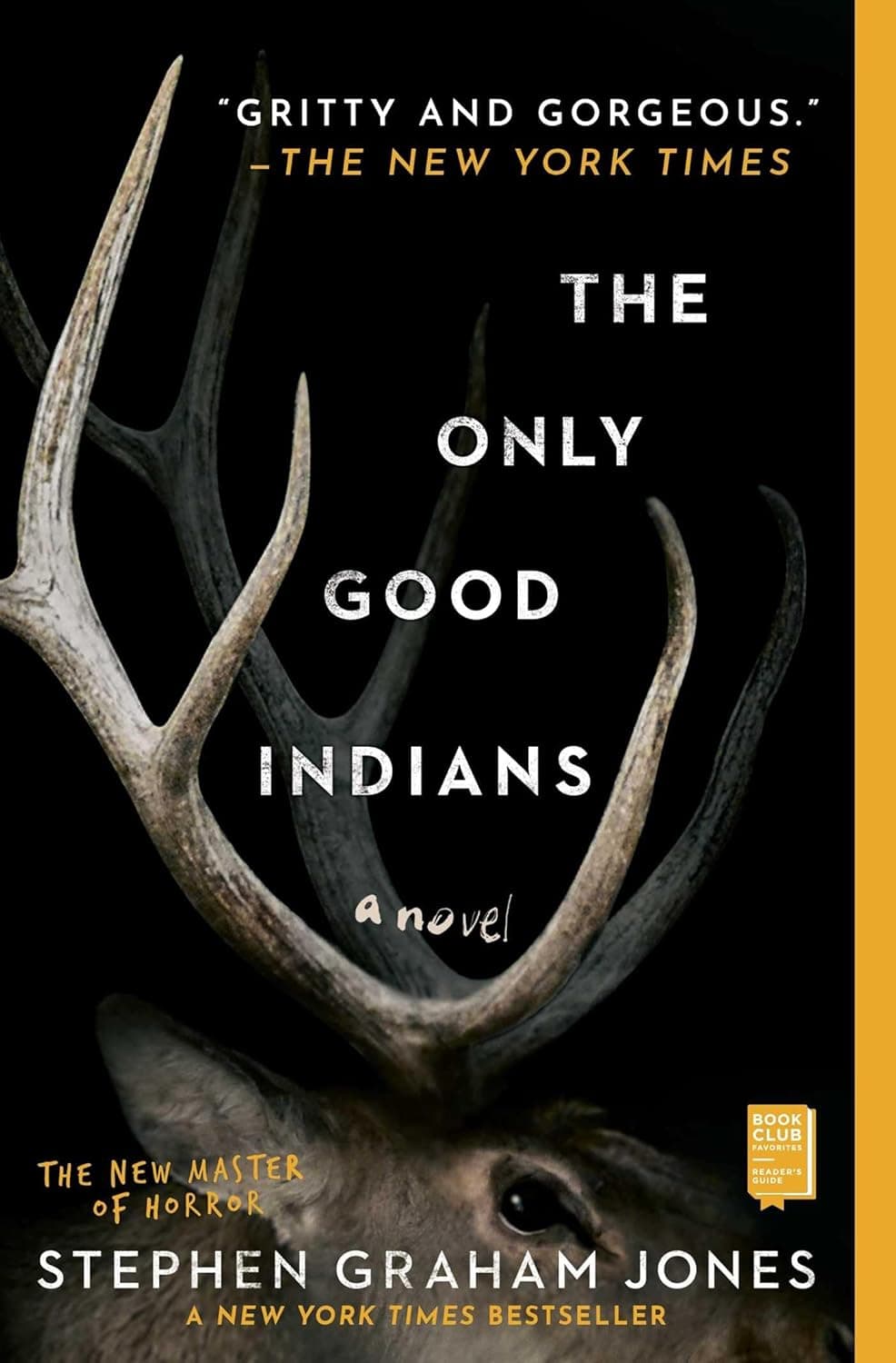
Richard Boss Ribs
Quick Facts
- Role: One of the four Blackfeet hunters from the illegal Thanksgiving elk hunt; the novel’s opening focal character and first victim of the vengeful spirit
- First appearance: Prologue, where his violent death launches the plot and the haunting
- Antagonist: The spirit of the elk, the Elk Head Woman
- Key relationships: Friends with Gabriel Cross Guns, Lewis Clarke, and Cassidy Sees Elk; older brother to Cheeto
Who They Are
Bold, bruised, and trying to outrun a past that won’t let go, Richard Boss Ribs (Ricky) is caught between the man he wants to be and the man the world keeps seeing. He flees the reservation after his brother’s overdose and takes work on an oil rig, where he’s reduced to token roles and slurs, but he still carries home inside him—its pride, its failures, and the hunt that went wrong. In the prologue’s compressed tragedy, Ricky becomes the series’ harbinger: the first to meet the supernatural retribution that will shadow his friends, and the first to briefly reclaim a warrior identity before it’s violently taken.
Personality & Traits
Ricky’s voice mixes gallows humor with keen self-awareness. He’s tough enough to keep moving but too honest to lie to himself about why he’s running. The result is a character who navigates humiliation and danger with grim wit, flashes of swagger, and a conscience he can’t fully bury.
- Cynical pragmatist: When an oil foreman claims Native people have “built-in cold resistance,” Ricky thinks, you don’t get cold-resistant because your jackets suck—you just stop complaining. The line shows his survival logic: endure, don’t expect fairness, keep going.
- Haunted by grief and guilt: He bolts after Cheeto’s overdose and avoids the funeral, then keeps circling back to the hunt in memory—classic avoidance that intensifies his shame and binds him to Guilt and Atonement.
- Loyal but conflicted: He admires Gabe’s fearless posture and wants to mail the stolen rifles back for his uncles—impulses that pit devotion against desertion and thread Ricky through Friendship and Betrayal.
- Self-aware outsider: He accepts “Chief” on the rig with resigned clarity, imagining himself as “the Indian thug off to the side.” He knows the script assigned to him and, in crisis, tries to rewrite it.
Character Journey
Ricky’s arc is brief but razor-defined. He flees Browning after Cheeto’s death, takes oil work in North Dakota, and tries to keep his head down. The elk’s appearance in the parking lot shatters that plan, framing him for vandalism and pushing him toward a mob of white roughnecks. Cornered, he stops running. He channels Gabe’s bravado, smiling like the man he admires—recasting himself from disposable stereotype to defiant Blackfeet fighter. The shift is exhilarating and terminal: the elk herd with the green eyes closes in, and Ricky’s death seals the pattern of Revenge and Retribution that will unspool through his friends. His end inaugurates the Cycle of Violence the hunters set in motion and can’t escape.
Key Relationships
- Gabriel Cross Guns: Gabe is Ricky’s template for courage—reckless, confrontational, magnetic. In the parking lot, Ricky wants Gabe beside him and then summons “Gabe’s smile,” borrowing an identity that lets him feel powerful for a heartbeat before the supernatural crushes it. The imitation reveals both admiration and a tragic longing for a self he thinks he lacks.
- Lewis Clarke and Cassidy Sees Elk: With Lewis and Cass, Ricky remembers the hunt as a vow to “be those kinds of Indians for once,” a fantasy of competence and honor that collapses under snow, shame, and aftermath. The memory binds them as co-authors of a mistake they’ll all pay for, even as distance and denial pull them apart.
- Cheeto: Ricky’s younger brother is the grief he can’t face. By leaving before the funeral, Ricky betrays his own idea of family duty—and that absence becomes the measure of what he thinks he deserves when the elk comes for him.
Defining Moments
Ricky’s scenes read like a fuse burning toward an explosion: short on time, long on consequence. Each beat pinpoints the tension between appearance and identity, choice and trap.
- The elk in the parking lot: A spike elk thrashes the trucks, inaugurating the novel’s blend of dread and omen. As the first visible haunting, it frames Ricky for the damage and announces The Supernatural and the Unseen as the true force driving events.
- The roughnecks’ pursuit: The mob misreads him on sight—Indian, guilty, disposable—and Ricky feels fear sharpen into defiance. For a moment he’s not a target but a presence; that shift gives him agency, even as it narrows his options.
- The final standoff: Hemmed in by men and a green-eyed herd, Ricky recognizes the trap’s design. He thinks in headlines, already imagining how his death will be flattened into cliché. The awareness underscores the horror: he sees the story they’ll tell about him—and that it will erase the truth.
Essential Quotes
The headline for Richard Boss Ribs would be INDIAN MAN KILLED IN DISPUTE OUTSIDE BAR.
That’s one way to say it.
This imagined epitaph shows Ricky anticipating erasure: the “dispute” implies equal blame, the capitalized label reduces him to type. His bitter aside—“one way to say it”—insists on a hidden story of targeted violence and supernatural setup that no headline will capture.
They’d almost done it last Thanksgiving, him and Gabe and Lewis and Cass, they’d meant to, they were going to be those kinds of Indians for once, they had been going to show everybody in Browning that this is the way it’s done, but then the big wet snow had come in and everything had gone pretty much straight to hell, leaving Ricky out here in North Dakota like he didn’t know any better than to come in out of the cold.
The breathless sentence strings together ambition, mythmaking, and collapse. “Those kinds of Indians” exposes the pressure to perform a warrior ideal; the “big wet snow” turns nature into complicity, blurring accident and punishment and pushing Ricky into exile.
He might be going down in this parking lot in a puddle of his own piss, but these grimy white boys were going to remember this Blackfeet, and think twice the next time they saw one of him walking into their bar.
Ricky reframes humiliation as legacy. Even as his body betrays him, he claims an identity (“this Blackfeet”) that demands witness; memory becomes a small victory against disposability.
Ricky rolled over, his face to the wash of stars spread against all the blackness, and considered that he maybe should have just stayed home, gone to Cheeto’s funeral, he maybe shouldn’t have stolen his family’s guns. He maybe should have never even left the rez at all.
He was right.
The stars’ indifferent beauty contrasts with Ricky’s cascade of regrets, each “maybe” tightening into certainty. The narrator’s blunt confirmation—“He was right”—is devastating: an ethical verdict and a recognition that his escape was always an illusion.