What This Theme Explores
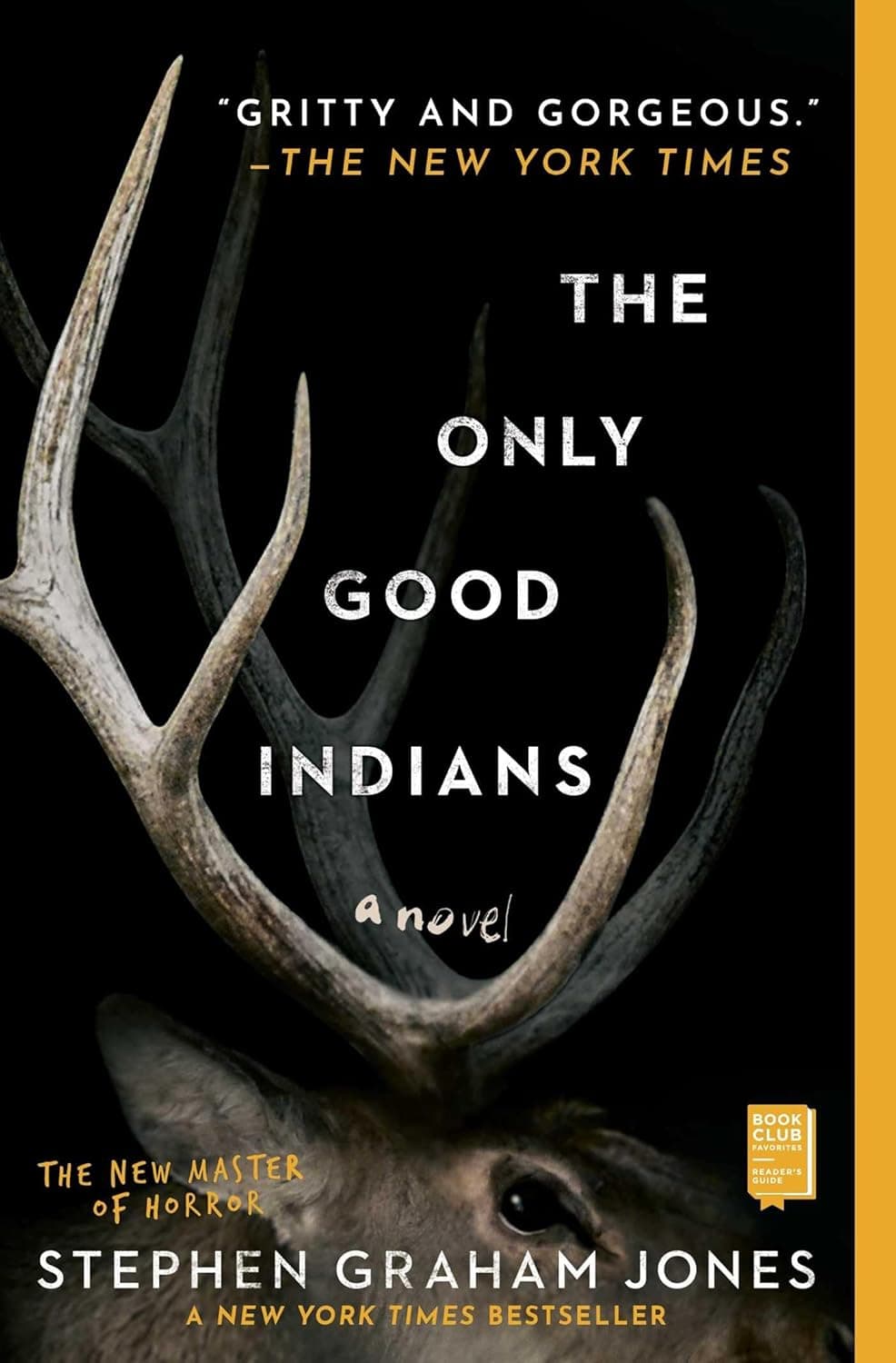
The Supernatural and the Unseen asks how guilt, memory, and broken tradition can acquire teeth—how the “unseen” becomes a moral force that refuses to stay out of sight. The novel blurs psychological dread with a literal haunting, suggesting that what people deny or rationalize nevertheless works upon their lives. It treats the spiritual world not as metaphor but as a participant with its own codes of justice, especially when human beings violate cultural or natural laws. Because that justice is rooted in Blackfeet identity and history, the horror lands personally: the supernatural remembers what the living would prefer to forget.
How It Develops
At first, the supernatural hides in plain sight, indistinguishable from hangover, bad lighting, and guilt. Richard Boss Ribs chases an elk through a bar parking lot and dies in the confusion, an episode that could be dismissed as misperception or punishment for hard living (Chapter 1-5 Summary). Lewis Clarke glimpses an elk calf only through the flicker of a ceiling fan, as if his conscience needs mechanical distortion to make the invisible visible. Early on, the “haunting” feels like a private reckoning rather than a ghost story.
Then the novel removes that protective ambiguity. By granting the vengeful spirit a point of view, Elk Head Woman is revealed as a thinking, remembering force, not a projection of grief (Chapter 6-10 Summary). The threat widens from isolated men to their circles: families and friends of Gabriel Cross Guns and Cassidy Sees Elk become vulnerable, proving the unseen can organize events, exploit weakness, and punish community-level ruptures, not just individual sins.
Finally, the supernatural steps fully into the body. The spirit hunts Denorah Cross Guns, turning myth into muscle and hoof, and demands a reckoning that the next generation must face. The confrontation ends not with exorcism but transformation, folding revenge into renewal with the birth of a new calf—an ending that binds moral debt to natural cycle rather than neat closure (Chapter 31 Summary).
Key Examples
-
Lewis’s first vision through the ceiling fan
- The elk calf appears only in the choppy “shutter speed” of the fan, making the supernatural seem like a trick of perception—and of conscience. The passage fuses memory to apparition: Lewis doesn’t just see a ghost; he recognizes the life he ended.
- “Lying on her side through the blurry clock hands of the fan is a young cow elk… And Lewis knows for sure she’s dead. He knows because, ten years ago, he was the one who made her that way.” The prose ties sight to culpability: recognition begets reality.
-
The shadow in the house
- The haunting turns from animal to hybrid, a woman with an inhuman head, signaling that this is not random spooking but a specific, embodied grievance. The shape’s “too heavy, too long” head implies the weight of memory that the living tried to outrun.
- “A woman with a head that’s not human. It’s too heavy, too long.” The image literalizes the fusion of human transgression and nature’s retaliation.
-
Elk Head Woman’s voice
- When the narrative lets the hunter speak, the illusion of coincidence collapses. Her tactics—protect, hide, wait, remember—translate animal survival into a spiritual ethic: memory is a weapon.
- “You hide in the herd. You wait. And you never forget.” The rhythm of instruction becomes the law that governs the haunting.
-
The sweat lodge massacre
- On the reservation, the spirit doesn’t simply attack; she engineers outcomes, preying on fear and mistrust until humans destroy one another. The unseen proves most lethal not in jump scares but in manipulation, twisting sacred space into a site of moral failure and bloodshed (Chapter 26-30 Summary).
Character Connections
Lewis Clarke
- Lewis embodies the tug-of-war between rationalism and belief. He tries to diagnose his visions as stress or optics, yet that skepticism isolates him and makes him vulnerable to the spirit’s orchestration. His guilt reroutes into violence, culminating in the tragic murders of his wife, Peta, and coworker, Shaney Holds—proof that refusing the unseen does not make one safe; it makes one an instrument.
Elk Head Woman
- As vengeance incarnate, she is not a generic monster but the memory of a specific wrong, a mother answering a desecration. Her evolution from suggestion to corporeal presence mirrors the story’s moral escalation: what begins as regret must become redress. The text grants her both terror and pathos, framing revenge as a form of mourning sharpened into justice.
Gabriel Cross Guns and Cassidy Sees Elk
- Their skepticism—jokes about elk not holding campfires—reads as modern bravado masking a deeper fear of cultural obligation. They treat the past as a closed case and the supernatural as superstition, but the spirit rewrites that calculus. Their downfall illustrates the theme’s insistence that disbelief does not invalidate the unseen; it merely blinds you to how it moves.
Denorah Cross Guns
- Denorah inherits the conflict without having caused it, shifting the theme from punishment to possibility. She faces the spirit as an opponent rather than a myth, translating fear into focus. By engaging on terms of respect and skill, she helps convert vengeance into continuity, enabling renewal rather than repeating the men’s cycle of denial and destruction.
Symbolic Elements
The ceiling fan
- A domestic machine becomes a veil: only when perception is disrupted can the truth come through. The fan’s flicker stages the crossing between worlds, suggesting that the unseen is not absent—just moving at a different speed than the human eye.
The basketball game
- The final showdown plays out on a court, turning a contemporary, communal ritual into sacred ground. Rules, timing, and skill become a counter-logic to brute violence, arguing that respect—for form, opponent, and play—is itself a spiritual ethic.
The elk boneyard
- The site of the illegal hunt anchors the story’s moral geography: it is both crime scene and cradle. By ending in rebirth where desecration began, the novel insists that consequences are not merely punitive but cyclical—the land remembers, and it also renews.
Contemporary Relevance
The theme speaks to modern anxieties about what happens when humans outrun responsibility—toward the environment, toward tradition, toward each other. In a world reckoning with ecological collapse, the novel imagines nature not as victim but as agent, pressing a bill long deferred. It also mirrors how historical and personal traumas “haunt” communities: what is denied returns as symptom, violence, or fate. The supernatural, here, is how the past forces itself into the present until respect is restored.
Essential Quote
“You hide in the herd. You wait. And you never forget.”
This credo distills the unseen’s ethic: protection, patience, and memory as instruments of justice. It reframes haunting as a disciplined, communal act rather than random terror, and it explains the novel’s structure—years pass, lives move on, and still the debt follows, relentless and precise.