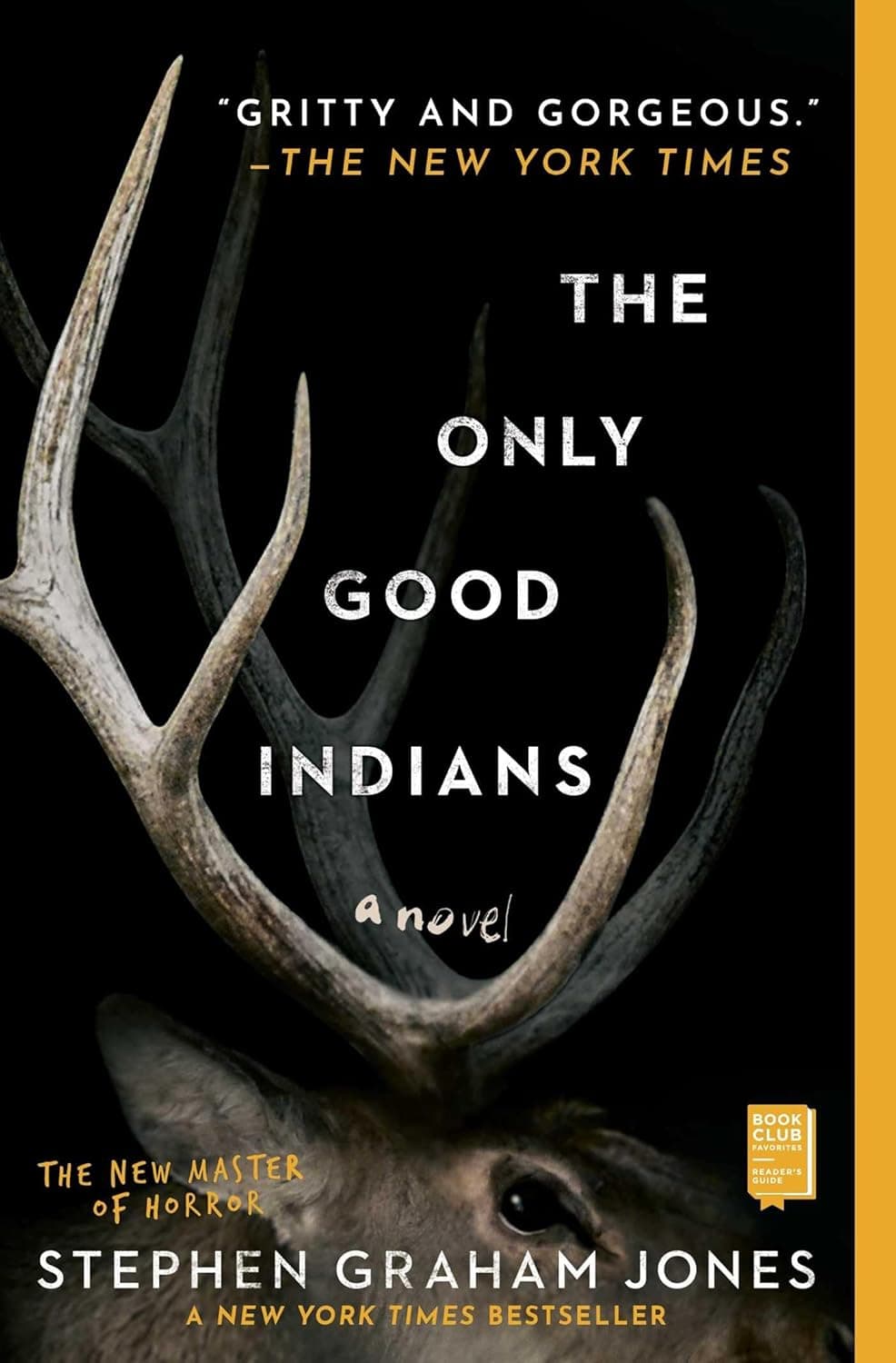
Stephen Graham Jones’s The Only Good Indians fuses slasher dread with a reckoning over heritage, remorse, and survival. A single transgression—the friends’ illegal elk hunt—reverberates across years, turning cultural dislocation and personal guilt into a supernatural vendetta. Horror here is the vessel for questions of identity and responsibility, and the story’s terror feels inseparable from the pressures of modern Indigenous life.
Major Themes
Revenge and Retribution
The novel’s engine is a debt being collected, with vengeance embodied by the relentless, shape-shifting spirit of Elk Head Woman. Her campaign answers the men’s sacrilege with methodical, escalating punishment, insisting that violations against nature and community carry consequences beyond the human world. Retribution transforms everyday spaces—bars, homes, courts, gyms—into arenas of judgment until mercy, not force, becomes the only way out.
Cultural Identity and Assimilation
Jones probes the gap between performing tradition and living it, asking what “a good Indian” means in a world defined by stereotype and survival. The four friends choose a spectacle of “authenticity” over responsibility, while lives like Lewis’s—off-rez with Peta—expose how assimilation can flatten voice and sever ties. In contrast, Denorah channels pride, skill, and art into a forward-looking identity that honors tradition without reenacting its most destructive myths.
Guilt and Atonement
Guilt stalks the men as relentlessly as any spirit, curdling into paranoia, rage, and self-destruction. Lewis’s futile attempts to make it right—redistributing the elk meat, rationalizing the hunt—can’t bridge the moral rupture he feels, and his visions become the novel’s first, most claustrophobic hauntings. Atonement here isn’t a single act but an ethic; without humility and repair, guilt only sharpens the edge of retribution.
Parenthood, Legacy, and Intergenerational Trauma
The story turns on what parents owe children—and what the dead demand of the living. Elk Head Woman’s maternal fury mirrors Gabe’s fierce hope for Denorah, and the friends’ choices threaten to pass on only violence and loss. The ending pivots on a child’s refusal to inherit vengeance, suggesting that legacy can be remade through empathy rather than blood-debt.
Supporting Themes
Cycle of Violence
One reckless act multiplies into spiraling harm, turning friends into enemies and communities into collateral damage. This cycle feeds on guilt and pride from the major themes above, and it only stops when Denorah rejects the logic of payback that forged it.
Respect for Nature
The “Thanksgiving Classic” violates sacred boundaries—taking too much, from the wrong place, for the wrong reasons. Nature’s answer is not passive; it strikes back through the spirit world, intertwining with revenge and exposing how cultural identity frays when reciprocity is abandoned.
The Supernatural and the Unseen
Jones blurs the line between haunting and psychology until the spirit’s presence becomes undeniable. The supernatural enforces moral balance, translating cultural law into literal peril and turning private guilt into public fate.
Friendship and Betrayal
Childhood bonds become pressure points under the weight of secrets and fear. Old loyalties collapse into suspicion and manipulation, echoing the original betrayal of the elk herd and accelerating the cycle of violence.
Theme Interactions
- Guilt and Atonement → Revenge and Retribution: Internal remorse can’t cancel external judgment; private apology fails before a communal, even cosmic, claim.
- Cultural Identity ↔ Cycle of Violence: Performing a mythic “Indian” identity triggers harm that a more grounded, respectful practice would avoid.
- Respect for Nature → Revenge: Spiritual justice flows from ecological offense; the land answers through the spirit who hunts the hunters.
- Parenthood and Legacy ↔ Guilt: Adults’ failures load the next generation with danger—until a child redefines inheritance through compassion.
- Supernatural and the Unseen ↔ Every Theme: The spirit world operationalizes ethics, turning abstract debts into visceral confrontations.
- Friendship and Betrayal → Cycle of Violence: Fractured trust magnifies vengeance, as old grievances become weapons in the spirit’s hands.
Character Embodiment
Elk Head Woman personifies revenge, ecological justice, and maternal grief. Her relentless pursuit makes the moral order material, forcing the men to face what they took and why it matters.
Lewis Clarke carries the novel’s densest guilt and assimilation anxieties. His unraveling shows how shame, isolation, and half-measures corrode judgment and invite supernatural reckoning.
Gabriel Cross Guns embodies pride, performance, and paternal hope; his love for Denorah collides with bravado, making him both protector and participant in the cycle he cannot control.
Cassidy Sees Elk channels wounded masculinity and denial, turning shared guilt into rivalry and blame. His fatal end with Gabe mirrors the original betrayal of the herd.
Richard Boss Ribs is the cycle’s first human casualty, his abrupt death signaling that consequences have arrived and will not be bargained with.
Denorah Cross Guns represents legacy reimagined—athlete, artist, and daughter who refuses inherited violence. Her final act of mercy reframes power as protection rather than domination.
Peta reflects the costs and comforts of assimilation, illuminating how distance from community can dull cultural voice and complicate ideas of family and future.
Shaney Holds becomes a vessel for the spirit’s vengeance, literalizing how the supernatural inhabits the everyday and how the line between friend and threat can vanish under the weight of payback.