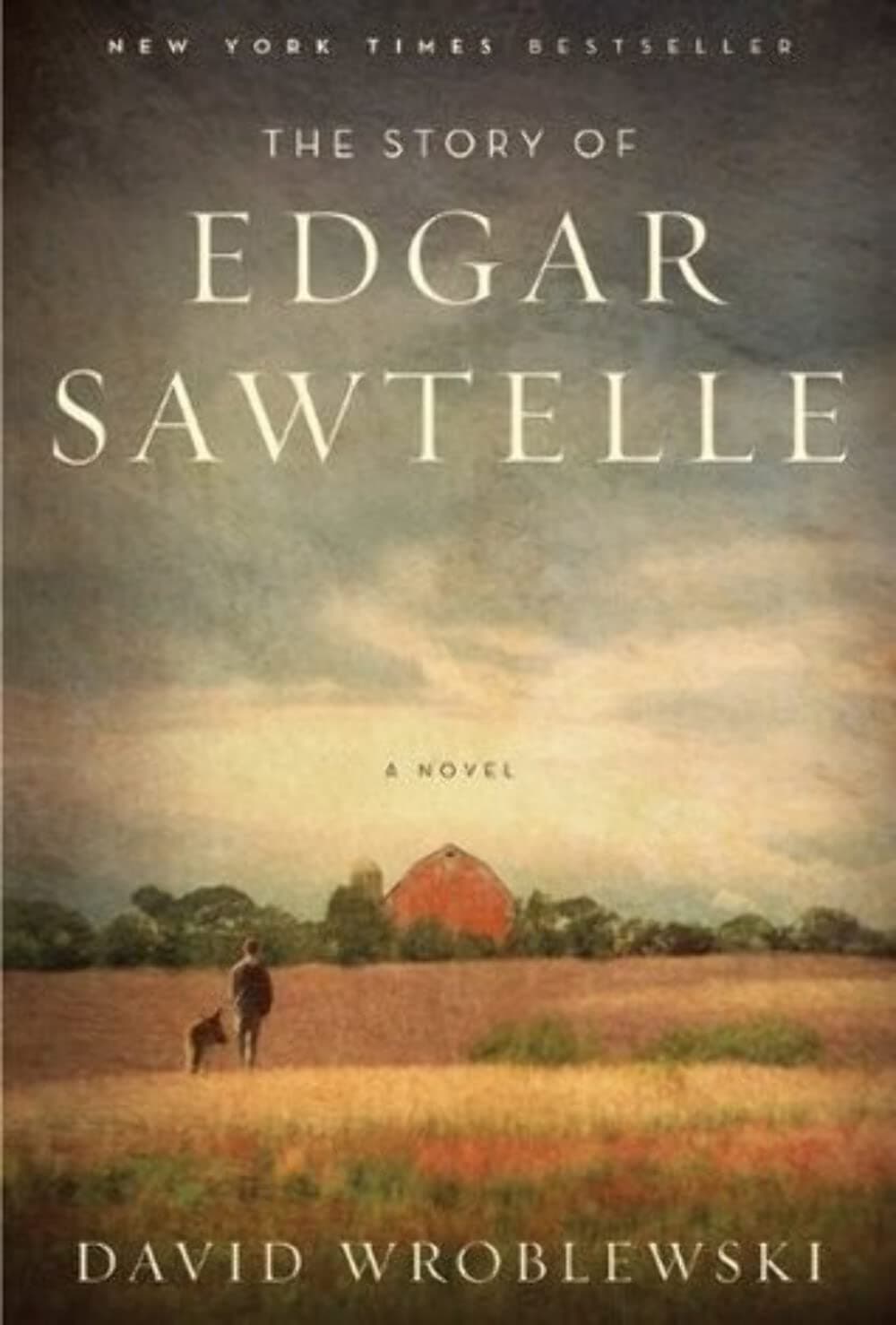
Opening
A single August night brings the Sawtelle farm to the brink. Edgar Sawtelle uncovers the evidence he needs against his uncle Claude Sawtelle, coerces help from his mother, and walks straight into a trap. Secrets, fear, and vengeance converge in the barn—until fire blows the family legacy apart.
What Happens
Chapter 41: Edgar
Hidden high in the suffocating heat of the haymow, Edgar listens to the rhythms of the farm and waits. Claude climbs into the mow and, with unnatural care, dismantles a section of hay bales. He pries up a floorboard, draws out a small, antique bottle with a glass stopper, stares at it, and then returns it to a cavity under the boards. He dusts straw over the place and restacks the wall until his work vanishes.
When Claude leaves, Edgar slips down to study the spot. He confirms the cavity in the hay is empty and understands the misdirection—what matters lies under the floor. He has at last seen the physical proof Ida Paine foretold and locks onto Truth and Deception as his compass: Claude is guilty, and the evidence is here.
Chapter 42: Trudy
Edgar catches his mother in the kennel. Gaunt, filthy, and blazing with purpose, he seizes control of their reunion with their shared signs—proof of Language, Communication, and Silence shaping their family. He tells Trudy that Claude found his note and that he needs a clear night in the barn.
He demands she keep Claude inside after dark. If she refuses or betrays him, he will disappear for good—a hard line that exposes the fracture in their Family and Legacy. They settle on a signal: if she cannot keep Claude in, she flips on the porch light. Before slipping away, Edgar signs that he knows about Almondine’s death and notes Essay’s new confinement with the other dogs, reading it as Claude’s leverage to force him off the farm.
Chapter 43: Edgar
Edgar waits at a dying oak at the property’s edge, folded by exhaustion and grief. He mourns Almondine and carries the guilt and sorrow of Doctor Papineau’s death—another scar in his Coming of Age and Loss of Innocence. Sleep finally takes him.
Essay wakes him, a duct-taped package tied to her collar. Inside: a photo of Claude holding Forte, a wad of cash, and the Impala’s key. The message is unmistakable: take the money and car and vanish. It isn’t mercy; it’s a bribe—and the cruel use of Essay to deliver it twists the knife of The Human-Animal Bond.
Chapter 44: Glen Papineau
The narrative turns to Glen Papineau. Claude calls in a rush: the spare Impala key is missing; Edgar must be planning to run. They plot. This is Betrayal and Revenge in action—Claude wants Edgar removed; Glen wants answers. The porch light becomes their signal: on means Edgar is inside and the plan is off; off means Edgar is in the barn.
Glen prepares ether in a beer bottle and sets up on a hill overlooking the farm. At twilight, he sees a figure slip behind the barn with a dog. The porch light stays dark. He descends through the south field, focused on seizing Edgar and wringing a confession about his father’s death.
Chapter 45: Edgar
Night drops. Edgar and Essay slide into the barn. He unscrews the lights until only one burns at the back, a trick he learned from Trudy, and he begins to search the medicine room. His flashlight dies; he detours to the workshop for batteries, then heads back into the dark.
Glen ambushes him. An ether-soaked rag clamps over Edgar’s face. He thrashes but can’t break free as Glen drags him toward the back door. Edgar’s fingers knock against a coffee can of quicklime; with a frantic heave he flings the powder up. A choking white cloud engulfs them.
Edgar collapses, half-conscious. Glen, blinded and howling as the quicklime sears his eyes, stumbles into the yard, begging for help. Trudy runs from the house. As the ether fog thins in Edgar’s head, he lunges for the pens, pounding fences and calling the dogs out of the barn to spare them the fumes. A brilliant blue light flares inside. Then the roar. The barn detonates—the Sawtelle heart gone in a single blast.
Character Development
These chapters harden everyone’s edges: grief curdles into resolve, suspicion into conspiracy, love into a line in the sand.
- Edgar Sawtelle: Moves from fugitive son to strategic avenger. He manipulates circumstances, sets conditions with Trudy, and fights with raw instinct in the barn, proving he will do anything to survive and expose the truth.
- Claude Sawtelle: Drops pretense. He hides the bottle, sends a payoff through Essay, and recruits Glen—each step tethered to guilt and fear of exposure.
- Trudy Sawtelle: Caught between partner and child, she chooses Edgar. Her cooperation underlines maternal loyalty amid confusion and danger.
- Glen Papineau: Shifts from wary deputy’s son to vigilante. He bypasses law for personal justice and pays for it with his sight and the spark that ignites catastrophe.
Themes & Symbols
Claude’s secret bottle and Edgar’s covert search bring [Truth and Deception] to a head. Everyone acts in the dark: Claude plots removal, Glen hunts a confession, Edgar hunts proof. The porch light’s absence coordinates their collision. This is also a crucible of [Betrayal and Revenge]—Claude betrays kin to protect himself; Glen channels grief over his father into violence; Edgar seeks justice for Gar Sawtelle with methods that risk becoming vengeance.
Silence defines power. Through [Language, Communication, and Silence], Edgar and Trudy’s signed pact, the unlit porch light, and Essay’s wordless delivery decide the night’s moves. [Grief and Loss] and [Coming of Age and Loss of Innocence] fuse as Edgar’s sorrow over Almondine and Doctor Papineau crystallizes into action; his childhood ends the moment the barn erupts.
Symbols:
- The poison bottle: The tangible “smoking gun” of Claude’s crime, the toxin at the core of the family.
- The barn: The Sawtelle legacy—work, training, home—transformed into a stage for ambush and then annihilated.
- Ether and quicklime: Instruments of suppression and desperate defense; chemical avatars of moral blindness and corrosive rage.
- The porch light: A mute semaphore whose darkness triggers the night’s fatal choreography.
Key Quotes
“A small, old-fashioned bottle with a glass stopper.”
- The object anchors Edgar’s suspicions in fact. Its antiquated design underscores how old sins linger beneath the farm’s everyday surfaces.
“If the porch light is on, abort.”
- This rule turns a household fixture into a vital code. It captures how nonverbal signals govern life-and-death choices when trust collapses.
“Take the money and the car and disappear.”
- The bribe exposes Claude’s endgame: not reconciliation, but erasure. Using Essay to deliver it weaponizes the bond between human and dog.
“A brilliant blue light flashes from within the barn.”
- The eerie color prefaces devastation. It transforms the barn from sanctuary to blast furnace, marking the instant the family’s center is destroyed.
Why This Matters and Section Significance
These chapters fuse every narrative strand—Edgar’s investigation, Claude’s guilt, Trudy’s divided loyalties, and Glen’s grief—into one irreversible night. The explosion doesn’t just level a building; it obliterates the Sawtelle way of life and clears the stage for tragedy’s endgame.
Hamlet’s Climax vs. Edgar Sawtelle’s Climax
- The duel: Edgar’s close-quarters struggle with Glen mirrors Hamlet’s fight with Laertes.
- The manipulated avenger: Glen, like Laertes, acts under a villain-uncle’s influence.
- The poison: Ether and quicklime echo the treacherous foil and cup—tools meant to silence and destroy.
- The catastrophe: The barn fire stands in for the play’s final bloodbath, consuming the setting and sealing a tragic outcome.
In burning through secrecy and revenge, the novel insists: once unleashed, hidden lies and retribution don’t resolve conflict—they raze everything in their path.