What This Theme Explores
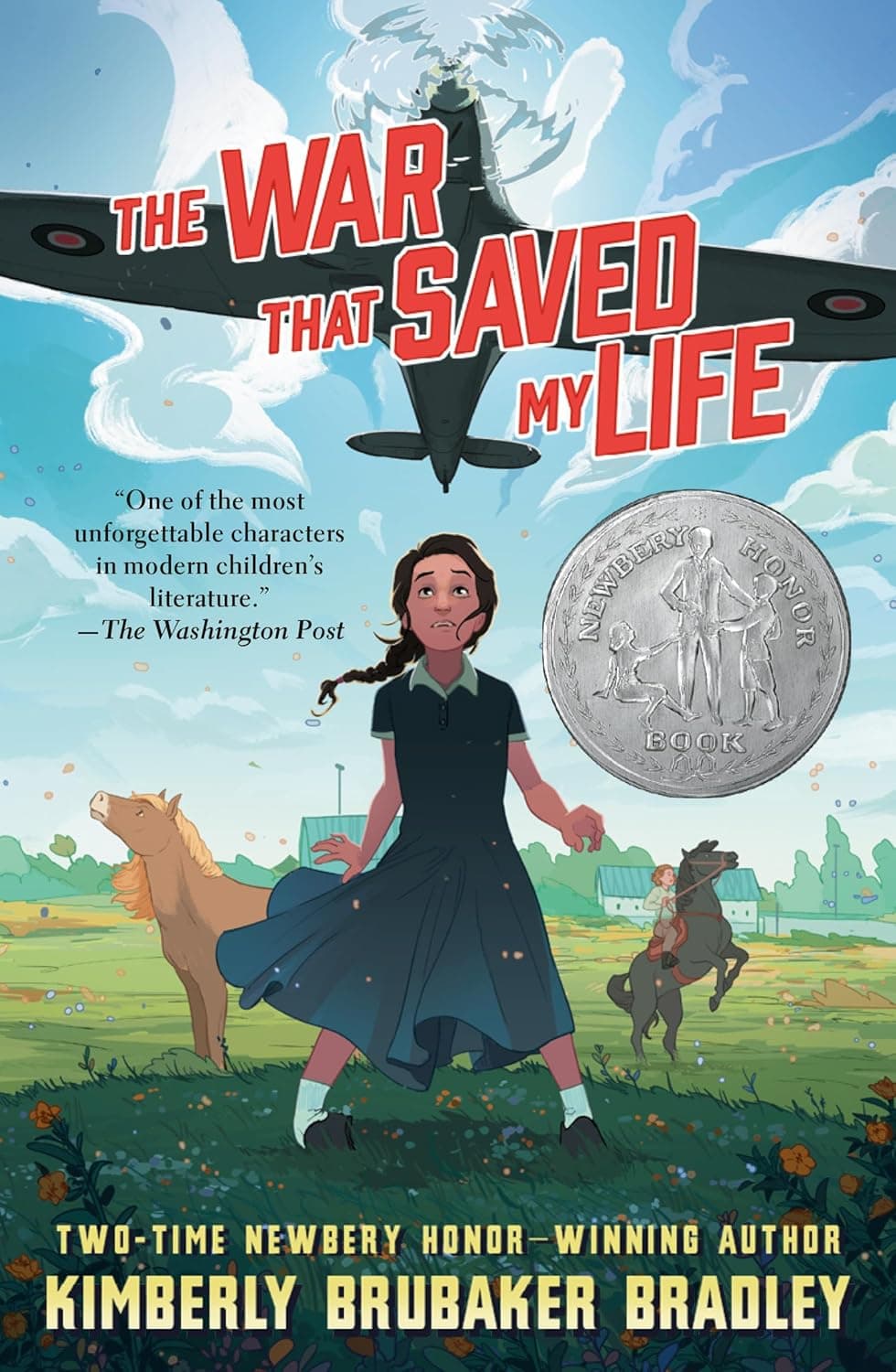
War as a Catalyst for Change examines how a global crisis forces intimate, personal revolutions. In The War That Saved My Life, the Second World War uproots routines, breaks abusive patterns, and pushes characters to redefine identity, family, and home. Evacuation and scarcity, usually marks of loss, paradoxically open space for autonomy, dignity, and skill-building. The theme asks whether catastrophe merely wounds or can also unearth strengths that everyday life suppresses—and what it costs to transform survival into belonging.
How It Develops
The threat of bombing in [Chapter 1‑5 Summary] jolts Ada’s world out of its brutal stasis. “The bombs” become the external force powerful enough to counter Mam’s control, making evacuation possible and giving Ada and Jamie their first nonnegotiable path out. Once war sets that path, Ada seizes it: in [Chapter 6‑10 Summary], the stolen shoes and nighttime escape convert fear into action. Her secret training to walk turns a national emergency into personal agency; for the first time, she chooses movement rather than waiting to be moved.
In [Chapter 11‑15 Summary], arrival at Miss Susan Smith’s house reframes displacement as opportunity. Rural life and Butter the pony give Ada a role—rider, learner, caretaker—that counters the identity of “cripple.” The war effort expands that role in [Chapter 16‑20 Summary], as blackouts, airfield work, and “Make Do and Mend” invite Ada to practice usefulness. Community need creates space where Ada’s competence matters more than her stigma.
The conflict’s stakes escalate in [Chapter 21‑25 Summary] when Dunkirk and a suspected spy pull Ada into national defense. Spotting the buried transmitter transforms her alertness—honed by surviving Mam—into civic vigilance, earning recognition from adults who once overlooked her. In [Chapter 26‑30 Summary], air raids and damage tighten communal bonds; shared shelters mirror Ada’s own inner storm, yet she now faces danger alongside neighbors, not alone under a sink.
Rationing and the Victory Garden in [Chapter 31‑35 Summary] turn scarcity into mastery. Gardening, knitting, and repair teach Ada to provision a future rather than merely endure a present. As news of war’s end arrives in [Chapter 36‑40 Summary], the narrative pivots from defense to reconstruction: Ada begins to imagine school, surgery, and life plans not defined by crisis. In [Chapter 41‑45 Summary], the prospect of medical repair offers not just physical correction but a reimagined self. Finally, [Chapter 46 Summary] closes the wartime chapter with departure from the countryside; Ada leaves not as a displaced child but as someone who has practiced independence and chosen her attachments.
Key Examples
-
Evacuation as Liberation
“Mam said we were going to be sent away… ‘What about me? Am I going?’” turns fear into a question of inclusion—and then into action when Ada takes the shoes and leads Jamie out. War’s coercive evacuation becomes a doorway to choice, reframing Ada from hidden burden to agent of escape. -
Learning to Walk → Walking Toward Freedom
“I pulled myself up… I fell, I got up, I kept trying.” Her self-directed training transforms a private disability narrative into a wartime ethic of perseverance. National mobilization against aggression echoes in Ada’s bodily mobilization against confinement. -
Butter the Pony – A Vehicle for Empowerment
“I rode Butter… the wind in my hair, the grass under my feet.” Riding literalizes dignity and balance; the pony carries Ada into terrains—fields, lanes, communities—previously visible only from a window. Confidence atop Butter becomes the counter-image to being shut in a cabinet. -
Spy-Catching Episode
“I think I found a spy! A man on the beach burying a suitcase.” Ada’s vigilance becomes valued intelligence, earning respect that resets how adults speak to and about her. The moment proves that the war doesn’t just endanger children; it also authorizes them to protect. -
Make-Do-and-Mend & Sewing
“Susan showed me how to stitch a button; I made a scarf for Jamie.” Scarcity converts into skill, giving Ada a measurable way to care for others. Each stitch counters the internalized label of “useless,” tying competence to love rather than to fear. -
Bomb Shelter Trauma → Collective Resilience
“The sirens wailed… we huddled in the shelter.” Shelters echo the claustrophobia of Ada’s cabinet, but the presence of neighbors transforms the space from punishment to solidarity. Shared danger reframes belonging as something forged under pressure, not granted by birth. -
Medical Hope at War’s End
“The doctor said surgery could fix my foot, but only with my mother’s permission.” Peace widens the horizon of repair while exposing residual power imbalances. The possibility of surgery signifies a future Ada can claim, not merely survive into.
Character Connections
Drawing on the [Character Overview], Ada Smith’s arc is the theme’s center of gravity. War pries open the door Mam kept shut, but Ada walks through it—learning to ride, sew, and act decisively. Each wartime task rewrites a story Mam authored about shame into one Ada authors about competence, so that by the end, her “home” is not a place that hides her but a network she sustains.
Jamie Smith’s growth runs in parallel: evacuation presses him from carefree little brother into reliable helper and brave participant. His responsibilities—feeding Butter, assisting adults, facing sirens—turn sibling loyalty into community-mindedness, showing how a child’s sense of safety can expand to include others.
Miss Susan Smith begins as a reluctant caretaker made necessary by wartime need; the role becomes a vocation. War clarifies her capacities and commitments, and her steady, practical love models a nonviolent power that outlasts the emergency. She embodies how the crisis can reorder adult priorities as profoundly as children’s identities.
Fred Grimes’s mentorship arises from wartime labor shifts, but its significance is personal: he treats Ada as a rider, not a diagnosis. His straightforward instruction supplies the respect that institutions withheld, illustrating how new wartime roles can humanize rather than bureaucratize.
Lady Thorton personifies the bureaucracy that moves children like pieces for the greater good. While her efficiency enables evacuation, her distance highlights a moral question the novel keeps pressing: who counts the cost to individual souls when systems act? She sharpens the contrast with Susan’s intimate care.
Mam is exposed by war rather than transformed by it. As bombs make cruelty untenable, her refusal to protect or imagine a future for Ada becomes clearer, forcing Ada to reject an authority that was always arbitrary. War doesn’t redeem Mam; it reveals her.
Symbolic Elements
The Window in Ada’s London flat is a fragile frontier between captivity and possibility. War’s call to evacuate breaks the habit of watching from a distance and compels Ada to cross that threshold into lived experience.
The Cabinet echoes the darkness of punitive confinement, yet wartime shelters complicate the image: enclosed spaces can also hold safety and community. The shift reframes enclosure from punishment to protection, mirroring Ada’s shift from secrecy to solidarity.
Butter the Pony channels motion and mutual trust. As Ada learns to balance and guide, she also learns to be carried—an image for accepting help without surrendering agency.
Blackout Curtains impose darkness that protects the many, not just hides the one. Where Mam’s rules enforce shame, the blackout’s rules knit a neighborhood into a single careful organism, turning concealment into communal care.
The Sea, first seen from the hill, widens Ada’s world beyond rooms and lanes. Its vastness holds fear and freedom together, capturing how war opens horizons that thrill precisely because they’re unknown.
The Sidesaddle, a gendered relic adapted to Ada’s body, marks tradition bent toward inclusion. The adjustment suggests how crisis can accelerate rethinking of norms—about women, disability, and who gets to ride “properly.”
Contemporary Relevance
The novel’s vision resonates wherever conflict displaces people: evacuations in recent crises show how danger can simultaneously imperil and liberate, forcing new communities to form quickly. Ada’s disability journey anticipates modern advocacy that centers access, dignity, and self-definition. Neighborhoods rallying under sirens recall how today’s communities mobilize during pandemics or natural disasters, discovering capacities they didn’t know they had. And as wartime roles expanded possibilities for women and children, ongoing debates about inclusion in public life and work continue to ask who gets to belong, contribute, and lead when the old rules no longer fit.
Essential Quote
“There are all kinds of wars.”
This line distills the novel’s thesis: the blitz outside maps onto the battles inside—against shame, abuse, and the belief that care must be earned. By naming multiple “wars,” Ada validates private suffering and frames personal growth as a victory no less real than national survival, making her triumph both intimate and politically resonant.