What This Theme Explores
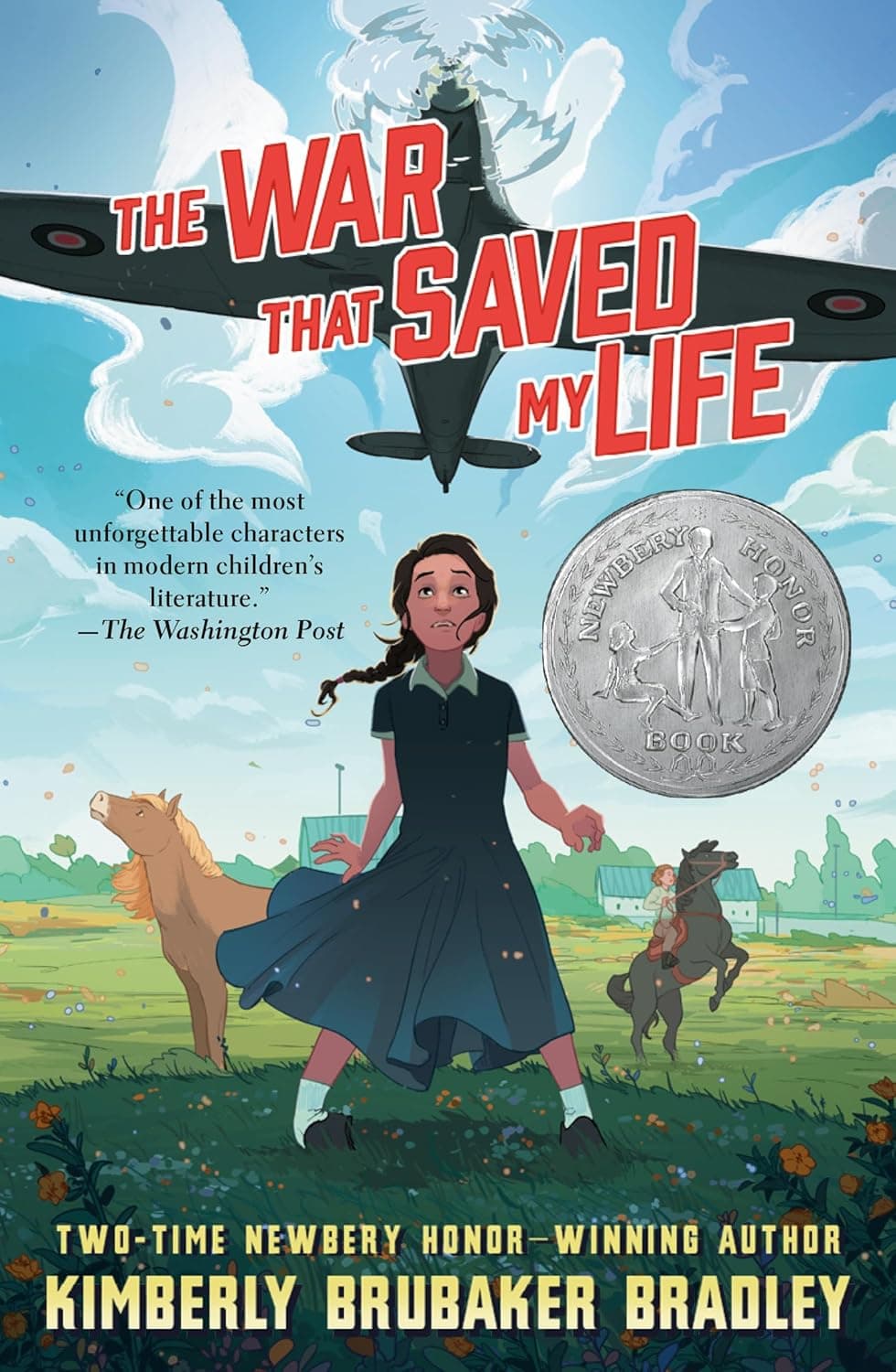
Found family in The War That Saved My Life asks what truly makes a family: blood, or the daily practices of love and responsibility. Through Ada Smith, the novel tests whether dignity and trust can grow in a home built by choice rather than obligation, especially after severe abuse. Her bond with Susan Smith and Jamie Smith shows how affection, safety, and shared vulnerability can rewire a child’s sense of self. The stark contrast with Mam makes the book’s claim unmistakable: love, not lineage, is the ground of belonging.
How It Develops
At the start, the trio is assembled by circumstance and resistance. In the evacuation of Chapter 1-5 Summary, Susan takes in Ada and Jamie reluctantly, and the children—trained by neglect—expect cruelty. Interactions are transactional: food, clothing, shelter are given, but no one yet believes those provisions signal care.
Gradually, small, consistent mercies begin to feel like promises. Across Chapter 11-15 Summary through Chapter 31-35 Summary, Susan’s ordinary routines—bandaging injuries, teaching Ada to read, insisting on fairness at school, instituting nightly reading—create a rhythm of reliability. When Ada breaks down on Christmas Eve, Susan’s response is not punishment but presence. That night transforms care from a service into a relationship: intimacy without fear.
The endgame tests whether this bond is durable enough to withstand biology and war. In Chapter 36-40 Summary through Chapter 46 Summary, Mam’s return forces Ada to ask who gets to define “family.” Susan’s explicit choice of the children—and their mutual rescue after the bombing—confirms a hard-won truth: they did not stumble into family; they made one, and it remade them.
Key Examples
The novel renders the abstract idea of chosen kinship through turning points where actions, not titles, define family.
-
Initial resistance and unexpected care: When they first arrive, Susan is curt, but she treats Ada’s bleeding foot with gentleness instead of reprimand. That intervention—practical, tender, and unasked—begins to dismantle Ada’s expectation that adults equal harm. The gap between Susan’s self-deprecating words and her steady kindness signals that character, not performance, makes a caregiver.
-
Protection as parental love: Susan confronts Jamie’s teacher for punishing his left-handedness, inventing a story to compel compliance. Her willingness to advocate, even to deceive for justice, marks the shift from caretaker to parent—she stakes her authority on the children’s welfare.
“When I was at Oxford,” she said, “my professor of Divinity, Dr. Henry Leighton Goudge, was left-handed. It is not the mark of the devil... Meanwhile you will allow Jamie to use whichever hand he prefers or I shall take action for the wounds he’s received.”
-
The Christmas Eve breakthrough: Ada’s panic over the velvet dress triggers memories of abuse; Susan answers with time, warmth, and silence rather than lecture. By holding Ada through the night, she teaches a new association: vulnerability can be met with comfort, not violence. That reframing is the emotional cornerstone of their found family.
-
Choosing family in the face of blood: When Mam returns, Susan refuses to defer to biology and declares her desire to keep the children. This is a moral stance as much as a legal risk—she defines family as an ethical commitment, not a genetic claim.
Susan looked straight back at me. She said, “That was last year. I want you now.”
-
Mutual salvation after the bombing: The destroyed house could signal the end of home; instead, it reveals what home really is. Their survival depends on each other, and Susan’s admission that the children “saved [her] life” reframes rescue as reciprocal, fusing them into a family by choice and consequence.
Jamie bounced over to Susan, grinning. “We’ve been shipwrecked,” he said.
Susan still looked stunned, but at Jamie’s insistence she stroked Bovril’s head. Then she put her arms around Jamie and looked directly at me. “It’s lucky I went after you,” she said. “The two of you saved my life, you did.”
I slipped my hand into hers... I searched my mind and found the name for it. Joy. “So now we’re even,” I said.
Character Connections
Ada’s arc embodies the theme’s psychological depth. Conditioned to expect pain, she initially confuses kindness with danger; learning to trust requires unlearning shame and accepting care without payment. As she masters reading and riding, she also masters intimacy—discovering that to belong is not to be owned, but to be known and safe.
Susan’s grief makes her guarded, but caregiving becomes the channel through which she reenters life. Her shift from reluctant guardian to fierce mother shows that chosen bonds demand courage: she lies to protect, confronts authority, and risks legal consequences. By claiming the children, she claims herself—redefining her identity not as a bereaved recluse but as a builder of home.
Jamie adapts fastest, functioning as a bridge between Susan and Ada. His easy affection and the care he gives Bovril model how nurture creates attachment; his progress (including overcoming bedwetting) illustrates how stability heals fear. He normalizes family rituals that help Ada step into trust.
Mam exposes the hollowness of biological entitlement. She treats the children as burdens and instruments of control, proving that blood alone cannot create a home. Her presence sharpens the novel’s moral contrast: authority without love is not family, and love without blood can be.
Lady Thorton begins as an agent of the evacuation system but becomes a witness to genuine kinship. Her later acknowledgment—“Separating them would kill them both”—offers social validation of a private truth, showing how communities can learn to recognize and honor chosen families.
Through Fred Grimes and Maggie Thorton, the novel sketches an extended kin network. Fred mentors Ada, treating her competence with respect that nourishes dignity; Maggie provides companionship that teaches friendship as another form of safe belonging. These relationships widen the circle, proving found family can branch into community.
Symbolic Elements
Susan’s house evolves from a dark, unfamiliar shelter into a sanctuary. Its final destruction underscores the theme: home is not a structure but the security carried in relationships. The rubble clarifies what remains—commitment, not walls.
Nightly reading—especially The Swiss Family Robinson—functions as a blueprint for building family. The ritual’s predictability fosters trust, while the story-within-a-story mirrors their task: crafting a life from wreckage by cooperating, protecting, and imagining a future.
The shared bedroom reverses Ada’s London confinement. Where her old room signified isolation and shame, this space marks closeness and chosen vulnerability; it is sleep as safety, not punishment.
Bovril the cat miniaturizes the theme. Jamie’s rescue and steady care demonstrate how responsibility begets attachment, and how offering sanctuary to another living creature helps heal one’s own fear.
Contemporary Relevance
The novel’s vision of family resonates in a world where adoption, foster care, queer kinship, and community care challenge narrow definitions of home. It affirms that stability and love—not lineage—repair trauma, and it honors caregivers who choose children as an act of ethics and hope. For readers who have survived harmful homes or built new ones from friendships and mentors, the book offers permission and a path: belonging can be made, defended, and joyfully lived.
Essential Quote
“That was last year. I want you now.”
This line is the hinge on which the theme turns. Susan rejects the past’s terms—reluctance, obligation, blood-right—and replaces them with a present-tense choice: to want, to claim, to love. In five words after the pause, she defines family as an active, ongoing decision, transforming a house of refuge into a home.