Opening
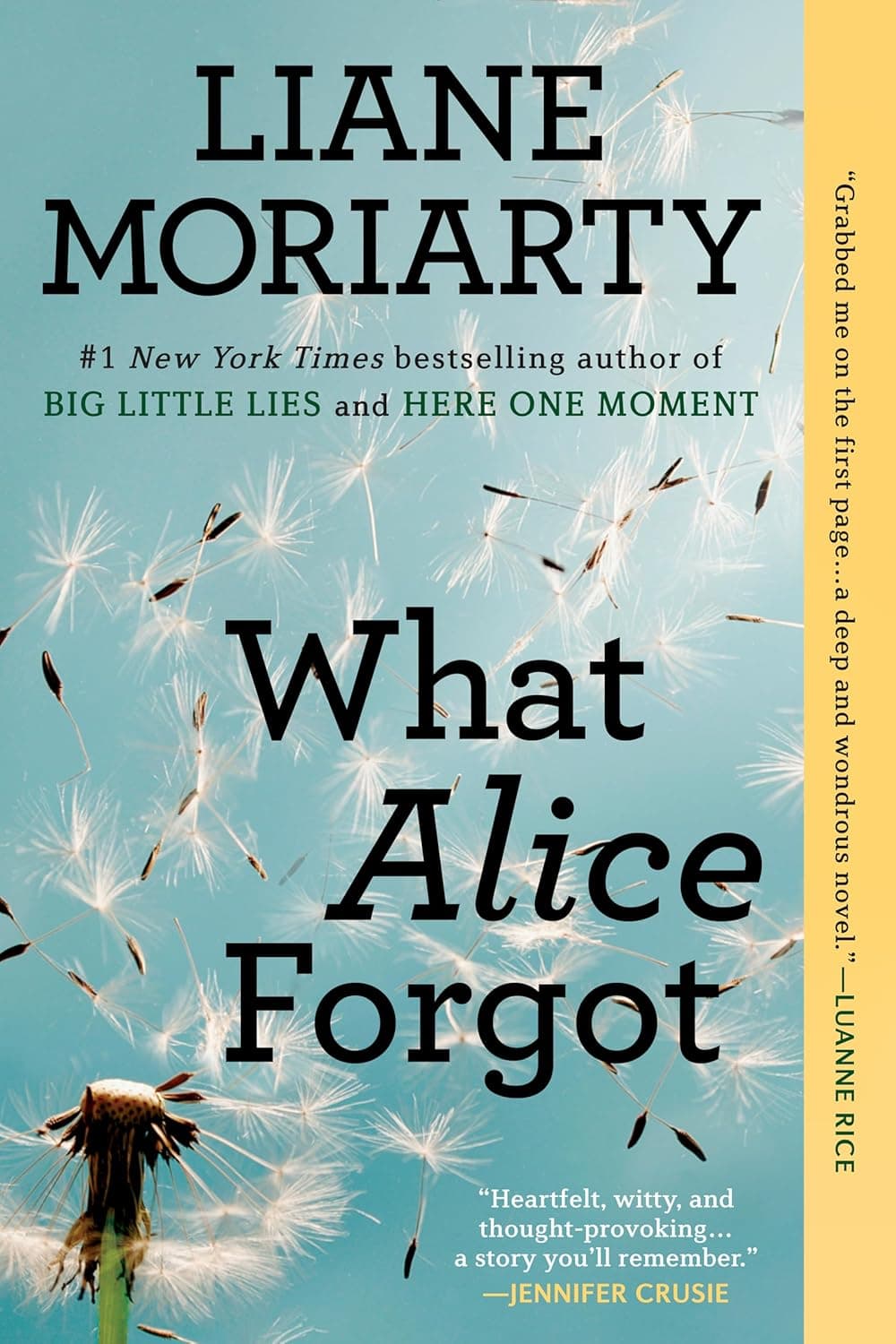
Amnesia shatters the life of Alice Love, and the next five chapters peel back the decade she’s lost with a mix of humor, grief, and revelation. Letters from Frannie and therapy “homework” from Elisabeth braid with Alice’s present-tense confusion as the story exposes a marriage in ruins, a sisterhood scarred by loss, and a name—Gina—that turns suspicion into a theory of betrayal.
What Happens
Chapter 11: The Woman in the Mirror
A letter from Frannie to her late fiancé, Phil, opens the chapter. She weighs Barb’s hopeful theory that the memory loss might reunite Alice and Nick Love against her own skepticism, remembering the “pure envy” she once felt watching their early passion—and the “hatred” she spotted on Alice’s face days before the accident. At her retirement village, Frannie spars with “Mr. Mustache,” who challenges her term “honorary granddaughter,” insisting Alice is real family; the barb irritates and unsettles her in equal measure.
Back in the hospital, Alice hears a “brisk, bossy voice” in her head—her 39-year-old self—ordering her to move. Driven by a familiar fear of body odor, she showers and faces the mirror. The woman in the glass is thinner, tauter, wrinkled—alien. Her stomach is flat; her breasts sag; her face is defined and older. The sight unmoors her from herself, intensifying the chapter’s focus on Transformation of the Self.
Scent unlocks emotion without context. Peach shampoo throws her against a memory of sobbing in a tiled shower. Her hands complete a complex hair-and-makeup routine through “muscle memory,” then a whiff of perfume detonates a “swirling vortex of grief and fury.” Panicked, she scrubs it off, resisting the flood of feeling. Elisabeth arrives to collect her; they laugh like sisters again—rare, warm, startling—until Alice mentions a recurring dream of a woman with an American accent. Elisabeth goes still.
Chapter 12: The Impossible Dream
Elisabeth’s homework explains why the dream rattles her. Six years earlier, both sisters are pregnant at once—Elisabeth after her first IVF cycle, Alice with an accidental third baby. At a twelve-week scan, a sonographer with a soft Southern American accent quietly says there’s no heartbeat. Alice gasps; Elisabeth realizes; baby Tom laughs in his stroller. The memory marks the beginning of Elisabeth’s story of Infertility and the Longing for Family.
In the present, Alice can picture the scene only through Elisabeth’s description. As they turn onto Alice’s street, terror seizes her body—an abrupt panic attack with no narrative attached—linking trauma to the split between Memory and Identity. Then ecstasy: their “Impossible Dream” house stands complete. White gravel. Glossy frames. Bougainvillea. The once-shabby home they bought from a lonely old woman is now the polished vision she and Nick designed together.
Inside, the open-plan living room matches Nick’s old sketches. But the sandstone lions they named George and Mildred are gone. “Not the look” for the new Alice, Elisabeth suggests. A delivery of glassware for a party Alice is somehow hosting tonight drops her into fresh confusion.
Chapter 13: The Kindergarten Cocktail Party
Alice and Elisabeth find the “Kindergarten Cocktail Party” in Alice’s diary. Elisabeth says Alice hosts these school events regularly now—news that bewilders the 29-year-old Alice in her head. When Alice asks about trying again after the miscarriage, Elisabeth flinches and sidesteps, the sisters’ unresolved pain rising between them.
Frannie’s next letter follows her bus-trip cat-and-mouse with Mr. Mustache. He buys her coffee; they debate Alice, divorce, and Elisabeth’s infertility. Frannie argues that babies aren’t the “be-all and end-all,” then feels exposed by her own defensiveness—another tiny fracture in her careful poise.
Elisabeth’s homework moves forward and back. She recounts a second pregnancy—this time natural, secret, and then still—another scan with no heartbeat. Shame curdles with grief; she feels like she “keeps turning up for ultrasounds of dead babies.” She remembers visiting Alice after Olivia’s birth, when Alice simply held her and cried: “I wish it was me visiting you.” The memory glows against their current strain. In the car, suspicion breaks out: “You’re not just pretending you don’t remember, so you can make some sort of point, are you?” The accusation wounds Alice—and echoes Nick’s.
Chapter 14: Who is Gina?
Alice explores her bedroom. It’s exquisite, feminine, pristine—and empty of Nick. The roses on her dressing table feel wrong; a card from Dominick Gordon reads, “I hope we can do that again one day.” Dating? Appalled, Alice rips the card apart, despising the “point-making hussy” version of herself who would hurt Nick like this.
Frannie arrives. She doesn’t know why Alice and Nick are divorcing—only that both were resolute, and custody was a fight. She mentions Alice seemed “very excited” about Dominick’s roses days earlier. Downstairs, Barb and her partner, Roger, join for lunch; Roger is performatively chummy, even smacking Barb playfully in a way that makes Alice cringe.
Then a name drops like a stone. Barb references a salad bowl from Gina. Alice flashes on Nick at the dining table saying, “It’s always about Gina,” and asks, “Who is Gina Boyle?” Silence. The room freezes—Barb, Roger, Elisabeth, Frannie—signaling a fault line. In her homework, Elisabeth imagines her younger self looking at the woman she’s become—hypervigilant, bitter, waging her “War on Terror” of worry—and saying, simply, “Sounds like it’s time you gave up.”
Chapter 15: The Affair
Barb finally fills the silence: Gina was a friend across the road; her family moved to Melbourne. The pieces align in Alice’s mind—Nick must have had an affair. The realization is physical, sharp. She feels foolish and furious, and wonders whether her own reaction detonated the marriage.
The phone rings. It’s Kate Harper from the gym—sleek, blonde, and poisonous. She performs concern while bragging about her busyness, then sneers about Elisabeth: “She’s the bad-tempered career woman with all the infertility problems, isn’t she?” Alice, enraged, agrees to host the cocktail party just to end the call, repulsed by a “friend” who talks like this—and by the social circle the older Alice has curated.
Elisabeth’s homework shifts to lunch with the “Infertiles,” her support group. They vent, then pivot to criticizing Alice based on Elisabeth’s past complaints. Shame and protectiveness bloom together; Elisabeth tells them about Alice’s amnesia and admits her younger self might advise her to quit IVF. The group rallies instantly: Never give up. Elisabeth sits between two comforts—the solidarity of the Infertiles and the buried love for her sister.
Character Development
These chapters deepen character through contrast—who each woman was, who she is now, and who she fears becoming.
- Alice Love: A decade vanishes, leaving her divided between a tender 29-year-old self and a hyper-competent stranger. She recoils from her thin, polished body, the bossy inner voice, the party-hosting schedule, and the evidence of dating, clinging to her idealized memory of Nick as the revelations of divorce and possible infidelity mount.
- Elisabeth: Her homework traces miscarriages, shame, and isolation. She swings between caustic defensiveness and fierce sisterly loyalty, flashing back to the hospital scene where Alice meets her pain with unadorned compassion.
- Frannie: Her letters reveal sharp wit, keen observation, and a guarded heart that Mr. Mustache keeps nudging open. She resists platitudes while quietly anchoring the family.
- Nick Love: Mostly offstage, but present in Alice’s memories of warmth, in the house he envisioned, and in a single, damning inference about Gina that reframes the decade.
- Dominick Gordon: A calling card—proof that the older Alice dates and courts attention, a fact the younger Alice rejects.
Themes & Symbols
Memory and identity splinter, then overlap. Alice’s mind can’t retrieve her life, but her body performs it—shower routines, makeup, even panic attacks that flare without context. Sensory triggers—peach shampoo, a perfume’s sweetness—open trapdoors to raw emotion. In the space between those feelings and the missing stories, identity wobbles: who Alice is becomes a negotiation between memory’s absence and the body’s certainty.
Transformation of the self runs on a parallel track. Alice’s mirror scene makes her an onlooker to her own evolution, while Elisabeth’s infertility reshapes her into someone she barely recognizes. The renovated house—their “Impossible Dream”—stands as a beautiful contradiction: a shared goal perfectly realized as the marriage that dreamed it dissolves. The lions’ removal hints at aesthetic—and moral—rebranding: out with the old, even if the old was beloved.
Symbols:
- The House: A gleaming monument to shared ambition that can’t secure love.
- The Mirror: A portal not to recognition but estrangement.
- Scents: Shortcuts to emotion, proving that the past lives in the senses even when memory fails.
Key Quotes
“Pure envy.”
Frannie’s admission reframes her role from cozy observer to candid witness. She both admires and distrusts the intensity she saw between Alice and Nick—setting up the whiplash between early passion and current hostility.
“Muscle memory.”
Alice’s body executes a routine her mind does not own. The phrase crystallizes the novel’s argument that identity persists in the body, complicating the idea that memory alone defines the self.
“A swirling vortex of grief and fury.”
The perfume-triggered flood shows how sensory cues bypass narrative. Even without facts, the strength of Alice’s emotion signals trauma she has learned to avoid—consciously or not.
“I wish it was me visiting you.”
Alice’s response to Elisabeth’s loss rejects forced cheer. It’s radical empathy that contrasts starkly with their later estrangement, reminding us of the relationship they’re at risk of losing.
“It’s always about Gina.”
This fragment turns a name into evidence. The room’s silence confirms its explosive power, and Alice’s intuition moves the affair from suspicion to story.
“She’s the bad-tempered career woman with all the infertility problems, isn’t she?”
Kate’s cruelty exposes the brittleness of Alice’s social world and ignites Alice’s protective anger for Elisabeth, nudging the sisters back toward alliance.
Why This Matters and Section Significance
Chapters 11–15 shift the novel from mystery-of-amnesia to anatomy-of-a-life. Elisabeth’s infertility history and the emergence of Gina supply the first coherent explanations for the decade’s fractures: why the sisters pull apart, why the marriage breaks, why Alice’s present self becomes sleek, efficient, and hard-edged. The house arrives as both dream fulfilled and indictment, making the central question urgent: How does a life that looks perfect turn into something no one can bear?
By interweaving Alice’s blank present with Frannie’s letters and Elisabeth’s homework, the narrative asks the reader to assemble truth from partial evidence. The result is intimate suspense: every laugh, scent, and slip of dialogue doubles as a clue, and every character holds a piece of the story that the others—and Alice—desperately need.