What This Theme Explores
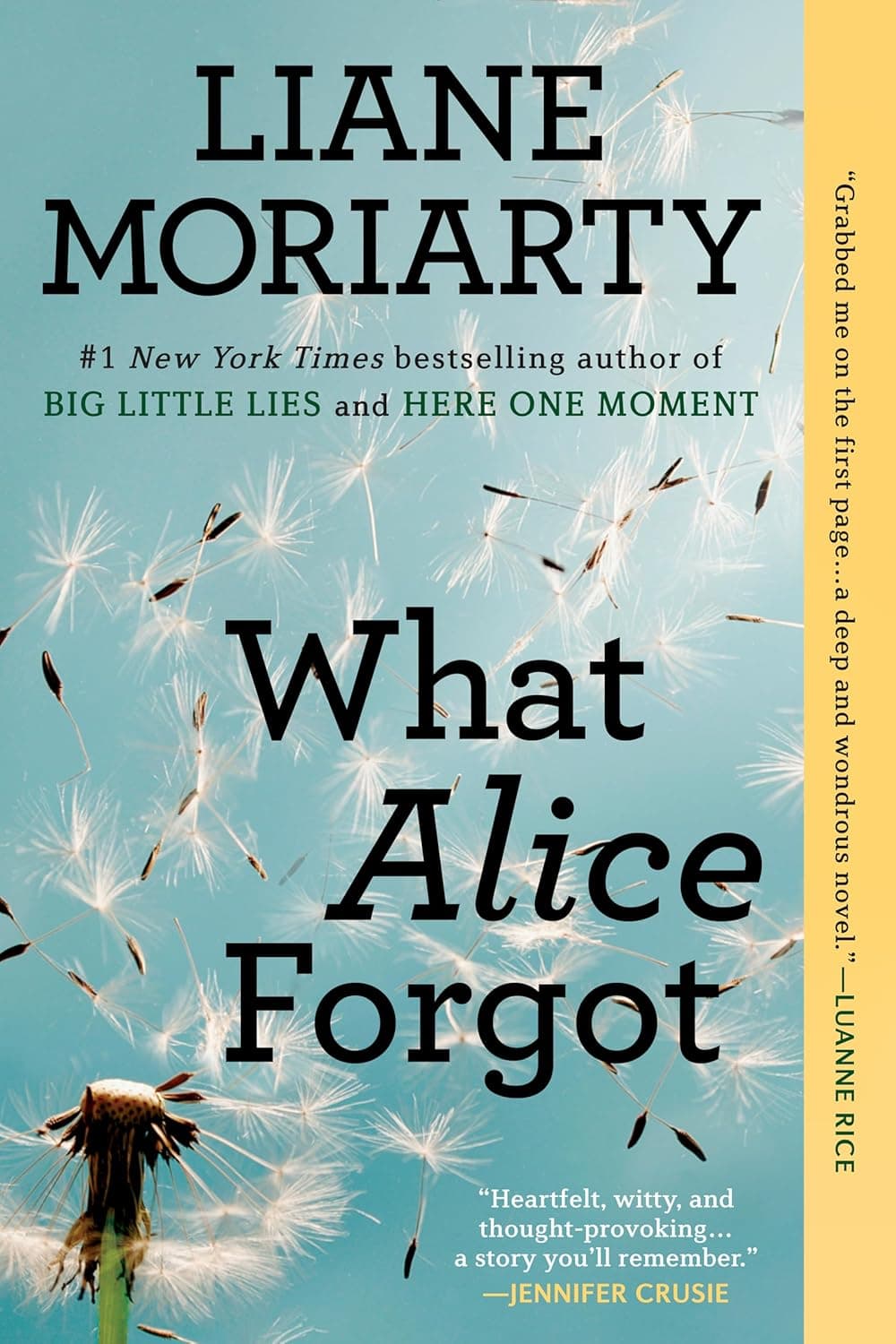
Infertility and the longing for family in What Alice Forgot interrogate how the desire for a child reshapes identity, intimacy, and the meaning of kinship. Through Alice Love and her sister Elisabeth, the novel contrasts effortless fertility with relentless medical struggle, asking what happens when biology refuses to cooperate with love. It examines grief that is both invisible and consuming, the corrosive envy that can grow between loved ones, and the fragile ways marriages carry—or buckle beneath—the weight of repeated loss. Ultimately, it questions whether “family” is a fixed biological category or a flexible, chosen network forged through empathy, endurance, and alternative paths to parenthood.
How It Develops
At first, the theme hides in plain sight, flickering in Elisabeth’s strained smiles and brisk deflections while Alice—stuck a decade in the past by her amnesia—assumes she’s newly pregnant and that her sister is fine. The early chapters show an unspoken imbalance: Alice’s taken-for-granted fertility becomes a silent affront to Elisabeth’s years of IVF, failed cycles, and miscarriages. Because Alice has forgotten the last ten years, she also forgets the etiquette of Elisabeth’s pain, which paradoxically allows her to approach it with guileless curiosity rather than defensiveness.
As Alice pieces together the lost decade, she stumbles onto a crucial bridge: a shared memory of Elisabeth’s first miscarriage. That recollection reorients Alice from oblivious optimism to active witness, while Elisabeth’s therapy “homework” reveals the private fallout—rage, shame, numbness—that cannot be safely aired at family dinners. The sisters circle each other warily: Alice tries to fix things (researching adoption, proposing solutions), and Elisabeth recoils, feeling misunderstood and exposed. The theme deepens from medical struggle to psychological unraveling, culminating in moments when grief tempts transgression and self-erasure.
In the final stretch, the story shifts from secrecy to support. Elisabeth faces a new pregnancy under a cloud of dread, and Alice, newly attuned, offers steadiness rather than solutions. The birth of Francesca Rose closes one loop of longing, yet the novel resists reducing “family” to a biological victory; in the Epilogue, Elisabeth and Ben adopt three children, widening the lens to include kinship formed through choice and commitment. The theme resolves not with a single cure but with a capacious definition of family that can hold both grief and joy.
Key Examples
-
Elisabeth’s journal entries expose the taboo emotions infertility breeds. In one, she describes a “trembly rage” after hearing about Alice’s latest pregnancy—“as involuntary and unstoppable as a huge hay-fevery sneeze”—a visceral image that captures envy as a bodily reflex rather than a moral failing. This entry from Chapter 2 shows how repeated loss can distort even loving relationships, making joy sound like an accusation.
-
Later, Elisabeth writes, “I don’t want to be a mother anymore... A mother. A mother. A mother... Sounds like smother,” from Chapter 22. The repetition grinds the word into abstraction, revealing how hope can curdle into self-protection and how the ideal of motherhood can start to feel suffocating. This is not a renunciation of love but a survival strategy against relentless disappointment.
-
Alice’s sudden recollection—“I remember an American lady saying, ‘I’m sorry, but there is no heartbeat’”—in Chapter 7 is a hinge moment. The misaligned memory underscores how trauma imprints beyond the person who experiences it, becoming part of a family’s collective story. It also turns Alice from bystander to bearer of memory, repairing the sisters’ fractured empathy.
-
The “coffee shop incident,” confessed in Chapter 24, marks the nadir of longing: Elisabeth briefly walks off with a stranger’s child. The scene is shocking not because she is monstrous, but because the longing is. It dramatizes how grief can erode boundaries, and how shame follows as an imperfect guardrail back to self-control.
Character Connections
Elisabeth is the theme’s clearest vessel: infertility rewrites her identity, isolates her socially, and tests her marriage. Her journals chart a progression from rage to numbness to a wary reengagement with hope, showing how the journey is non-linear and recursive. She embodies both the resilience required to keep trying and the courage to imagine family beyond biology.
Alice, initially the embodiment of ease—three children, accidental pregnancies—becomes the novel’s lesson in re-learning empathy. Her amnesia strips away entrenched defensiveness and competitive sisterhood, allowing her to meet Elisabeth’s pain without the baggage of past missteps. As Alice rediscovers her own children, the book juxtaposes two experiences of motherhood: one besieged by scarcity, the other by overfamiliarity.
Ben’s arc complicates simple solutions: as an adoptee, he initially resists adoption, fearing to replicate his own wounds. His eventual change of heart is not an afterthought but part of the theme’s argument that healing can reshape what kind of family feels possible. Meanwhile, Frannie embodies chosen kinship; as an “honorary grandmother,” her steady presence and letters to Phil model how love can scaffold a family even where blood ties falter. Her empathy for Elisabeth arises from her own thwarted hopes, reinforcing the novel’s insistence that grief can be a bridge rather than a barrier.
Symbolic Elements
-
Elisabeth’s journal functions as a private reliquary of grief. It contains emotions too volatile for public life, turning the act of writing into both confession and control. The notebook’s intimacy mirrors the secrecy around infertility, while making that secrecy legible to the reader.
-
The fertility doll, a gift from Dino, compresses the tension between science and superstition. Against the sterile regimen of IVF, this talisman represents community care, ritual, and the human need to believe in luck when data offers no guarantees.
-
The “lost astronauts”—Elisabeth’s metaphor for miscarried babies—render absence visible. By imagining them adrift in space, the novel honors intangible grief: theoretical children who nonetheless exert gravitational pull on the living.
Contemporary Relevance
The novel speaks to a world where IVF, miscarriage, and adoption are widely discussed yet often privately endured. It captures the financial and bodily costs of treatment, the social awkwardness of good news delivered to the wrong audience, and the way envy can coexist with genuine love. By tracing a path that includes both a biological child and adoption, the book validates multiple routes to family, inviting more honest conversations about what longing does to people—and what compassion can repair.
Essential Quote
“I remember an American lady saying, ‘I’m sorry, but there is no heartbeat.’”
This simple sentence condenses the clinical language of loss and the way such moments echo across relationships. Spoken through Alice’s mouth yet sourced from Elisabeth’s body, it symbolizes grief as communal memory—binding the sisters, rehumanizing their estrangement, and reframing family as something forged by shared witness as much as by blood or biology.