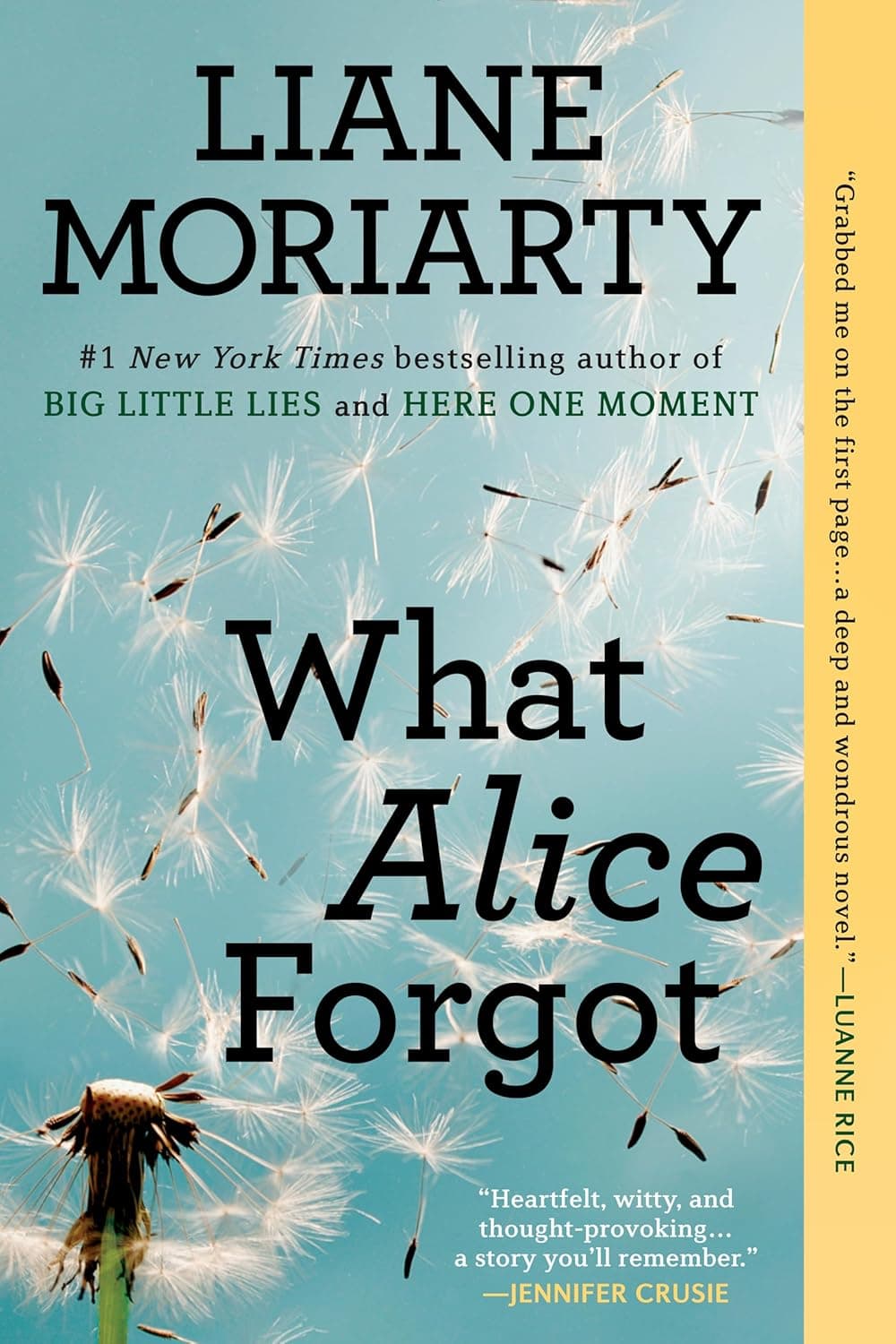
In Liane Moriarty’s What Alice Forgot, a single fall erases a decade and turns everyday life into a mystery. Through the split perspective of a 29-year-old mind in a 39-year-old body, the novel probes memory, marriage, and self-reinvention, while Alice Love, her sister Elisabeth, and her grandmother Frannie illuminate how love, loss, and time reshape who we are.
Major Themes
Memory and Identity
The novel’s engine is Alice’s amnesia, which strips away a decade of experiences and exposes how identity is scaffolded by memory. Without the intervening years, the optimistic, affectionate 29-year-old Alice collides with the hyper-competent, impatient 39-year-old version she doesn’t recognize—the “snippy voice” in her head, the gym-toned body, the pristine house, and even three children whose faces she only grasps through photos in the Full Book Summary. Symbols deepen this tension: the renovated but sterile home and the missing sandstone lions, George and Mildred, mark a polished exterior that has lost the playful warmth of her younger self.
The Evolution of Love and Marriage
Moriarty dissects the lifecycle of a relationship, contrasting the rapture of early love with the attrition of domestic strain, miscommunication, and accumulated resentments. Alice’s rose-colored memories of a besotted Nick Love from the Chapter 1-5 Summary clash with the man who now calls from Portugal bristling with anger; yet a salsa dance at Family Talent Night reveals embers that haven’t gone out. Emblems like Granny Love’s “ugly but valuable” ring and the completed “Impossible Dream” renovation list capture a marriage where achievement and status began to eclipse tenderness and trust.
Transformation of the Self
The book interrogates whether the changes we call “growth” actually make us better—or merely harder. Alice’s decade-long metamorphosis from baking, gardening “domestic goddess” to wired, task-mastering “supermum” mirrors a culture of performance: Mega Meringue Day fundraisers, caffeine-fueled days, and disciplined routines. Shifts in her relationships—distance from Elisabeth and Sophie, and an intense bond with the late Gina Boyle—and even her body’s transformation signal how stress, grief, and ambition subtly recalibrate values and personality.
Supporting Themes
Infertility and the Longing for Family
Elisabeth’s journals channel the ache of failed pregnancies and the way sorrow colonizes identity. Her grief stands as a painful counterpoint to Alice’s harried motherhood, intensifying their estrangement and entwining this theme with Memory and Identity (how loss defines the self) and the Nature of Sisterhood (how unequal fortune breeds distance).
Forgiveness and Second Chances
Amnesia functions as an accidental reset, clearing the fog of grudges so Alice can meet Nick—and herself—with fresher eyes. As memories return, particularly around Gina’s death and the slow unspooling of the marriage, forgiveness grows more hard-won and meaningful, culminating in the Epilogue where a more integrated Alice embraces renewal without erasing the past.
The Nature of Sisterhood
Alice and Elisabeth’s bond is frayed by jealousy, misread intentions, and diverging life paths. The accident forces them to renegotiate closeness, transforming old competition into empathy as each finally sees the other’s hidden wounds.
The Pressures of Modern Motherhood
Schoolyard politics, “Class Mum” perfectionism, and elaborate fundraisers satirize an arms race of maternal achievement. These pressures accelerate Alice’s harsher transformation and strain her marriage, showing how performance culture can hollow out intimacy and joy.
Theme Interactions
- Memory and Identity → Transformation of the Self: By erasing the gradual slide of ten years, amnesia makes change feel like rupture, prompting Alice—and the reader—to question whether “growth” improved her or merely armoured her.
- Evolution of Love and Marriage → Forgiveness and Second Chances: The near-collapse of Alice and Nick’s relationship looks terminal until forgetting dissolves old scripts; only then can they rebuild not the past’s infatuation but a steadier, more complex love.
- Infertility and the Longing for Family ↔ The Nature of Sisterhood: Elisabeth’s grief becomes the silent wall between the sisters; genuine repair begins when Alice finally comprehends the depth of that loss.
- Pressures of Modern Motherhood → Evolution of Love and Marriage and Transformation of the Self: Performing the “perfect family” corrodes both the marriage’s tenderness and Alice’s softer self, turning care into competition.
- Symbols as Crossroads: The renovated house, missing lions, and Granny Love’s ring migrate across themes, marking identity shifts, marital power struggles, and the trade-offs of status for soul.
Character Embodiment
Alice Love
Alice personifies Memory and Identity and Transformation of the Self. Feeling like an impostor in her own life, she confronts the gulf between who she remembers being and who she became, testing whether love and character can be reclaimed without pretending the intervening decade didn’t happen.
Nick Love
Nick anchors The Evolution of Love and Marriage: once besotted, now brittle, he embodies how stress, pride, and miscommunication calcify tenderness. His tentative re-opening to Alice models the courage of Forgiveness and Second Chances.
Elisabeth
Through journals and raw introspection, Elisabeth carries Infertility and the Longing for Family and the Nature of Sisterhood. Her pain both reshapes her identity and challenges the sisters to replace comparison with compassion.
Frannie
Frannie’s letters to her late fiancé, Phil, preserve a self built on remembrance, offering a gentler counterpoint to Alice’s amnesia. She embodies perspective—how honoring the past can steady the present.
Gina Boyle
Gina catalyzes Alice’s later-life persona—intense friendship, new habits, and, in death, unresolved grief that explains much of Alice’s hardening. Recovering memories of Gina becomes a hinge for both identity and forgiveness.
Madison, Tom, and Olivia (with Madison Love linked)
The children ground the Pressures of Modern Motherhood and refract the marriage’s evolution; Alice’s initial dislocation from them underscores how memory roots identity, while renewed connection marks her integration by the end.