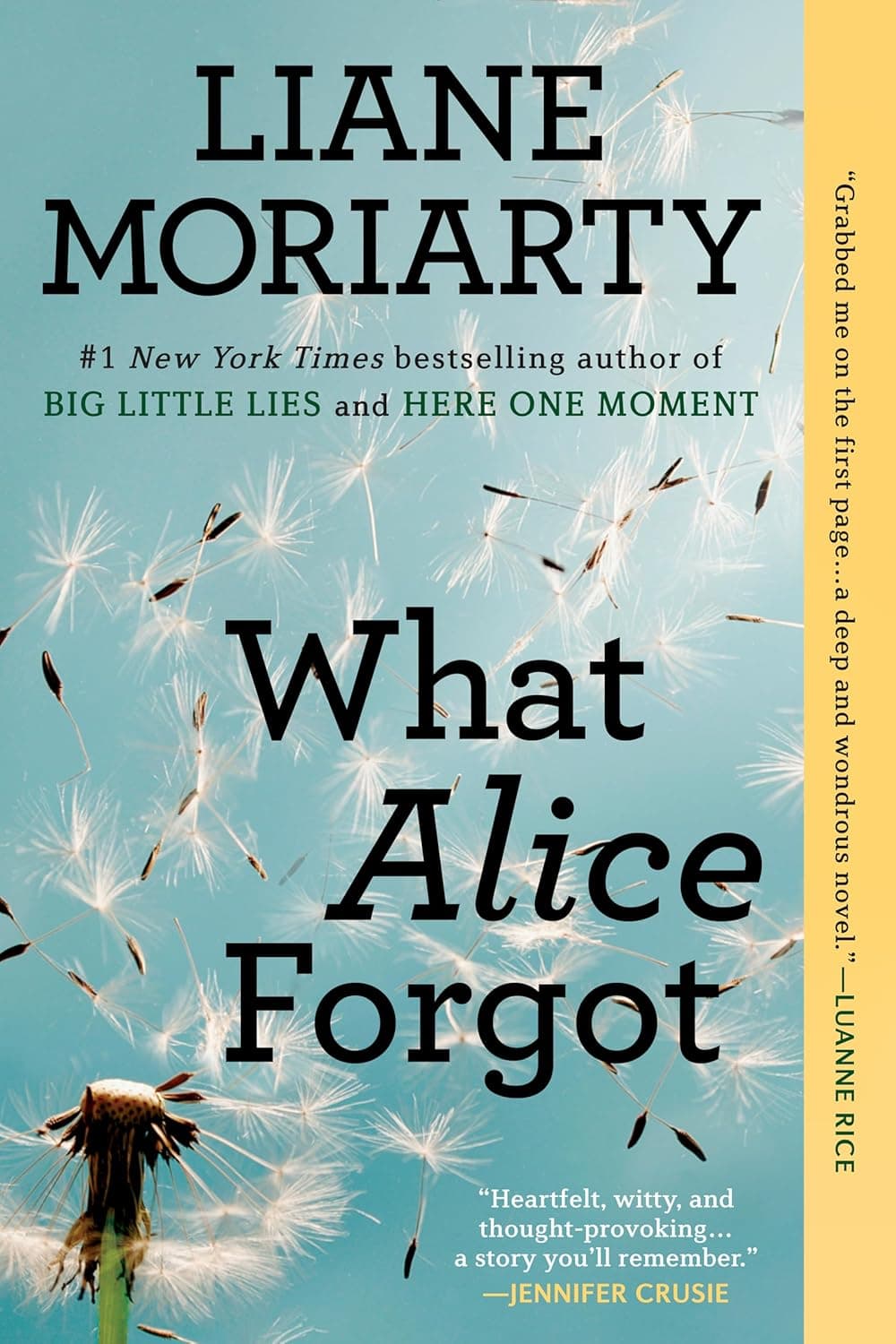
Opening
A decade vanishes, and the life left behind feels like a stranger’s. These chapters push the mystery into crisis: the body remembers what the mind rejects, a friend is revealed to be dead, and the family Alice longs for erupts into chaos at her doorstep.
What Happens
Chapter 16: The World’s Biggest Lemon Meringue Pie
Left alone for the first time since the accident, Alice Love wanders her house like a visitor in a museum of her own life. When her neighbor Mrs. Bergen—once a beloved gardening mentor—icyly snubs her, the small cruelty lands like a slap, proof that social fault lines have opened in the decade she can’t recall. Searching for clues, she explores the children’s rooms: Madison Love has a moody pre-teen haven of city posters and a recipe book; Tom’s door shouts “KEEP OUT”; Olivia’s fairytale space hides a heartbreak—Alice’s costly honeymoon dress, stained and crumpled in a dress-up box. The ruined dress embodies the theme of Transformation of the Self, a cherished symbol degraded by time and carelessness.
A walk becomes a run. Her body slips into pace and breath with effortless precision, while her 29-year-old mind balks, dramatizing the split at the core of Memory and Identity. At Rawson and King, terror seizes her: a flash—green car, plate “GINA 333”—and a full-blown panic attack. A stranger, Dominick Gordon, helps her home and gently unfolds more shocks: he is the principal at her children’s school, they have been dating for a month, and she is spearheading a Guinness World Record attempt to bake the largest lemon meringue pie for a school fundraiser. He studies her face and says she has “lost your frown,” as if amnesia has erased ten years of tension. Then he kisses her. His delighted son Jasper catches them, and Alice reels, guilty and confused.
Interleaved entries add texture. Frannie notes how Alice’s friendship with Gina Boyle skews possessive. Elisabeth, completing therapy homework, writes that she has quit IVF while Ben—after a talk with Alice—suddenly champions adoption. She admits she loathes Gina’s patronizing tone about Infertility and the Longing for Family and recalls calling Alice after a miscarriage only to hear Alice laughing with Gina in the background—an audible crack in the sisters’ bond.
Chapter 17: Gina Is Dead
Frannie’s latest letter softens her crusty exterior: “Mr. Mustache” from the retirement village shows real tenderness when she speaks of Phil, her long-lost fiancé. Meanwhile, Alice wakes from a nightmare of a towering black tree and prowls the dark house, replaying the surreal party she hosted the night before. She moves through it like an actress impersonating a capable 39-year-old “Class Mum,” fielding confidences from strangers and, to her surprise, performing convincingly.
In the kitchen, she finds Elisabeth awake and brittle with insomnia. They talk. Alice posits a neat explanation for the divorce: Nick had an affair with Gina. Elisabeth’s silence stretches—and then she detonates Alice’s theory.
“I really doubt that, Alice.”
“Why?”
Elisabeth paused and then looked her in the eye. “Because she’s dead,” she said.
The words collapse Alice’s assumptions and flood the missing decade with tragedy.
Chapter 18: What’s Gone Wrong Between Us?
Elisabeth fills in the terrible blanks. Gina died in a car crash a year earlier—Alice witnessed it. The panic attack at Rawson and King, the faint memory of pink balloons: they point to a funeral, not a party. Gina’s death predates Alice and Nick’s separation by about six months, complicating any simple blame. Shaken, Alice begs for portraits of the children she can’t picture. Elisabeth obliges: Madison is intense and accident-prone with behavioral issues; Tom is whip-smart, funny, and suspicious; Olivia is an adored charmer. They are no longer babies in Alice’s mind but fully formed people she doesn’t know.
Talk turns to the divorce and a vicious custody struggle—the corrosion of a marriage that once felt indestructible, underscoring The Evolution of Love and Marriage. Then Alice asks about the sisters’ fight. Elisabeth admits Alice ambushed Ben with a slick adoption presentation, telling him to “get over” his adoption-related trauma. It worked—Ben now longs to adopt—but Elisabeth feels too depleted and resentful to pursue it. Their conversation exposes a long, jagged rift carved by misunderstanding and unsolicited “help,” and Alice whispers the question neither can soothe: “What’s gone wrong between us?” The moment aches with the possibility of Forgiveness and Second Chances.
Chapter 19: OREGANO
On Sunday, Alice braces for Nick’s arrival with the children. She changes outfits, forms hamburger patties by muscle memory, and finds her wedding and engagement rings tossed in a drawer—a quiet emblem of a marriage unceremoniously unmoored. She opens wine and dislikes how easily she drinks alone. Dominick drops by, careful and affectionate, while sidestepping details about the divorce. He vaguely cites Nick’s long work hours and “sexual issues,” and Alice cringes at the thought of having shared such intimacy with a near-stranger.
After he leaves, her fingers wake the study computer and type the password: OREGANO. An email chain with Nick unspools in acid bursts—Christmas plans, Granny Love’s engagement ring, contempt layered on contempt. The tone is cold and prosecutorial, proof of a communication style scorched bare of affection.
You can’t YOU think of THEM for a change? This is all about YOU. As usual.
…
If you’re thinking of selling it, you’ve really sunk to a new low. Even for you.
Tires crunch in the driveway. With the bile of those words still in her mouth, Alice goes to open the door.
Chapter 20: You Don’t Remember Us, Do You?
Chaos pours in. Olivia barrels into her arms, a small, exuberant stranger who is somehow her daughter. Then Nick appears—older, grayer, thicker—and colder than any version she remembers. Tom and Madison file in, fully themselves: sharp, wary, combustible. Madison bristles immediately, furious that Alice forgot promised ingredients for lasagna.
They attempt dinner. The tension is flammable. When Alice asks why they are divorcing, Nick accuses her of playing games. She dredges up tender moments from their early love until he finally understands—she truly remembers nothing. His shock hardens into frustration. He snaps that she has a boyfriend—Dominick—and when Alice clings to him, babbling about fixing everything, he pulls away.
Madison hears enough to be wounded and furious, repeats that Nick called Alice a “hard bitch,” and sets off a wrestling match with Tom that turns the living room into a battlefield. As the noise peaks, Madison stops, locks eyes with her mother, and delivers the devastating truth they are all circling.
“You don’t remember us, do you?”
Character Development
These chapters pivot characters from rumor and memory into immediate, messy presence. The gap between who they were and who they are becomes the story’s engine.
- Alice Love: A 29-year-old heart inside a 39-year-old life, she discovers she’s become a fitness-obsessed, hyper-competent Class Mum who meddles in others’ pain. The ruined dress, the “lost frown,” and the vicious emails fracture her self-image, forcing her to reckon with a self she doesn’t recognize.
- Nick Love: Once tender, now guarded and brisk, he appears as a depleted father and strategic co-parent, his communication with Alice reduced to accusation and defense.
- Elisabeth: Wry and wounded, she carries years of infertility grief and resentment. Alice’s “help” pushed Ben toward adoption—but at the cost of their sisterhood’s trust.
- Dominick Gordon: Kind, stabilizing, and gently smitten, he stands in sharp relief to Nick’s hostility and exposes how far Alice’s private life has drifted from her memories.
- Madison, Tom, Olivia: No longer symbols of a future family, they are fully realized kids—intense, witty, demanding—whose needs and anger puncture Alice’s romantic fantasy of motherhood.
Themes & Symbols
The novel deepens its meditation on Memory and Identity by splitting Alice into body and mind. Her legs run, her hands type “OREGANO,” her hips shape hamburger patties—while her conscious self resists. The world keeps offering objective records—funeral balloons, email archives, a principal-boyfriend—to counter her internal narrative. Identity here is not memory alone but also habit, reputation, artifact, and consequence.
The Evolution of Love and Marriage plays out in parallel archives: the glowing memories Alice clings to and the digital autopsy of her marriage’s decay. What begins as a story of “what went wrong” becomes a study of how distance grows—through stress, work, grief, and the slow normalization of contempt. That erosion spreads, too, cracking sisterhood under the weight of Infertility and the Longing for Family. The possibility of Forgiveness and Second Chances hovers, fragile but present, in a whispered, “What’s gone wrong between us?”
Key symbols:
- The frown: A face smoothed by amnesia suggests a self unburdened—temporarily—from a decade’s worth of anger and anxiety.
- The emails: A sterile, permanent record of cruelty that memory can’t soften or revise.
- The children’s rooms: Physical biographies of years Alice missed.
- The ruined honeymoon dress: A desecrated relic of early love, mirroring the marriage’s tarnish.
Key Quotes
“Because she’s dead,” she said.
This line detonates Alice’s neat theory of infidelity, rerouting the mystery through grief and trauma. It also reframes Gina’s presence in the narrative—from rival to absence—and makes Alice’s panic attacks intelligible and tragic.
You can’t YOU think of THEM for a change? This is all about YOU. As usual. … If you’re thinking of selling it, you’ve really sunk to a new low. Even for you.
The emails strip away nostalgia and show the practiced cadence of two people fighting to win, not to understand. Their venom proves the marriage’s erosion is not a single rupture but a habit of contempt.
“You’ve lost your frown.”
Dominick’s observation turns Alice’s amnesia into a physical symbol: without a decade of stress mapped onto her face, she moves through the world more openly. The line also reveals how visible her hardness had become to others.
“What’s gone wrong between us?”
Alice’s question to Elisabeth captures the ache of relationships damaged by “help” and silence. It invites repair but also acknowledges that time and pain have shaped them into people who can’t return to the past untouched.
“You don’t remember us, do you?”
Madison names the unspeakable and forces the family to confront the real stakes. This isn’t just a marriage in crisis; it’s a mother estranged from her children by the blank space in her mind.
Why This Matters and Section Significance
This section shifts the story from detective work to confrontation. Nick and the children step out of Alice’s fantasies and into her kitchen, and the result is cacophony: emails that bruise, kids who fight, and a husband who recoils. The revelation of Gina’s death redirects blame and grafts trauma onto the marriage’s timeline, suggesting deeper roots to their collapse than “drifting apart.”
Together, these chapters raise the central questions of the novel: Who are we without our remembered selves? Can a love story survive its own archives? Alice must now rebuild not just a memory, but a family—if they’ll let her, and if she can bear what the records say she has become.