Opening
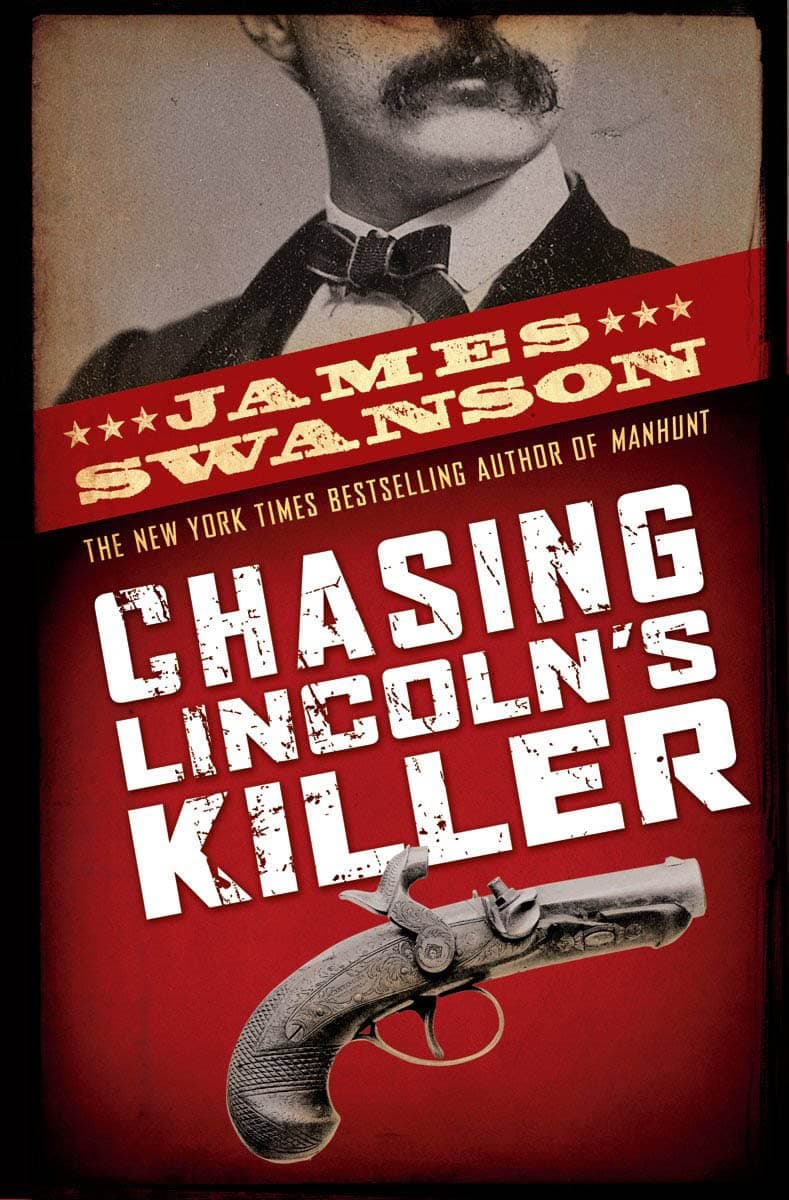
Nine days after the assassination, John Wilkes Booth and David Herold limp into Virginia believing safety lies just across the river. Instead, every mile south tightens the noose of the great Manhunt and Pursuit, until a locked tobacco barn becomes a stage, a trap, and a pyre.
What Happens
Chapter 11: Glorious Old Virginia
After a week in a Maryland pine thicket, Booth and Herold finally slip across the Potomac on April 23, guided by Thomas Jones to a Confederate contact, Mrs. Elizabeth Quesenberry. Herold approaches her alone because Booth’s broken leg prevents travel; only after Herold invokes Jones’s name does Quesenberry agree to help. She orders food and horses, understanding the risk of aiding the nation’s most wanted men and pushing them south with haste.
The fugitives then seek refuge with Dr. Richard Stuart, whom Booth expects to welcome them as Confederate brothers. Instead, Stuart hears Herold’s stilted story, sees the danger, and refuses shelter beyond a meal. Booth, insulted and clinging to ideals of The 'Lost Cause' and Southern Honor, later sends Stuart a sarcastic payment for the food. Desperate, Booth and Herold threaten a local Black farmer, William Lucas, to secure a wagon and driver. At the Rappahannock, fortune shifts: three Confederate soldiers—Willie Jett, Ruggles, and Bainbridge—hear Herold’s bold confession of their identities and decide to help rather than betray them.
Crossing the river with their new allies, Booth bursts out, “I’m safe in glorious old Virginia, thank God!” The soldiers deliver them to the farm of Richard Garrett, who, believing Booth to be a wounded Confederate veteran, offers shelter. For the first time since the crossing, Booth rests as if among friends.
Chapter 12: A Trap
In Washington, Edwin M. Stanton accelerates the chase, dispatching detective Lafayette Baker, who sends his cousin Luther Baker and Lieutenant Edward Doherty with the Sixteenth New York Cavalry. Telegraphs and steamboats shrink Booth’s ten-day lead to a single day. While Booth charms the Garrett children and spins tales of war wounds, soldiers descend across the countryside. On April 24, federal troops arrest Dr. Samuel A. Mudd in Maryland for aiding the fugitives.
The next day, word of the massive reward shakes Booth’s fragile confidence. His nervous reaction to passing riders alarms the Garretts. When Herold returns from town, John Garrett refuses them another night in the house. Meanwhile in Port Conway, the cavalry learns from locals that Booth and Herold crossed with Willie Jett, who is likely in Bowling Green. The web of Conspiracy and Betrayal tightens as Ruggles and Bainbridge ride to warn Booth about Union cavalry nearby, but the soldiers thunder past the farm, chasing Jett.
Now frightened, the Garretts insist Booth and Herold leave. The fugitives beg to stay until morning. Fearing for their horses, the Garretts herd them into the tobacco barn for the night—then lock the doors. A haven becomes a cage.
Chapter 13: The Last Performance
The cavalry arrests Willie Jett at a Bowling Green hotel and, under pressure, he betrays Booth’s location and offers to guide the troops to the Garrett farm. Shortly after midnight on April 26, the Sixteenth New York Cavalry surrounds the property. Inside the barn, Booth and Herold wake to hoofbeats, lunge for the doors, and find themselves trapped. Their frantic attempt to pry out a back board fails. The soldiers drag Richard Garrett from bed; when he hesitates, they threaten his son John, who admits the men are inside the tobacco barn.
Luther Baker sends John Garrett into the barn to demand the fugitives’ weapons. Booth shouts a threat and drives Garrett back out. Baker issues an ultimatum: surrender in fifteen minutes or be burned out. Herold panics and pleads to give up. Booth sneers “damned coward,” then allows him to exit; soldiers seize Herold and tie him to a tree. Alone and cornered, Booth steadies himself for what he casts as his final act—a last chance to craft an ending aligned with Heroism vs. Villainy, even as history brands him a murderer.
Chapter 14: Useless, Useless
Detective Everton Conger refuses a risky assault and orders the barn torched. As soldiers pile kindling, Booth calls out one final challenge: a duel on open ground against twenty-six men. When they refuse, he quips, “Well, my brave boys, prepare a stretcher for me!” Conger lights the straw. Fire climbs the walls, illuminating Booth inside and forcing a choice: burn, shoot himself, or fight. He grabs a carbine and hobbles toward the door.
Through a crack, Sergeant Boston Corbett, a fierce religious zealot, sees Booth raise the weapon toward the doorway and fires his revolver, striking Booth through the neck. Soldiers drag the paralyzed assassin from the burning barn. Laid on the Garretts’ porch, Booth whispers, “Tell Mother, I die for my country,” then asks to see his hands. He stares and breathes his last words: “Useless, useless.” At sunrise on April 26—twelve days after Ford’s Theatre—the manhunt ends. Corbett faces no punishment, claiming Providence guided his shot, a flashpoint for Justice vs. Vengeance. Stanton secretly buries Booth in an unmarked grave, denying Confederate sympathizers a shrine. In the aftermath, trials determine the conspiracy’s fate: Mary Surratt, Lewis Powell, David Herold, and George Atzerodt hang on July 7, 1865; Dr. Mudd and others receive prison terms.
Character Development
The final chase strips away illusions and forces every character to choose between loyalty, survival, and myth. Masks drop: a grand actor faces a truth he cannot rewrite, a sidekick cuts loose to live, and ordinary citizens protect their homes over a cause that has already crumbled.
- John Wilkes Booth: Pride hardens into bitterness when Dr. Stuart snubs him and the Garretts lock him away. He leans into his identity as a performer, aiming for a death he can stage, only to reach piercing clarity with “Useless, useless.”
- David Herold: Dutiful and resourceful on the run, he finally buckles under the heat of the barn siege. His surrender is raw self-preservation—not villainy—and it diverges sharply from Booth’s thirst for theatrical martyrdom.
- The Garrett Family: Hospitable at first, then cautious, then terrified. Their shift from sanctuary to carceral vigilance marks the collapse of Booth’s fantasy of reflexive Southern solidarity.
- Boston Corbett: A soldier convinced of divine mission, he short-circuits due process with a single shot. In doing so, he embodies a collision between battlefield morality and legal justice.
Themes & Symbols
Loyalty and identity fracture under pressure. The fading aura of The 'Lost Cause' and Southern Honor meets hard reality when Southerners calculate risk over romance: Dr. Stuart refuses shelter; the Garretts lock the barn; Willie Jett talks. The Confederacy’s etiquette and myth cannot shield Booth from fear, law, or the self-interest of those he expects to protect him.
The engine of Conspiracy and Betrayal drives the climax. Each “ally” becomes a potential informant, each refuge a trap, each kindness transactional. Meanwhile, the Manhunt and Pursuit grows modern and relentless: telegraph cables, steamboats, and cavalry coordination compress distance and time until the barn burns. The barn itself becomes a symbol layered with meaning—shelter, stage, prison, and pyre—transforming a humble farm structure into the emblem of a national reckoning. And in Corbett’s shot, Justice vs. Vengeance blurs, denying the courtroom its narrative while delivering swift, irreversible punishment.
Key Quotes
“I’m safe in glorious old Virginia, thank God!”
Booth’s exultation captures his delusion that state lines and Confederate sentiment will protect him. The line foreshadows the irony that Virginia, not Maryland, becomes the place of his capture and death.
“Damned coward.”
Booth’s insult to Herold during the barn standoff reveals his obsession with honor and performance. It also exposes Booth’s blindness to reality: Herold’s surrender is not treachery but a sane response to an unwinnable situation.
“Well, my brave boys, prepare a stretcher for me!”
Flippant and theatrical, Booth’s taunt seeks to frame his death as gallant combat. The soldiers’ refusal to duel punctures his script, reminding us that war’s end has shifted moral ground away from ceremony to capture and accountability.
“Tell Mother, I die for my country.” … “Useless, useless.”
Booth’s last declarations try to reclaim patriotic purpose, then collapse into stark self-judgment. Staring at his hands, he recognizes the futility of his act and the failure of his self-fashioned role as avenger.
Why This Matters and Section Significance
These chapters deliver the narrative’s crescendo and resolution: the pursuit narrows, the myth of Confederate refuge dissolves, and Booth’s end denies him the public platform of a trial. His death lets Stanton control the story and push the remaining conspirators toward conviction without Booth’s grandstanding or potential revelations. The epilogue of arrests, trials, and executions shifts the book from feverish chase to the cool machinery of punishment, marking the nation’s pivot from chaos to restored federal authority—and cementing how a barn in rural Virginia becomes the final stage of a national tragedy.