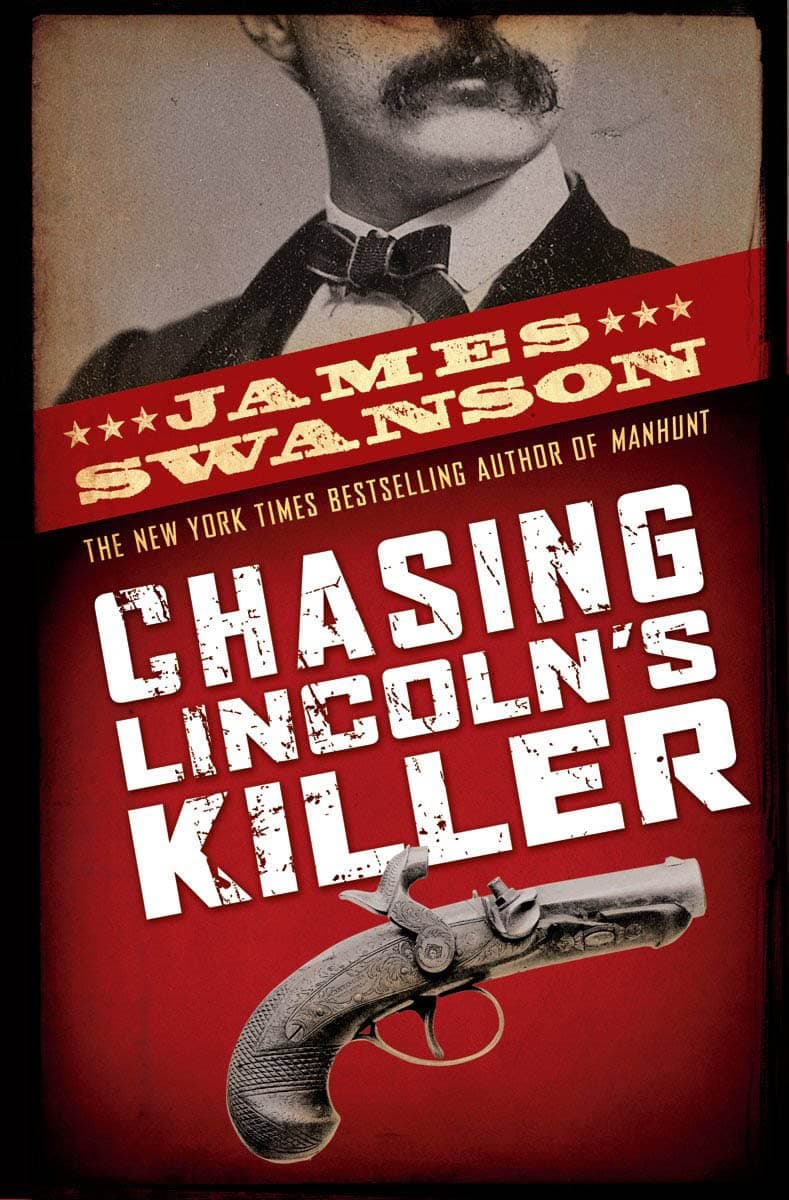
Opening
At dawn on April 15, 1865, Abraham Lincoln dies in a boardinghouse bedroom while, across the street, Edwin M. Stanton seizes command of a sprawling, chaotic hunt for John Wilkes Booth and his accomplices. What begins as a national vigil turns into a relentless chase, revealing a hidden web of sympathizers and the chilling scope of Conspiracy and Betrayal.
What Happens
Chapter 6: “Now He Belongs to the Angels”
As morning breaks, doctors watch Lincoln’s pulse slow in the Petersen house; at 7:22 A.M., he draws his final breath. In the hush that follows, Stanton stands at the bedside and declares, “Now he belongs to the angels.” Even as grief shudders through the room, Stanton keeps working: he has evidence pulled from Booth’s hotel—among it, a letter from “Sam”—solid proof the murder is premeditated and part of a wider scheme.
Stanton wires the country with the news. Mary Todd Lincoln cannot bear a final look; before the removal, Stanton clips a lock of Lincoln’s hair as a keepsake for Mary Jane Welles. Soldiers place the body in a plain pine box, wrap it in a flag, and carry it back to the White House in a spare, solemn procession. That same morning, Vice President Andrew Johnson quietly takes the oath of office. Newspaper extras race through the streets, some wrong, all frantic, mirroring the nation’s shock.
Chapter 7: A Doctor in the House
While Washington mourns, Booth and David Herold arrive at the farm of Dr. Samuel A. Mudd. Mudd sets Booth’s broken leg without yet divining the truth; Herold eats breakfast with the family as the wounded assassin rests. Later, Mudd and Herold ride toward Bryantown in search of a carriage—only to spot a column of the Thirteenth New York Cavalry occupying the town, the first major turn in the theme of Manhunt and Pursuit.
Herold bolts back to the farm. Mudd presses on, hears the stunning news—Lincoln is dead, and the killer is Booth—and realizes instantly who lies in his guest room. He chooses silence. Returning home, he finds Booth elated at confirmation of Lincoln’s death. Terrified for his family yet bound by The 'Lost Cause' and Southern Honor, Mudd orders the men to go but equips them with directions to Captain Samuel Cox and tells them how to reach Thomas Jones, the one man who can ferry them across the Potomac. He also prepares to mislead any investigators—an act that makes him an accomplice.
Chapter 8: A Grim Easter
The fugitives drift through the dark Maryland countryside and pay a local, Oswell Swann, to guide them across the treacherous Zekiah Swamp to Cox’s farm. They arrive after midnight on Easter Sunday—“Black Easter.” Cox hesitates, then notices the “J.W.B.” tattoo on Booth’s hand; Booth’s poise and charisma do the rest. Cox refuses to shelter them in his house and instead hides them in a dense pine thicket, teaching them a secret three-note whistle to signal the arrival of help.
He sends his son to summon Jones, a seasoned Confederate operative who already suspects why he’s needed. Jones meets with Cox, hears the confession—Lincoln’s killers are in hiding nearby—and agrees to take the risk. With the whistle code in hand, Jones rides alone toward the thicket to meet the most wanted men in America.
Chapter 9: The Hottest Place in Hell
Jones finds the pair pale, hungry, and fraying. Booth confirms he killed the president and vows he will never be taken alive. Jones lays out a counterintuitive plan: stop running and disappear. He instructs them to remain absolutely silent in the thicket while he feeds them, brings newspapers, and waits for the patrols to thin. One man’s patience and discipline blunts the force of the federal search.
Meanwhile, the dragnet finally tightens elsewhere. George Atzerodt is arrested after drunken boasts draw attention. In Washington, Lewis Powell blunders into Mary Surratt’s boardinghouse while it’s being raided; Surratt denies knowing him, a lie that seals her fate. Other conspirators from the earlier kidnapping scheme—Samuel Arnold and Michael O’Laughlen—are rounded up. Overloaded, Stanton brings in top detectives, including Lafayette Baker, to drive the pursuit.
Chapter 10: A Wrong Turn
Days pass in the thicket. The men grow filthy and desperate; Booth’s leg throbs. Jones keeps his promise, delivering food and the news. Booth devours the papers and reels: instead of a Roman avenger, he is branded a common murderer, while Lincoln becomes a national martyr—precisely the opposite legacy Booth imagines for himself. Enraged that his explanatory letter never appears, he turns to his diary to justify his crime. To keep their hiding place quiet, Herold kills their horses and sinks the bodies in a quicksand pit.
Investigators return to question Mudd, whose shifting story raises suspicion. On April 20, Stanton posts a $100,000 reward for Booth, Herold, and John Surratt. That night Jones judges the river safe. He leads the fugitives to the Potomac, hands them a small boat, a compass, and directions to a Virginia contact. Booth tries to pay him; Jones accepts only the eighteen dollars he spent on the boat. The men push into the dark—then Herold, disoriented, rows the wrong way. By dawn, they have slipped not into Virginia but back onto Maryland soil, farther from freedom than before.
Key Events
- April 15, 7:22 A.M.: Lincoln dies at the Petersen house.
- April 15: Booth and Herold reach Dr. Mudd; after learning their identities, Mudd aids their escape.
- April 16 (Easter Sunday): Thomas Jones hides the fugitives in a pine thicket.
- April 17: Powell and Mary Surratt are arrested at her boardinghouse.
- April 20: Atzerodt is captured; Stanton posts a $100,000 reward.
- Night of April 20: Jones launches Booth and Herold onto the Potomac.
- Night of April 20–21: They lose their way and land back in Maryland.
Character Development
These chapters strip away illusions, showing who acts from loyalty, fear, pride, or principle under extreme pressure.
- John Wilkes Booth: Vanity and delusion harden into self-pity as newspapers vilify him and lionize Lincoln. Pain and dependency replace his swagger; his diary becomes a last bid to control his legacy.
- David Herold: Nervous, impulsive, and useful mainly as a guide, he panics in Bryantown and later rows the wrong way—small mistakes with big consequences.
- Dr. Samuel A. Mudd: Torn between safety and sympathy, he chooses silence and assistance, then lies to investigators—decisions that bind him to the conspiracy.
- Thomas Jones: Resourceful, disciplined, and resolute, he alone outwits the federal net for days, acting from loyalty rather than profit.
- Edwin M. Stanton: Grief channels into command. He centralizes the investigation, communicates decisively, and expands the pursuit with ruthless efficiency.
- The Conspirators: Atzerodt’s boasts and Powell’s blunder expose their ineptitude, throwing Booth’s temporary escape into sharper relief.
Themes & Symbols
These chapters crystallize Manhunt and Pursuit: Swanson cross-cuts between hunters and hunted to build relentless tension, where luck—cavalry in Bryantown, a patrol skirting the thicket—repeatedly decides fates. The web of Conspiracy and Betrayal expands with Mudd, Cox, and Jones, who shield the fugitives, even as Surratt’s denial and Mudd’s lies become the very acts that doom them. Through The 'Lost Cause' and Southern Honor, the aid given to Booth reads as duty to a fallen nation, not mere crime—an ethic powerful enough to risk families, farms, and lives.
Swanson also reframes reputation in real time through Heroism vs. Villainy. Booth expects laurels as a “liberator,” only to confront the public’s instant moral verdict. In the same pages that elevate Lincoln to martyrdom, Booth becomes the era’s most reviled figure—a reversal that fuels his fury and his diary’s self-justifications.
Symbols
- The Pine Thicket: Both sanctuary and prison—protection from patrols, yet immobilizing dependence on Jones for survival.
- The Newspapers: The nation’s first draft of judgment, reflecting and shaping legacy; a mirror Booth cannot bear.
- The Potomac River: A border between danger and perceived safety; crossing it becomes the fugitives’ consuming hope and fatal obsession.
Key Quotes
-
“Now he belongs to the angels.”
Stanton’s bedside eulogy sanctifies Lincoln in an instant, signaling a national shift from political conflict to reverent mourning. It also marks the moment Stanton turns grief into action, launching the hunt with moral clarity.
-
“Black Easter”
The phrase brands the holiday with tragedy, fusing the sacred calendar to national grief. It underscores the moral inversion of the day—while churches celebrate resurrection, the nation buries its leader and the killers hide in the woods.
-
“J.W.B.”
The tattoo on Booth’s hand exposes him even in secrecy; identity literally marks the body. Cox’s recognition turns suspicion into certainty, propelling the fugitives deeper into clandestine aid.
-
“I will never be taken alive.”
Booth’s vow closes off surrender and frames the chase as an all-or-nothing endgame. It reveals pride and fatalism more than strategy, hinting at a finale that can only turn violent.
Why This Matters and Section Significance
These chapters pivot the book from a single gunshot to a national reckoning, establishing the pattern that drives the narrative: intimate scenes with the fugitives intercut with the government’s expanding pursuit. They also expose the Confederate underground—Mudd, Cox, and Jones—as the crucial reason Booth stays ahead of the law, embodying a defeated cause that still binds its adherents.
Stylistically, swift pacing, shifting viewpoints, and knife-edge near-misses convert history into thriller. Arrests of secondary conspirators narrow the cast and raise the stakes, funneling all attention toward the two figures still at large—Booth and Herold—and the river that both beckons and betrays them.