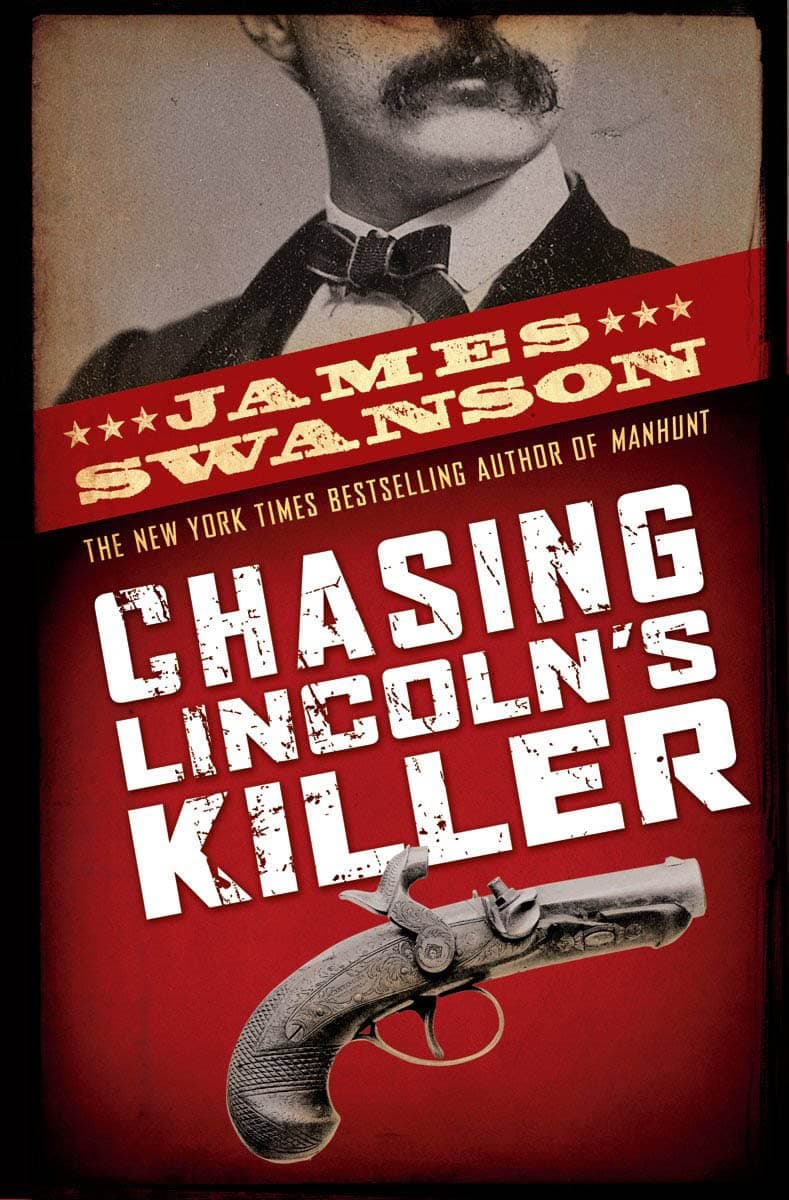
Opening
The Epilogue of Chasing Lincoln's Killer tracks the long shadow of John Wilkes Booth’s crime and the uneven fates of those tangled in it, then pivots to what endures. It contrasts the noisy spectacle that grows around the assassin with the quiet moral authority of Abraham Lincoln’s legacy.
What Happens
In 1869, Booth’s body is released to his family and buried in an unmarked grave in Baltimore—a final anonymity that frustrates idolaters. Secretary of War Edwin M. Stanton continues his service and receives a Supreme Court nomination, but dies later that year before taking his seat. William H. Seward and his sons survive Lewis Powell’s knife, yet the household collapses under grief: Seward’s wife dies two months after the attack, and his daughter Fanny the following year. Henry Rathbone and Clara Harris, the couple seated with the Lincolns at Ford’s Theatre, marry; haunted by the trauma of that night, Rathbone murders Clara eighteen years later and is committed to an asylum.
The net around the conspirator network tightens, loosens, and frays. Thomas Jones, the Confederate agent who hides Booth and David Herold and guides them across the Potomac, guards his secret for nearly two decades before telling his story. Dr. Samuel A. Mudd serves a prison sentence, then receives a pardon from President Johnson for his lifesaving work during a prison epidemic; years later, he privately admits he recognized Booth when the assassin arrived at his farm. John Surratt flees across Europe, is captured in Egypt, tried in the United States, and walks free after a hung jury—only to wear the reputation of a coward who let his mother, Mary Surratt, hang.
Swanson then fixes the lens on legacy. Ford’s Theatre is restored as a museum that draws more than a million visitors a year to relics of the crime—Booth’s pistol, diary, and compass—creating an uneasy shrine to both the victim and the killer. He argues Booth ultimately fails: he neither rallies the South nor reverses the Civil War, betraying his devotion to The 'Lost Cause' and Southern Honor. The “real hero” is Lincoln, whose ideals of freedom and equality outlast the assassin’s fame. Across the street, the quieter Petersen House, where Lincoln dies, becomes a place to contemplate his “unfinished work.”
Character Development
The Epilogue closes arcs by revealing not only outcomes but the moral shape of each life after April 14, 1865.
- John Wilkes Booth: Infamy secures his name, but his goals collapse. An unmarked grave mirrors a legacy defined by failure rather than martyrdom.
- Dr. Samuel A. Mudd: A pardon complicates public judgment, but his later confession clarifies his role in Conspiracy and Betrayal and brands him a man who protected himself over truth.
- John Surratt: Legal freedom arrives without honor. He lives under the stigma of abandoning his mother to the gallows.
- Henry Rathbone: The trauma of the assassination corrodes him until he reenacts its violence, killing his wife with the same kinds of weapons Booth carried.
Themes & Symbols
Swanson’s final pages render a clear moral verdict on Heroism vs. Villainy. Lincoln’s principles—union, equality, and civic courage—endure, while Booth’s notoriety curdles into proof of his failure. The crowds who come to see the assassin’s artifacts underscore how fascination with evil can eclipse reverence for virtue, yet the narrative insists that character, not spectacle, defines legacy.
The Epilogue also complicates Justice vs. Vengeance. The swift executions of some conspirators contrast with the pardon of Mudd and the acquittal-by-deadlock of Surratt. Legal outcomes diverge from moral responsibility, suggesting that while the manhunt satisfies demands for retribution, history’s longer judgment is uneven, imperfect, and often unsatisfying.
Symbols sharpen these arguments:
- Ford’s Theatre vs. the Petersen House: Ford’s, with its relics and crowds, symbolizes sensational memory—the crime’s spectacle and the assassin’s lingering allure. The Petersen House, quiet and solemn, embodies the cost of leadership and the enduring weight of Lincoln’s sacrifice.
- Booth’s unmarked grave: A negation of the heroic monument he craves; anonymity prevents a shrine and cements his status as a national villain.
Key Quotes
“John Wilkes Booth did not get what he wanted.”
This sentence delivers the book’s blunt verdict. It strips the assassin’s myth of glamour and reduces his legacy to failure—no uprising, no reversal of the war, no honored cause.
Lincoln is the “real hero.”
By naming Lincoln in these terms, Swanson closes the moral debate. The phrase elevates ideals over infamy and directs readers’ admiration toward character and principle rather than spectacle.
Lincoln’s “unfinished work.”
Echoing the Gettysburg Address, this phrase reframes the Petersen House as a living memorial. It invites readers to carry forward the democratic project that outlives the assassin’s violence.
Why This Matters and Section Significance
The Epilogue provides closure after the adrenaline of the Manhunt and Pursuit, tracing how a single night reshapes dozens of lives and the nation’s memory. By weighing unequal punishments, private confessions, public reputations, and the spaces where we remember, Swanson locks in the book’s moral core: villainy can seize a moment, but heroism defines the future.