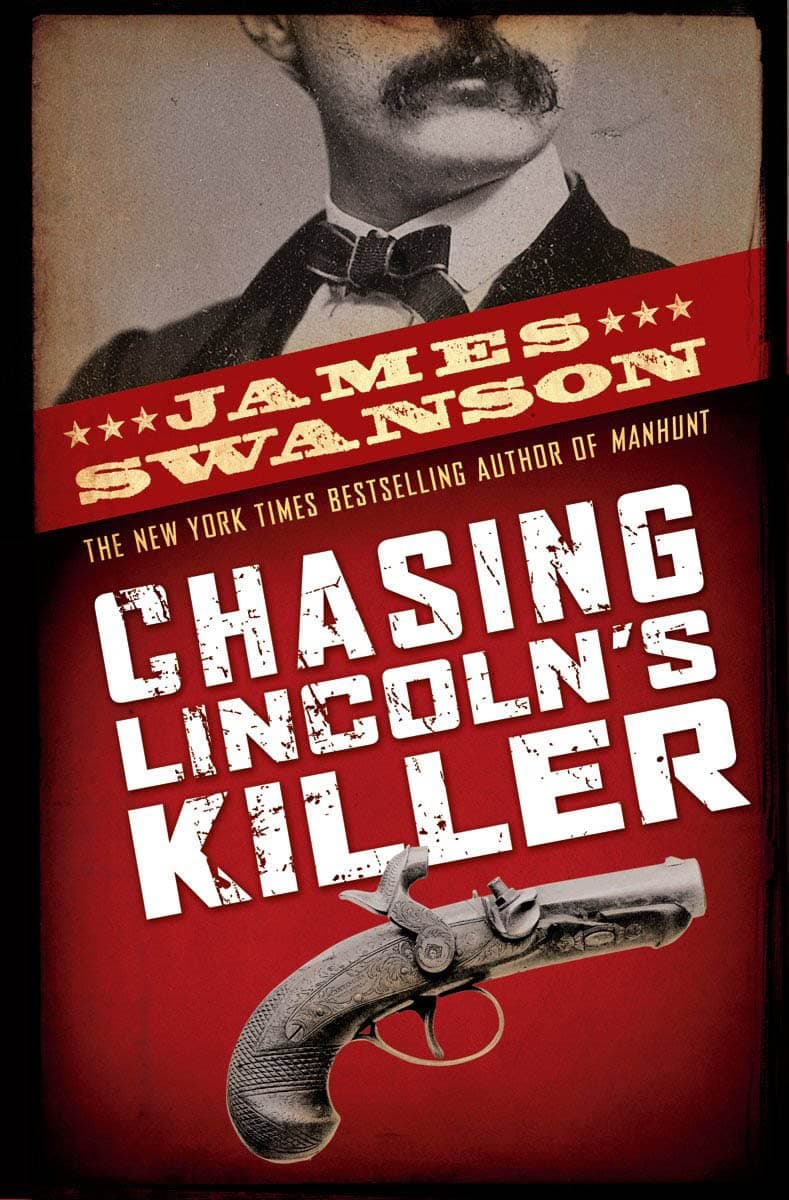
This collection of quotes from Chasing Lincoln's Killer by James L. Swanson spotlights the pivotal moments, figures, and themes of the assassination and the twelve-day pursuit that followed. Each passage below pairs the historical moment with literary insight to clarify why it matters to the book’s narrative and ideas.
Most Important Quotes
Booth’s Theatrical Defiance
"Sic semper tyrannis!"
Speaker: John Wilkes Booth | Context: Chapter 2, Ford’s Theatre; shouted after Booth leaps from the presidential box moments after shooting President Lincoln.
Analysis: Booth turns murder into spectacle, borrowing the Roman republican script to cast himself as Brutus and Lincoln as Caesar. The cry fuses politics and performance, revealing Booth’s actorly ego and his conviction that assassination could be framed as patriotic theater. Its irony is searing: the line he intends as a heroic slogan will forever brand him a villain. By invoking classical revolt and the rhetoric of The 'Lost Cause' and Southern Honor, the moment crystallizes his self-fashioned mythology and primes the book’s tension around Heroism vs. Villainy.
A Nation Sanctifies Its Loss
"Now he belongs to the angels."
Speaker: Edwin M. Stanton | Context: Chapter 7, the Petersen House; Stanton speaks at the moment of Abraham Lincoln’s death on April 15, 1865.
Analysis: Starkly lyrical from the Union’s iron-willed organizer, the line elevates Lincoln from embattled president to martyr. Stanton’s sudden shift into elegiac language signals a national pivot—from crisis management to remembrance—and inaugurates Lincoln’s afterlife in American memory. The sentence compresses public grief and private awe, shaping the narrative arc that follows as an effort to honor and vindicate Lincoln’s sacrifice. It also foreshadows Stanton’s relentless, duty-first leadership of the manhunt and frames the moral stakes of Justice vs. Vengeance.
The Assassin’s Final Reckoning
"Useless, useless."
Speaker: John Wilkes Booth | Context: Chapter 13, the Garrett farm; Booth’s last words as he stares at his paralyzed hands after being shot in the burning barn.
Analysis: Booth’s dying verdict collapses his entire enterprise into two defeated syllables. The image of ruined hands—the instruments of pistol, dagger, and self-justifying prose—serves as stark symbolism for his broken agency and failed cause. Swanson heightens the dramatic irony: a man who sought immortal glory ends in impotence and regret. The line punctures the assassin’s delusions and resolves the book’s meditation on Heroism vs. Villainy, revealing infamy as a hollow, self-destroying pursuit.
Thematic Quotes
Manhunt and Pursuit
The Hunt Begins
"Search the trains! Guard the bridges! Orders were sent to commanders in the field in Virginia, chasing down leads based on early but false information Stanton received from tipsters."
Speaker: Narrator | Context: Chapter 7, the Petersen House; the site becomes Stanton’s improvised command center in the hours after Lincoln’s death.
Analysis: The staccato imperatives plunge the reader into the manhunt’s fevered opening hours, emphasizing urgency and scale. Swanson’s cadence mimics dispatches flying across telegraph lines, while the reference to “false information” underscores the fog-of-war atmosphere that both hinders and, paradoxically, shields the fugitives. The scene spotlights Stanton’s decisive will, repurposing a private home into the brain of a national dragnet. It also sets the procedural pulse that powers the narrative, marrying historical detail to thriller pacing.
The Price of Capture
"$100,000 REWARD! THE MURDERER Of our late beloved President, Abraham Lincoln, IS STILL AT LARGE."
Speaker: Narrator (quoting the reward poster) | Context: Chapter 11, War Department proclamation; an extraordinary sum offered for Booth, Herold, and John Surratt.
Analysis: The poster’s typographic roar—capital letters and exclamation—reads like shouted grief turned into policy. By placing a fortune on the fugitives’ heads, the state transforms private citizens into a nationwide network of informants, enlarging the hunt beyond military channels. Calling Lincoln “our late beloved President” canonizes him even in bureaucratic print, sacralizing pursuit as civic duty. The quote captures how emotion, money, and mass participation converge to tighten the net around the conspirators.
Conspiracy and Betrayal
A Mother’s Denial
"Before God, sir, I do not know this man; and I have never seen him and did not hire him to dig a gutter for me."
Speaker: Mary Surratt | Context: Chapter 10, the Surratt boardinghouse; Surratt denies knowing Lewis Powell when he appears during her interrogation.
Analysis: Swearing her falsehood “Before God,” Surratt escalates an evasion into a perjured pledge, transforming suspicion into certainty for investigators. The lie’s implausibility—given Powell’s prior visits—exposes the conspiracy’s domestic footprint and the peril of loyalty under pressure. Swanson frames the moment as tragic irony: to save herself, she utters the line that seals her fate. The scene clarifies how everyday spaces and relationships became the conspiracy’s covert infrastructure.
The Doctor’s Lie
"No, the doctor replied, they were complete strangers to him."
Speaker: Narrator (reporting the words of Dr. Samuel A. Mudd) | Context: Chapter 11, Mudd’s farm; he denies recognizing Booth to Union soldiers despite prior contact.
Analysis: The clinical calm of the sentence disguises a decisive act of obstruction: Mudd’s denial grants the fugitives precious time. His choice reflects the war’s lingering loyalties and fears, showing how personal allegiance could override civic responsibility in the fractured borderlands. Swanson uses the understatement to chilling effect, letting a quiet lie carry enormous consequence. The episode widens the conspiracy’s moral map, revealing complicity as a spectrum rather than a single treasonous act.
Character-Defining Quotes
John Wilkes Booth’s Resolve
"That is the last speech he will ever give."
Speaker: John Wilkes Booth | Context: Prologue, outside the White House; said to Lewis Powell after Lincoln’s April 11 speech endorsing limited Black suffrage.
Analysis: The flat certainty reads like a self-issued death warrant for Lincoln, revealing Booth’s arrogance and speed of radicalization. Tying his decision to Lincoln’s racial progress positions the murder within the politics of The 'Lost Cause' and Southern Honor. The menace lies in the grammar—a declarative prophecy rather than a plot—in which Booth casts himself as history’s executor. It foreshadows the play-turned-crime he will stage at Ford’s Theatre.
Lincoln’s Brief Glimpse of Peace
"We must both be more cheerful in the future — between the war and the loss of our darling Willie — we have both been very miserable."
Speaker: Abraham Lincoln | Context: Chapter 1, an afternoon carriage ride with Mary on April 14, 1865; Lincoln reflects on the war’s end and family grief.
Analysis: The line reveals Lincoln as husband and father first, leader second, granting a tender window into relief after years of strain. By invoking Willie’s death, the sentence layers national trauma with private mourning, deepening the poignancy. Dramatic irony hangs over the optimism, as readers know the “future” will be cut short that very night. Swanson uses the moment to humanize the martyr before the myth descends.
Stanton’s Ruthless Stewardship
"Take that woman out and do not let her in again."
Speaker: Edwin M. Stanton | Context: Chapter 7, the Petersen House; Stanton orders Mary Todd Lincoln removed from the death chamber amid her grief.
Analysis: Cold on its face, the command distills Stanton’s crisis persona: control, clarity, and the subordination of sentiment to duty. Swanson frames the harshness as tactical necessity, positioning Stanton as the nation’s de facto stabilizer in the power vacuum. The moment complicates the theme of leadership by juxtaposing compassion’s cost against order’s demands. It also anticipates the stern framework within which he will chase accountability and weigh Justice vs. Vengeance.
Powell’s Terrifying Cry
"I'm mad. I'm mad!"
Speaker: Lewis Powell | Context: Chapter 4, the Seward house; shouted amid Powell’s savage assault on the family.
Analysis: Whether ploy or confession, the outburst weaponizes unpredictability, magnifying the terror of his attack. The repetition and abrupt syntax mimic a mind unmoored, blurring the line between calculated brutality and unhinged violence. Swanson’s scene-craft showcases Powell as the conspiracy’s raw force, a human battering ram whose menace is psychological as well as physical. The cry brands him as chaos incarnate, distinct from Booth’s theatricalism.
Memorable Lines
Lincoln’s Prophetic Dream
"[Lincoln] said [the dream] related to . . . the water; that he seemed to be in some . . . indescribable vessel, and that was moving with great [speed] towards an indefinite shore."
Speaker: Narrator (quoting Gideon Welles’s diary) | Context: Chapter 1, a cabinet meeting the morning of April 14; Lincoln recounts a recurring dream before major wartime events.
Analysis: The dream’s aquatic imagery—speeding vessel, hazy shore—operates as symbolic foreshadowing of death’s approach. Its vagueness intensifies the aura of fate, lending the narrative a mythic undertow amid documentary detail. By placing this moment hours before the assassination, Swanson threads inevitability through the day’s ordinariness. The passage elevates the story from true-crime chronicle to tragic national elegy.
The Flash at Ford’s
"The black powder charge exploded and spit the bullet toward Lincoln’s head. The muzzle flash lighted the box for a moment like a miniature lightning bolt."
Speaker: Narrator | Context: Chapter 2, Ford’s Theatre; the instant Booth fires.
Analysis: Kinetic verbs (“exploded,” “spit”) and the lightning simile turn a historical fact into vivid sensory shock. The quick flare that “lighted the box” freezes the tableau, a photographic flash before catastrophe. Swanson’s cinematic prose collapses time, pulling readers into the breathless second when history pivots. The description exemplifies the book’s blend of archival precision and thriller momentum.
Opening and Closing Lines
The Truth Pledge
"This story is true. All the characters are real and were alive during the great manhunt of April 1865."
Speaker: Narrator (James L. Swanson) | Context: Introduction; the author frames the narrative’s basis in fact.
Analysis: The declarative opener establishes verisimilitude, promising history with the pulse of narrative. By announcing reality at the outset, Swanson heightens suspense rather than diminishing it—the events’ incredibility becomes part of their power. The line also primes readers to attend to sources and sequence, lending documentary weight to the chase that follows. It’s a contract of trust that shapes how every subsequent scene is read.
Principles Endure
"The real hero is Abraham Lincoln and the principles for which he lived — and died: freedom and equal rights for all Americans."
Speaker: Narrator (James L. Swanson) | Context: Epilogue; the book’s final assessment of legacy.
Analysis: The conclusion redirects attention from the spectacle of crime to the substance of ideals, insisting that villainy cannot eclipse virtue. By centering Lincoln rather than his killer, Swanson resolves the narrative’s moral calculus and affirms the story’s civic purpose. The sentence ties the man to the mission, translating loss into a national mandate. It leaves readers with a thematic compass: history’s true measure is principle, not notoriety.