Opening
The Gaither sisters land in the heart of Oakland’s Black Panther community and collide with new ideas, new rules, and the old ache of an absent mother. As Delphine navigates Sister Mukumbu’s warmth and Cecile’s cold revolution, a family rift explodes over a doll, and Delphine takes her first step from watcher to participant.
What Happens
Chapter 11: Even the Earth Is a Revolutionary
At the People’s Center summer program run by the Panthers, Delphine Gaither immediately gravitates toward the warm, grounded authority of Sister Mukumbu, imagining a mother she can trust. Instead of presidents, the classroom walls hold Huey Newton and Malcolm X; Martin Luther King Jr. is notably absent. Delphine spots Hirohito Woods, the go-kart rider who nearly hit them, and braces herself.
Sister Mukumbu pulls Hirohito into a science demonstration—he spins on his axis and orbits her “sun”—to explain rotation and revolution. Then she bridges science to politics: revolution is change, a persistent turning toward something new, introducing the children to Social Justice and Activism as everyday work. The spell breaks when Vonetta Gaither blurts, “We didn’t come for the revolution. We came for breakfast,” and Fern Gaither adds they also came to meet their mother. Laughter rolls through the room. Delphine’s face burns, and the moment she wants—asking Sister Mukumbu about the name the Panthers use for their mother—slips away.
Chapter 12: Crazy Mother Mountain
That night over Chinese takeout, Cecile Johnson (Nzila) finally faces Delphine’s question: Why do the Panthers call her “Inzilla”? She corrects it—Nzila—and says it’s Yoruba for “the path,” her poet’s name: “My poems blow the dust off surfaces to make clear and true paths,” tying her art to Identity and Self-Discovery. The sisters hit her with their practiced, rapid-fire questions—Why change your name? How will people know you?—and Cecile swats away fame as foolishness: her poems are “the people’s art.”
Then her suspicion flares. She accuses them of being agents for “the Man,” the FBI, COINTELPRO—kids used to turn in their parents. She targets Vonetta’s hunger for approval and Fern’s smallness to make her point. Delphine counters, “No one listens to kids,” but Cecile rejects the innocence of that statement. The air chills; her revolution builds walls instead of bridges.
Chapter 13: Everyone Knows the King of the Sea
Delphine turns inward, replaying the power of names. She resents Cecile for throwing away her own while insisting her daughters keep the ones she chose. Vonetta’s name comes from Sarah Vaughan; Fern nearly gets a special, “made-up” name until their father intervenes—and soon after, Cecile leaves, widening the wound of Family, Motherhood, and Abandonment.
Haunted by schoolyard taunts of the TV dolphin, Delphine goes to the library and finds “Delphine” in the dictionary: derived from “dolphin.” She had believed her mother gave her something rare and poetic. Discovering it’s a word for a “big fishy mammal” crushes that dream. The realization snaps a thread she clings to and marks a private pivot in her Coming of Age.
Chapter 14: Coloring and La-La
Back at the Center, Crazy Kelvin tosses off a cynical comment that dents Delphine’s growing admiration for the Panthers’ community work. In class, the kids color posters—“FREE HUEY,” “ALL POWER TO ALL THE PEOPLE”—and Vonetta bolts to impress a trio of sisters. The middle one, Janice, mocks Fern for carrying her white doll, Miss Patty Cake. Desperate to fit in, Vonetta says nothing. Delphine snaps. She tells Janice to shut up, and Janice’s older sister, Eunice, steps in. Sister Mukumbu separates them, urging unity against bigger enemies, not each other.
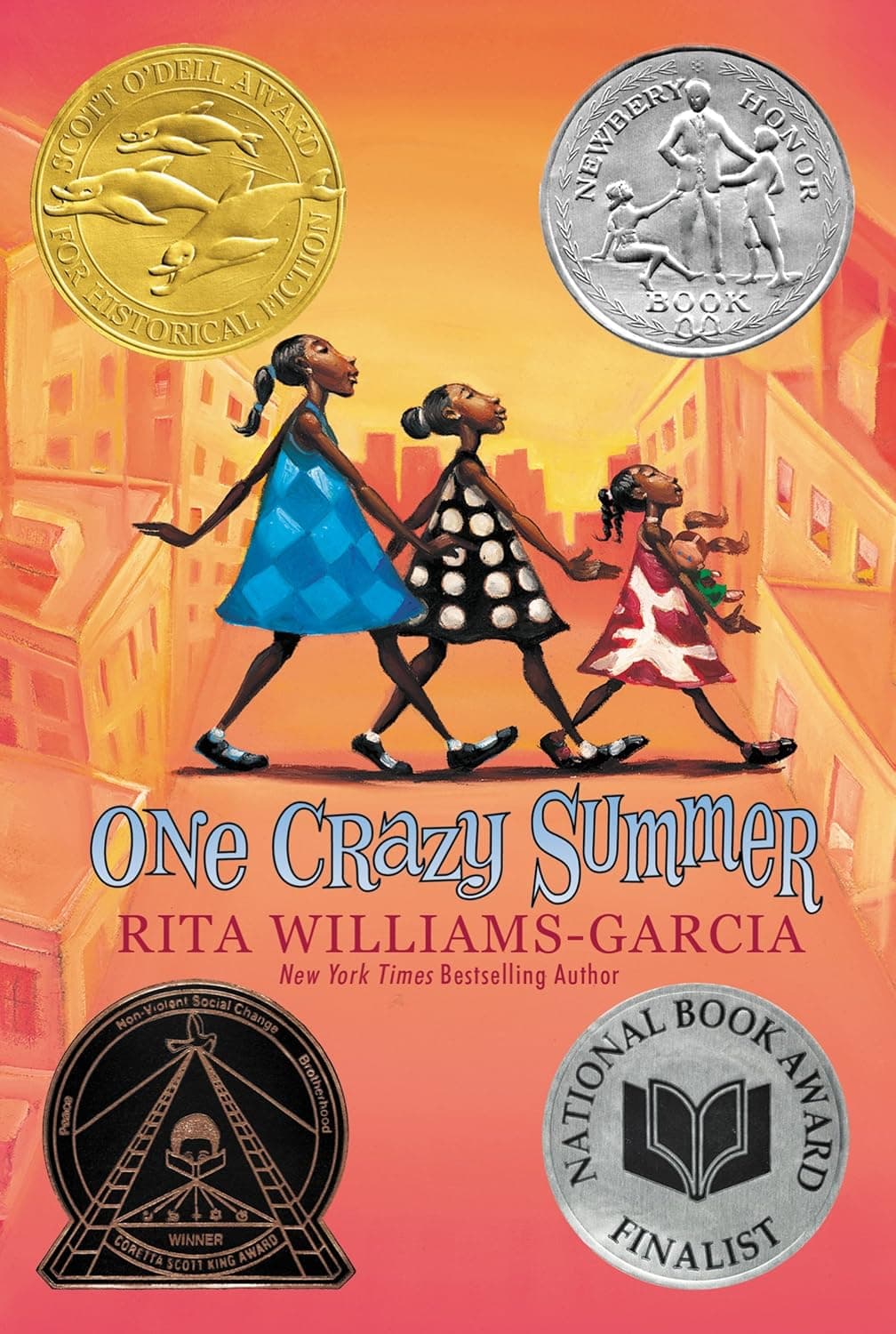
The real explosion happens at Cecile’s house. While Delphine and Fern are out, Vonetta covers Miss Patty Cake with black marker, head to toe. When Fern finds her defaced doll, she attacks Vonetta. Cecile storms in and, for the first time, touches her daughters—only to wrench them apart. She scolds Delphine for letting it happen, calls Vonetta cruel, and tells Fern she’s “too big” for a doll. No comfort follows, only order.
Chapter 15: Counting and Skimming
Delphine tries to save Miss Patty Cake with soap, Ajax, then Pine-Sol, but the ink has sunk in. The doll turns gray, scratched, and sour-smelling. Delphine hides it in her suitcase and quietly starts counting the days until they can go home. The sisters’ bond feels cracked, and Cecile offers no glue.
At the Center, Sister Mukumbu hands Delphine and Fern stacks of the Black Panther newspaper to count. Delphine teaches Fern a quicker way to bundle sets and feels Sister Mukumbu’s calm approval. Then headlines catch her eye—Huey Newton, Li’l Bobby Hutton—and she skims until she loses count. Instead of a scolding, Sister Mukumbu offers a copy at a worker’s discount. Delphine spends the two dimes she saved for a call to Brooklyn. She chooses understanding Oakland over hearing home.
Character Development
Across these chapters, the girls’ tight triangle shifts: Delphine shoulders more caretaking even as her private hurts surface; Vonetta’s need to belong curdles into betrayal; Fern’s innocence takes a blow; Cecile’s artistry and paranoia harden the distance she keeps; Sister Mukumbu models a steadier kind of power.
- Delphine: Steps further into a parent role, confronts her name’s origin, and redirects her longing for maternal guidance toward Sister Mukumbu. Her curiosity about the Panthers grows into action when she buys the paper.
- Vonetta: Chases popularity at the Center, fails to defend Fern, and crosses a line by defacing Miss Patty Cake—revealing how far she’s willing to go to be seen.
- Fern: Suffers a symbolic loss of innocence with the ruined doll and clings more tightly to Delphine for protection.
- Cecile/Nzila: Asserts her poet’s identity and revolutionary purpose, but her suspicion of institutions extends to her daughters, reinforcing her emotional barricades.
- Sister Mukumbu: Offers discipline without harshness and frames revolution as learning, care, and community—an alternative model of leadership and motherhood.
Themes & Symbols
These chapters braid family rupture with political awakening. The home space remains cold; tenderness comes from the Center. Motherhood fragments into two models: Cecile’s austere, art-first revolution and Sister Mukumbu’s nurturing, community-first teaching. The sisters begin to absorb movement language and purpose, even as they struggle with abandonment and loyalty at home.
Identity crystallizes around names. Cecile chooses “Nzila” as a declaration of self-authorship; Delphine discovers her name is not the rare gift she imagined. That gap—between the meaning a name holds and the meaning a person needs—drives Delphine’s coming of age. Knowledge becomes a choice, too: the newspaper stands in for a path forward, one Delphine buys with the currency of sacrifice.
Symbols:
- Names: The architecture of identity—chosen (Nzila) versus inherited (Delphine)—and the power to define oneself.
- Miss Patty Cake: Childhood innocence and familial trust; the permanent gray stain marks a wound that won’t wash out.
- The Black Panther newspaper: Literacy, consciousness, and commitment; Delphine’s purchase is a quiet pledge to engage.
Key Quotes
“We didn’t come for the revolution. We came for breakfast.”
Vonetta’s line undercuts Sister Mukumbu’s lesson and spotlights competing needs: nourishment versus ideology, attention versus belonging. It also exposes the girls’ precarious home life to the whole room, embarrassing Delphine and sharpening her protective instincts.
“My poems blow the dust off surfaces to make clear and true paths.”
Cecile frames art as action, elevating her poetry to revolutionary work. The image of “dust” and “paths” defines Nzila—“the path”—and signals why she chooses art over motherhood’s daily labor.
“No one listens to kids.”
Delphine’s protest reveals both her felt invisibility and a child’s faith that danger passes over the small. Cecile’s rebuttal—children are used as spies—shatters that illusion and deepens Delphine’s confusion about trust and power.
“FREE HUEY” / “ALL POWER TO ALL THE PEOPLE”
These slogans turn coloring time into civic education. By putting political language in children’s hands, the Panthers make activism tactile and communal—ink, paper, and shared purpose.
“Too big” for a doll.
Cecile’s verdict dismisses Fern’s comfort and fast-tracks her out of childhood. The phrase lands like a sentence, echoing the permanence of the ink seeping into Miss Patty Cake.
Why This Matters and Section Significance
Chapters 11–15 shift the sisters from bystanders to participants in Oakland’s revolutionary life and sharpen the novel’s central tensions. The People’s Center becomes the girls’ true classroom, with Sister Mukumbu modeling a humane, collective power that counters Cecile’s solitary, suspicious stance. Inside the family, loyalty fractures—Vonetta’s betrayal and the destruction of Miss Patty Cake leave marks no scrubbing can erase. For Delphine, buying the Panther paper signals a turn: she begins to author her own path, choosing inquiry over escape and community over silence.