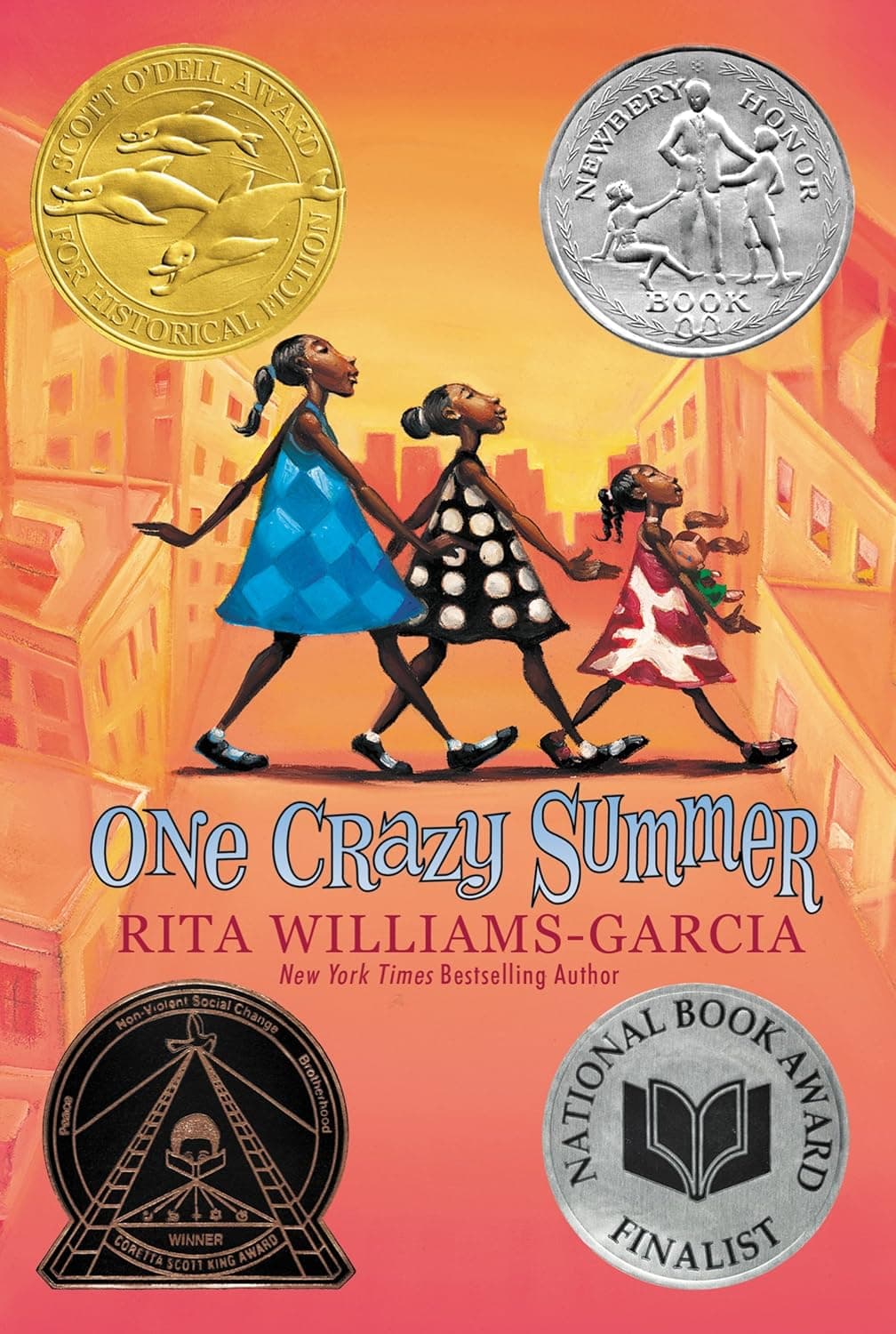
Opening
In Oakland, three sisters test the edges of trust and belonging as their estranged mother keeps them at arm’s length. When Delphine Gaither tries to tether them to home, Cecile Johnson (Nzila) pushes them toward the Black Panthers’ world, where breakfast lines, slogans, and ideology collide with the girls’ need for love.
What Happens
Chapter 6: Collect Call
After Chinese takeout, Delphine uses spare change to call home collect to Brooklyn. She wakes Big Ma, who scolds her for the cost, for being out late, and for their mother’s failings—offering no comfort before Delphine quietly hangs up. The call leaves Delphine lonelier than before.
Back at the house, Cecile has the girls eat on the floor. She passes cartons, eats greedily with chopsticks, and says little. Delphine thinks this sparse meal is the “most mothering” they’ve received—more ritual than warmth. A hard knock rattles the door. Tense, Cecile orders the girls to their room. As they duck away, Delphine catches a glimpse of three figures in dark clothes with Afros, confirming that something secretive—and possibly dangerous—circles their mother.
Chapter 7: For the People
Pressed to the floor with their “spy” skills, the girls listen. The visitors are Black Panthers; Delphine recognizes the language she’s heard on the news. Voices volley across the kitchen: “For the people,” “Seize the time,” against Cecile’s clipped “Me,” “My,” and “No.” The Panthers demand access to her paper, ink, and press for the cause of Social Justice and Activism. Cecile defends her art and tools as her own livelihood.
They call her “Sister Inzilla,” invoke Huey Newton, and insist no Black person is free until all are free. Cornered, Cecile relents—on one shocking condition: “All right. All right. But you gotta take my kids.” After they leave, the girls argue about what Cecile prints. Vonetta Gaither and Fern Gaither whisper about counterfeiting; Delphine suspects poetry and revolution. As she assembles the clues, her Coming of Age accelerates.
Chapter 8: Glass of Water
That night, Delphine enforces bath rotations and puts her sisters to bed. Hours later, Fern pads to the kitchen and asks Cecile for a glass of water. Cecile refuses, telling her to drink the “nasty” bathroom water. Fern squares up: “I’m not Little Girl. I’m Fern.” The moment lands like a stake in the ground—her name, her self—planting the theme of Identity and Self-Discovery.
Delphine smooths things over with her polite “talking to white folks” voice. Cecile begrudgingly gets the water but bans them from her kitchen. As the door swings, Delphine sees strange “white wings” hanging from the ceiling—sheets, prints, poetry, secrets. The scene cements what Big Ma warned: Cecile’s selfishness runs so deep she’d toss away her children over a name. The cold demand that Fern drink every drop underscores the chapter’s raw portrait of Family, Motherhood, and Abandonment.
Chapter 9: Inseparable
Morning brings no breakfast. Cecile sends the girls to the Panthers’ People’s Center, shoving a box of flyers at Delphine and telling her to say they’re from “Inzilla,” who has “gave to the cause.” As they head out, Fern runs back for Miss Patty Cake. Cecile sneers that she’s too old for a doll; Fern answers, steady and sure: “No.”
Delphine understands the doll as ballast against their mother’s indifference. Cecile’s parting instructions—“Stay out till sundown”—echo behind them. On the walk, Vonetta and Fern want to call Papa to rescue them. Delphine agrees—once they’ve saved enough dimes to avoid another collect call that will only bring more scolding.
Chapter 10: Breakfast Program
At the People’s Center, a line of hungry children—Black, white, and brown—waits for free breakfast. Delphine hands over the flyers; a Panther thanks her and calls her “Sister.” The fragile calm shatters when Crazy Kelvin targets Fern’s white doll, accusing her of “self-hatred” and ordering the girls to call themselves “Black,” not “colored.”
All three sisters stand together: they are “colored girls.” The gentle Sister Mukumbu intervenes and dismisses Kelvin’s posturing. The girls eat their cold food in uneasy quiet while other kids taunt Fern as “White Baby Lover,” until Delphine’s sharp defense costs Vonetta a chance at new friends. Even so, one thread ties: the Panthers recognize them as “Sister Inzilla’s” children, giving the girls a fraught but real connection to their mother’s world.
Character Development
Delphine’s voice steadies as her responsibilities expand, but every small win comes with emotional cost. Fern claims her name—and power. Vonetta chases belonging yet holds the line for her sisters. Cecile reveals how fiercely she guards her art and autonomy, even at the expense of nurturing.
- Delphine: Tightens her role as caregiver and strategist—managing money, time, and conflict; reads adult politics between the lines.
- Fern: Rejects “Little Girl,” asserts “Fern,” and clings to Miss Patty Cake as a substitute for withheld affection.
- Vonetta: Yearns for friends but sides with her sisters when teased and tested.
- Cecile (Nzila): Exposed as a committed poet-printer whose radical independence overrides maternal duty; bargains her children to keep her press running.
- Crazy Kelvin: Embodies rigid, performative militancy; polices language and identity without empathy.
- Sister Mukumbu: Models calm, community-centered leadership that tempers the movement’s harsher edges.
Themes & Symbols
The tangle of family and politics tightens. Cecile’s refusal to mother—no comfort on the phone, no food in the morning, a grudging glass of water—forces the girls to build their own family unit. Delphine’s practical care and Fern’s insistence on her name counter Cecile’s emotional vacancy. Miss Patty Cake becomes a contested object: to Fern, a source of love; to Kelvin, a sign of racial betrayal. The doll exposes how tenderness and identity can clash under public scrutiny.
The Black Panthers appear in full complexity: a movement of free breakfasts, slogans, printing presses, and internal contradictions. The kitchen—once a symbol of warmth—becomes a locked studio of art and secrecy. By banishing the girls from that space and outsourcing breakfast to the People’s Center, Cecile merges the domestic and the political, making the revolution both a literal provider and a wedge in the family.
Key Quotes
“All right. All right. But you gotta take my kids.”
Cecile’s bargain exposes her priorities: art and activism over motherhood. The line shocks the girls—and the reader—because it recasts maternal love as negotiable collateral.
“I’m not Little Girl. I’m Fern.”
Fern’s declaration marks her first open defiance. By naming herself, she claims dignity in a household that tries to shrink her.
“For the people.” / “Seize the time.” … “Me.” “My.” “No.”
The dueling refrains compress the ideological battle: collective need versus individual autonomy. The clipped rhythm mirrors a call-and-response that neither side fully wins.
“Stay out till sundown.”
Cecile’s dismissal functions as both curfew and exile. It underlines how she removes mothering from her daily tasks and assigns the community to feed and mind her children.
“We’re colored girls.”
The sisters’ united language choice asserts identity on their own terms. Even as the movement pushes new labels, the girls cling to the words that feel true to their lived experience.
Why This Matters and Section Significance
Chapters 6–10 pivot the novel from private hurt to public struggle. The girls’ hunt for care collides with Cecile’s guarded life as Nzila, where poems turn into pamphlets and the kitchen turns into a press. The People’s Center expands their world—introducing solidarity, surveillance, and contradiction—while solidifying the sisters’ bond. These chapters lay the rails for the summer’s journey: Delphine’s growing authority, Fern’s self-assertion, and the ongoing negotiation between family loyalty, identity, and revolution.