What This Theme Explores
Mental Health and Well-being in Radio Silence probes how young people survive when achievement and image are valued more than wholeness. Through Frances Janvier and Aled Last, the story examines the thin line between coping and collapse: how relentless academic pressure, parental control, and online exposure can turn everyday life into a private emergency. It treats depression and anxiety not as labels but as lived conditions—felt in cluttered rooms, creative silence, and the terror of disappointing others. At its core, the book argues that authenticity, friendship, and permission to choose one’s own path are not luxuries but essentials for mental health.
How It Develops
Early on, mental health exists as a quiet, interior battle. Frances performs the part of a perfect student, defining herself as a “study machine” while privately feeling hollow and inauthentic; Aled, shyer and highly anxious, trembles in public spaces and hides in private ones. Their friendship creates a sanctuary where “Real Frances” can exist and where Aled’s gentleness is received rather than mocked—brief, healing breaks in a culture that rewards only the polished performance.
As the podcast Universe City grows, pressure replaces privacy. Success brings the threat of exposure, and Aled’s fear of being found out intensifies, especially under the controlling scrutiny of his family. His birthday confession that he doesn’t want university is not a whim but a boundary—one he believes he is not allowed to draw. The more he denies his needs, the more his coping mechanisms buckle.
By the end, silence becomes crisis. Isolated at university, Aled withdraws into a wrecked room, hate messages, and a final episode of pure white noise, while Frances—reeling from her own Cambridge rejection—recognizes that both of them have been living by scripts that are breaking them. The friends’ rescue mission is practical and moral: extracting Aled from harm, rejecting externally imposed futures, and choosing a life organized around well-being, not prestige.
Key Examples
Stress and Academic Pressure
- Frances believes any moment not spent studying is “wasted,” revealing how institutional success colonizes her sense of self. This mindset seems protective—work guarantees worth—but actually narrows her identity until it can only rise or fall with grades.
- The night before a maths exam, she breaks down over a single topic, showing how disproportionate fear attaches to small uncertainties. The scene reframes “rigor” as hypervigilance: her body rings the alarm long before any real failure arrives.
- After Cambridge rejects her, Frances feels like a total failure, as if years of effort meant nothing. The shock exposes the trap of conditional self-worth and pushes her to separate who she is from what an institution decides.
Depression and Isolation
- Frances finds Aled’s university room in ruins—trash, hate mail, silence—which externalizes his internal collapse. The space reads like a map of depression: no order, no care, and no belief that anyone will enter with kindness.
- His communication blackout is both a symptom and a shield. Cutting off contact protects him from further demands but also starves him of the connection that could help, revealing how depression can turn self-preservation into self-isolation.
- The final Universe City episode—twenty minutes of white noise—translates despair into sound. With words gone, the static becomes the only possible speech, announcing a crisis that language can’t carry.
Anxiety and Social Fear
- At parents’ evening, Aled shakes through a short speech, making an ordinary task feel like a cliff edge. The moment insists that anxiety isn’t mere shyness; it’s a physiological storm that distorts even simple interactions.
- Both Frances and Aled hide their “weird” clothes and interests to avoid judgment, creating double lives. The cost of fitting in is loneliness—connection requires visibility, but visibility feels unsafe.
Character Connections
Aled Last is the clearest conduit for the theme, carrying acute anxiety and depression shaped by control and emotional abuse at home. Universe City begins as a lifeline, a controlled world where he can give voice to pain without being seen; once that privacy is threatened, the lifeline becomes a noose. His crisis reframes help as an act of courage: accepting intervention, refusing a prescribed future, and rebuilding a self that is not defined by other people’s demands.
Frances Janvier’s mental health is entangled with the Pressure of Academia and the Education System. Her “study machine” persona keeps her safe socially but empties her internally, and the Cambridge rejection forces a reckoning with the brittleness of a single-identity life. Friendship with Aled is restorative because it validates her creative, odd, and joyful self—the parts that grades can’t measure but well-being depends on.
Carol Last embodies the harm of authoritarian parenting cloaked as ambition. She strips Aled’s room, polices his time, and prizes control over care, making achievement a weapon rather than a gift. Her presence shows how mental health can be destabilized not only by stress but by the erosion of safety at home.
Carys Last models a different response: escape. Her decision to run away is both a wound and a strategy, illustrating how survival sometimes looks like disappearance when no safe compromise exists.
Daniel, outwardly polished, reveals the fragility beneath performance: “being smart is the only special thing about me.” His secret, strained relationship with Aled shows how academic and social pressures can twist intimacy into another arena for judgment, deepening the sense that affection must be earned by excellence.
Symbolic Elements
Universe City: The podcast is Aled’s interior made audible—an imaginative refuge where trauma can be reshaped into story. When outsiders breach that privacy, the invasion mirrors the violation of his mental sanctuary, converting solace into stress.
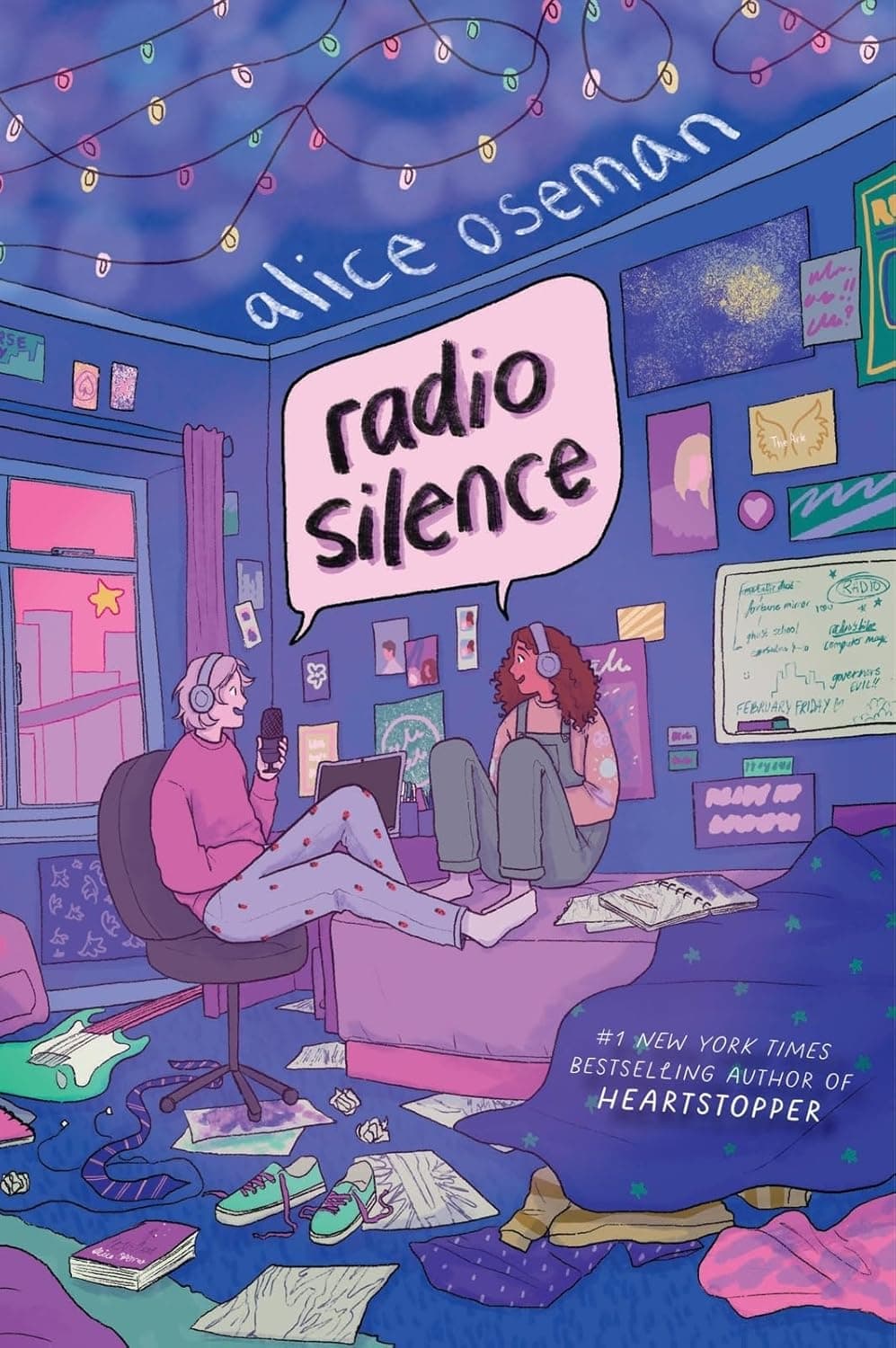
Aled’s Bedroom: At home, his “treasure cavern” and galaxy ceiling honor his inner cosmos; when they’re stripped and painted over, it is an assault on identity. Later, the squalid university room becomes a body-double for depression, a space that has given up on being seen.
Radio Silence: As a pseudonym and a title, it names the condition of suffering without speech. The creator cannot speak in life, so he transmits a coded SOS, hoping the right listener will decode it.
White Noise: The static-only finale of Universe City stands for breakdown—communication collapsed into undifferentiated sound. It’s the soundscape of a mind overwhelmed, where meaning has been lost but distress is unmistakable.
Contemporary Relevance
Radio Silence maps the modern student psyche: admissions anxiety, the monetization of excellence, and the precariousness of online life. It captures both the warmth of digital community and the cruelty of doxxing and pile-ons, showing how visibility can nourish or destroy. As public conversations about mental health widen, the novel offers a humane blueprint—choose people over prestige, process over performance, and needs over norms—and insists that opting out of harmful expectations is not failure but care.
Essential Quote
“I hate being at university,” he said.
“Yeah?”
“Yeah.” His eyes welled up again. “I hate it. I hate everything about it. I’m going insane.” A tear fell and I squeezed his hand.
“Why don’t you quit?” I whispered.
“I can’t go home. I hate it there too. So … I’ve got nowhere to go,” he said, his voice croaky. “Nowhere to go. No one to help me.”
This exchange distills the theme: anxiety becomes entrapment when every sanctioned option—home or university—feels unsafe. The whispered “Why don’t you quit?” introduces the radical alternative the novel champions: that mental health justifies rewriting the script. The scene reframes help as solidarity and choice, not endurance, and marks the turn from silent suffering to active care.