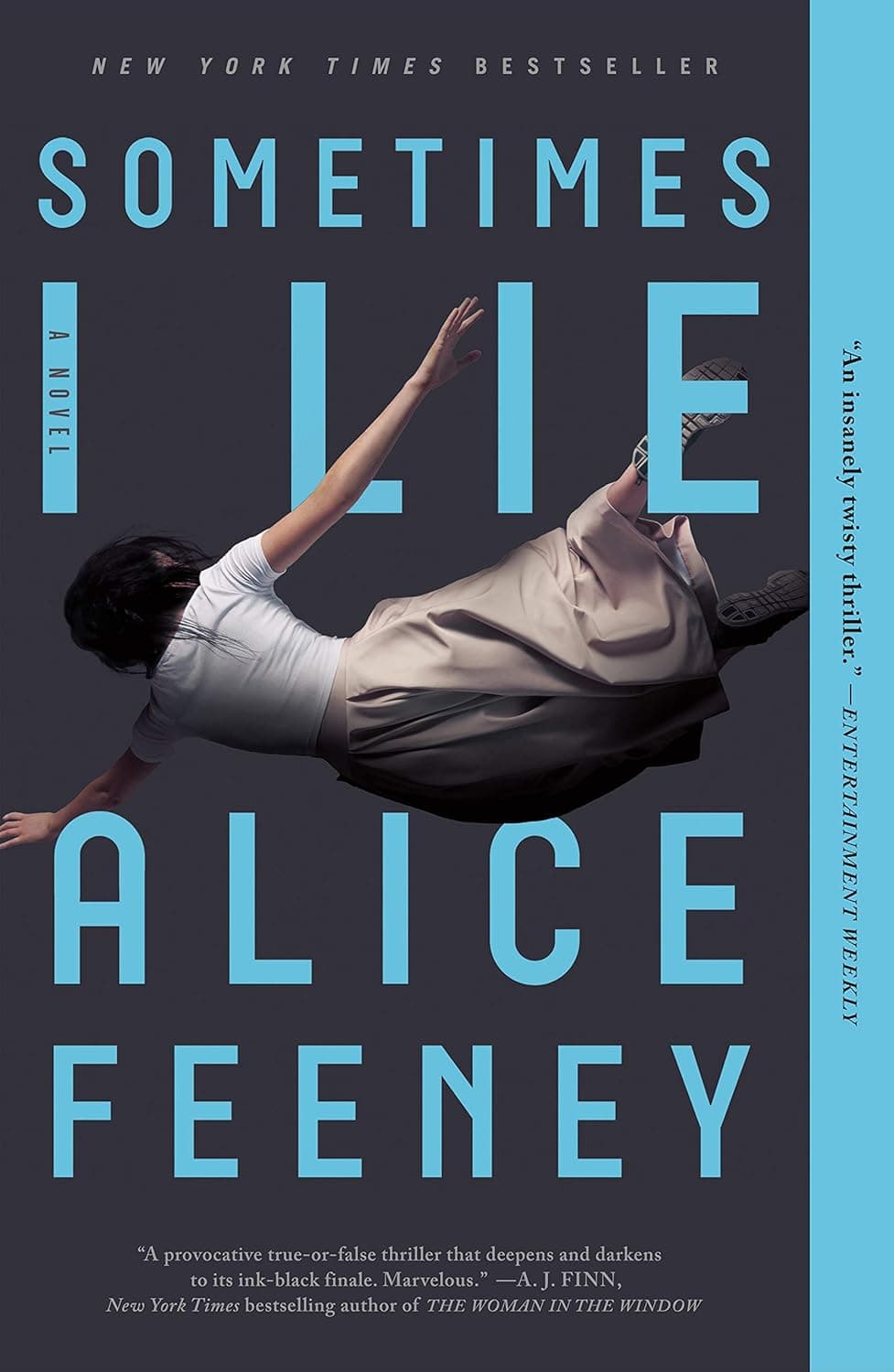
Opening
The mask finally slips. As Amber Reynolds wakes inside her coma and faces a predator in the present, the past detonates: the childhood diaries aren’t hers, and the fire that forged her life is not what it seemed. These chapters pivot the novel around Deception and Unreliable Narration, transforming a mystery of memory into a fight for survival.
What Happens
Chapter 51: Then — Christmas Eve 2016
Amber soaks in the bath on Christmas Eve, cradling the secret of her pregnancy. When she dries off, red fingerprints bruise her neck in the mirror—fresh proof of violence she won’t name. Downstairs, her husband, Paul Reynolds, builds a cozy fire that instantly nauseates her. He apologizes, sensing the old fear it triggers, but the damage to the mood is done.
They sit by the flames and Paul brims with excitement about his international book tour. “Thank God it’s just the two of us,” he says, unwittingly crushing her plan to tell him about the baby. When he casually pulls out a childhood diary from 1992 and suggests reading it together, Amber snaps. She rips it away, and when he asks why she keeps something that hurts her, she reveals the secret at the story’s core: the diaries aren’t hers. “They’re not my secrets. The diaries belong to Claire.”
Chapter 52: Now — New Year’s Eve 2016
Amber’s mind unlocks a long-buried truth about Claire. They are not biological sisters; Amber, born Taylor, was the lonely kid who insisted everyone use her surname. She was Claire’s only friend. On the night of the fire that killed Claire’s parents, Amber watches Claire—backpack on—turn the oven gas knobs, light kindling in the fireplace, and lead her outside to wait. Claire sings a warped lullaby, swapping in “Like a fire in the sky,” then performs hysterical grief once the house combusts, later telling Amber she did it “for us,” so they would be together. The memory brands Amber with lifelong Trauma and its Lasting Effects and an irresolvable knot of Guilt and Blame.
The recollection jerks Amber fully into the present. Her eyes open. She sees the hospital room, hears the door, and instantly closes them, retreating to the safety of her feigned coma.
Chapter 53: Now — New Year’s Eve 2016
A man enters and locks the door: Edward Clarke. He is no doctor—only a night porter who says Amber “destroyed my career” years ago with letters that ruined his prospects. He brags about nudging the police toward Paul as the culprit in Amber’s accident, framing his vendetta as Justice and Revenge. Worse, he admits he has been using his access to drug her and keep her trapped in total Confinement and Powerlessness.
Edward assaults her while she remains immobile, forcing intimacy she can neither consent to nor resist. He recalls seeing her two years earlier when Claire’s twins were born and resenting her for walking past without recognition. Before he goes, he wipes his fingers inside her mouth and hisses that he knows how to keep her here and that no one suspects him—an act of pure Manipulation and Control.
Chapter 54: Now — New Year’s Eve 2016
As the door clicks shut, Amber tests her body—and finds a sliver of movement. Her right hand twitches; she drags her arm up, teeth-clenched against the pain, and yanks out the IV. Realizing the drip contains the drugs Edward is using, she rips the bag free and hides it in a cabinet to preserve evidence.
Exhaustion bears down, but she fights it. She locks onto the red emergency cord above her bed, reaches, and pulls. The light flashes. Voices approach. Her vision narrows to black as she clings to the sheets, “crashing”—no longer purely a victim, but a patient signaling for help.
Chapter 55: Then — Christmas Day 2016
Christmas Day unfolds at Claire’s newly renovated house—once Amber’s childhood home and now a sleek shell scrubbed of history, a living testament to warped Memory and Reality. Amber hides the bruises on her neck with a scarf; her niece Katie tugs at it, nearly exposing the marks. Amber tries to tell Claire that “something… shouldn’t have happened,” reaching toward the truth about Edward, but swallows the confession. Paul gives her a new diary, a tone-deaf gift after last night’s revelation. Amber notices the cast-iron robin doorstop from Claire’s childhood—a weighty relic in a house determined to forget.
On the walk home, Paul is silent and distant. Passing a petrol station, Amber slips into a new flashback: she recently siphoned petrol from Madeline Frost’s car. When Madeline’s vehicle died, Amber “helped” her home, took her credit card, and used it to buy extra petrol in cans—wiping prints, stashing the fuel. Madeline, who inherited the house that should have been Claire’s after the fire, is cruel and vain in Amber’s mind. Amber’s thoughts are cold and meticulous; she concludes Madeline “will not be missed.”
Character Development
Amber Reynolds
- Amber’s confession about the diaries detonates her credibility and reframes every memory she’s shared.
- The fire’s true story explains her lifelong fear, shame, and rage while revealing a capacity for calculation—especially in her methodical plan against Madeline.
- In the hospital, she pivots from utter helplessness to fragile agency by removing the IV, hiding evidence, and pulling the alarm.
Claire
- No longer the flawless sister, Claire emerges as a childhood friend who murdered her parents to keep Amber close.
- Her perfectionism and control in adulthood echo a disturbing origin: love expressed through possession and erasure.
Edward Clarke
- The mask drops: Edward is a resentful porter obsessed with punishing Amber for his ruined career.
- He manipulates institutions, drugs Amber, and assaults her—escalating from shadowy threat to immediate, predatory force.
Madeline Frost
- Introduced in detail as the beneficiary of Claire’s family tragedy and a target for Amber’s vengeance.
- Amber’s pitiless appraisal of Madeline reveals how far she’s willing to go to right perceived wrongs.
Themes & Symbols
Deception and Unreliable Narration
- The diaries’ true authorship forces a full re-read of Amber’s “memories,” proving how deftly the narrative invites and exploits misplaced trust.
- Paul’s cheery travel plans and Claire’s immaculate life both hide rot beneath polish; appearances mislead at every level.
Trauma and its Lasting Effects; Guilt and Blame
- The fire brands Amber’s psyche with fear, shame, and paralysis that mirror her hospital imprisonment.
- She carries survivor’s guilt for watching and staying silent, and her reawakened body parallels her memory’s return.
Justice and Revenge; Manipulation and Control
- Edward justifies cruelty as balance restored; Amber rationalizes her scheme against Madeline as deserved.
- Each character weaponizes power—physical, institutional, psychological—to trap others within their design.
Confinement and Powerlessness
- The coma literalizes Amber’s voicelessness. Edward exploits that silence, while Amber’s emergency cord becomes the first tangible break in the cage.
Fire
- Fire destroys and “purifies,” reshaping lives in violent bursts—from the original inferno to the petrol cans waiting for a spark.
The Robin Doorstop
- A bird meant to fly rendered cast iron and grounded: a symbol of memory’s weight and a childhood frozen in place.
Key Quotes
“Thank God it’s just the two of us, we’d never be able to go if we were tied down.”
- Paul’s offhand joy crushes Amber’s plan to reveal her pregnancy, exposing the widening gulf between their desires. The line also frames “freedom” as a choice that isolates Amber further.
“They’re not my secrets. The diaries belong to Claire.”
- This confession flips the entire narrative, proving Amber has curated the truth and inviting doubt about every earlier claim. It also shifts suspicion and power toward Claire’s hidden hand.
“Like a fire in the sky.”
- Claire’s twisted lullaby turns a child’s comfort into an omen of destruction. The lyric fuses innocence with malice and locks fire to love, fear, and possession in Amber’s mind.
“I know how to keep you here and nobody suspects a thing.”
- Edward’s threat braids control, secrecy, and institutional invisibility. It clarifies the stakes: Amber’s fight is not just for truth but for bodily autonomy and survival.
Why This Matters and Section Significance
These chapters deliver the book’s central unmasking: the diaries expose the lie animating Amber’s story, and the fire’s truth recasts Claire as both savior and destroyer. At the same time, the present tense danger surges—Edward’s assault transforms an abstract mystery into a visceral countdown, while Amber’s removal of the IV and pull of the emergency cord mark her re-entry into the plot as an active force.
The past and present finally lock together. Childhood complicity, adult silence, and calculated revenge converge to question who deserves sympathy, who holds power, and what “justice” becomes when each character writes their own version of it. As the narrative tilts toward the climax, trust collapses—and the spark Amber hides promises one more blaze.