Opening
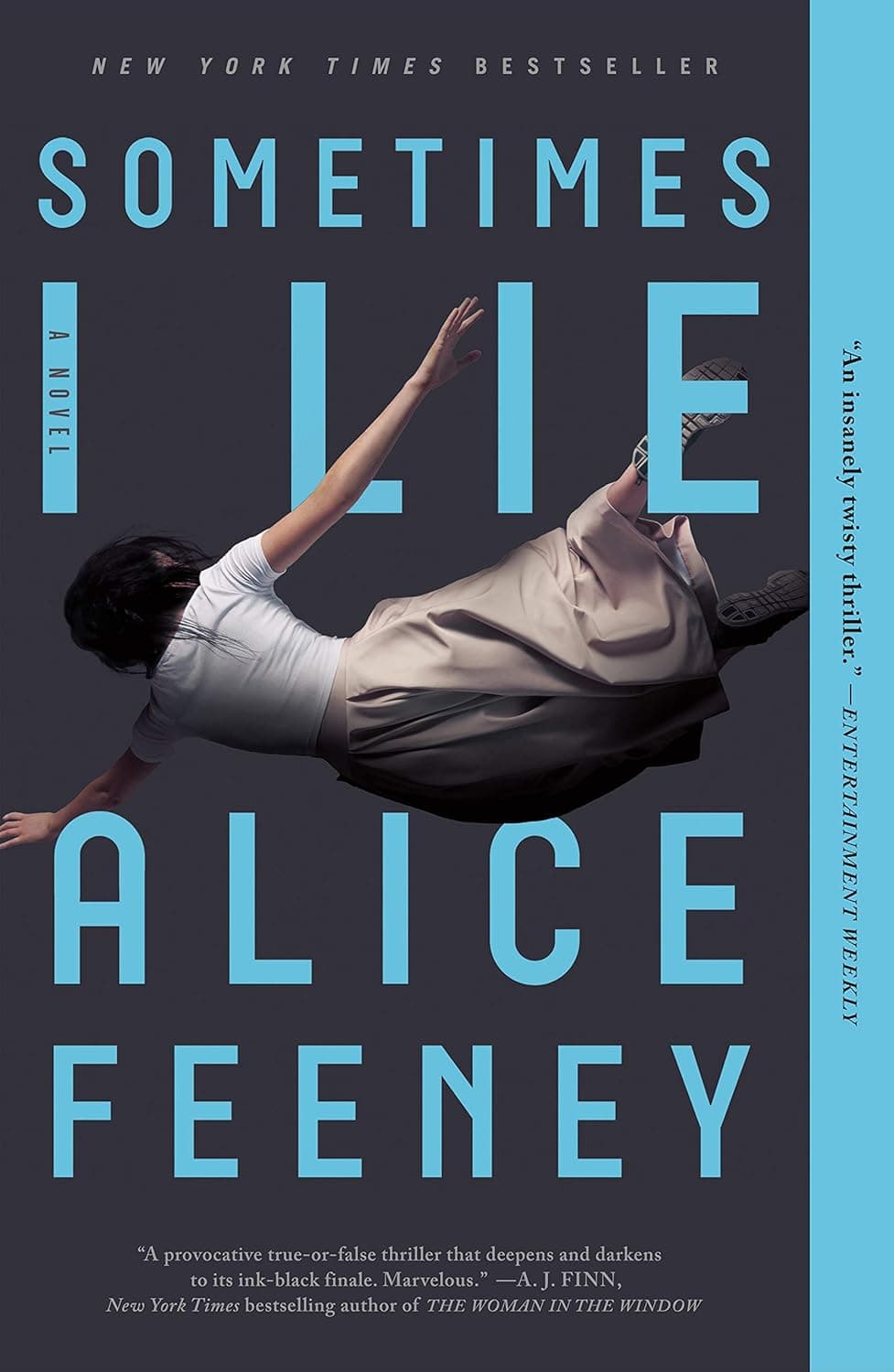
Across five tightly woven chapters, Amber Reynolds navigates a collapsing marriage, a vicious office power play, police suspicion after a near-fatal crash, and the buried wounds of a neglected childhood. The story toggles between “Then,” “Before,” and “Now,” revealing how Amber’s coping rituals, secret schemes, and fractured memories feed a mystery in which no one—and nothing—is fully trustworthy.
What Happens
Chapter 6: Then (Monday, December 19, 2016—Evening)
Amber comes home to a scene that feels staged against her: Paul sits in their kitchen drinking red wine with her sister, Claire. The air hums with forced cheer and a cloying perfume that Amber recognizes as both familiar and dangerous, sharpening the dynamic of Sisterhood and Toxic Relationships. She sends Claire away, locks the door, and deliberately pours the remaining wine down the sink, watching the stain bloom in the porcelain like a mark she can’t scrub off.
Confronting Paul, Amber accuses Claire of planning the visit while knowing she’d be out. Paul shrugs it off, claiming Claire is just low and tried to call Amber first. The argument spikes. Overwhelmed, Amber turns to the oven and begins counting and humming “The wheels on the bus” under her breath—an old ritual that Paul calls “nuts,” a visible sign of Trauma and its Lasting Effects. Finally, he holds her while she admits to herself, “It’s the truth, but not the whole of it,” threading in Deception and Unreliable Narration.
Chapter 7: Before (Monday, September 16, 1991)
A decade earlier, ten-year-old Amber begins a school diary assigned by Mrs. MacDonald after the class reads Anne Frank. She lists three truths with blunt clarity: she is almost ten, she has no friends, and her parents don’t love her—an early blueprint for her Identity and Self-Perception. She sits next to a girl she calls “Taylor,” an unpopular “chalk duster” kid who may be her first chance at friendship.
Amber writes about her Nana—her one source of warmth—who gave her the diary before dying of cancer. At home, her parents’ marriage is a revolving door of silence, drinking, and late-night fighting about money. To drown it out, Amber hums “The wheels on the bus,” planting the seed of the adult ritual we’ve already seen. The diary’s voice is small and controlled, but the pain is not.
Chapter 8: Now (Tuesday, December 27, 2016)
In her coma, Amber feels Claire arrive like a scent—overpowering perfume that cuts through the hospital air. Claire whispers, “You still have glass in your hair,” and Amber is hurled into a surreal, cinematic vision that blurs Memory and Reality: she perches in a tree and watches a faceless little girl singing in the road; a car swerves, hits the tree, and Amber sees her own body arc through the windshield in slow motion. The radio crackles, and the smooth, icy voice of Madeline Frost says, “Nothing happens by accident.” Then Paul arrives, snapping the scene back to the ward.
Paul and Claire argue; they’re not supposed to be in Amber’s room together. DCI Jim Handley and PC Healey interrupt to question Paul. A neighbor heard him and Amber arguing in the street before the crash. Worst of all, some of Amber’s bruises and the marks on her neck predate the accident—suggesting abuse and hinting at Manipulation and Control. Paul, evasive about his bandaged hand and vague about that night, is “invited” to the station.
Chapter 9: Then (Tuesday, December 20, 2016—Morning)
Back at the radio station the week before the crash, Amber executes a meticulously staged plan to unseat her boss, Madeline. In a new red dress and lipstick—her armor—she and her producer, Jo, launch a fake Twitter account and trend the hashtag #FrostBitesTheDust to seed rumors that Madeline is leaving. Amber also nudges Matthew, another boss, to take Madeline’s guests out to brunch, stranding Madeline live on air.
During the show, Amber fights the urge to pick at her lips as minutes drag. Afterward, Madeline storms into the debrief, furious about the rumors and a missing coffee mug. Amber stays cool: Matthew is gone for the day—with her guests. A red envelope peeks from Madeline’s notebook, part of Amber’s bigger trap. “Step one is complete,” she thinks, channeling Justice and Revenge with calculated poise.
Chapter 10: Before (Thursday, October 24, 1991)
In her second diary entry, Amber hovers at the edge of friendship with Taylor. When wealthy bully Kelly O’Neil taunts Taylor for being “flat-chested,” the universe spins a chance: during a rainy hockey game, Amber’s stick “accidentally” flies and hits Kelly in the face, drawing blood. Amber records the event with a careful hedge—“It was an accident, so I didn’t feel too bad about it”—then recalls Nana’s maxim that there are no accidents and everything happens for a reason. The line casts a lingering doubt over her innocence.
At home, another plate shatters. Amber imagines her mother threw it at her father after he mocked her weight. She clutches Nana’s robin-shaped metal doorstop—heavy, grounded, unable to fly—an image of her own stuckness. She decides to “sleep on” the problem of being friends with Taylor, underscoring how isolation shapes her choices.
Character Development
Beneath the shifting timelines, core relationships calcify: a marriage curdles into secrecy, a sister bond bristles with threat, and a professional rivalry becomes a battleground for control.
-
Amber
- Reveals herself as both victim and strategist: traumatized, compulsive, and tender in the hospital timeline; cold, precise, and vengeful at work.
- Uses rituals (counting, humming) to manage panic; admits she withholds “the whole truth,” foregrounding her unreliability.
- Childhood diary entries expose the origin of her loneliness, anger, and appetite for plausible deniability.
-
Paul
- Appears caring in flashes but evasive under pressure; his bandaged hand, the neighbor’s report, and older bruises on Amber position him as a prime suspect.
- Prefers the “glamorous” version of Amber, suggesting conditional love and image-conscious pride.
-
Claire
- Enters rooms with perfume and smiles but radiates a “flash of danger.”
- Keeps secrets with Paul and violates the hospital agreement, implying she holds key knowledge about the week of the crash.
-
Madeline Frost
- Cuts a tyrannical figure in Amber’s professional world.
- Becomes the target of Amber’s slow-burn takedown, raising questions about who is the true manipulator.
-
Jo
- A willing accomplice to Amber’s plot, enabling the rumor campaign and amplifying Amber’s reach.
Themes & Symbols
The novel threads deception through every timeline. Amber states she lies and omits; Paul minimizes and deflects; Claire hovers at the edge of confession. The structure—Now/Then/Before—makes truth a moving target, so readers triangulate through tone, detail, and contradiction to parse Deception and Unreliable Narration.
Childhood wounds refuse to stay buried. The “wheels on the bus” refrain migrates from a kid’s defense against nightly fights to an adult’s panic ritual, mapping the direct line of Trauma and its Lasting Effects. In Amber’s coma, perception fractures: the faceless girl, the radio voice, the tree vantage—everything slides between Memory and Reality, while the police probe turns private hurt into public scrutiny, implicating Manipulation and Control.
Symbols concentrate this tension:
- Red dress and lipstick: armor and mask for the office battlefield, a curated persona to execute revenge.
- The robin doorstop: a grounded bird that cannot fly, mirroring Amber’s trapped childhood.
- The faceless girl: an absence with agency—possible repressed memory, fractured self, or literal witness—haunting every version of events.
- Hospital room: a site of Confinement and Powerlessness, where Amber’s mind becomes both prison and detective’s board.
Key Quotes
“I feel like an intruder in my own home.”
- Amber’s first step into the kitchen reframes domestic space as hostile territory. The line sets the tone for marital estrangement and primes suspicion toward both Paul and Claire.
“It’s the truth, but not the whole of it.”
- Amber labels her storytelling with surgical precision. The admission codifies partial truths as her default mode and instructs readers to interrogate everything she says.
“You still have glass in your hair.”
- Claire’s whisper yanks the past into the present and triggers Amber’s hallucinatory crash sequence. The image of embedded glass suggests damage that lingers, seen by others before Amber can name it.
“Nothing happens by accident.”
- Madeline’s radio-voice in Amber’s vision echoes Nana’s credo and tilts the crash toward intent rather than chance. The repetition binds the childhood “accident” on the hockey field to the car wreck.
“It was an accident, so I didn’t feel too bad about it.”
- Young Amber’s qualifier is a shield and a tell. The sentence performs innocence while inviting doubt, training readers to hear the gap between what she writes and what she means.
Why This Matters and Section Significance
These chapters establish the novel’s operating system: three timelines that refract the same core questions—what happened to Amber, who wanted it, and why. The “Before” diary builds the psychological architecture that explains the “Then” schemer and the “Now” survivor. Meanwhile, the hospital interrogation turns private patterns of denial and control into public stakes, pushing Paul and Claire into the circle of suspects.
By seeding motifs—the “wheels on the bus,” the stain in the sink, the red armor, the doorstop—and entwining them with the ambiguity of “accidents,” the narrative invites readers to treat every scene as evidence. The result is a taut lattice of memory, motive, and misdirection that primes the rest of the book to escalate questions of abuse, intent, and truth itself.