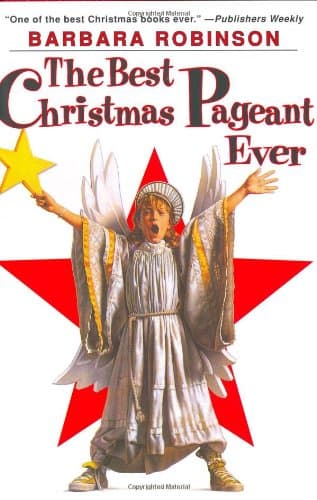
Barbara Robinson’s The Best Christmas Pageant Ever unfolds in a small-town church where a cherished nativity rehearsal collides with unruly newcomers. As the community scrambles to keep tradition intact, the pageant becomes a mirror for the town’s assumptions—and a surprising doorway to grace.
Main Characters
The Herdmans
The six siblings—Ralph, Imogene, Leroy, Claude, Ollie, and Gladys—are collectively known as the Herdmans, “the worst kids in the history of the world.” Wild, unsupervised, and unfamiliar with church, they crash the pageant for the promise of snacks and proceed to upend every rehearsal with blunt questions and streetwise logic. Their ignorance strips the nativity of its safe gloss, exposing the danger, poverty, and wonder at its core. As they lock horns with the anxious congregation and the new director, they unwittingly become the story’s truth-tellers, forcing the town—and the audience—to see the Christmas story as immediate, human, and alive.
Imogene Herdman
Imogene—the fiercest Herdman girl—grabs the role of Mary and refuses to relinquish it, bringing menace, curiosity, and a startling protectiveness to the part. She bullies and bluffs, yet her first encounter with the nativity softens into awe as she imagines the risk, fear, and grit of a young mother with nowhere safe to go. Her clashes with the rule-following townspeople, especially Alice, set her in tense orbit around the pageant’s director, whose steadiness Imogene gradually respects. In the pageant’s quiet climax, her tearful, raw performance marks a turning point of Transformation, revealing a toughness reoriented toward tenderness.
Ralph Herdman
Ralph, cast as Joseph, begins as a reluctant participant and emerges as a practical, indignant defender of the holy family’s dignity. His blunt questions—why no one made room at the inn, why the journey was so dangerous—reframe the nativity as a real crisis rather than a polite tableau. Playing opposite Imogene, he steadies the Herdmans’ version of Joseph and Mary with a protective instinct that surprises everyone. His quiet shift from ignorance to engagement anchors the pageant’s new seriousness.
Leroy Herdman
Leroy is a classic Herdman instigator whose mischief steers him into the role of a Wise Man—and, unexpectedly, into generosity. He brings a hustler’s eye to the story’s stakes, speculating about betrayal and danger while pushing the other kids to think beyond rote answers. Most memorably, he swaps the traditional gift for a ham from the family’s charity basket, a no-nonsense offering that turns the Wise Men’s tribute into a gesture of real sacrifice. In shifting from taking to giving, he embodies the book’s vision of The True Meaning of Christmas.
Gladys Herdman
Gladys, the smallest and scariest Herdman, charges into the role of the Angel of the Lord like a comic-book avenger. She refuses ethereal delicacy, delivering the good news with a shout and a shove that jolts the shepherds—and the audience—awake. Her explosive “Hey! Unto you a child is born!” slices through tradition and makes the message sound urgent, risky, and real. While she doesn’t soften much, her ferocity reframes the angelic announcement as frontline, world-changing news.
Supporting Characters
The Narrator
The Narrator, a girl in Imogene’s grade, observes the Herdmans with a mix of dread, fascination, and gradually widening empathy. Through her keen, funny voice, we watch the town’s horror turn to astonishment as the pageant becomes more honest and less polished. Her evolving respect for Imogene charts a journey toward Perspective and Understanding.
Mother (Grace Bradley)
Mother inherits the director’s job and, against mounting complaints, insists on giving the Herdmans a fair chance. Patient, flustered, and quietly brave, she refuses to cancel or sanitize the chaos, guiding it instead toward something true. Her leadership models Inclusion and Acceptance and makes the “best” pageant possible precisely by letting it be different.
Charlie
Charlie, the narrator’s younger brother, accidentally triggers the entire plot with a bluff about Sunday school snacks. A typical kid rattled by the Herdmans, he functions as the story’s catalyst and a barometer of the town’s changing attitudes. His early relief that “there aren’t any Herdmans here” makes their eventual welcome feel all the more significant.
Alice Wendleken
Alice is tidy, rule-bound, and certain she should be Mary; Imogene taking the role is her worst nightmare. She catalogs every Herdman offense and embodies the town’s prim judgment, never budging even as the pageant grows more powerful. Her rigidity highlights the book’s call to humility and Challenging Preconceptions.
Minor Characters
- Father: The narrator’s wry, skeptical dad dreads the show and then is disarmed by its sincerity, conceding it was “quite a pageant.”
- Mrs. Armstrong: The sidelined original director phones in orders from her sickbed, representing tradition so rigid it nearly smothers change.
- Reverend Hopkins: The minister backs Mother’s decision, reminding the congregation that Jesus’s welcome is for everyone—even the town terrors.
- Claude and Ollie Herdman: As Wise Men alongside Leroy, they add comic menace and plainspoken questions that help deconstruct and rebuild the nativity.
Character Relationships & Dynamics
At the story’s core stand two families whose orbits collide: the Herdmans, all bluster and survival instinct, and the narrator’s household, the church’s reluctant caretakers. Mother’s steady, stubborn openness becomes the counterweight to the Herdmans’ chaos, drawing Imogene, Ralph, Leroy, and Gladys into a fragile trust that makes rehearsal possible. The narrator, watching Imogene from up close, moves from fear to respect, while Charlie learns that the kids he dreaded are capable of startling kindness.
Opposing them is the town establishment—Alice, Mrs. Armstrong, and other church ladies—whose devotion to propriety puts them at odds with the messy realities the nativity depicts. Their pressure on Mother escalates as the Herdmans keep asking raw, inconvenient questions; the conflict pits tidy tradition against truth-telling realism. Reverend Hopkins serves as a quiet ally, reminding the congregation that the gospel’s welcome isn’t conditional, while Father’s dry asides give way to genuine admiration once the curtain rises.
Within the pageant itself, pairings reshape familiar roles: Imogene and Ralph play Mary and Joseph like embattled parents guarding a newborn, turning sentiment into grit and love. Leroy, Claude, and Ollie redefine the Wise Men through their ham-gift subversion, and Gladys’s explosive angel terrifies the shepherds into paying attention. These shifting dynamics forge unlikely alliances, expose hidden prejudices, and ultimately knit the community into a humbler, more generous whole.