Imogene Herdman
Quick Facts
- Role: Oldest Herdman girl; self-appointed Virgin Mary in the church pageant
- Reputation: Bully, cigar-smoker, and schemer who “terrorizes” classmates
- First appearance: Early scenes at church and school, when the Herdmans crash Sunday school
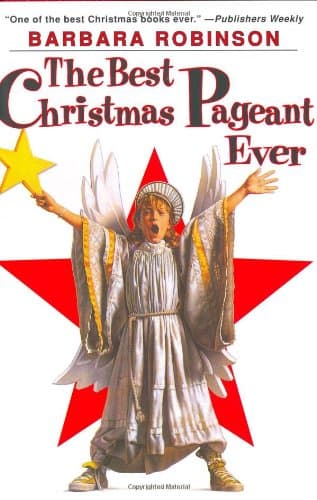
- Standout details: Sharp elbows, big gold earrings, a crooked veil, and—after the pageant—a swollen eye from stumbling in an emotional daze
- Core themes: Transformation, The True Meaning of Christmas
- Family note: Pierced ears courtesy of her sister, Gladys Herdman
Who She Is
Bold, feared, and utterly uninterested in church propriety, Imogene Herdman storms the pageant not out of piety but power—then surprises everyone, including herself. She seizes the role of Mary to control the stage, yet once inside the nativity story she had never heard before, she refuses to play it safely or sweetly. Her questions, outrage, and fierce protectiveness crack open a stale tradition and let real feeling in.
Imogene’s presence is physical as well as forceful: one of six “skinny, stringy-haired” Herdmans with the “sharpest elbows,” she insists on keeping her new gold earrings under Mary’s veil. Even her veil sits “cockeyed,” a visual echo of how she unsettles the church’s neat pageant—and how the pageant ultimately unsettles her. She becomes the book’s most vivid embodiment of Challenging Preconceptions: the “worst” kid revealing the story’s best truth.
Personality & Traits
Imogene’s rough edges are real, but they protect a blunt honesty that the pageant sorely needs. She doesn’t know the script—so she asks the questions polite people won’t. What looks like defiance often masks a bracing moral instinct: if Mary was turned away, if Herod wants to kill a baby, then outrage—not decorum—is the right response.
- Intimidating and cunning: She gathers secrets (like classmates’ weight) and leverages them—she even bullies Wanda Pierce out of a charm bracelet. Threatening to stuff a pussy willow in Alice Wendleken’s ear secures her the role of Mary.
- Blunt and inquisitive: Having never heard the nativity, she breaks the play-acting with “Wait—what?” interruptions: Who would leave a baby in a feedbox? Where are the adults in charge?
- Bossy yet protective: Her Mary is “loud and bossy,” more stressed mother than meek saint. She barks orders, guards the baby, and instinctively burps the doll after laying it in the manger—behavior that reads as irreverent and deeply maternal at once.
- Defiant: She smokes cigars in the church bathroom, triggering a fire-department fiasco. Her rule-breaking exposes how much the town values appearances—and how little it expected to be moved.
Character Journey
Imogene begins as a one-note terror who treats the pageant like a new opportunity to scheme. The turning point comes the instant she hears the nativity for the first time: her outrage at the innkeeper and horror at Herod aren’t jokes—they’re moral clarity. From there, she shifts from heckling to inhabiting Mary. She polices the stable, shields the baby, and rejects any version of the story that makes the danger tidy or the poverty pretty. During the performance, under candlelight and “Silent Night,” she breaks—crying openly, veil askew, later stumbling into a cabinet as if the world has tilted. The town witnesses not a perfect pageant but a true one. Her arc reframes the community’s faith through a new lens, modeling Perspective and Understanding.
Key Relationships
- Alice Wendleken: Alice is Imogene’s prim foil—the keeper of rules and lists. Imogene bullies her out of the Mary role, but the deeper contrast is moral: Alice measures behavior; Imogene, once engaged, measures justice. Alice’s horror catalog highlights how easily “goodness” can become surveillance.
- Mother: The reluctant director who gives Imogene a chance, Mother answers every blunt question instead of shutting them down. By treating Imogene seriously, she turns disruption into discovery—and quietly shepherds Imogene toward genuine awe.
- The Narrator: Initially scared and dismissive, the narrator watches Imogene’s curiosity and grief with growing respect. Through Imogene, the narrator learns to see the nativity (and the Herdmans) without the protective gloss of tradition.
- The Herdman Siblings (especially Ralph Herdman): As Mary and Joseph, Imogene and Ralph set the tone. Her investment reins in the chaos, redirecting it toward reverence—right down to the family bringing their ham as a gift when they have nothing else.
Defining Moments
Imogene’s story is punctuated by shocks that first confirm her reputation—then upend it.
- Volunteering for Mary (Chapter 3-4 Summary): She seizes the role through intimidation, terrifying the church ladies. Why it matters: It centralizes the town’s anxiety—and positions Imogene where transformation can actually happen.
- Reacting to the Christmas story: At the first rehearsal, she blurts questions that slice through sentimentality (“Where was the Child Welfare?”). Why it matters: Her outrage reframes the nativity as a story of danger, injustice, and courage, not pageant prettiness.
- The cigar incident (Chapter 5-6 Summary): Smoking in the church bathroom triggers a fire scare and public fury. Why it matters: It raises the stakes; if Imogene fails on stage, the town is ready to say “We told you so.”
- Crying during the pageant (Chapter 7 Summary): Under candlelight and “Silent Night,” Imogene silently weeps. Why it matters: This is the conversion the book cares about—less belief as doctrine, more compassion as recognition.
Essential Quotes
As far as anyone could tell, Imogene was just like the rest of the Herdmans. She never learned anything either, except dirty words and secrets about everybody. This summary of her reputation frames the surprise to come. The “dirty words and secrets” establish her power—and the limits of what the town thinks she can know. The pageant will expand that knowledge into empathy.
"You mean they tied him up and put him in a feedbox?" she said. "Where was the Child Welfare?" Imogene’s language is modern and blunt, collapsing the distance between Bible times and now. By invoking “Child Welfare,” she forces adults to see the real stakes: this isn’t quaint; it’s neglect.
"My God!" Imogene said. "He just got born and already they’re out to kill him!" Her exclamation is both profane and profoundly moral. She reacts as any decent person should—naming the horror plainly—thereby shaming the community’s habit of smoothing the story’s edges.
Imogene Herdman was crying. In the candlelight her face was all shiny with tears and she didn’t even bother to wipe them away. She just sat there—awful old Imogene—in her crookedy veil, crying and crying and crying. The repeated “crying” slows time, letting the audience witness transformation rather than being told about it. The “crookedy veil” keeps her visibly imperfect, underscoring that grace arrives to the flawed, not the polished.
But as far as I’m concerned, Mary is always going to look a lot like Imogene Herdman—sort of nervous and bewildered, but ready to clobber anyone who laid a hand on her baby. This final image recasts Mary through Imogene’s fierceness: maternal protection as holiness. It’s the book’s thesis in miniature—real love looks more like nervous vigilance than serene pageantry.