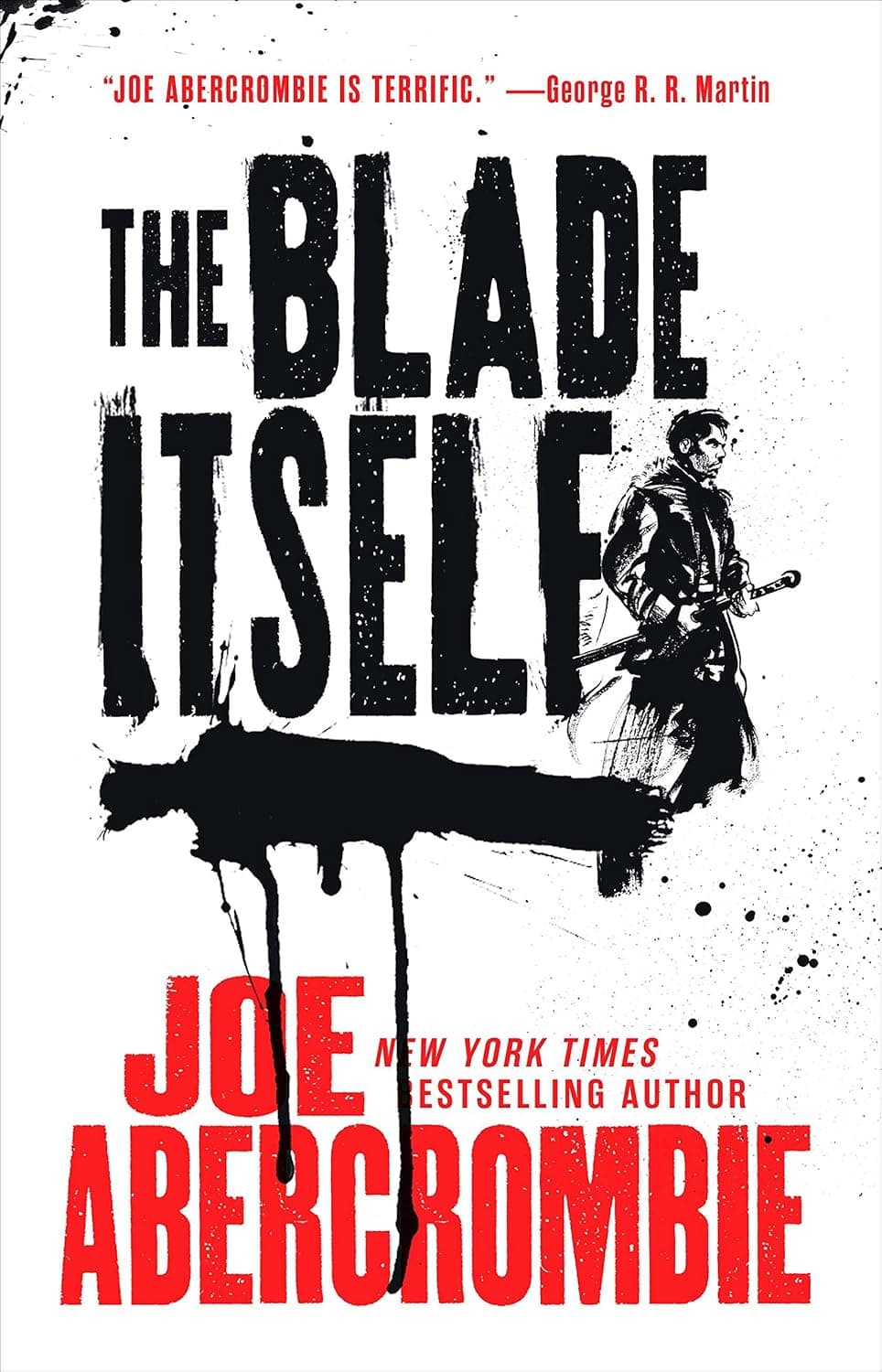
What This Theme Explores
Cynicism and Moral Ambiguity in The Blade Itself interrogates what remains of honor, justice, and heroism when institutions are corrupt and individuals are driven by pain, fear, and self-interest. The novel rejects clean binaries: good intentions curdle under pressure, and villainy often hides in respectable offices. It asks whether morality can survive when survival itself demands compromise—and whether the language of “honor” and “duty” simply masks the machinery of power. In this world, perspective determines who looks like a hero; outcomes, not ideals, dictate who wins.
How It Develops
The theme surfaces immediately through three entwined perspectives whose private thoughts dismantle public myths. Logen Ninefingers, introduced in flight and bereavement, embodies pragmatic survival: he leaves his dead behind in the opening sequence, not from cruelty but from a hard lesson that life offers little room for ceremony (Chapter 1-5 Summary). Sand dan Glokta, once a golden boy officer and now a broken inquisitor, thinks with acid clarity about pain, power, and hypocrisy; his interrogation of former acquaintance Salem Rews shows how private loyalties evaporate before institutional necessity. Meanwhile Jezal dan Luthar treats life as a ladder, fencing and flirting his way upward, mistaking privilege for merit and confusing charm for virtue.
As plots converge, personal cynicism broadens into systemic rot. Glokta’s orders under Arch Lector Sult lay bare that “justice” is a political cudgel: framing Sepp dan Teufel is not about truth but leverage (Chapter 11-15 Summary). Jezal’s training for the Contest exposes honor as performance—sweat lacquered into spectacle for the already powerful. The arrival of Bayaz, bearing wisdom’s trappings, complicates everything: the archetypal guide manipulates with opaque ends, proving that even mythic authority is not morally neutral.
By the end, the machinery of cynicism no longer needs to hide. Glokta dissolves the Mercers on coerced testimony, reflects that “we must work with the tools we have,” and accepts his status as a necessary villain in a necessary machine (Chapter 41-45 Summary). Jezal’s great triumph in the Contest is exposed as theater—secured by Bayaz’s intervention rather than skill or valor. And Logen, who strains toward decency, is dragged back into the brutal efficiency of the Bloody-Nine; each attempt at goodness collapses under the weight of what it takes to live.
Key Examples
-
Glokta’s forensic gaze strips meaning from “truth.” His inner monologue surveys corpses and confessions like a bored expert, noting how outcomes can be tailored to fit political need. The cool detachment is not cruelty alone—it’s the survival posture of a man who knows that skepticism is safer than belief (Chapter 1-5 Summary).
-
Jezal’s Contest exposes the hollowness of honor. He treats fencing as a social game, and when victory arrives through backstage manipulation rather than merit, the spectacle confirms that honor is a commodity distributed by power. “Winning” turns out to be proof of corruption, not of worth.
-
Institutional “justice” as theater: Sult demands names, documents, and finger-pointing—not to discover truth, but to stage it. Glokta’s coerced confessions and show trials reveal a legal system optimized for domination, not deliberation. The Inquisition converts pain into policy, converting doubt into obedience (Chapter 41-45 Summary).
-
Logen’s hard pragmatism reframes heroism as a liability. His refusal to indulge in noble last stands underlines the book’s ethic: living to fight (or flee) another day often requires choices that look ugly from a distance. The novel asks whether “being good” is possible when survival demands a different calculus.
Character Connections
Sand dan Glokta stands at the crossroads of victim and perpetrator. His broken body is a permanent memory of institutional cruelty; his work perpetuates the same. The tension between his disgust and his competence generates the book’s sharpest cynicism: he is both the clearest critic of power and its most effective instrument, proving how systems convert suffering into obedience and pity into compliance.
Logen Ninefingers dramatizes moral ambiguity from the inside. He longs to be decent, yet the Bloody-Nine within him is efficient, adaptive, and terrifyingly suited to the world’s demands. Each time Logen chooses life over grace, the book implies that morality without power is a wish—and power without restraint is the rule.
Jezal dan Luthar begins as a vessel for the lies of his class—vain, careless, and convinced of his entitlement. As he learns that honor is choreographed and merit purchased, his vanity curdles into cynicism. His arc suggests that disillusionment without accountability does not produce virtue; it produces a more polished selfishness.
Bayaz embodies the theme at its grandest scale. The “wise wizard” is neither mentor nor moral compass but an engineer of outcomes, treating nations like game pieces. His omniscience exposes the emptiness of epic guidance: if wisdom serves only victory, it is simply power wearing a pleasant mask.
Symbolic Elements
The House of Questions turns justice into architecture. Its subterranean rooms and ritualized cruelty symbolize a state that manufactures “truth” to fit the case, making darkness not an absence of light but a policy.
The Contest functions as a ritual of respectable violence. Marketed as honor’s purest arena, it is ultimately decided by influence and trickery, revealing that the pageantry of virtue exists to launder the decisions of the powerful.
“The blade itself” is the novel’s governing metaphor. Violence appears elemental and self-perpetuating, implying that once force is unsheathed, it writes the terms to which morality must bend—blurring responsibility and making ethics feel secondary to survival.
Contemporary Relevance
In an age of institutional mistrust, performative politics, and curated narratives, The Blade Itself feels eerily familiar. The book’s courts and councils resemble any system where outcomes precede evidence, and where charisma masks extraction. It speaks to how quickly ideals become branding and how easily “justice” becomes a stage-managed product. Most unsettling is its insistence that cynicism can be a rational response—and yet, without a counter-ethic, cynicism only perfects the system it despises.
Essential Quote
“Once you’ve got a task to do, it’s better to do it than to live with the fear of it.” (Chapter 1-5 Summary)
This mantra, attributed to Logen’s father, distills the novel’s ethic of grim pragmatism: action over aspiration, survival over purity. It captures how fear, honor, and morality are subordinated to necessity—how “doing” becomes its own justification in a world where hesitation is fatal. The line is both wisdom and warning, explaining why characters harden—and how, step by step, expedience becomes a philosophy.