Most Important Quotes
The Title's Origin
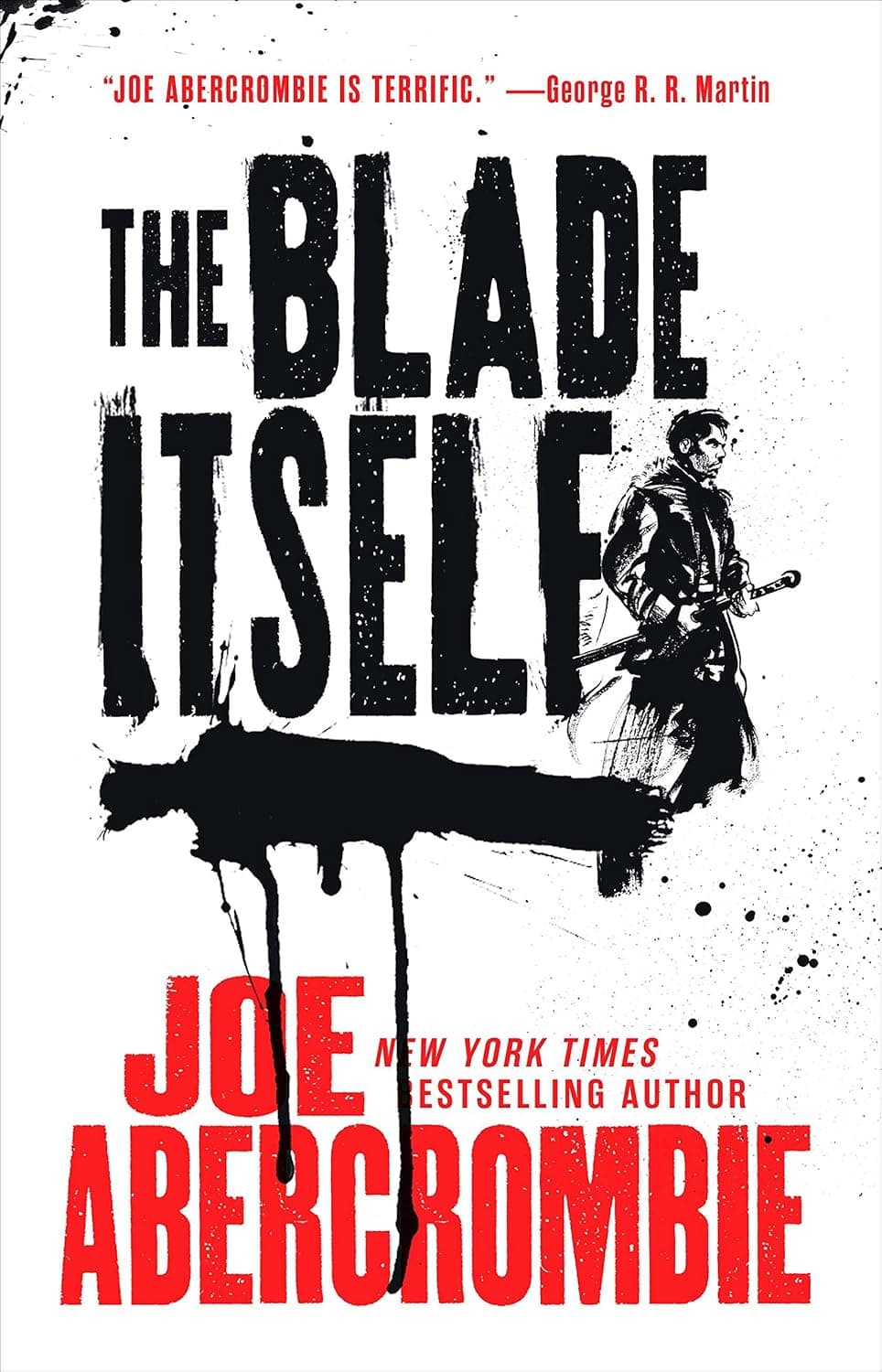
"The blade itself incites to deeds of violence."
Speaker: Homer (Epigraph) | Context: As the Part I epigraph, drawn from Homer's The Odyssey, this line gives the novel its title and philosophical spine.
Analysis: The epigraph suggests violence carries its own momentum—once introduced, it compels further harm. This premise radiates through every major arc: Logen Ninefingers is haunted by the Bloody-Nine, a self that seems summoned by steel, while Sand dan Glokta becomes both instrument and victim of systemic brutality. The idea reframes violence as an active agent and aligns the novel with the theme of The Nature of Violence, where force corrodes both wielder and world. Stylistically, the classical allusion confers a grim universality, signaling that what follows is not chivalry but cause-and-effect carnage.
The Survivor's Mantra
"Say one thing for Logen Ninefingers, say he’s a survivor."
Speaker: Logen Ninefingers | Context: After plummeting from a cliff and washing ashore, Logen appraises his ruined circumstances with dry understatement.
Analysis: The refrain functions as a self-mocking epitaph that never quite lands, encapsulating the ethic of Survival and Pragmatism. It is pride edged with resignation, measuring worth not by honor but by endurance. The irony is black: survival forces Logen to carry the weight of his deeds, binding him to The Burden of the Past and Memory. As a structural device, the line punctuates crises across the narrative, foreshadowing that survival here is not triumph but the relentless continuation of consequence.
The Torturer's Question
"Why do I do this?"
Speaker: Sand dan Glokta | Context: Limping into another day’s work at the House of Questions, Glokta’s internal refrain meets the clatter of locks and the stink of fear.
Analysis: This looping question is Glokta distilled—self-lacerating, lucid, and trapped. Once a shining officer, now a crippled inquisitor, he embodies the machinery of Power and Corruption while being crushed by it. The rhetorical nature of the question—part confession, part deflection—underscores the novel’s moral algebra: survival, utility, and pain justify one another in an endless circle. As a technique, the interior monologue sets biting irony against grim procedure, making Glokta’s sections both repellent and irresistibly human.
The Pragmatist's Creed
"Once you’ve got a task to do, it’s better to do it than to live with the fear of it."
Speaker: Logen Ninefingers (quoting his father) | Context: With a Shanka gnawing his leg and a cliff beneath him, Logen chooses the river over paralysis.
Analysis: This axiom is the hard kernel of Logen’s worldview and a clear emblem of Survival and Pragmatism. It rejects heroics for agency: outcomes may be grim, but choosing is the one remaining freedom. The line sets him apart from characters like Jezal dan Luthar, whose vanity stalls action. As craft, the remembered voice of the father compresses backstory, ethos, and immediate peril into one decisive beat.
Thematic Quotes
The Nature of Violence
A Life of Pain
"His life. It seemed a bitter, pointless sort of a life now. No one was any better off because of it. Full of violence and pain, with not much but disappointment and hardship in between."
Speaker: Logen Ninefingers | Context: Hanging from a root above a gorge, Logen sifts his past as death looms near.
Analysis: The passage strips away any romance of the warrior’s path, tallying cost without consolation. Logen recognizes himself as both wounder and wounded, a man whose survival compounds harm. The blunt, accumulative syntax mirrors the unrelentingness of his history, reinforcing The Burden of the Past and Memory. It’s a manifesto of anti-heroism: endurance does not redeem, it merely extends the ledger.
The Professional's Lie
"I don’t want to hurt you, believe me, it will give me no pleasure.” Nothing will.
Speaker: Sand dan Glokta | Context: Addressing the merchant Salem Rews, Glokta offers a sterile mercy while his inner voice nullifies it.
Analysis: The split between spoken line and internal rejoinder dramatizes the corrosion of empathy. The outward civility is procedural; the inner addendum—“Nothing will”—exposes a man hollowed out by his own ruin. Violence here is not sadistic exuberance but professional vacancy, sharpening the novel’s portrait of Cynicism and Moral Ambiguity. Irony operates at the sentence level, turning politeness into a scalpel.
The Disparity Between Appearance and Reality
The Facade of Fashion
"If he was being completely honest, he didn’t really enjoy smoking. It made him feel a bit sick, but it was very fashionable and very expensive, and Jezal would be damned if he would miss out on something fashionable just because he didn’t like it."
Speaker: Narrator (about Jezal dan Luthar) | Context: During a card game with fellow officers, Jezal performs sophistication he does not feel.
Analysis: The irony is precise: luxury that induces nausea is nevertheless compulsory in Jezal’s self-mythology. The observation captures Jezal dan Luthar as a creature of display, enslaved to status more than to pleasure. As motif, the expensive pipe is a miniature of his larger roles—fencer, officer, suitor—where appearance outruns substance. The sentence’s cool omniscience pries apart image and appetite, indicting a culture that mistakes cost for value.
The Crumbling Facade of the Union
"The Union has never seemed more powerful, has never controlled more land, but beneath the façade we are weak."
Speaker: Arch Lector Sult | Context: In a rare moment of candor with Glokta, Sult sketches the Empire’s rot beneath its gilding.
Analysis: The line pivots on “seemed,” making power a veneer rather than a fact. The Union mirrors its most polished sons—Jezal and Glokta—all posture masking fragility, thereby deepening the theme of institutional Power and Corruption. Diction like “façade” and “weak” compresses geopolitical exposition into a moral diagnosis. Foreshadowing hums beneath the surface: the gravest threats will come from internal decay, not foreign banners like Bethod.
Cynicism and Moral Ambiguity
The Nature of Power
"Life—the way it really is—is a battle not between good and bad, but between bad and worse."
Speaker: Joseph Brodsky (Epigraph) | Context: As the Part II epigraph, this line lowers the moral ceiling on the conflicts to come.
Analysis: The sentence rejects the heroic binary, substituting triage for virtue. It frames the protagonists’ choices as damage control: Logen fumbles toward decency, Glokta survives by serving rot, and Bayaz maneuvers with ends opaque and means ruthless. As a thematic overture to the First Law, it primes readers to expect inversion of trope and erosion of ideal. The aphoristic form gives it the chill of a rule rather than an opinion.
The Liar's Truth
"Oh, that. I am a liar."
Speaker: Bayaz | Context: After implying cooperation with Bethod, Bayaz voids his promise with disarming bluntness.
Analysis: The paradox—truthfully declaring deceit—recasts Bayaz from eccentric sage to dangerous operator. Its shock value lies in its candor: he names the game and invites everyone to keep playing anyway. Irony weaponized becomes character: words are not bonds but tools, and the wizard’s charisma is a mask with teeth. The line amplifies the novel’s commitment to Cynicism and Moral Ambiguity, warning that power is most potent when it narrates reality itself.
Character-Defining Moments
Logen Ninefingers — The Hard Truth
"You have to be realistic."
Speaker: Logen Ninefingers | Context: A recurring piece of self-advice he repeats before hard choices, from battlefield retreats to personal reckonings.
Analysis: The mantra compresses an ethic forged in blood: optimism is a liability, clarity a survival tool. It licenses choices that would read as cowardice in nobler tales—running, yielding, abandoning—yet here register as wisdom. By draining sentiment, the phrase keeps Logen focused on probabilistic outcomes rather than ideals. Stylistically plain to the point of austerity, it doubles as character sketch and narrative throttle.
Sand dan Glokta — The Signature Threat
"Body found floating by the docks, bloated by seawater and horribly mutilated… far… far beyond recognition."
Speaker: Sand dan Glokta | Context: A rehearsed intimidation delivered to prisoners in the House of Questions, tailored to shatter bravado.
Analysis: The vivid physicality—“bloated,” “mutilated,” “beyond recognition”—makes fear tactile, not theoretical. Having survived torture, Glokta speaks from intimate knowledge of dread, weaponizing specificity over bluster. The ellipses pace the threat like a slow tightening of a tourniquet, a formal mimicry of psychological pressure. It’s cruelty as technique, revealing a man who has made his trauma into a script.
Jezal dan Luthar — The Card-Table Gospel
"It’s all about the players, and nothing about the cards."
Speaker: Jezal dan Luthar | Context: Boasting during a game of cards, Jezal explains his edge as social dominance rather than luck or skill.
Analysis: The metaphor is confession: Jezal believes performance trumps substance, charm outruns chance. It captures his faith in birth, beauty, and brazenness as trump suits, crystallizing the novel’s critique of elitist theater. The line dovetails with his devotion to appearance over reality, a creed that will buckle under war’s indifference to swagger. As a maxim, it’s smooth; as destiny, it’s brittle.
Collem West — Climbing Without a Ladder
"I didn’t have a choice. I’m not a nobleman. Fencing was the only way for me to get noticed."
Speaker: Collem West | Context: Admitting to Jezal, amid training-yard routines, why he chased distinction with such severity.
Analysis: West’s candor reframes ambition from vanity to necessity, exposing the Union’s class chokehold. Unlike Jezal, his discipline is transactional—a wager against a rigged system—making him harder, humbler, more combustible. The quote threads personal resentment into the broader loom of Ambition and the Pursuit of Power. Its plain diction mirrors West’s workmanlike ethos: no flourish, all grind.
Ardee West — The Scalpel of Truth
"You spoiled little rich boys are all the same. You get everything you could possibly want, then throw a tantrum because you have to pick it up yourself! You’re pathetic! You make me fucking sick!"
Speaker: Ardee West | Context: In a heated confrontation with Jezal, Ardee detonates his self-pity and privilege.
Analysis: Ardee’s tirade slices through aristocratic self-myth with caustic precision. Her profanity and refusal to flatter mark her as a moral counterpoint to salon politeness, a truth-teller in a culture of veneers. The speech weaponizes class anger and personal disappointment, recasting flirtation as indictment. It defines her not as foil but as force—funny, furious, and clear-eyed.
Ferro Maljinn — One Word, Entire World
"Vengeance."
Speaker: Ferro Maljinn | Context: Asked by Yulwei what she wants, Ferro distills her desire to a single, unbending aim.
Analysis: The monosyllable is character as hammer-blow: no adornment, no compromise. It reduces future and identity to a vector pointed backward, making Ferro both terrifyingly focused and tragically arrested. As emblem of The Nature of Violence, the word suggests how trauma collapses possibility into fixation. The brevity is poetic and brutal—nothing more needs saying, and nothing else exists.
Memorable Lines
The Torturer's Lament
"If Glokta had been given the opportunity to torture any one man, any one at all, he would surely have chosen the inventor of steps."
Speaker: Narrator (about Sand dan Glokta) | Context: Confronting a staircase, Glokta translates mundane agony into the argot of his trade.
Analysis: The mordant joke fuses black humor with bodily misery, making pain intimate and absurd at once. It reframes “torture” as daily routine, revealing how thoroughly suffering has colonized Glokta’s imagination. The hyperbole is character logic, not comic relief: stairs are an adversary as real as any traitor. Abercrombie’s tonal balance—grim and wry—turns empathy into a wince and a grin.
Opening and Closing Lines
The Ironic Beginning
"The End"
Speaker: Narrator | Context: The novel opens with a chapter titled “The End,” inaugurating the story with a paradox.
Analysis: The inversion telegraphs a project of subversion: beginnings are endings; victories curdle; cycles grind on. It announces that Logen Ninefingers’ old life is over even as the narrative begins, tying structure to theme. As framing, it primes readers for irony as default and closure as mirage. The two words are a thesis statement masquerading as a prank.
The Unanswered Question
"Why do I do this?"
Speaker: Sand dan Glokta | Context: Alone after toppling the Mercers and receiving orders for Dagoska, Glokta returns to his refrain in the novel’s final beats.
Analysis: Ending where he began, Glokta closes the circle without closing the wound. His “success” yields only deeper entanglement, sharpening the book’s devotion to Cynicism and Moral Ambiguity. The unresolved question is both character and craft: a cliff not of plot but of purpose. It ushers the reader into the sequel with a shiver rather than a bow.