What This Theme Explores
Power in The Blade Itself is not a neutral resource but a moral solvent: whoever grasps it—state, guild, Magus, noble, or brute—finds their motives warped and their scruples pared away. The novel interrogates whether institutions can restrain power when those institutions are themselves designed to wield it, and whether individual virtue can survive within systems that reward ruthlessness. Abercrombie also probes the seduction of power’s “usefulness”: the way good intentions curdle into expedience when violence and manipulation consistently get results. Ultimately, the book asks whether any hierarchy—mystical or mundane—can be anything but a machine for producing winners who justify what they do and losers who live with the costs.
How It Develops
The theme enters at street level with Sand dan Glokta, whose sardonic inner voice exposes the Union’s justice as theater and the Inquisition’s “truth” as product. Early chapters set a spectrum of power: the immediate coercion of Logen Ninefingers, the inherited arrogance of Jezal dan Luthar, and the bureaucratic menace of Arch Lector Sult. Glokta’s interrogation of Salem Rews in the Chapter 1-5 Summary makes plain that confessions are manufactured to fit political needs—proof that power defines justice, not the other way around.
The canvas widens as Sult pits the Inquisition against the Mercers, using Glokta’s talents to fracture a rival power base while feigning public-minded reform. The arrival of Bayaz shifts the axis from institutional to mythic power: a Magus who claims ancient authority yet behaves like any other operator, recruiting “companions” for ends he will not share. In the North, Bethod turns a war of unification into tyranny, echoing the Union’s rot and showing that banners and accents change, but power’s logic does not.
By the time the Open Council convenes, the novel strips away pageantry to reveal where authority truly lies. Fenris the Feared’s raw presence reduces laws and protocol to empty ceremony, a spectacle underscored in the Chapter 36-40 Summary. Sult crushes the Mercers to consolidate the Inquisition; Bayaz rigs honor itself by tilting the Contest; Jezal’s “triumph” becomes the visible sign of invisible hands. In the end, each protagonist finds their agency diminished, discovered only as a margin within larger designs—and even that narrow space is bought with compromise.
Key Examples
-
The Inquisition’s methods: Glokta’s interrogations render “truth” a commodity minted by pain and paperwork, not evidence. The state’s power is shown to be less about justice than about narrative control: who gets to say what happened, and who must sign beneath it.
“We cannot have these constant interruptions!” shouted Glokta. “How can our prisoner sign his paper of confession if his hands are tied? Please release him.” The grim joke exposes both the performance of due process and its violent core: restraint is removed not to free the man, but to finalize his coerced confession.
-
Sult’s machinations: Sult weaponizes institutions to eliminate rivals, using Glokta as a disposable instrument to break the Mercers and enthrone his own allies. His language of duty camouflages personal consolidation of power.
“I have a task for you... I want you to arrest Sepp dan Teufel.” The pause before the command and the promise of “redemption” dramatize how hierarchy conscripts subordinates with flattery and threat, laundering vendetta into policy.
-
Bayaz’s true nature: Posing as a guardian of the greater good, Bayaz treats people as tools and traditions as obstacles. His quiet manipulation of Jezal’s Contest demonstrates that even sacred rituals of honor are pliable when a superior power chooses an outcome—and that moral rot spreads fastest under the banner of necessity. By recruiting companions without real consent, he recasts the “quest” as coerced service.
-
The Open Council: When Fenris the Feared confronts the Union, ceremonious authority evaporates in the face of brute capability. The moment reveals the fragility of institutional legitimacy: power that relies on performance collapses before power that can inflict consequences. It’s not that violence replaces politics; it exposes what politics has been deferring.
Character Connections
Glokta embodies power’s cyclical cruelty. Broken by Gurkish torture, he survives by reproducing the same logic upon others, all while narrating his own self-disgust. His mind keeps the system’s moral contradictions in view, but his body and position insist on participation—showing how power traps even those most conscious of its corruption.
Sult personifies institutional appetite. He sees people as levers and departments as weapons, and he believes sincerely that his dominance is synonymous with the state’s health. In his hands, procedure becomes a mask for neutralizing enemies and elevating loyalists, proving how bureaucracy can professionalize cruelty.
Bayaz represents the oldest and most unaccountable power: myth stamped into man. He tells grand stories of ancient wars, then acts like any contemporary politician—lying when useful, coercing when necessary, and treating secrets as currency. By conscripting companions and bending the Contest, he collapses the boundary between miracle and manipulation.
Jezal begins with petty privilege and graduates to curated prominence. His ascent, managed by mentors and sealed by Bayaz’s interference, reveals how elites are manufactured: not through merit, but through sponsorship, performance, and the quiet removal of obstacles. What looks like destiny is, in fact, design.
Symbolic Elements
The House of Questions embodies the Union’s hidden foundations. Its subterranean corridors and ritualized pain literalize the idea that public order rests upon concealed violence, and that the state’s “answers” are fabricated beneath the streets the citizens walk.
The Agriont’s gleaming towers symbolize civilization’s self-image: stability, refinement, purpose. Inside, however, petty feuds and strategic cowardice rot the marble from within, turning the capital into a diorama of how institutions curate appearances while neglecting responsibilities.
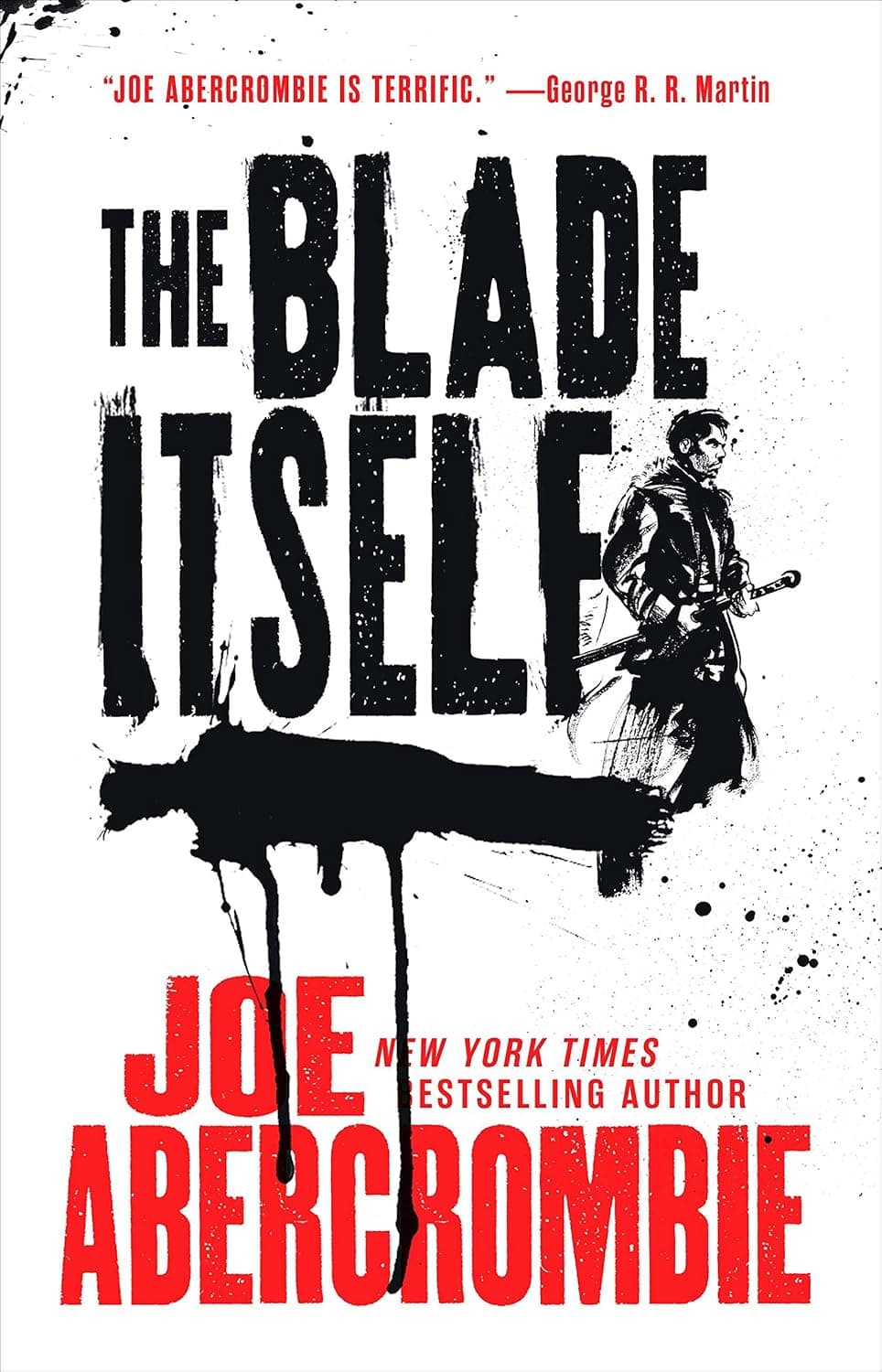
“The blade itself” functions as the novel’s central metaphor: power as a tool that incites its own use. Merely possessing the capacity to harm produces both temptation and justification—violence becomes a solution looking for a problem, and authority a theater seeking an audience.
Contemporary Relevance
Abercrombie’s portrait of power—procedural on the surface, coercive underneath—echoes modern anxieties about governance, corporate influence, and information control. The novel anticipates how institutions can manufacture “truths” and outcomes, how charismatic figures reframe manipulation as necessity, and how spectacle can substitute for accountability until confronted by undeniable force. Its skepticism does not date; it maps how trust erodes when citizens suspect that rules are tools and that merit is choreography.
Essential Quote
“The blade itself incites to deeds of violence.”
The line crystallizes the book’s claim: power alters the wielder before it ever strikes the target. By framing violence as an intrinsic temptation of capability, the quote explains why characters and institutions keep choosing coercion even when gentler paths exist—because possession creates appetite, and appetite demands rationalization.