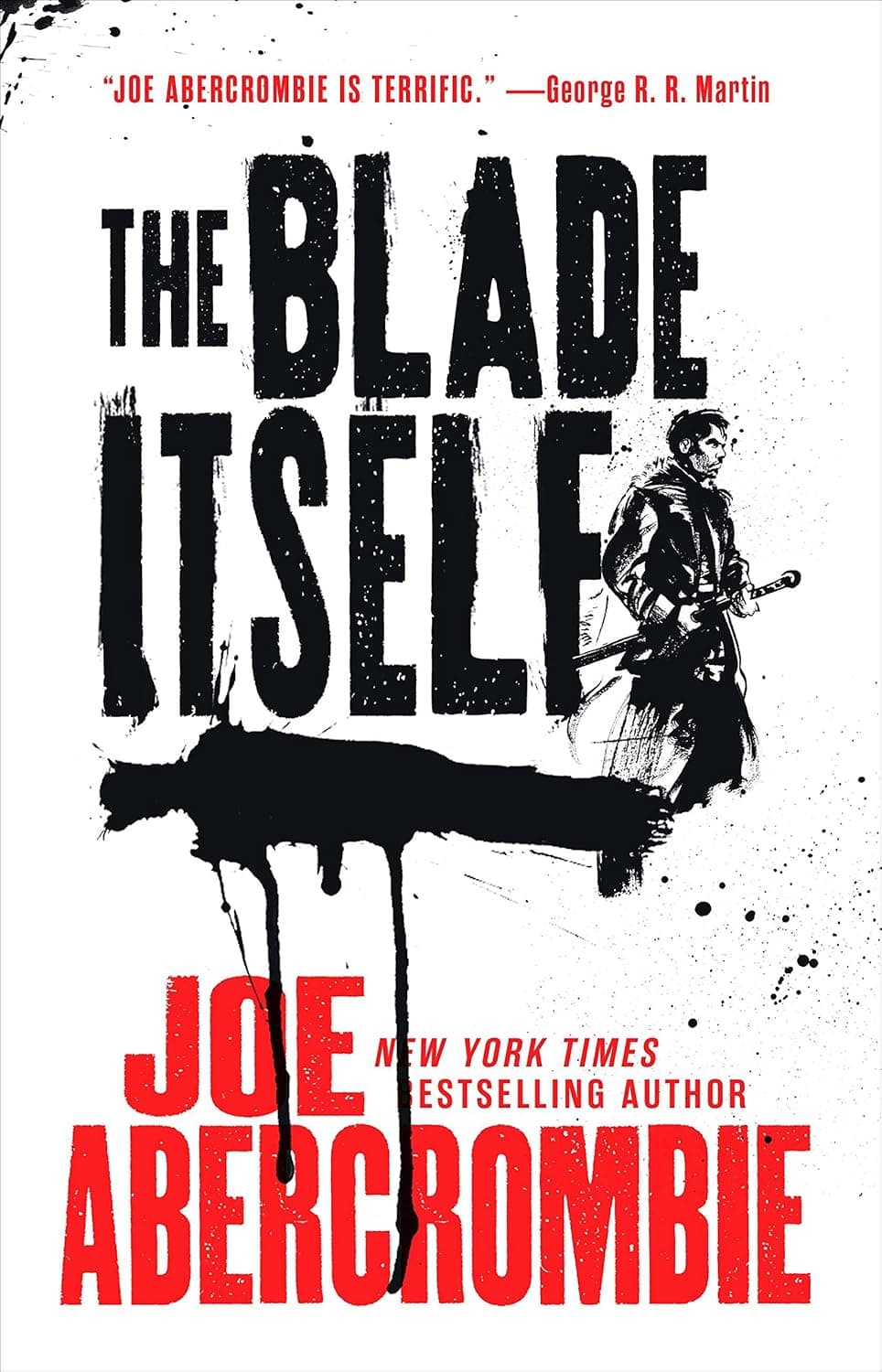
The Nature of Violence
What This Theme Explores
The Blade Itself interrogates whether violence can ever be noble, or whether it inevitably corrodes the people and institutions that wield it. It tests the line between necessity and cruelty, asking when survival hardens into appetite and when justice collapses into punishment for its own sake. The novel also probes how violence shapes identity—whether it is a choice, a contagion, or a mask that eventually grows into the face beneath. At its core, the theme confronts cycles of harm: how pain begets pain, and how even “civilized” violence is often only a polished form of the barbaric.
How It Develops
The theme arrives unvarnished in the wilderness, where Logen Ninefingers scrabbles for life against inhuman foes, the land itself an accessory to brutality. His opening ordeal strips combat of mythic sheen, presenting it as clumsy, wet, and panicked—an animal fact of survival, not a stage for glory (see Chapter 1-5 Summary). From the start, the novel insists that violence is not choreography; it is contingency under pressure.
In the city, Sand dan Glokta reframes violence as policy. His interrogations are conducted with ledgers and titles rather than war cries; yet his ruined body whispers what bureaucratic euphemisms conceal. Violence here is a profession—codified, budgeted, and deniable—its chill all the more disturbing because it masquerades as order and duty.
Against these extremes stands Jezal dan Luthar, who treats violence as sport: rules, judges, points. But his worldview buckles when formal training collides with state force—he sees an arrest unfold and glimpses how power actually hits flesh (see Chapter 16-20 Summary). The novel uses Jezal’s naive vantage to expose the distance between stylized aggression and real harm.
Violence as vengeance arrives in Ferro Maljinn, whose history of enslavement concentrates hurt into a single imperative: destroy those who destroyed me (see Chapter 31-35 Summary). Her entrance collapses any pretense of moderation; the narrative begins to show how righteous rage can become its own prison.
By Part II, the strands converge and escalate. The Fencing Contest that once flattered Jezal’s vanity turns into a crucible where a duel with Gorst maims pride and body alike. Logen’s struggle with his alter-ego intensifies until the Bloody-Nine becomes less a survival mechanism than a terrifying surrender of self. Glokta learns that his “necessary” cruelty merely services the ambitions of Arch Lector Sult, revealing the state’s violence as a mask for personal power. The book closes with the Union readying for war, widening violence from individual bodies to entire nations.
Key Examples
-
Logen’s opening survival fight
They crashed to the wet ground together, rolled together through the dirt and the thorns and the broken branches, tearing and punching and growling at each other. A tree root hit Logen in the head, hard, and made his ears ring. He had a knife somewhere, but he couldn’t remember where.
The scene dismantles heroic spectacle: combat is disorientation, luck, and exhaustion. Violence is not a showcase of mastery but a scramble where the environment, not just the enemy, bruises and decides.
-
Glokta’s interrogations and the refrain “Why do I do this?” Glokta’s clinical routines—tools labeled, steps rehearsed, paperwork filed—strip away rage and reveal violence as procedure. His haunted self-questioning exposes the cost to the perpetrator: moral erosion paired with unending physical pain, a cycle that reproduces in others what was done to him.
-
Jezal’s fencing versus real violence
The white man dealt him a savage blow in the midriff and he folded up with a sigh... The white monster silenced him with a heavy fist in the face, knocking him limp into the road.
Jezal’s curated pain in training—counted, controlled—meets sudden, ruleless force. The contrast shatters his fantasy of honorable combat, showing how “sport” becomes meaningless when power ignores the script.
-
Ferro’s introduction and refusal of mercy
“Mercy? Hah!” She pushed the stopper back into the skin, then tossed it down next to the grave. “Don’t you know who I am?” She grabbed hold of the handle of the shovel, the point of its blade bit once more into the earth.
Ferro transforms the plea for mercy into a reminder of identity forged by suffering. Her pitiless response illustrates how oppression can convert the language of morality into a weapon, recoding mercy as weakness in a world that showed her none.
-
The Bloody-Nine unleashed
The Bloody-Nine’s sword flashed over, broke the haft into splintered halves... He flung it away and hefted the mace, came on even harder, swinging it round with furious bellows.
When the Bloody-Nine surfaces, violence becomes ecstatic and self-sustaining. The loss of deliberation—he flings one weapon for another, accelerating—suggests that the act itself is the goal, obliterating survival’s calculus and the man who once made it.
Character Connections
Logen embodies the paradox of necessary harm: he kills to live, yet each killing feeds a persona that lives to kill. His fight to remain “a good man” dramatizes violence as addiction—periods of control punctured by relapses into the Bloody-Nine, where fear, fury, and habit harden into identity.
Glokta is both artifact and artisan of cruelty. His broken body is the ledger where past violence is written; his daily work is how the state keeps writing. He personifies “civilized” brutality—pain sanitized by process—while his conscience, never fully silent, underscores the hypocrisy of institutions that condemn barbarism while systematizing it.
Jezal begins as the poster boy for romanticized combat, convinced that skill and status purify the act. Reality dismantles him: he learns that pain does not obey rules and that honor offers no protection once fists and politics intrude. His disillusionment charts the collapse of the heroic ideal under contact with actual force.
Ferro channels violence into vengeance so thoroughly that it becomes her grammar for the world. Trauma gives her purpose, but also narrows possibility; relationships become tactical, trust a liability. She challenges any easy separation between justified fury and corrosive hatred by showing how quickly one becomes the other.
Symbolic Elements
-
“The blade itself” The title, echoing the Homeric line, suggests that tools of harm exert their own gravitational pull: once a blade exists, it solicits use. Across the novel—from swords and foils to torture implements—means invite ends, nudging people and states toward the violence their instruments make convenient.
-
Glokta’s body His missing teeth, limp, and chronic pain are living monuments to the permanence of harm. The body refuses forgetting, turning every motion into a reminder that violence lingers long after motives fade.
-
The House of Questions As a sterile site of cruelty—records, cells, appointments—it embodies the bureaucratization of harm. Violence here becomes paperwork, making it scalable, deniable, and chillingly ordinary.
Contemporary Relevance
Abercrombie’s grim realism counters a culture that often glamorizes violence in games, films, and politics, asking readers to consider what is erased when pain is edited out. Logen’s internal fractures echo contemporary understandings of trauma and the way survival strategies can become self-destructive habits. Glokta’s profession raises questions about state power—enhanced interrogations, security rationales, and the moral slippage of “necessity.” Ferro’s vengeance mirrors global cycles of retribution, showing how justified anger can calcify into identity and perpetuate conflict. The novel challenges us to scrutinize not only spectacular violence but also the polite, procedural kind done in our names.
Essential Quote
“The blade itself incites to deeds of violence.”
As the book’s thesis statement, this epigraph frames violence as more than choice: it is an ecology of tools, incentives, and stories that coax action. It links the personal (Logen’s sword, Ferro’s shovel), the institutional (Glokta’s instruments), and the ceremonial (Jezal’s foil), insisting that availability and legitimacy of force shape desire—and that once invited in, violence tends to stay.