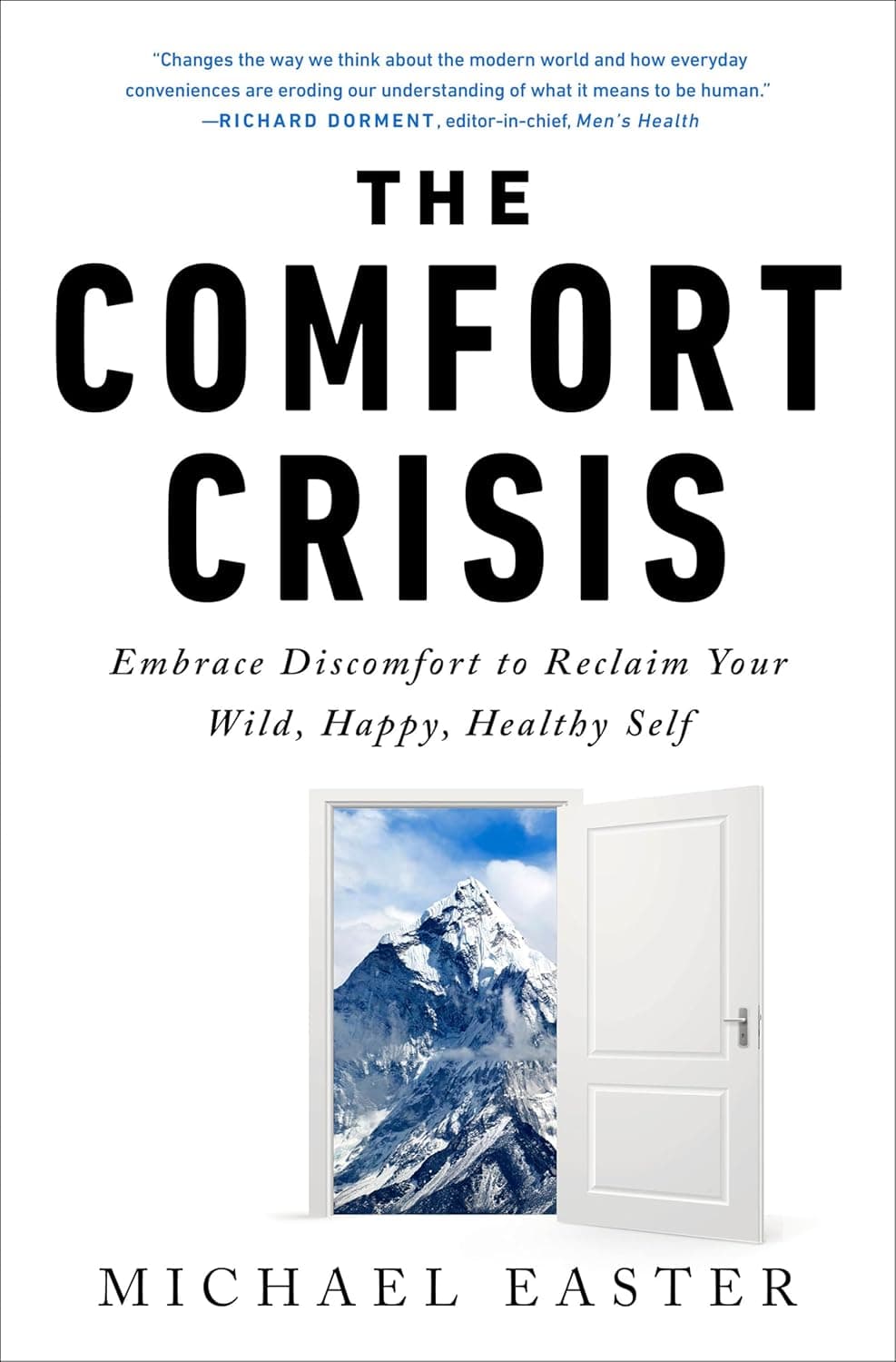
The Comfort Crisis charts journalist Michael Easter’s 33-day caribou hunt into the Alaskan Arctic to probe a paradox: the safer and easier life becomes, the less resilient and fulfilled we feel. The book contends that modern comfort erodes the very capacities—strength, perspective, meaning—that once helped humans thrive, and it offers a blueprint for reclaiming them through deliberate, well-chosen discomfort.
Major Themes
The Crisis of Comfort
The Crisis of Comfort names the central problem: a mismatch between bodies built for scarcity, weather, and work and a world engineered to remove friction. Easter shows how “comfort creep,” a concept grounded in the research of David Levari, steadily shrinks what we can tolerate, turning climate control, ergonomic seating, and constant convenience into habits that dull resilience and heighten chronic stress. The result is a society overfed and underchallenged—safer than ever but increasingly anxious, unfit, and dissatisfied.
Embracing Voluntary Discomfort
Embracing Voluntary Discomfort presents the countermove: intentionally choosing hard things to regain toughness, perspective, and joy. The book anchors this in misogi, a modern rite articulated by Dr. Marcus Elliott: attempt something so difficult there’s a 50% chance of failure, as Easter does in Alaska and in his choice to get sober. Science backs the approach through Mark Seery’s “toughening” research, while Donnie Vincent models a life organized around purposeful hardship—proof that controlled struggle restores capacities that comfort deconditions.
Reconnection with Nature and Wildness
Reconnection with Nature and Wildness argues that the wild is both the setting for and the medicine within discomfort. Days in the backcountry trigger the “three-day effect,” forest bathing calms the nervous system, and rare, unbroken silence reorients attention away from urban overstimulation to “soft fascination.” For Easter—and for outdoorsmen like Vincent—the tundra becomes a teacher, reminding humans of the rhythms we’re built for and providing relief from the sterile excess of modern life.
Confronting Mortality for a Fuller Life
Confronting Mortality for a Fuller Life reframes death-awareness as a tool for urgency, gratitude, and meaning. In Bhutan, Easter learns from Khenpo Phuntsho Tashi that deliberate contemplation of mortality clarifies values and reduces trivial anxiety; in the hunt, he meets death viscerally and recognizes the life-death cycle as sobering, not nihilistic. The perspective shift—accepting impermanence—turns hardship from punishment into a path toward depth.
Supporting Themes
The Power of Boredom and Solitude
The Power of Boredom and Solitude rehabilitates boredom as a signal—not an enemy—that points us toward change, creativity, and self-audit. Drawing on James Danckert, the book shows how the distraction-free Arctic forces Easter to sit with his thoughts long enough for attention to reset, a mental counterpart to physical misogi that dovetails with both Reconnection with Nature and Embracing Voluntary Discomfort.
The Health Benefits of Hunger
The Health Benefits of Hunger reintroduces scarcity as a healthful stressor. With guidance from nutritionist Trevor Kashey, Easter explores fasting and hunger-induced autophagy as cellular housekeeping that modern abundance suppresses. On the tundra, intermittent hunger sharpens appreciation, recalibrates appetite, and reinforces the broader case for cyclical stress.
The Importance of Physical Work and Carrying Loads
The Importance of Physical Work and Carrying Loads elevates functional strain—especially rucking—as an ancestral movement pattern with modern payoff. Through Jason McCarthy and the brutal pack-out of caribou, Easter highlights how carrying awkward, heavy loads integrates strength, endurance, and grit, binding Embracing Voluntary Discomfort to a tangible, whole-body practice.
The Need for Rites of Passage
The Need for Rites of Passage laments their disappearance and revives them through misogi. Self-designed trials with real risk and privacy mark transitions, build identity, and test limits; Easter’s hunt—and his sobriety—function as rites that fuse physical challenge, boredom, hunger, and mortality into one transformative crucible, tying every major theme together.
Theme Interactions
- Crisis of Comfort → Embracing Voluntary Discomfort: Problem meets prescription. As comfort narrows our capacity, intentional hardship re-expands it.
- Reconnection with Nature ↔ Power of Boredom and Solitude: Wild places strip noise and novelty, making true boredom—and its creative reset—possible.
- Health Benefits of Hunger ↔ Confronting Mortality: Both practice a deliberate “letting go”—of food and of permanence—producing renewal (cellular and existential).
- Physical Work and Carrying Loads ↔ Rites of Passage: Heavy, awkward labor becomes the embodied test within misogi, proving competence and catalyzing identity change.
- Confronting Mortality → Embracing Voluntary Discomfort: Remembering we’re finite infuses hard choices with purpose, turning discomfort into meaning rather than mere endurance.
- Reconnection with Nature → All: The wild contextualizes every stressor—hunger, boredom, exertion, death—so they register as natural cycles, not pathologies.
Character Embodiment
Michael Easter Easter personifies the move from numbing comfort to chosen challenge. His sobriety, Arctic misogi, and reflections on hunger, boredom, and death weave all themes into a lived experiment, demonstrating that discomfort—properly dosed—restores resilience and joy.
Donnie Vincent Vincent embodies Embracing Voluntary Discomfort and Reconnection with Nature. A life spent in remote landscapes models how sustained exposure to harshness and wildness builds competence, humility, and a grounded sense of belonging.
Dr. Marcus Elliott Elliott provides the conceptual architecture for misogi and the Need for Rites of Passage, translating the book’s themes into a practical, modern ritual that channels hard effort toward identity-level change.
Mark Seery Seery gives Embracing Voluntary Discomfort its scientific ballast. His “toughening” research connects lived adversity to better mental and physical health, legitimizing hardship as medicine rather than masochism.
Khenpo Phuntsho Tashi The Khenpo anchors Confronting Mortality for a Fuller Life, showing how routine contemplation of death clarifies priorities and softens anxiety. His teachings turn the hunt’s visceral lessons into a durable daily practice.
Jason McCarthy McCarthy stands for The Importance of Physical Work and Carrying Loads, reframing fitness as purposeful strain. Rucking becomes a portable antidote to sedentary comfort and a gateway into misogi-style challenges.
Trevor Kashey Kashey embodies The Health Benefits of Hunger, translating fasting and scarcity into practical levers for metabolic health and appetite reset, and linking physiology to the broader rhythm of cyclical stress.
James Danckert Danckert represents The Power of Boredom and Solitude, recasting boredom as a constructive state that, when embraced—especially in nature—clears attention and invites insight, complementing every other theme.