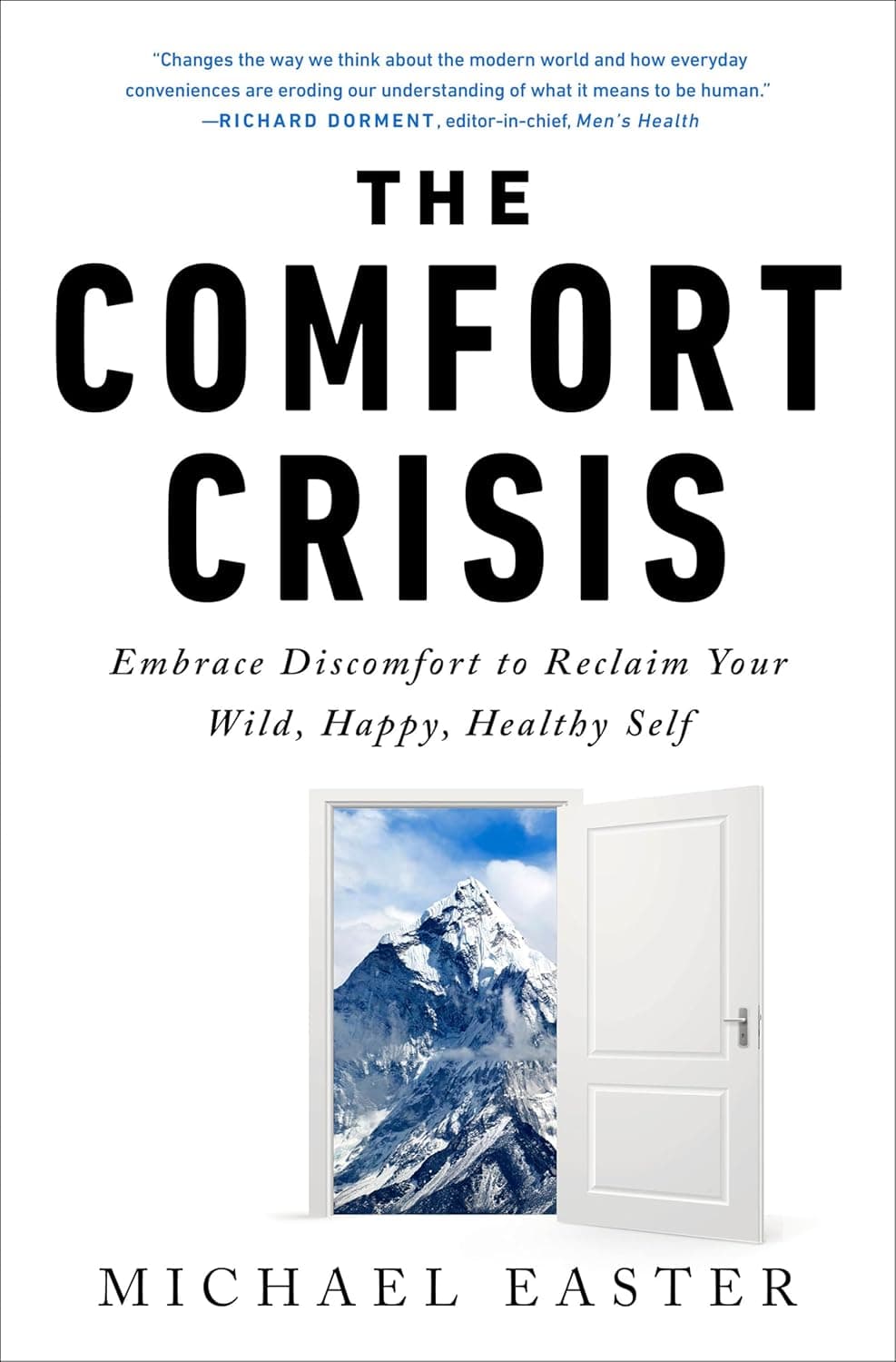
Michael Easter
Quick Facts
- Role: Author-narrator of The Comfort Crisis; the subject of the book’s central experiment in engineered hardship
- First appearance: Opening chapters, confessing his “professional hypocrite” status and setting the stakes for change
- Occupation: Health journalist and university professor
- Key relationships: Mentor Donnie Vincent; intellectual architect Dr. Marcus Elliott; nutrition coach Trevor Kashey; pragmatic, grounding wife
Who They Are
Michael Easter is The Comfort Crisis’s modern everyman—competent, successful, and comfortable, yet quietly unfulfilled. He turns himself into a living experiment, trading the numb predictability of ease for a 33-day caribou hunt in the Alaskan Arctic. As both narrator and test subject, he translates science and philosophy into felt experience, inviting the reader to watch a theory become a life: that voluntarily courting discomfort can restore meaning, health, and connection.
Personality & Traits
Easter’s voice blends confession with curiosity. He owns his contradictions, then interrogates them, using reporting and physical trials to close the gap between what he knows and how he lives. The humor and humility keep the inquiry human: he’s a “gangly writer” who fears bush planes, ties his shoes bunny-ears style, and still shows up.
- Self-aware and honest: He admits alcoholism, familial self-destruction, and the hollowness of preaching health he didn’t practice. This candor is the engine of his change rather than its epilogue.
- Curious and investigative: He chases the “why” behind behavior, cross-examining scientists like Marcus Elliott and Buddhist thinkers such as Khenpo Phuntsho Tashi; the book’s arguments arrive tested, not assumed.
- Apprehensive but willing: Fear of bush flights and Arctic exposure never vanishes; he decides anyway, and that decision—repeated—becomes a habit of courage.
- Reflective and philosophical: Field discomfort is constantly braided with research and meaning-making; hunting, hunger, and boredom become lenses on mortality, purpose, and modernity.
- Self-deprecating wit: Calling himself a “righteous asshole” for suburban rucking breaks tension while sharpening the point—ego is cheap; preparation isn’t.
Physicality & Appearance
Easter begins “bony,” “gangly,” and visibly out of his depth—a yuppie among backcountry hunters. Training with Trevor Kashey trims him from 185 to 170 pounds, and a month in the Arctic chisels the rest: he returns lighter, “callused, bruised, cut, [and] hardened.” The body becomes the book’s marginalia—every blister and bruise annotates an idea he’s testing.
Character Journey
Easter starts on the other side of addiction, newly sober but lulled by modern ease—what he names The Crisis of Comfort. To shake the creep of convenience, he commits to a misogi-scale test—Embracing Voluntary Discomfort—by joining Donnie Vincent for a 33-day Arctic hunt. The early days are punishing: cold that gnaws, hunger that distracts, and long windows of nothing that feel like failure, until he begins to discover The Power of Boredom and Solitude.
The hunt’s turning point is the caribou stalk and kill: laser focus, grief, gratitude, and labor fuse into a single act of participation. The brutal pack out cements the lesson—capacity expands under load. He returns “on the pink cloud,” renewed but realistic about comfort’s return; the answer isn’t one grand gesture but a practice of choosing challenge. His misogi reclaims a modern form of The Need for Rites of Passage our culture has neglected.
Key Relationships
-
Donnie Vincent: A model of quiet competence, Donnie mentors Easter through the backcountry’s practical and ethical knots. With him, Easter encounters a living argument for Reconnection with Nature and Wildness—that intimacy with weather, land, and animal life recalibrates our sense of scale, responsibility, and awe.
-
Dr. Marcus Elliott: Marcus provides the frame: misogi is a psychological test disguised as physical hardship. His influence shifts Easter’s goals from mileage and metrics to identity and thresholds—who you become on the other side of a day that looked impossible.
-
Trevor Kashey: The “wacky, amazing, beautiful-mind” coach who turns food into data and discomfort into a tool. Trevor teaches Easter to accept, even use, hunger—an onramp to The Health Benefits of Hunger—and to separate nutritional signal from emotional noise.
-
His Wife: Dry, affectionate, and practical, she’s the tether to ordinary life. Her send-off—“Don’t get your head slapped off by a grizzly bear”—captures her role: support with a reality check, love without romanticizing risk.
Defining Moments
Easter’s growth isn’t a straight line; it’s a string of thresholds he chooses to cross.
-
The decision to get sober
- Why it matters: It’s his first deliberate break with destructive comfort. Sobriety becomes the template for every later choice—accept short-term pain to reclaim long-term agency.
-
The first-night storm in the teepee
- Why it matters: Hurricane-force winds strip away the illusion of control. He learns the difference between managing variables and submitting to realities larger than you.
-
The caribou kill
- Why it matters: Pulling the trigger shifts him from observer to participant, collapsing abstraction into responsibility—food, death, gratitude, consequence. It’s the heart of Confronting Mortality for a Fuller Life.
-
The pack out
- Why it matters: Hauling 100-plus pounds of meat and gear over miles converts philosophy into sweat. It embodies The Importance of Physical Work and Carrying Loads: strength is made by what you’re willing to carry.
Essential Quotes
I was also something of a professional hypocrite. I had an enviable career at a glossy magazine as a health journalist dispensing advice on how to live a better life. I was good at the job. But I wasn’t exactly living the wisdom I wrote. Most of my mental energy was spent toggling back and forth between being drunk and obsessing over the next drink.
This confession is the book’s ignition. By indicting himself first, Easter earns the authority to interrogate everyone’s comfort—and to test solutions on his own life before offering them to the reader.
I was marinating in the stuff. Except that these were less acutely destructive but potentially more insidious forms of it. I just had to take a look at my everyday life. I was comfortable, quite literally, every single moment.
He reframes modern comfort as a slow-acting toxin—less dramatic than addiction, more pervasive. The insight raises the stakes: the problem isn’t crisis but drift, and drift requires deliberate counterweights.
I looked like a righteous asshole. Felt like one, too. But I’d rather look and feel like one in a Las Vegas subdivision than perform like one once I got to the Arctic.
Self-deprecation sharpens his ethic: train for function, not optics. Here, pride is repurposed into preparation; embarrassment becomes a small price for real competence.
Conflicting emotions of sadness and elation rise within me. My body is heavy yet pulsing with energy. It is a feeling of intense closeness to and gratitude for this animal and the place from which he came. Almost like love.
The kill is not triumphalism; it’s intimacy and moral weight. Easter locates meaning at the intersection of grief, gratitude, and labor—where dependence on nature is acknowledged rather than denied.
Back from misogi, I felt like I was back on the pink cloud. Alaska provided me with another heavy dose of discomfort, and its lessons changed me. But I also understood that they wouldn’t be everlasting, that comfort creep would gain inches each day. I’m already planning the next misogi.
He resists the neat ending. Change is a practice, not an epiphany, and “comfort creep” names the constant antagonist—demanding that misogi become recurring, not singular.