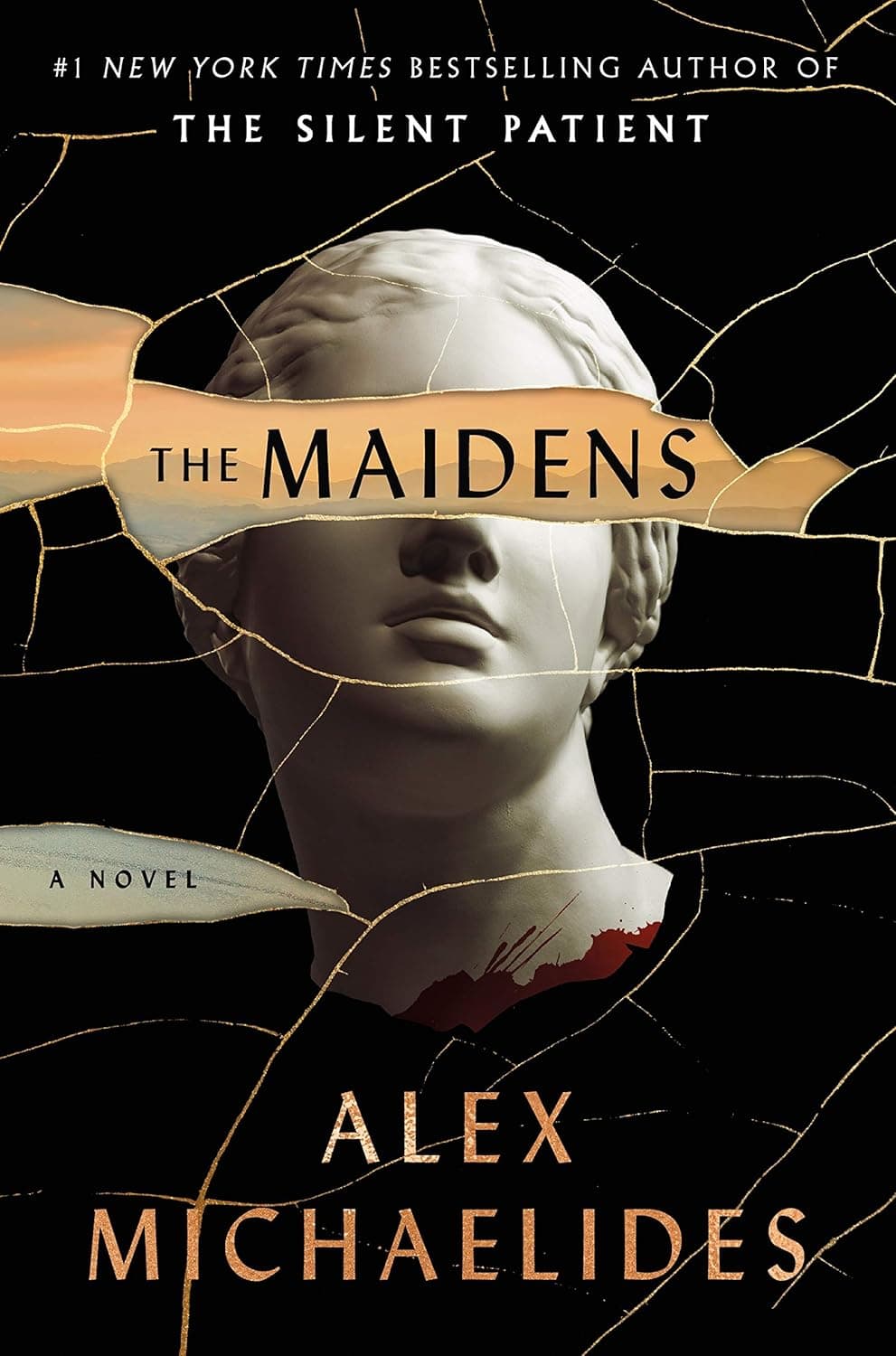
Opening
A second murder turns St. Christopher’s from sanctuary to pressure cooker. As panic spreads and allegiances strain, Mariana Andros doubles down on her suspicions even as alibis pile up, and Edward Fosca invites her into his lair for a performance that feels eerily like a confession.
What Happens
Chapter 46
Campus dread intensifies after the second killing. Parents withdraw students; doors lock; shadows lengthen. Mariana stays close to her niece, Zoe, who sobs over Veronica—grief that Mariana recognizes as displaced mourning for Tara Hampton and a needed release of Grief and Loss.
At high table with Clarissa, Mariana produces a new postcard. Clarissa identifies St. Lucy—the blind martyr whose eyes are plucked out—and translates the Greek on the back: a line from Euripides’ Iphigenia in Aulis describing a girl led to sacrifice, her “beautiful neck” severed. The killer’s fixation on Greek Mythology and Tragedy suddenly feels literal.
Mariana breaks her silence and lays out her theory: Fosca runs a secret society—the Maidens—and he’s the murderer. Clarissa is aghast; Zoe, though wary, admits the archaic postcards feel like Fosca’s style. Mariana argues the quotes are a code with personal meaning. If they can parse it, they can stop him.
Chapter 47
Mariana and Zoe head to the college bar and confront Serena of the Maidens. Serena, furious that the police questioned her and Fosca because of Mariana, drops a bomb: Fosca has a watertight alibi for Veronica’s murder. She was with him in a private tutorial the entire evening—Fosca never left. It’s the second crime he can’t have committed, at least on paper.
The news cracks open a raw exchange between Mariana and Zoe. Zoe challenges Mariana’s Obsession and Fixation, hinting that it says more about Mariana than about Fosca; she even cites how Sebastian, Mariana’s late husband, called her stubborn. The jab nearly sparks a serious fight.
They retreat and apologize, but unease remains. When Zoe departs for class, Mariana lies—claiming she’s meeting an old friend. In truth, she’s agreed to dine with Fosca, an act of Deception and Betrayal that she knows Zoe would forbid. She warns Zoe to be careful; Zoe’s bravado only amplifies Mariana’s dread.
Chapter 48
Left alone with her thoughts, Mariana starts to doubt herself. Fosca has alibis for both murders; all she has is instinct and circumstantial threads. She wonders whether grief and bias have blurred her judgment and whether she has misread the entire pattern.
She does what she’d advise a patient: seek supervision. She decides to call her therapist, Ruth, and leave for London tomorrow to gain distance from Cambridge’s “poisonous atmosphere.” But first, she must keep the dinner with the man she fears most—Fosca.
Chapter 49
Mariana climbs a narrow, warped staircase into Fosca’s rooms and steps into ritual. Incense hangs in the air; a record murmurs ominous classics; a “stygian gloom” settles over a candlelit parlor. The decor telegraphs Appearance vs. Reality: scholarly elegance veiling macabre relics—a Gothic cross, a human skull, a statue of Pan, and a lone pinecone.
Fosca materializes from the shadows in a dinner jacket, suave and solicitous, saying he dressed for a “beautiful woman.” He has arranged a private meal delivered by a college waiter—no interruptions. Mariana asks about the pinecone. Fosca links it to the Eleusinian Mysteries: the seed within, the spirit in the body. He invites her to “look inside,” offers it like an initiation token. She refuses. The waiter leaves; the performance begins.
Chapter 50
In the candlelit dining room, Fosca serves rare leg of lamb; blood pools across Mariana’s plate until nausea rises. He probes her personal life—Sebastian—while she turns the spotlight back, therapist to subject. He coolly recounts a brutal father who terrorized his mother, a confession of Childhood Trauma and Its Consequences delivered with a chilling absence of feeling.
Conversation circles the murders. Fosca notes the police visited him because of her. He dismisses her accusations as scapegoating: the two of them are outsiders in Cambridge’s hierarchy, and she needs a monster. When Mariana asks what kind of person commits these crimes, Fosca offers a meticulous profile: a spiritual showman staging sacrifices—a ritual of rebirth and resurrection—crafted like a Jacobean tragedy to shock and entertain. The performance feels indecently intimate, like a masked confession. Mariana’s appetite vanishes. She says she is finished.
Character Development
These chapters push each character past their façades and into testing ground.
- Mariana Andros: Her certainty fractures under Fosca’s alibis, and Zoe’s challenge forces self-scrutiny. Yet inside Fosca’s gothic theater, her fear hardens into conviction, even without proof. She lies to Zoe, revealing how isolation and doubt narrow her world.
- Zoe: She shifts from protected niece to moral counterweight, questioning Mariana’s motives and judgment. Her willingness to confront Mariana reshapes their bond, adding tension and agency.
- Edward Fosca: He curates setting as power. His charm, his “initiation” offerings, and his blood-dark dinner form a controlled spectacle. The unemotional account of family violence and his theatrical killer profile sharpen him into either brilliant analyst—or predator narrating his own crimes.
Themes & Symbols
Ancient sacrifice vs. modern crime. The St. Lucy postcard and the Euripidean line about the “beautiful neck” link the murders to ritual slaughter in Greek tragedy. Fosca’s analysis reframes the killer as a liturgist of death, staging acts of purification and rebirth. The classical veneer legitimizes violence as art—precisely the danger Mariana senses.
Masks and mirrors. [Appearance vs. Reality] colors everything: a college becomes a hunting ground; a professor’s salon becomes a crypt; courtesy becomes coercion. Fosca’s rooms externalize his psychology—erudite polish wrapped around bones and blood.
Fixation and control. Zoe names Mariana’s [Obsession and Fixation] and destabilizes the narrative center. Whether Mariana is onto a murderer or creating one from grief becomes an open question, even as Fosca’s staged intimacy exerts its own gravitational pull.
Symbols:
- The Pinecone: An Eleusinian sign of initiation and the “spirit within”—Fosca’s invitation to cross a threshold she refuses.
- The Bloody Lamb: Sacrifice on a plate, turning dinner into a votive offering and mirroring the killer’s theatrics.
- St. Lucy: Sight vs. blindness—who sees the truth, and who is led, eyes covered, to the altar?
Key Quotes
“Her beautiful neck is severed.”
- From Iphigenia in Aulis, this line anchors the murders in sacrificial myth, elevating crime to ritual and turning victims into offerings. It primes Mariana—and the reader—to view each clue as liturgy, not happenstance.
“Stygian gloom.”
- The phrase captures Fosca’s curated darkness and positions his rooms as an underworld stage. In this setting, conversation becomes ceremony; confession, performance.
“The seed inside us—the spirit within the body.”
- Fosca’s pinecone lesson doubles as a recruitment pitch. He frames inner truth as secret knowledge only he can unlock, a manipulation masquerading as enlightenment.
“A sacrificial act… a ritual of rebirth and resurrection.”
- Fosca’s killer profile is chilling because it sacralizes the murders. The religious vocabulary suggests the perpetrator sees himself as priest and performer, not monster.
“A showman… designed to shock and entertain.”
- Theatricality becomes motive. The killer wants an audience—and Fosca, by narrating it so vividly, either reveals piercing insight or proximity no innocent man should have.
Why This Matters and Section Significance
Fosca’s second alibi undercuts Mariana’s credibility and deepens the mystery, forcing both her and the reader to question the evidence vs. intuition. The dinner is the book’s fulcrum: setting, menu, and conversation fuse into a power ritual where Fosca controls tempo and tone. His profile functions as a mask—truth concealed in performance—galvanizing Mariana despite her doubts.
The rift with Zoe isolates Mariana, heightening danger and narrowing her support just as the killer’s mythic pattern sharpens. These chapters escalate from campus fear to intimate psychological warfare, aligning the investigation with ancient scripts of sacrifice while asking whether seeing clearly requires stepping into the dark—or refusing the invitation.