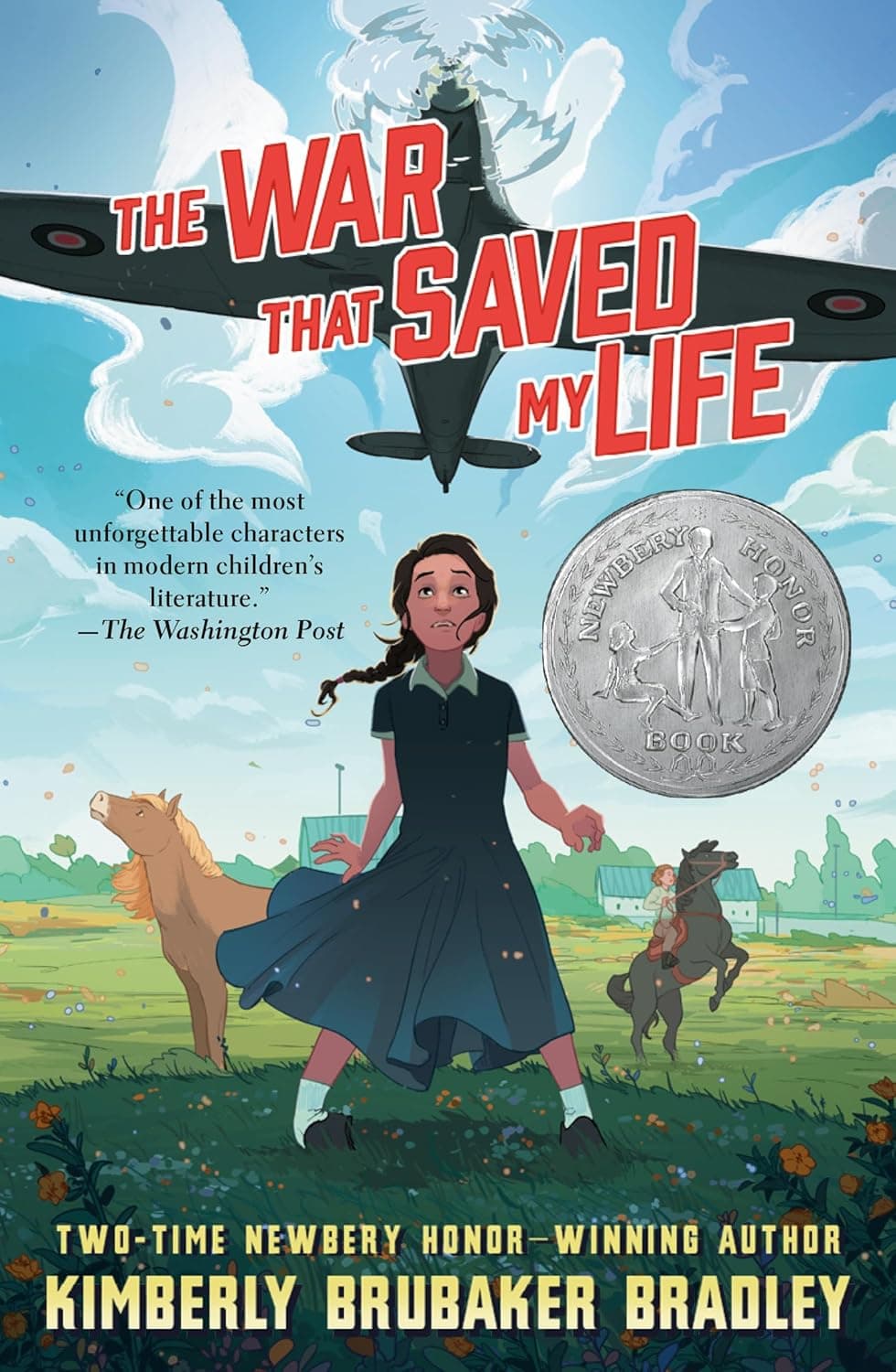
Opening
Chapters 16–20 tighten the fragile bonds among Ada Smith, Susan Smith, and Jamie as war pressures mount and old wounds surface. Misunderstandings, a plane crash, and a showdown at school force this makeshift household to confront pain, protection, and the slow work of Trauma, Abuse, and Healing.
What Happens
Chapter 16: A Liar
Ada returns late, braced for a blow; Susan instead roars with fear and relief, a kind of care Ada doesn’t recognize. Ada proudly recounts helping Maggie Thorton after a plane spooks her horse—calming the animal, riding double to Maggie’s grand house, and being driven home by the groom. Susan, convinced Ada only followed and fantasized the rest, calls her a liar and sends her to her room. The word slices into Ada’s thin, growing sense of Identity and Self-Worth.
That night, Jamie trudges up with supper and declares he hates school and will never go back. Ada says nothing, hollowed out by Susan’s disbelief, but she hears the warning in Jamie’s vow.
Chapter 17: Persistence
In the morning Ada can’t make Butter trot; the pony plods, immune to her kicks and clicks. A car pulls up. Lady Thorton strides in to thank Ada for saving Maggie—who has a concussion—and praises Ada’s uncanny touch with the difficult horse. The visit vindicates Ada publicly. As Susan stands stricken, Ada says, “She didn’t believe me.” Lady Thorton leaves a box of hand-me-downs, including Maggie’s old jodhpurs—riding pants that fit Ada’s body and the rider she’s becoming. Her parting advice: with stubborn ponies (and life), “persistence” matters.
Afterwards Susan apologizes. She tries to draw a line between lies that protect and lies for self-importance. Ada stays guarded, but the apology cracks the ice: Susan admits fault, and Ada learns that adults can make it right.
Chapter 18: A Lysander
At breakfast, a shattering explosion rattles the house. Susan shoves Ada and Jamie under the table and holds them tight. Smoke curls from the airfield; a plane burns. Jamie, suddenly expert, whispers it’s a Lysander transport and frets about the crew he “knows.” He folds into Susan’s arms. Watching him lean on someone else, Ada feels disoriented and oddly relieved—an early step toward The Meaning of Found Family.
News arrives that Maggie has gone off to boarding school until Christmas. Jamie’s hatred of school hardens into truancy. Susan marches him there daily and waits until he goes inside. Ada recognizes his trapped panic as the same cage she once lived in, tethered to their London flat—an echo of Freedom and Imprisonment. Susan grows tight-lipped; her letters to Mam go unanswered.
Chapter 19: Blackout
As evenings darken, Susan hauls out her sewing machine and makes blackout curtains. Creating steadies her, and she says she hasn’t sewn since “Becky” died—her grief breaking the surface at last. She offers to sew clothes for the children—a velvet dress for Ada.
“I don’t want you making me things,” Ada snaps, flinching from generosity she doesn’t feel she deserves. She accuses Susan of never wanting them in the first place. Susan tries to explain that her reluctance was about her own brokenness, not the children. Ada shuts down, claims to hate the cocoa, and goes to bed. The house holds both care and the terror of receiving it.
Chapter 20: The Mark of the Devil
At dinner, Susan sees a raw welt on Jamie’s wrist—rope burn. He won’t explain. The next morning she walks him to school with Ada, then doubles back. She throws open the classroom door. Jamie sits tied to his chair.
The teacher says she is “training” him out of left-handedness—“the mark of the devil.” Susan blazes. With icy precision she invents a left-handed Oxford Divinity professor to shred the superstition and threatens consequences if it happens again. On the walk home, Ada asks if her clubfoot is also a mark of the devil, if that’s why Mam hates her. Susan stops. “I don’t want to tell you a lie, and I don’t know the truth,” she says, and adds that if Mam hates Ada for her foot, Mam is wrong. The honesty opens a door Ada thought was locked forever.
Character Development
As war jitters rise, the household shifts from fragile truce to genuine attachment. Moments of protection, apology, and truth-telling reshape loyalties and self-belief.
- Ada
- Endures the shattering pain of being disbelieved, then tastes vindication when Lady Thorton confirms her heroism.
- Accepts a new identity as a rider through Maggie’s jodhpurs but recoils from Susan’s intimate care.
- Voices her deepest fear about her foot and hears, for the first time, an adult’s careful, non-cruel truth.
- Susan
- Moves from anger to accountability, apologizing without defensiveness.
- Becomes a fierce advocate—physically protective during the crash and intellectually devastating in the school confrontation.
- Reawakens creativity at the sewing machine, signaling thawing grief and a choice to build a home.
- Jamie
- Anxiety spikes into bedwetting, truancy, and silence about abuse at school.
- Transfers his primary need for comfort from Ada to Susan, cementing new attachment.
- Learns that difference (left-handedness) isn’t shameful when defended by an adult who refuses cruelty.
Themes & Symbols
The chapters braid trauma with repair. Susan’s initial disbelief triggers Ada’s old defenses, yet apology and protection become cure and counterspell. Jamie’s being tied for left-handedness mirrors Ada’s lifetime of punishment for her foot; both expose arbitrary cruelty. Susan fights the teacher as if fighting Mam herself—tangible justice against ignorance—advancing the family’s healing.
Identity takes root in action and in what others reflect back. Being called a liar threatens Ada’s emerging self, but Lady Thorton’s gratitude and the snug fit of riding pants confirm her competence. Clothing functions as symbols: Maggie’s jodhpurs confer belonging; Susan’s offer to sew is love made visible—generosity Ada longs for but can’t yet receive. The blackout curtains work two ways too: they darken the windows for war even as they let Susan stitch light into the home.
Key Quotes
“She didn’t believe me.”
- Ada’s plain statement exposes the wound beneath her anger. Being believed is more than pride—it’s identity. When Lady Thorton corroborates her story, Ada gains not only proof but a foothold in a world where her word matters.
“Persistence.”
- Lady Thorton’s one-word counsel frames the section’s ethic. Persistence tames Butter, mends relationships, and becomes a survival tool for children unlearning fear.
“I didn’t mean to call you a liar.”
- Susan’s apology models adult accountability. By distinguishing survival lies from self-aggrandizing lies, she gives Ada moral language to separate her actions from her worth.
“The mark of the devil.”
- The teacher’s superstition crystallizes institutional cruelty. It parallels Mam’s contempt for Ada’s foot and gives Susan a clear enemy to confront, transforming abstract injustice into a stoppable act.
“I don’t want to tell you a lie, and I don’t know the truth.”
- Susan refuses easy comfort. Her honest uncertainty, coupled with affirmation, builds trust more deeply than any platitude could.
Why This Matters and Section Significance
These chapters pivot the novel from wary coexistence to the beginnings of family. Susan proves she is a parent not by claiming the title but by doing the work: apologizing when she is wrong, shielding the children from danger, and telling hard truths gently. External crises—the crash, the abuse at school—force Ada and Jamie to test whether this home can hold their fear. It does. In the afterglow of Susan’s defense and honesty, Ada’s defenses start to crumble, making space for safety, belonging, and the possibility of a new life built together.