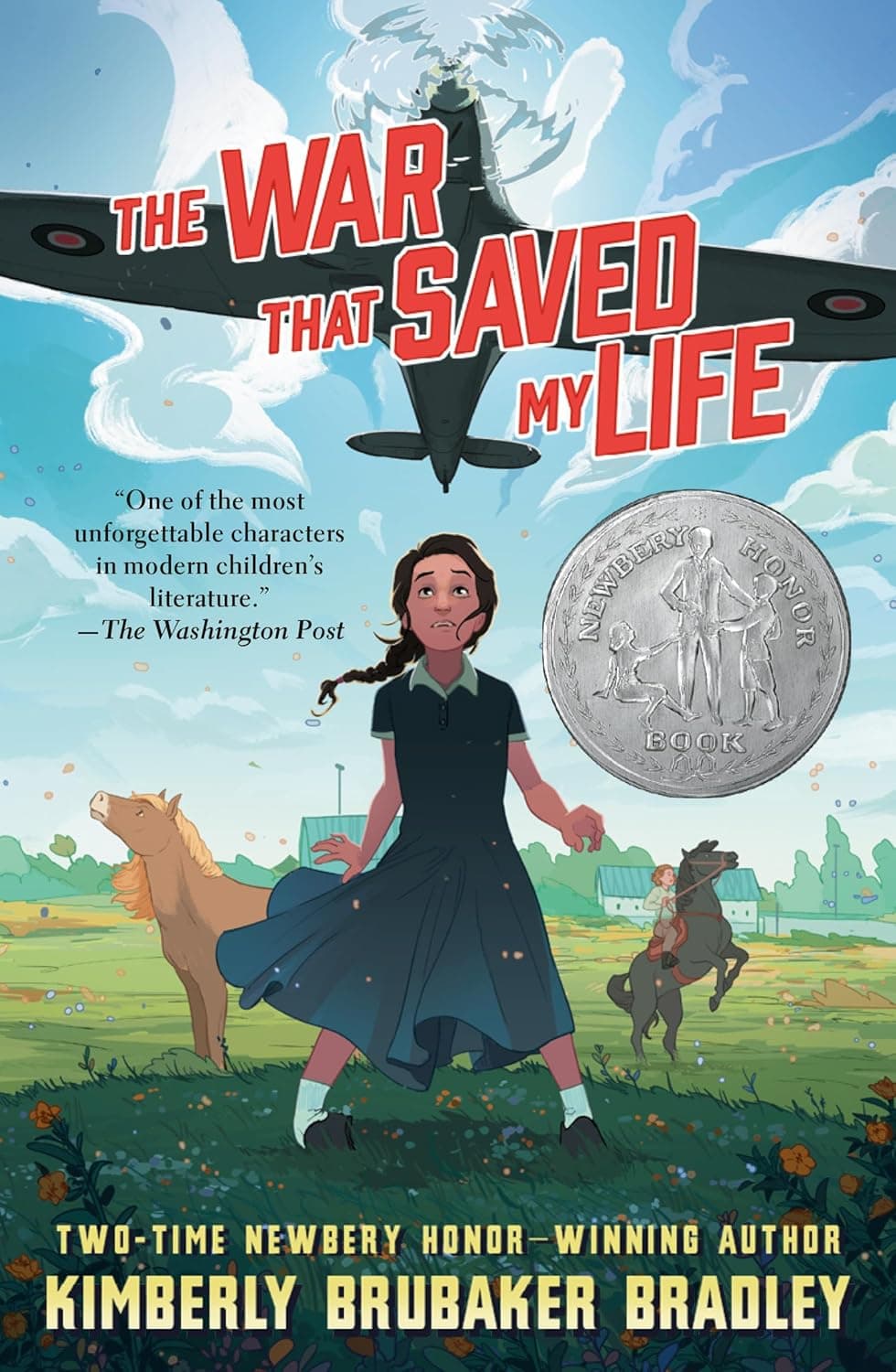
What This Theme Explores
Identity and Self-Worth in The War That Saved My Life asks who gets to define a person: the abuser who names them “rubbish,” or the self who learns to act, choose, and be wanted. For Ada Smith, identity begins as a cage imposed by her mother, Mam, and slowly becomes something she authorizes through effort, courage, and connection. The novel probes how trauma distorts self-perception and how consistent care, accomplishment, and truthful naming can rebuild it. It ultimately argues that worth is inherent, but it becomes visible—to others and to oneself—through tried capacities and the experience of being chosen.
How It Develops
At the start (Chapter 1-5 Summary), Ada’s identity is pure negation: she is “monster,” “cripple,” “shame.” Her mother confines her to a room and to a story about herself that admits no agency. Ada’s first private revolt—teaching herself to walk—quietly cracks that story. The pain she endures becomes proof she can act, and action becomes the first building block of a new self.
Evacuation opens a wider field in which that self can grow (Chapter 6-10 Summary – Chapter 26-30 Summary). In the country, Susan Smith meets Ada not with pity but with attention: food, lessons, boots, and the expectation that she can learn. Ada begins to name herself by what she does—caring for Jamie, riding Butter, helping Fred Grimes. Yet the old voice persists, erupting most painfully when tenderness calls her “beautiful,” a description that collides with years of humiliation.
By the end (Chapter 31-35 Summary – Chapter 46 Summary), Ada’s new identity is tested and affirmed. Exposing a spy translates private growth into public worth, and the village’s gratitude counters Mam’s narrative with communal recognition. When Mam returns, the central conflict is no longer escape but allegiance: Which identity will Ada believe? Backed by experience and by Susan’s explicit choice—she wants Ada and Jamie—Ada finally refuses the old name, taking her place as a wanted, capable child.
Key Examples
The novel threads Ada’s self-redefinition through moments where language, action, and recognition collide. Each scene below doesn’t just “show” identity; it changes who Ada understands herself to be.
-
Mam’s imposed identity Mam reduces Ada to her foot, fusing disability with moral failure and social shame. This verbal violence authorizes physical confinement and teaches Ada to police herself with insults that precede anyone else’s.
“You’re nobbut a disgrace!” she screamed. “A monster, with that ugly foot! You think I want the world seeing my shame?”
-
A first fracture in the narrative On the road, Stephen White parrots village gossip that Ada is “simple,” then corrects course when he hears her speak. His startled, “You’re a cripple?” separates intellect from impairment, splitting the single shaming label into parts and hinting at a more nuanced self.
“Simple. Not right in the head. That’s what everybody says.” He said, “I didn’t even know you could talk.” ... For the first time, he looked at my feet. “You’re a cripple?”
-
The shock of the mirror In the station lavatory, Ada sees herself from the outside for the first time. The painful recognition—unkempt hair, pallor, difference—moves her from inherited names to observation, an early step toward self-knowledge that can be changed rather than a fate that can’t.
All of a sudden I realized I was looking in a mirror. ... I stared into this one, appalled. I’d assumed I looked like all the other girls. But my hair was clumpy, not smooth. My skin was paler than theirs...
-
Choosing a name When asked for a last name, Ada claims “Smith,” linking herself—by impulse and hope—to Susan and to the possibility of belonging. Naming here becomes authorship: she writes herself into a family before it fully exists.
-
Becoming a rider Deciding to ride Butter, Ada adopts an identity built on skill, courage, and joy. Riding transforms her relationship to her body from shame to capacity; she is not the foot that limits her but the rider who moves anyway.
I tapped the window. “I’m going to do that,” I said.
-
The green velvet dress Susan’s gift triggers a panic that exposes the old script: beauty and love feel dangerous because they contradict the identity that kept Ada “safe” through obedience and smallness. The breakdown marks a turning point where kindness feels unbearable—proof that healing requires unlearning as much as learning.
“I can’t wear this,” I said. I pulled at the bodice, fumbling for the buttons. “I can’t wear it. I can’t.”
-
The village’s affirmation Catching the spy gives Ada a public identity that can’t be dismissed as charity. Recognition from authority reframes her as helpful and brave, allowing external validation to support, rather than replace, emerging self-respect.
“I should have believed you,” he said. “I’m sorry. A grateful nation thanks you for your service.”
Character Connections
-
Ada Smith Ada’s arc tracks the shift from internalized contempt to earned confidence. Each self-taught skill—walking, riding, reading—adds a strand to a sturdier identity, but the decisive change is relational: realizing that being wanted is not a reward for perfection but a condition that enables growth.
-
Susan Smith Susan refuses to let Ada’s foot be the story; she offers tools, boundaries, and words that fit the girl she actually sees. Crucially, Susan’s own low self-regard (“I am not a nice person at all”) creates a mirrored journey: both must accept care to become the selves their actions have already begun to prove.
-
Mam Mam personifies identity as domination, wielding shame to maintain control. Her final rejection perversely liberates Ada by making explicit what was always true: the cruelty was never a measure of Ada’s worth, only of Mam’s fear and anger.
-
Maggie Thorton As a peer who treats Ada as a fellow rider rather than a charity case, Maggie normalizes Ada’s competence. Friendship here functions as everyday recognition—quietly consolidating the new identity outside the charged parent-child dynamic.
Symbolic Elements
-
Ada’s clubfoot First a symbol of imprisonment and “monstrosity,” the foot becomes a measure of resilience as Ada walks and rides. The prospect of surgery signals a future where the physical reminder of trauma no longer dictates the limits of her life.
-
Butter the pony Butter embodies freedom disciplined by skill. Each ride literalizes self-mastery: control of reins, control of fear, control of the story Ada tells herself about what she can do.
-
Crutches and the sidesaddle These are instruments of accommodation, not erasure. They model a world where access expands capacity, reinforcing that worth does not depend on “fixing” the body but on enabling participation.
-
Clothing Clothes track Ada’s transformation from neglect (the “grubby” dress) to capability (riding jodhpurs from Lady Thorton) to the aspirational green velvet dress that feels emotionally premature. Wardrobe changes become visible milestones in self-perception: clean, fitted, and finally—eventually—beautiful.
Contemporary Relevance
Ada’s struggle speaks to anyone dismantling a shaming narrative—whether rooted in disability, poverty, mental health, or public scrutiny in the age of social media. The book shows that self-worth grows at the intersection of real competencies, truthful feedback, and belonging, not from likes or labels. It also underscores the power of “found family” and mentoring: one attentive adult and a supportive community can rewire a child’s sense of who they are and what they deserve.
Essential Quote
“I can’t wear this,” I said. I pulled at the bodice, fumbling for the buttons. “I can’t wear it. I can’t.”
This refusal condenses the theme: an identity built on worthlessness cannot yet bear the weight of beauty. The dress becomes a test of self-concept, revealing the gap between how Susan sees Ada and how Ada can stand to see herself—and pointing toward the slow, courageous work of closing that gap.