What This Theme Explores
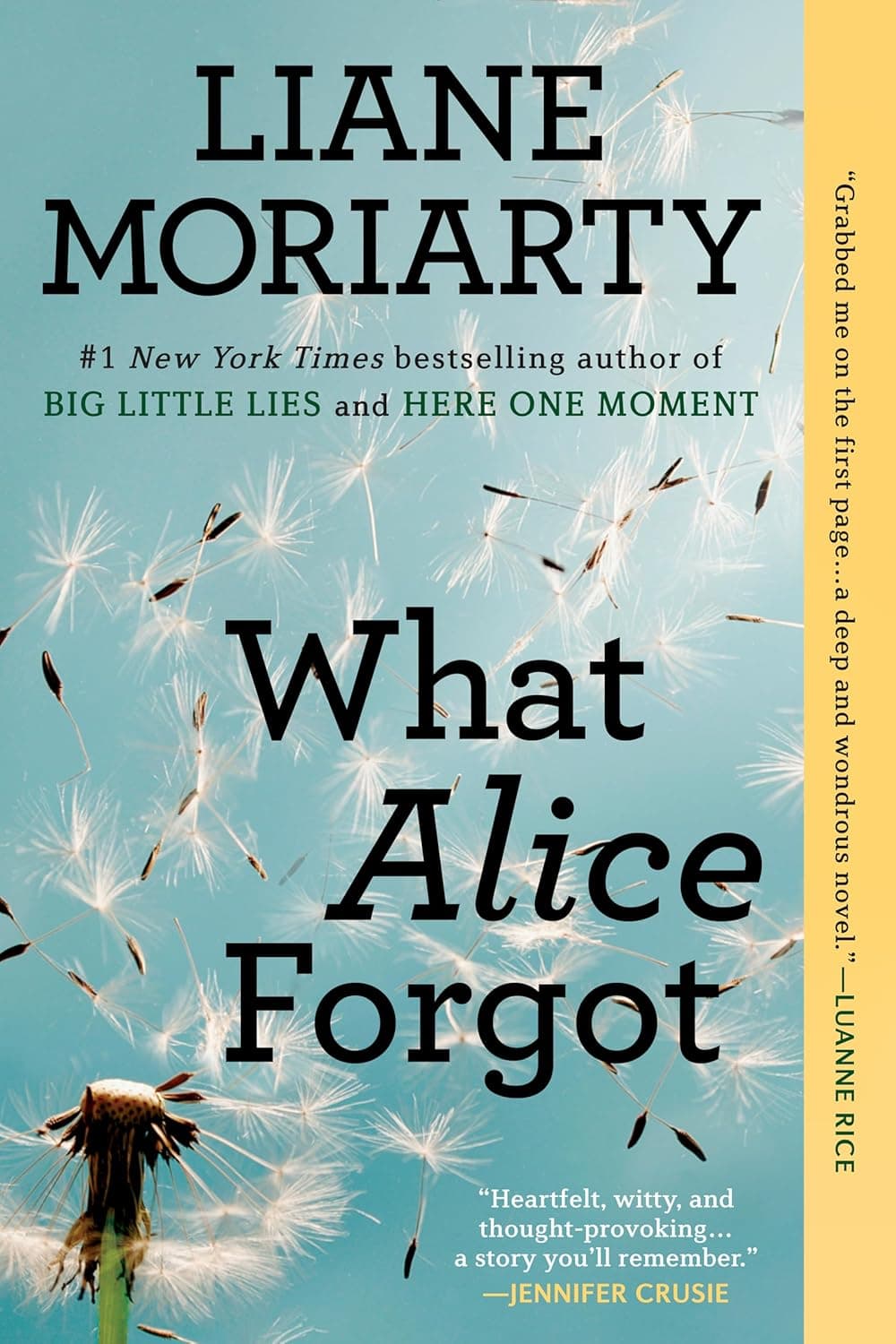
The Evolution of Love and Marriage asks whether the breathless rush of first love can survive the friction of ordinary life—and, if not, what might replace it. Through Alice Love’s amnesia and her fraught reunion with Nick Love, the novel examines how careers, children, grief, and pride subtly recalibrate a couple’s priorities until affection hardens into habit or hostility. It probes the difference between romance and partnership: is commitment just staying, or is it the active labor of forgiveness, curiosity, and repair? By stripping away a decade of history, the book turns memory into a diagnostic tool, testing which parts of love were youthful gloss—and which can be rebuilt, deliberately, as adults.
How It Develops
At first, the story frames love as bliss remembered. Alice wakes up clinging to a sunlit montage of her marriage—“lavender-scented bliss” and a husband who felt like a “human hot water bottle”—images that echo the intoxicating certainty of early passion as recalled in Chapter 1. That spell breaks when she discovers the present-tense truth: a separation freighted with contempt and logistical skirmishes, signaled by a searing early phone call and the shock of being mid-divorce in Chapter 7. The question becomes not just “What went wrong?” but “When did love change, and why didn’t we notice?”
The middle of the novel maps a slow attrition rather than a single betrayal. Parenting obligations multiply; Nick’s work expands to fill the margins; Alice’s intense friendship with Gina Boyle distorts priorities and alliances. Grievances accumulate in small, sharp drifts: a bitter email volley over Christmas logistics in Chapter 19, and the humiliating memory of Nick kissing someone in the laundry in Chapter 24. The theme widens beyond their marriage through Elisabeth, whose infertility carves a different, quieter canyon between spouses—proof that love can be eroded by absence as effectively as by conflict.
In the final movement, forced proximity becomes opportunity. A rickety truce cracks open during the Family Talent Night, where a salsa routine in Chapter 26 reintroduces playful touch and shared rhythm, revealing chemistry buried but intact. When Nick finally names the “million” petty cuts that bled them dry, the novel shifts from nostalgia to intentionality: love is no longer a current one floats in but a practice one chooses. The epilogue’s reconciliation reads not as a return to the past but as a new craft—less sparkling and more layered, the taste earned rather than effervescent.
Key Examples
-
The Idealized Past
Alice’s earliest memory of her marriage is buoyant and uncomplicated, the kind of shorthand lovers use when the world still feels like a private joke. The phrase anchors her belief that their bond was once mutual, tender, and obvious—making the present unrecognizable.“Don’t be ridiculous, you goose, you know I’m bloody besotted with you.”
The language of easy adoration becomes a measuring stick she repeatedly holds against their current estrangement, exposing the distance between youthful certainty and adult disillusionment. -
The Bitter Present
Their first post-accident phone call slices through nostalgia with pure hostility, revealing how suspicion has replaced trust. The shock to Alice’s younger mindset underscores how far habitual defensiveness has replaced generosity.“Then why the fuck did I need to call you?”
The brusqueness is not just anger; it’s the sound of a marriage that’s been outsourcing affection to logistics and scorekeeping. -
The Slow Erosion
When Nick catalogs the trivial arguments that metastasized, the novel resists melodrama and instead indicts indifference and pride. The “cherries” fight reads as absurd and painfully familiar—a case study in how contempt builds molecule by molecule.“We argued. We argued over the most trivial things... Like, I don’t know, cherries... It was the crime of the century. You would not let it go.”
The accumulation of small refusals to apologize or empathize becomes the true antagonist, drowning grand romantic gestures in daily friction. -
A Glimmer of Hope
The salsa at Family Talent Night uses awkward performance to bypass practiced defensiveness. Laughter and touch, for a moment, rewire their body language before their minds can resist.“In a sudden movement, he put his hand on Alice’s lower back and pulled her close... There was still chemistry.”
The scene suggests that reconnection is partly physical memory—trust rehearsed through movement—hinting that intimacy can be relearned.
Character Connections
Alice Love and Nick Love embody the theme’s full arc, from giddy collusion to managerial coldness to deliberate renewal. Alice’s amnesia makes her both unreliable and newly honest: she sees the marriage without the crust of accumulated hurt, which lets her question rituals (and resentments) she once accepted. Nick’s confession of “a million reasons” is a turning point: by naming the ordinary ways they failed each other, he reframes blame as a shared discipline they can adopt or abandon.
Elisabeth and Ben mirror a different hazard of long-term love: the quiet desolation of infertility. Through Elisabeth’s journal voice—bristly, self-aware, and aching—the novel shows how grief makes partners retreat into parallel solitudes. Their path toward adoption marks a pivot from measuring love by outcomes to measuring it by endurance and mutual care.
Barb and Roger offer a late-life template grounded in companionship, humor, and chosen rituals (including salsa). While sometimes comic foils, they model a relationship that thrives on steadiness rather than velocity, suggesting that intimacy can be built intentionally at any age.
Gina and Mike Boyle function as cautionary spillover: their infidelity-riddled implosion “infects” nearby marriages by normalizing contempt and crisis. The social contagion underscores how couples are ecosystems embedded in larger networks; boundaries and discernment are part of marital maintenance.
Symbolic Elements
The House on Rawson Street begins as a shared “Impossible Dream”—a renovation project fueled by sweat, plans, and optimism—and thus mirrors a marriage under construction. Later, its polished perfection becomes elegiac: a beautiful shell containing an absent partnership, proof that aesthetic order can mask emotional vacancy.
Granny Love’s Ring vs. the Tiffany Bracelet splits tradition from intimacy. The heirloom ring carries institutional weight and obligation, while the bracelet—tied to pregnancy and private sentiment—embodies the couple’s specific story. Alice’s later fixation on the ring during divorce proceedings reveals how symbols can calcify into territory markers when tenderness evaporates.
The Salsa Dance stages reconciliation as choreography. In its forced closeness and public play, the dance dramatizes how shared rhythm must be relearned; missteps are inevitable, recovery is the point. It is a kinetic argument for love as practice rather than feeling.
Contemporary Relevance
Modern marriages often strain under the “mental load” of parenting, career ambition, and the always-on demands of digital life. What Alice Forgot taps a common fear: that partners gradually become co-managers of a household rather than companions, and that love fades not in tragedy but in unread emails and unrepaired micro-hurts. Alice’s accidental “do-over” is wish fulfillment with teeth, suggesting that perspective—not perfection—revives commitment: naming patterns, renegotiating roles, and choosing kindness over being right. The novel’s hope is pragmatic, offering a blueprint for repair that feels attainable in an era of burnout and drift.
Essential Quote
“We argued. We argued over the most trivial things... Like, I don’t know, cherries... It was the crime of the century. You would not let it go.”
This admission reframes the story from a hunt for a single rupture to a reckoning with habits—pettiness, scorekeeping, and pride—that corrode intimacy. By spotlighting a ridiculous argument, the novel shows how meaning accretes around small acts: each refusal to soften becomes a brick in a wall. The line invites readers to identify their own “cherries” and, crucially, to practice letting them go.