Opening
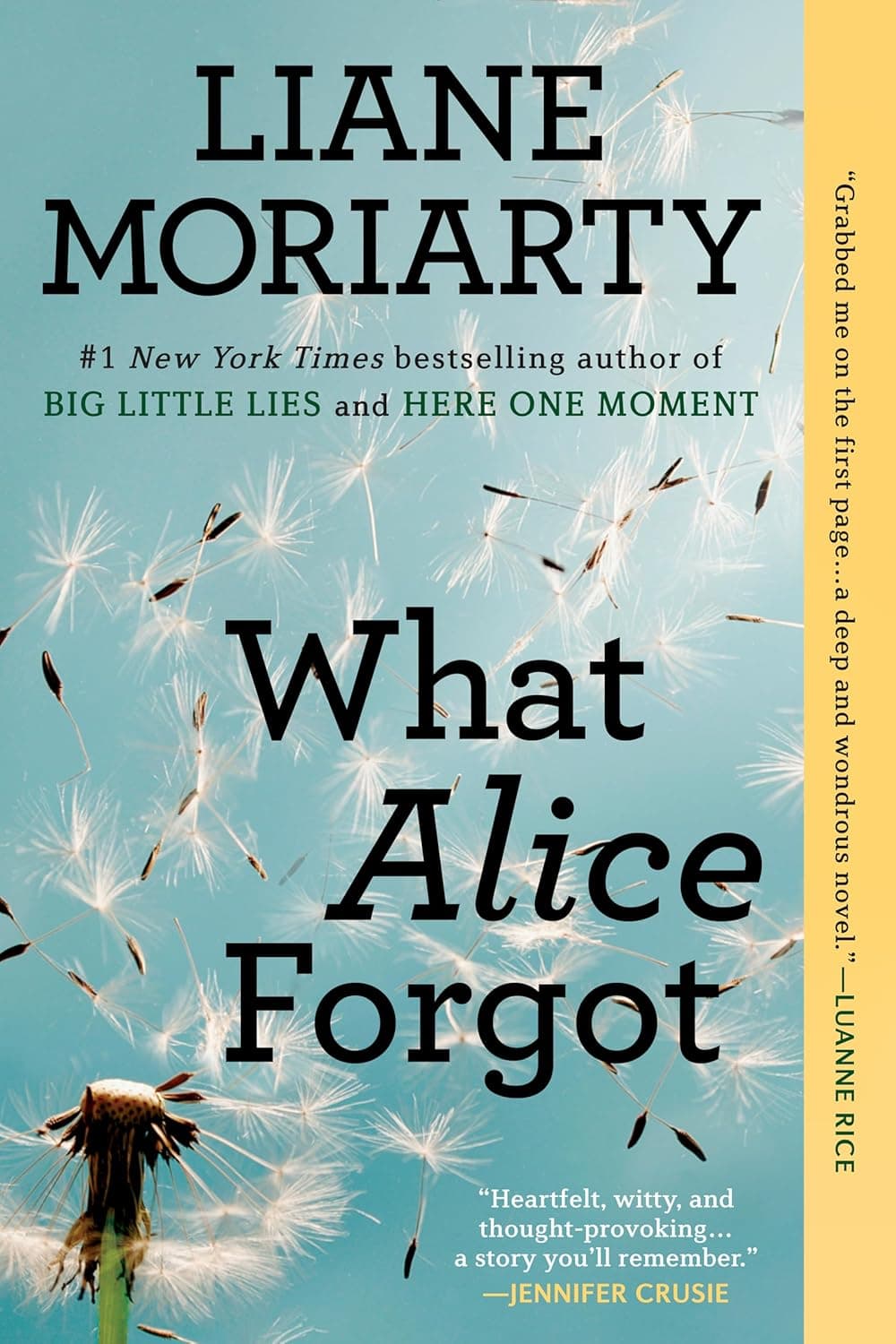
Across Chapters 26–30, family performances, public disasters, and private confessions collide to shake loose the decade Alice Love can’t remember. As old wounds surface and unexpected grace interrupts the chaos, Alice confronts who she became, who she was, and the kind of love she still wants—with Nick, with her children, and with her sister.
What Happens
Chapter 26: The Family Talent Night
At Frannie’s retirement village, the Family Talent Night gathers the extended Love clan in one room. Alice meets Nick’s sister Ella, now a 25-year-old mother to Billy. The conversation bristles; the Love family’s resentment toward Alice sits just beneath every polite comment. As the acts unfold, Alice’s mind drifts to the gulf between her own modest, suburban Catholic upbringing and Nick’s polished, affluent Anglican family—how Nick once made her world feel more dazzling, and how small she used to feel without him. The pull and ache of Transformation of the Self press in as she tries to reconcile both versions of herself.
Then Olivia Love takes the stage with a wobbly, delightful butterfly dance she choreographs herself. Watching her, Alice and Nick share an unguarded flash of pride and tenderness—a small, golden bridge to their old intimacy. The mood flips when Alice’s mother, Barb, and Nick’s father, Roger, launch into a “mortifyingly sexual” salsa, then yank Alice and Nick up for a lesson. Forced into each other’s arms, Alice feels a fierce spark of chemistry that makes reconciliation seem possible.
After the show, Alice returns Granny Love’s heirloom ring to Nick. Ella challenges her about the divorce and custody fight; Nick steps in to defend Alice, but the air stays tight with tension. In a quiet corner, Nick explains how Alice’s fierce identification with Gina Boyle’s marital struggles warped their own marriage—Alice began projecting Gina’s problems onto him. When Alice asks if they can try again, Nick doubts she’ll feel the same once her memory returns. They land on a cheeky $20 bet about it. The truce doesn’t last; a prickly argument flares, underscoring the fragile state of their bond and the uneasy arc of The Evolution of Love and Marriage. In a homework entry, Elisabeth confesses she skips the event and spirals into despair, highlighting Infertility and the Longing for Family.
Chapter 27: Brownies and Bad News
Alice stumbles on proof of her 2008 life: she’s president of a residents’ committee pushing for high-density rezoning, a campaign born from Gina’s vision that pits her against her elderly neighbor, Mrs. Bergen. A newspaper clipping quotes Alice’s bloodless, investment-driven rationale. Horrified, she bakes brownies and makes a humble doorstep apology—an act of Forgiveness and Second Chances that begins to mend what she broke.
She notices the strange ways Memory and Identity return: not as full memories, but in phrases her mouth remembers and instincts her body repeats. Time in 2008 feels thin and frantic, unlike the spacious days of 1998. So she loosens up: Olivia skips violin; Madison Love stays up late to bake a cake. Meanwhile, Elisabeth’s homework describes how seeing Alice at her work seminar nearly unravels her. And in a letter to her long-dead fiancé, Phil, Frannie confides she has a date with Xavier, a sweet first step toward joy.
Elisabeth’s second entry is clinical and devastating, detailing her latest, failed embryo transfer with numbed precision. The chapter closes on a cliff’s edge: at school, Dominick Gordon rushes up to Alice with a grave face. There’s a “serious problem with Madison.”
Chapter 28: Whales in the Harbor
The “serious problem” hits like a wave: Madison bullies a classmate, Chloe Harper—threatening her with scissors, chopping off her hair, and shoving her face into a cake. Dominick suspends Madison. In his office, a stricken Chloe sobs while Madison clamps down in stony silence. Nick arrives; he and Alice decide to handle it together and take Madison to the beach.
On the sand, Madison cracks. Chloe called her ugly and spread a rumor that Alice and Dominick were having sex at school. Madison’s cruelty is born from humiliation and fear. Then wonder interrupts: a mother and calf humpback whale surge out of the harbor, slick backs gleaming, tails slapping. The family’s anger dissolves into awe. In that fragile calm, Nick speaks. He describes how Gina’s death rotted the foundations of their marriage: Alice pushed him away; he felt she wished he’d died instead of Gina. Petty fights—about cherries, about everything—became constant. He retreated into work, and the Goodman project year may have been the year that broke them. He reaches for Alice’s hand. “Maybe we should try again.”
Chapter 29: The Lions and the Lie-in
In the garage, Alice finds George and Mildred—two old sandstone lions—stained and discarded. She scrubs and restores them to the front steps, a small ceremony for her vow to repair what’s crumbling at home. Then Ben phones in a panic: the clinic says Elisabeth is pregnant, but she’s spiraling—unable to believe it, refusing to name it.
Alice goes to her sister, who stares blankly at the TV. Alice climbs into bed beside her, saying nothing. She offers her Dino’s fertility doll, a talisman of community and hope. Something softens. Elisabeth releases the fury and terror she’s been hoarding: she can’t survive another loss. Alice leans toward her belly and whispers to the baby to “stick around.” The permission to hope cracks the dam; Elisabeth sobs.
That night, romance turns into farce. Dominick arrives to visit Alice—then Nick turns up with an identical bunch of tulips. Dominick exits. Alice and Nick share wine, flirtation, and a kiss that feels like home—until Olivia tiptoes in: “Do you love Mummy again?”
Chapter 30: Mega Meringue Day
Mother’s Day dawns on the Mega Meringue Pie fundraiser—conceived, built, and turbocharged by 2008-Alice. Industrial mixers churn, sponsors glitter, news crews swarm. Alice feels like an imposter inside her own competence: the “bloody marvel,” the “bull terrier,” the logistical nucleus of a community she somehow made and misplaced. Everyone gathers under the marquee: Dominick, Nick with the kids, Elisabeth and Ben, Barb and Roger.
Amid the chaos, Barb drops a quiet bomb: Frannie’s fiancé, Phil, died two weeks before their wedding decades ago. Frannie has written to him ever since. The revelation reframes Frannie’s life, and her cheerful date with Xavier now glows with hard-won courage. The program begins. Nora, as MC, dedicates the day to Gina Boyle and her lemon meringue pie recipe. One hundred mothers in matching aprons lift their whisks. At the center stands Alice, ringed by the messy, vibrant life she created—and forgot.
Character Development
Alice shifts from defensive, efficient operator to someone who repairs harm and chooses presence.
- Apologizes to Mrs. Bergen and relaxes her parenting, letting spontaneity in.
- Listens to Madison’s pain instead of punishing first.
- Becomes the sister Elisabeth needs—quiet, steady, hopeful.
- Acknowledges her complicity in the marriage’s decay while daring to want Nick again.
Nick moves from courteous distance to radical honesty.
- Defends Alice to Ella, co-parents decisively during the school crisis.
- Confesses the bitterness seeded by Gina’s death and the Goodman project’s cost.
- Reopens the door to reconciliation and reaches for Alice.
Elisabeth breaks the numbness.
- Homework entries chart despair to the first flicker of hope.
- Her breakdown—and acceptance of Alice’s comfort—marks a pivot toward healing.
Madison’s anger reveals itself as hurt.
- The bullying exposes shame, rumor, and body insecurity.
- She is steadied by seeing her parents act as a unit and by the shared moment at the harbor.
Frannie expands in the light.
- Her letters to Phil and her date with Xavier rewrite her “spinster” story as lifelong love and renewed courage.
Themes & Symbols
The Evolution of Love and Marriage tests every relationship here. A forced salsa turns into real chemistry, and a kiss tastes like possibility, but Nick’s confession insists on the truth: love erodes grain by grain through miscommunication, projection, and evasions. At the same time, late-in-life romance (Frannie and Xavier) and Barb and Roger’s goofy joy affirm that love can be remade at any age.
Forgiveness and Second Chances thread through apologies, reconciliations, and tentative bets. Alice’s brownies to Mrs. Bergen, the beach truce after Madison’s suspension, and Nick’s “Maybe we should try again” all assert that repair is an action, not a feeling.
Transformation of the Self collides with Memory and Identity. The “bull terrier” who builds Mega Meringue Day is real; so is the playful, less rigid 1998 Alice. The chapters argue for synthesis—competence without cruelty, ambition with tenderness.
Symbols:
- The whales interrupt human drama with awe, granting the family a reset and making truth-telling feel safe.
- George and Mildred, restored to their stoop, mirror Alice’s effort to clean and reinstall the guardians of home—trust, steadiness, love.
- The Mega Meringue Pie embodies 2008-Alice: large-scale, efficient, community-binding, and rooted in Gina’s legacy.
Key Quotes
“Maybe we should try again.”
- After the whale sighting, Nick’s line is both invitation and admission. He acknowledges that something precious remains and that truth—not perfection—is the only foundation they have left.
“There’s a serious problem with Madison.”
- Dominick’s phrase reframes Madison’s cruelty from moral failure to crisis in need of care. It catalyzes unified parenting and the family’s reorientation toward empathy.
“Bloody marvel.” / “Bull terrier.”
- The public labels for 2008-Alice capture her competence and relentlessness. Admiration and unease live together in the titles, mirroring Alice’s ambivalence about who she became.
“Stick around.”
- Alice’s whisper to Elisabeth’s baby transforms abstract hope into a spoken pact. It lets Elisabeth grieve and hope at once—an emotional position she’s avoided to survive.
“Do you love Mummy again?”
- Olivia’s question grounds adult complications in a child’s simple need. It exposes what’s at stake: not just romance, but the shape of a family.
Why This Matters and Section Significance
These chapters form the emotional hinge of the novel. Nick finally narrates the missing decade from his side, complicating any neat reconciliation while making it imaginable. Madison’s crisis does what crises often do: it forces clarity about priorities and reminds Alice and Nick how to act together. Elisabeth’s pregnancy and breakdown turn the abstract theme of infertility into a raw, embodied struggle, and Alice’s bedside solidarity repairs the sisters’ fracture.
By gathering everyone under the Mega Meringue marquee and dedicating the day to Gina, the book fuses memory, identity, and community into a single tableau. Alice stands at the nexus of who she was and who she is becoming, learning that repair happens in small acts—a brownie, a dance step, a restored lion, a whispered plea—and in shared awe that lets a family begin again.