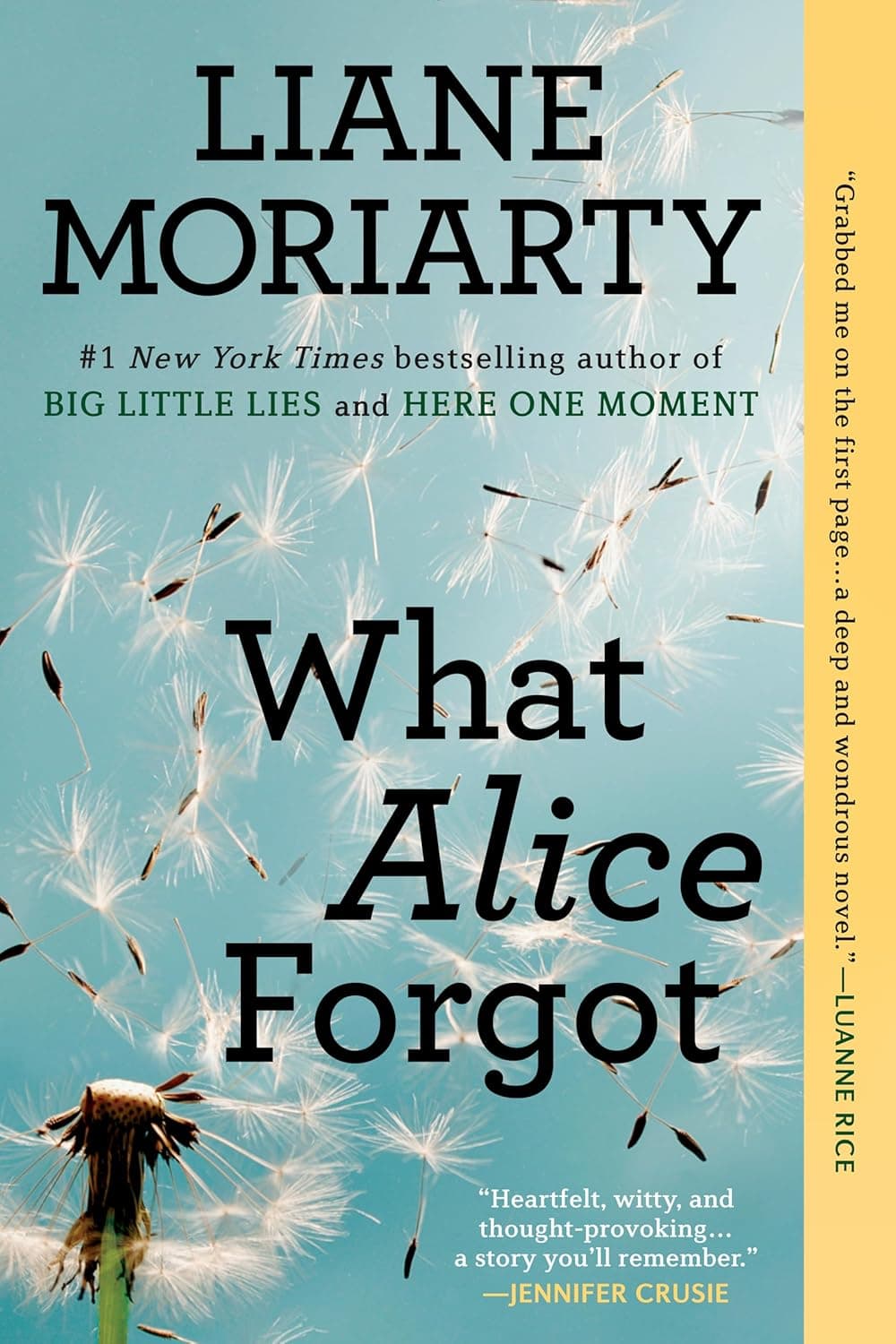
Opening
The fundraiser meant to honor Alice Love’s lost friend becomes the spark that restores a decade of her life. In the scent of lemon meringue and the sound of Elvis, memory surges back, reshaping relationships, healing old rifts, and leaving a glimmering question about what love looks like after loss.
What Happens
Chapter 31: The Mega Meringue Pie
The school oval turns into a gigantic outdoor kitchen for “Mega Meringue Day” in honor of Gina Boyle. Under Nora’s command, a platoon of mothers churn pastry in a cleaned concrete mixer and stir lemon filling in an industrial vat. Amid the raucous teamwork, Alice stares at the absurd scale of it all and whispers to Maggie, “It’s madness.” Maggie grins back: “It’s all your doing, Alice!” The women roll out a sheet of pastry big enough to blanket the pie dish and cheer when it settles into place, a communal victory.
While the pie bakes, the air fills with the sweet-sharp scent of pastry and lemon. Year 4 takes the stage as miniature Elvises, swiveling through a medley. The smell and the music—Gina’s favorites—collide inside Alice. Her head throbs, her vision tilts, and something “too large to remember” swells. As she sees both Nick Love and Dominick Gordon running toward her, the world blanks and she crumples. The chapter cuts to Elisabeth’s homework entry: she is bleeding in a Port-a-loo and believes she is miscarrying again.
Chapter 32: The Flood of Memories
The dam breaks. Alice’s last ten years rush back in jagged flashes: meeting Gina, the immediate, consuming friendship between their families; the way Nick’s career inches between them; petty fights that mask deeper wounds—fruit platters, money, in-laws. She sees her slow estrangement from Elisabeth, misread silences curdling into bitterness while Elisabeth’s grief over infertility devours her days. She re-inhabits the births of each child, tiny moments that loom like constellations.
Then the worst: the storm, Gina’s red Mini ahead, the great liquid amber splitting and smashing down, the sound of the crash tearing the sky. After, grief and rage fill every space. Nick doesn’t come to the funeral. Arguments harden into separations; loneliness mutes her. A gentler chapter follows—meeting Dominick, who makes room for her to breathe. The reel fast-forwards: their first night together, her gym faint, the amnesia, the halting optimism of forgetting.
Memory snaps fully into place. Shame washes through her—kissing Nick, returning the family ring, blundering through the week without context. Outside, she opens her eyes to Nick and Dominick. Nick clocks the change and freezes into distance. “You owe me twenty bucks,” he says, and walks away. Dominick folds her into his arms and promises she is safe now.
Chapter 33: Life with Memory
Months later, Alice runs—Gina’s old route, now her own ritual. She keeps a journal obsessively, knitting together the tangle of marriage and motherhood, letting herself see a love story of “a million colors,” not one clean shade. “Young Alice,” the earnest, easy self from before, still tugs on her thoughts. That voice loosens her grip on control and softens how she parents, especially with Madison, whom she now understands she once blamed—misguidedly—for Gina’s death.
She is officially with Dominick. She likes the steadiness of their phone calls, the low hum of everyday intimacy, but catches herself performing contentment as if for an invisible audience of Nick. Even so, the divorce edges into genuine civility; Nick takes the kids more often, routines settle. On the run, her phone rings twice: Dominick’s ordinary check-in, then Ben’s bright news—Elisabeth has delivered a healthy baby girl.
Chapter 34: Elisabeth’s Homework
Elisabeth writes to her therapist, Jeremy, overflowing as she describes Francesca Rose’s birth. She confesses she doesn’t believe she is truly a mother until she hears her daughter cry. Joy detonates—and anxiety shadows it—each feeding the other like two hearts beating in one body. Ben cries constantly, the dam of years finally bursting. The couple holds a small ceremony for their “lost babies,” and the act steadies her.
She reflects on Infertility and the Longing for Family, apologizing for once unloading her pain without seeing that Jeremy and his wife are in treatments, too. Rationally, she says, they should have stopped long ago and pursued adoption. But then she looks at Francesca: she would crawl through every shard of that past again for this child. She encloses a “strange, rather ugly doll”—a fertility totem—and wishes Jeremy luck.
Chapter 35: Frannie’s Last Letter
In her final letter to Phil, Frannie says she is done writing to the dead and is living with Xavier in the light. She recounts Madison’s victory at the school oratory competition, the whole extended family gathered: Alice with Dominick, Nick with his mother and sisters, Elisabeth and Ben with the baby. She watches Barb’s joy soften her face as she holds her granddaughter.
Frannie notices that Alice seems looser, happier since the accident, and that moving in with Dominick is on the table. Yet when Madison’s name is called, Alice instinctively turns not to Dominick but to Nick. Their eyes lock; their hands brush—brief, electric, undeniable. Frannie reads the truth in the moment that others refuse to see: that story may not be finished.
Character Development
Alice’s restored memory forces her to braid the hope of her younger self with the scars of her older one. Across these chapters, everyone recalibrates—some with closure, some with questions still humming.
- Alice Love: Integrates “Young Alice” with the seasoned mother who has grieved, fought, and hardened. She admits the nuanced causes of her marital breakdown, accepts her missteps—especially with Madison—and chooses gentler, more intentional habits.
- Nick Love: Seen in full: not just a work-obsessed absence, but a man under strain who is also Alice’s rescuer at times. His “You owe me twenty bucks” defense shows pain calcified into sarcasm, making him both wounded and withholding.
- Elisabeth: Transforms from grief’s echo chamber into a mother lit from within. Her letter reframes her suffering as part of Francesca’s origin story without erasing the cost.
- Frannie: Releases the past by ending her letters to Phil, stepping fully into her role as matriarch and keen observer who spots truths others miss.
Themes & Symbols
The section crystallizes how identity reshapes under pressure and how love evolves through time, memory, and loss.
- Memory and Identity: Memory returns not to erase change but to complete it. Alice can’t step back into a simpler self; she must synthesize the decade she’d lost. The flood of fragments—petty fights beside cataclysmic grief—shows identity as accumulation, not replacement.
- The Evolution of Love and Marriage: The marriage frays through neglect, career strain, and unspoken grief, not a single rupture. Even so, Frannie’s observation hints at Forgiveness and Second Chances: love may persist as a live current beneath legal endings.
- Transformation of the Self: Amnesia births a softer Alice; restored memory demands she choose what to keep. Elisabeth’s arc from infertility’s abyss to motherhood proves transformation can arrive painfully—and then all at once.
Symbols:
- The Lemon Meringue Pie: A messy, communal act of love that mirrors friendship and healing. Its scent, coupled with Elvis’s music, unlocks Alice’s mind, tying sense memory to the deepest vaults of identity.
Key Quotes
“It’s madness.”
“It’s all your doing, Alice!”
These lines frame the fundraiser as both ridiculous and revelatory. Maggie’s response crowns Alice as architect of the chaos, underscoring her influence on community and how love for Gina galvanizes collective action.
“Something too large to remember.”
The phrase captures the prelude to the memory flood. It translates trauma’s scale into sensation—Alice can feel the weight of ten years pressing at the edges before language breaks and the dam gives way.
“You owe me twenty bucks.”
Nick’s line is a shield. The trivial debt stands in for a decade of unpaid emotional accounts, letting him punish and protect himself at once. It also signals that he recognizes the return of her memory—and refuses intimacy in the moment it’s possible.
“Everything is all right now.”
Dominick’s reassurance anchors the present. While it can’t rewrite the past, it offers a safe harbor in the aftermath of Alice’s mental upheaval, defining his role as comfort and stability.
Why This Matters and Section Significance
This is the novel’s pivot. The mystery of lost years ends; the question becomes how to live with them. The return of memory reframes Alice’s choices, reopens her connection with Nick, and clarifies what she values with Dominick and her children. Elisabeth’s letter delivers emotional catharsis and closes a long-running wound with joy. Frannie’s final note widens the lens and points forward, lightly foreshadowing the Epilogue and leaving the central love story humming with possibility.