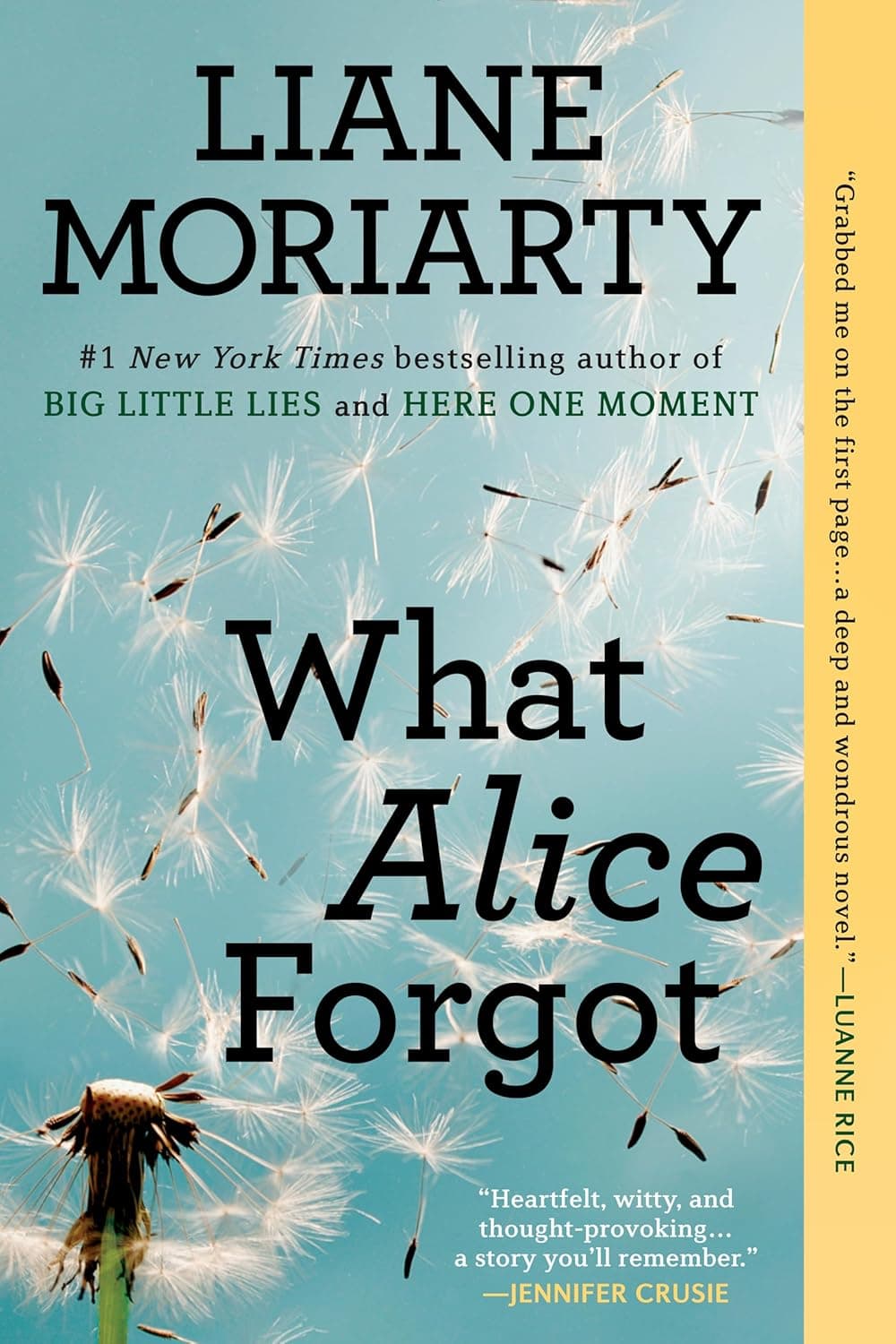
Opening
The epilogue settles Alice Love into a clear-eyed present, poised between a dream of the past and a breakfast-tray future. On Mother’s Day morning beside Nick Love, Alice recognizes that her second chance doesn’t revive first love—it matures it.
What Happens
Alice drifts in a sunlit dream: a houseboat holiday with her best friend, Gina Boyle, all warm timber, kids’ laughter, and the smell of summer on the water. Then Dominick Gordon surfaces beside her—wrong, intrusive, a betrayal inside a perfect memory—and Gina swims away. Alice wakes next to Nick, aware that her dreams of Gina are tender and unvarnished, as real in feeling as they are unreachable.
It’s Mother’s Day. Alice’s first thoughts go to Tom, Olivia, and Madison Love—their quirks, challenges, and secret delights. She smiles at Olivia’s rebellious streak and at how Madison has softened into poise and kindness. Her mind widens to family: her sister Elisabeth, once defined by Infertility and the Longing for Family, now presides over a joyful madhouse of four children (three adopted sons and a daughter); her grandmother Frannie keeps lively pace with her partner, Xavier.
Yesterday, Alice spotted Dominick in the grocery store. The sight sets off Madison’s question in her head: without the amnesia, would she and Nick have found their way back? Alice decides probably not. She locates the pivot point instead—a day on the front lawn when she and Nick fell into unstoppable laughter over a shared memory while Dominick stood apart, excluded by history. That laugh tells her their bond is the sum of years lived together, not a spark you can fake or replace.
Alice reframes love: it isn’t the “sparkling mineral water” fizz of the beginning but the “French champagne” depth that comes from time, hardship, and forgiveness—the “invisible threads” of memory binding two people. Nick wakes and jokes he says a little prayer thanking God for the spin class that caused her accident because it gave them another shot. Their children burst in, singing, with breakfast in bed. Alice bites into a pancake and holds the moment still, choosing to savor it before it slips into memory.
Character Development
Alice’s voice now carries steadiness and choice. She integrates who she was at 29 with who she became by 39, and lands on a self that is curious, forgiving, and present.
- Alice: Merges past and present selves; recognizes love as shared history, not adrenaline. Her decision to savor the moment shows peace with time’s flow.
- Nick: Relaxed and affectionate; his “spin class” joke reveals humility and gratitude. He has moved from anger to warmth without losing the steadiness earned by struggle.
- Elisabeth: Transitions from quiet grief to bustling fulfillment; her crowded, happy home mirrors the novel’s arc from loss to abundance.
Themes & Symbols
Love evolves by being lived. The epilogue completes The Evolution of Love and Marriage: Alice’s mineral-water-to-champagne metaphor insists that lasting love grows complex through shared work, mistakes, and delight. That complexity depends on Memory and Identity; the “invisible threads” of remembered life bind Alice and Nick and, in binding them, make Alice’s identity whole again. Her choice to savor breakfast in bed shows her actively creating the next thread.
The ending also affirms Forgiveness and Second Chances and the Transformation of the Self. Nick’s gratitude reframes the accident as a doorway; Alice’s perspective reframes their history as raw material for a better marriage. Together, they demonstrate that starting over doesn’t mean returning—it means integrating.
- Symbol: The houseboat dream evokes an unspoiled past with Gina; Dominick’s intrusion fractures it, clarifying that the future Alice imagined with him can’t coexist with the deeper happiness rooted in her shared history with Nick and Gina. The dream redirects Alice from nostalgia to the present.
Key Quotes
“Sparkling mineral water” versus “French champagne.”
- Alice’s central metaphor. Early love is bright and effervescent; mature love is layered and earned. The comparison distills the book’s thesis: longevity transforms feeling into flavor.
“Invisible thread[s]” of shared memory.
- Alice names the connective tissue of marriage. The phrase turns memory into a living bond—delicate but strong—and explains why a single laugh on the lawn outweighs any new attraction.
Nick says a “little prayer thanking God for creating the spin class.”
- A joke with a confession inside it. Nick acknowledges their reunion grows from pain and chance, and he meets that fact with gratitude rather than guilt or superstition.
Why This Matters and Section Significance
The epilogue closes the circle: confusion becomes clarity, estrangement becomes intimacy, and memory becomes the means of identity rather than its fracture. Alice and Nick don’t rewind their marriage; they write a new chapter with old ink. By choosing to savor one ordinary mouthful of pancake, Alice shows the novel’s final truth—love is built in moments, then remembered.
For the bigger picture of how this ending resonates across the novel’s plotlines and relationships, see the Full Book Summary.