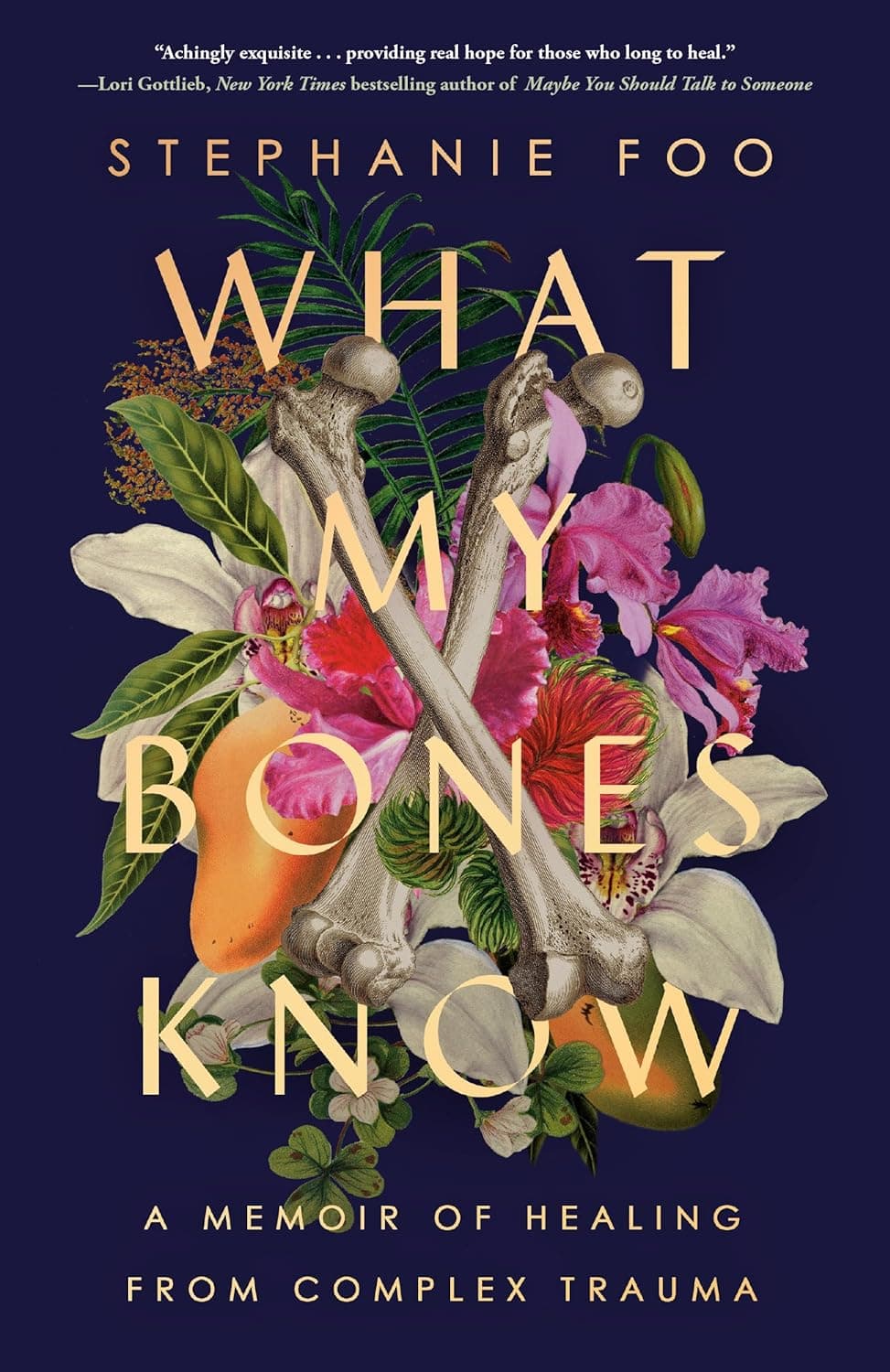
Auntie
Quick Facts
- Role: Great-aunt; matriarch of Stephanie’s paternal family; emotional refuge and cultural anchor
- First appearance: Stephanie’s childhood visits to Malaysia
- Home: A bustling Malaysian household filled with food, mah-jongg, and family rituals
- Key relationships: Stephanie Foo; her nephew (Stephanie’s father); the extended family
- Signature images: “Coke-bottle glasses,” shuffling gait, tiny frame that somehow commands any room
Who They Are
Bold, funny, and fiercely loving, Auntie is the moral center of Stephanie’s paternal family and the safest space of Stephanie’s childhood. She turns her home in Malaysia into a counterweight to the chaos of Childhood Abuse and Family Dysfunction, celebrating Stephanie with extravagant affection and ritualized praise. Yet beneath her warmth is a strategist shaped by Intergenerational and Cultural Trauma: she believes survival requires endurance, tact, and selective silence. Over time, Stephanie learns that Auntie’s love was not naive—it was deliberate, coordinated, and often the only intervention her culture and fear allowed.
Personality & Traits
Auntie’s presence blends theatricality with tenderness. She can pivot from a comic outburst to a proverb about endurance in a heartbeat, modeling a way to feel deeply without losing control. Her indulgence isn’t simply doting—it’s a purposeful antidote to deprivation, and her secrecy isn’t indifference—it’s a protective strategy born of experience.
- Fiery and theatrical: Prone to passionate, quickly dissipating outbursts—about the quality of fruit or a misremembered detail—her emotions often arrive “infused with mischievous glee.” This volatility is safe, even playful, showing Stephanie that intensity need not equal danger.
- Caring and indulgent: She spoils Stephanie with favorite foods and constant praise—“Ho gwaai, ho gwaai”—turning Malaysia into a haven. The excess is intentional, countering the scarcity of love at home.
- Screwball humor: During mah-jongg, she “farted loudly…then laughed so hard about it she peed her pants.” By making her own body the joke, she punctures shame and lightens a household heavy with unspoken pain.
- Stoic resilience: A survivor of poverty, war, and loss, she preaches, “When the sky falls, use it as a blanket.” Her proverbs distill a worldview where pain is transmuted into endurance—a cultural script that both protects and constrains.
- Small but commanding: Under five feet tall, nearly blind, shuffling in thick lenses, she still commands any space. The paradox—frail body, formidable aura—signals that authority can be moral rather than physical.
- Secretive yet watchful: She maintains family silence for years yet later reveals she saw Stephanie’s suffering clearly. Her quiet is not ignorance; it’s a calculation about risk, safety, and how love can be delivered when intervention might inflame harm.
Character Journey
At first, Auntie represents uncomplicated belonging: Malaysia is where Stephanie is cherished, fed, and praised, a bright counterpoint to a dangerous home. This idyll fractures after the parental divorce, when Auntie admonishes Stephanie—“You are not a good person, okay? You need to become a better person.”—apparently siding with her nephew and puncturing the fantasy of unconditional acceptance. Only at the end of Auntie’s life does the full design become visible: the family always knew about the abuse and orchestrated “favoritism” to saturate Stephanie with love they couldn’t safely enforce through confrontation. With this revelation, Auntie’s contradictions resolve—her cheer, secrecy, and scolding align as the tactics of a woman constrained by culture and fear, doing everything she can to keep a child alive, seen, and worthy.
Key Relationships
-
Stephanie Foo: Auntie is a surrogate mother and emotional anchor, creating a sanctuary of praise, food, and celebration whenever Stephanie visits Malaysia. Their bond carries both balm and bite: it heals Stephanie’s early wounds, then forces her to reckon with the limits of love that will not (and perhaps cannot) intervene directly.
-
Stephanie's Father: Having helped raise him, Auntie wields enormous moral influence, which helps explain why she scolds Stephanie after the divorce. Her loyalty to him complicates her role as protector, revealing how caregiving in one relationship can unintentionally wound another.
-
Stephanie's Mother: Auntie never confronts her directly, fearing escalation. This wary distance exposes the family’s calculus: silence as a survival tactic. By choosing indirect care over open conflict, Auntie protects Stephanie in the narrow ways she believes are possible.
Defining Moments
Auntie’s most revealing scenes trace how she turns love into strategy—rituals, proverbs, even scoldings—each calibrated to soothe, contain, or redirect harm.
- Declaring Stephanie the “favorite”: She orchestrates a chorus of “Ho gwaai, ho gwaai” and special treats during childhood visits.
- Why it matters: What seemed like bias is actually a therapeutic performance—teaching Stephanie she is worthy in a family that cannot safely stop the harm at its source.
- Dispensing Chinese wisdom: “When the sky falls, use it as a blanket…Big things, make small. Small things, make nothing.”
- Why it matters: These aphorisms encode a cultural survival manual; they also reveal the cost—pain is managed by shrinking it, not confronting it.
- The post-divorce confrontation: “You need to become a better person,” she tells Stephanie after the separation.
- Why it matters: A shattering of the “always-on-your-side” myth, this moment shows Auntie’s allegiance to harmony and hierarchy, even at Stephanie’s expense.
- The final revelation: “Everybody is kind to you because everyone knows that you suffer a lot,” she confesses near the end of her life.
- Why it matters: The truth reframes decades of behavior—Auntie’s secrecy becomes care, her favoritism becomes strategy, and Stephanie gains the context needed to begin healing.
Essential Quotes
“Ho gwaai, ho gwaai.” (So well-behaved. So good.)
Auntie’s refrain is both praise and prescription. Repeating it trains Stephanie to imagine herself as worthy and good, rewriting the internalized scripts of unworthiness planted by abuse.
“When the sky falls, use it as a blanket. Big things, make small. Small things, make nothing. When someone wrongs you, never keep it in your heart. Let it go. Smile through your tears. Swallow your pain.”
This is Auntie’s creed of survival. It dignifies endurance while exposing its cost: pain that is swallowed does not disappear, it settles—shaping a family that copes brilliantly yet struggles to confront.
“You are not a good person, okay? You need to become a better person.”
The reprimand stings because it comes from the one person who felt purely safe. It reveals Auntie’s competing commitments—to family hierarchy, to harmony, to moral correction—and marks a crisis in Stephanie’s faith in unconditional love.
“Everybody is kind to you because everyone knows that you suffer a lot. That’s why they’re so kind to you. Because when you’re young, they realized. You suffer a lot.”
Here, Auntie finally names what was always felt but never said: the family’s tenderness was deliberate triage. By articulating the strategy, she turns scattered memories of being “the favorite” into evidence of care.
“You say anything, who suffer? Your father... If we say, don’t do that, she would done more. She would beat more. Cheh! Not to say it stop. You think it’s like that?”
Auntie lays out the family’s logic of nonintervention—confrontation would likely escalate harm. The blunt calculus is painful but clarifying, revealing the constraints under which her love had to operate.