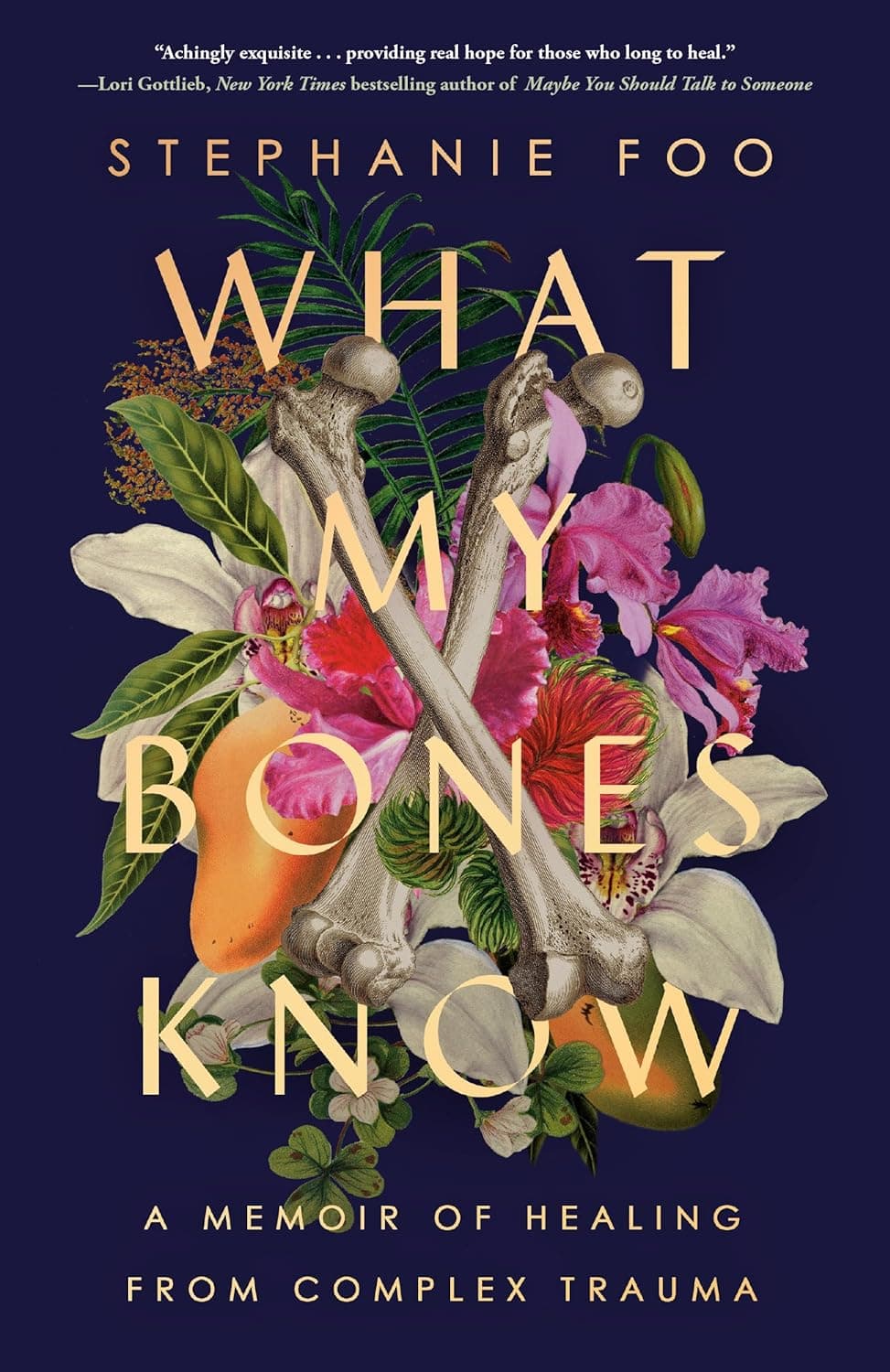
This guide introduces the people who shape a memoir of survival, self-study, and repair. Centered on a narrator confronting Complex PTSD, the cast falls into two camps: a family of origin marked by harm and abandonment, and a chosen family—and therapeutic team—who help her name her pain and imagine a different future.
Main Characters
Stephanie Foo
Stephanie Foo is the memoir’s narrator and beating heart, tracing a path from a childhood of severe abuse to an adulthood defined by diagnosis, inquiry, and painstaking healing. A driven, meticulous journalist, she initially channels her trauma into achievement—and into the numbing rhythms of work—mirroring the pattern explored in Theme: Workaholism as a Trauma Response. She grapples with self-loathing, rage, and what she calls “the dread,” until a crisis and the name “Complex PTSD” reframe her life story (Chapter 11-15 Summary). Through research, therapy, and community, she shifts from seeing herself as broken to claiming hard-won strengths—empathy, insight, and resilience—and builds a new vision of family grounded in safety and choice, culminating in marriage and a steadier sense of self.
Stephanie's Mother
Stephanie’s Mother is the primary antagonist, a volatile presence whose public charm masks private cruelty. She oscillates between manipulation and explosive violence, weaponizing threats of suicide and blame to control her daughter and maintain a terrifying codependency. Her abrupt abandonment when the narrator is thirteen—and the estrangement that follows—becomes a central wound the memoir must name and grieve (Chapter 1-5 Summary). As the narrator investigates intergenerational harm, she comes to recognize that her mother’s rage likely grew from profound personal and cultural unfulfillment—important context that clarifies, but never excuses, the absence of love.
Stephanie's Father
Stephanie’s Father begins as a passive bystander to abuse and evolves into an abuser himself, alternating neglect with frightening displays of anger—most memorably his “car terrorism” during arguments. After the divorce, he leans on his daughter for emotional caretaking while hiding a new marriage and family, then abandons her to live alone as a teenager (Chapter 1-5 Summary). Though once viewed as a brilliant immigrant success story, he is revealed as a hollow, self-pitying figure whose failures of protection and honesty compound the narrator’s trauma. Choosing estrangement from him becomes a decisive act of self-preservation and growth (Chapter 31-35 Summary).
Supporting Characters
Joey
Joey is the narrator’s partner and eventual husband, a steady, loving presence who models safety and repair. A former soldier and debate teacher, he balances directness with deep empathy, offering the radical permission that “it’s okay to have some things you never get over,” and welcoming her into an expansive, chaotic, and affectionate family that broadens her sense of belonging (Chapter 41-43 Summary).
Auntie
Auntie, the formidable great-aunt in Malaysia, is a matriarch whose fierce love and gallows humor (“When the sky falls, use it as a blanket”) anchor the narrator in a wider lineage. She later reveals that the family recognized the abuse and tried to counterweight it by showering the child with affection, reframing “favorite” status as a quiet resistance to harm (Chapter 26-30 Summary). Her stories illuminate Intergenerational and Cultural Trauma, helping the narrator contextualize pain without normalizing it.
Dr. Jacob Ham
Dr. Jacob Ham is the trauma specialist whose collaborative, relational practice finally meets the narrator’s needs. Treating her with curiosity rather than judgment, he analyzes session transcripts with her, teaches the art of “repair” in relationships, and normalizes difficult emotions—guidance that shifts her from self-punishment to self-acceptance (Chapter 36-40 Summary).
Samantha
Samantha is the long-time therapist who first names C-PTSD for the narrator, giving language to a lifetime of pain and launching the book’s inquiry (Prologue). Loving and steady but not specialized in complex trauma, she ultimately becomes a figure the narrator must leave to pursue more targeted care—a difficult ending that doubles as an act of self-advocacy.
Minor Characters
- Kathy: A childhood best friend whose enduring loyalty becomes part of the narrator’s chosen family and a vital thread of continuity across distance and crisis.
- Dustin: One of two closest high school friends; his steadfast presence, alongside Kathy’s, is a lifeline that helps the narrator choose survival as a teen.
- Lacey: A fellow journalist with C-PTSD whose message after the diagnosis offers the first glimpse that competence and trauma can coexist.
- Barbara: A neighbor who confronts the abuse head-on, providing a rare moment of adult witness and validation even though her intervention fails.
- Steve: A former classmate who later confirms the prevalence of corporal punishment in their community, situating the narrator’s pain within a broader context (Chapter 26-30 Summary).
- Yvonne Gunter: A high school social worker who corroborates the community’s high rates of trauma and mental health struggles, countering institutional denial.
Character Relationships & Dynamics
At the memoir’s core is a fracture: parents who should have safeguarded a child instead became sources of terror, abandonment, and secrecy. The mother’s volatility and the father’s passivity curdle into direct harm; even their conflicts with each other spill into the narrator’s life, culminating in abandonment that forces premature self-reliance. Naming Complex PTSD reorients these memories, allowing the narrator to disentangle inherited patterns from personal identity and to set boundaries—estranging herself from both parents as an act of protection and clarity.
In contrast, the chosen family and therapeutic circle model safety that is felt, not just declared. Joey’s patient love and his family’s embrace offer daily experiences of trust and repair, while Auntie’s fierce care connects the narrator to a lineage of endurance that reframes shame into survival. Samantha provides the crucial diagnostic key, and Dr. Jacob Ham teaches the mechanics of relational healing—curiosity, co-analysis, and “repairs”—that help the narrator tolerate conflict without catastrophe. Friends like Kathy and Dustin, along with community witnesses such as Barbara, Steve, and Yvonne Gunter, knit a fabric of validation around the narrator’s story. Together these relationships trace an arc from isolation to interdependence, from crisis to a grounded, chosen home.