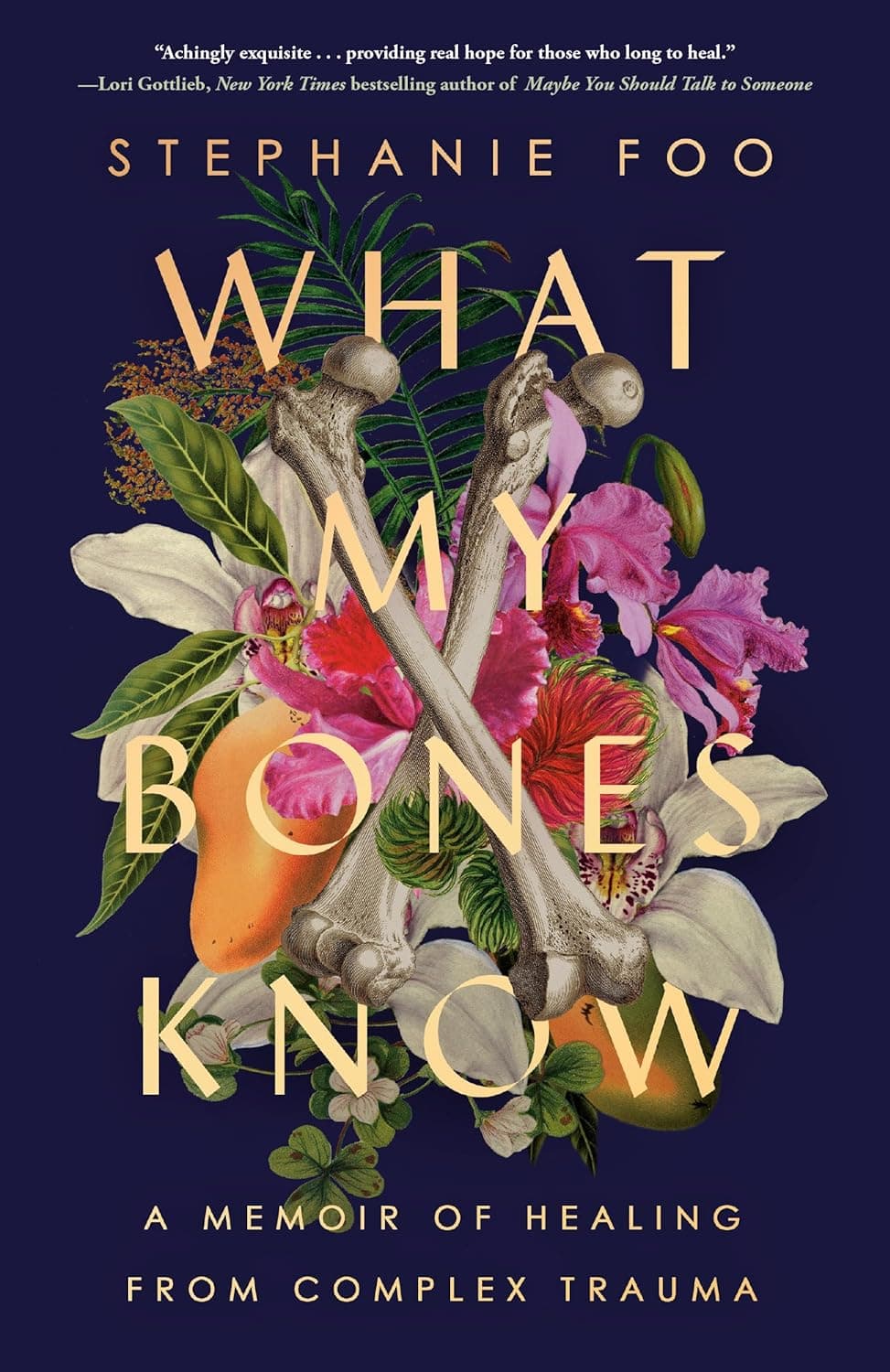
An exploration of Stephanie Foo’s memoir, What My Bones Know, reveals a layered portrait of trauma’s reach and the halting, resilient work of repair. The book braids memoir and reportage to probe how pain lodges in memory, identity, and even biology, while also asking what kinds of relationships and practices make healing possible. Across these pages, survival evolves into agency: trauma → understanding → community → a more integrated self.
Major Themes
Complex Trauma and Its Lifelong Impact
The memoir’s core inquiry is into the nature of complex trauma—how prolonged, repeated harm reconfigures a person from the inside out. In the Prologue, Stephanie Foo receives a C‑PTSD diagnosis as Samantha explains its roots in continual abuse, a revelation that reframes Foo’s dread, relationships, and work habits as adaptations to a “lack of nurture.” Foo’s research—ACE scores, the physiology of hypervigilance, and later health issues—underscores trauma as a full‑body experience that shapes perception, attachment, and lifespan.
The Journey of Healing and Recovery
Healing emerges as a messy, relational practice rather than a single fix or endpoint. Foo quits her dream job—“Healing needs to be my job now”—and, in Chapter 6-10 Summary, commits to modalities like EMDR, IFS, restorative yoga, and transparent, collaborative therapy with Dr. Jacob Ham. Through gratitude journaling, attunement, and her marriage to Joey, Foo learns repair over perfectionism, building a scaffold for safety, connection, and self‑compassion.
Intergenerational and Cultural Trauma
Foo situates her story within histories of migration, poverty, and family secrecy to show how harm is transmitted across time and culture. Stories of Auntie and Malaysian relatives illuminate a stoic ethos—“eat bitterness”—that normalizes silence and endurance, while epigenetic research suggests inherited biological echoes of stress. Returning to San Jose in Chapter 21-25 Summary, Foo uncovers a broader, unspoken pattern of community abuse, complicating blame and broadening the frame from “what happened” to “what shaped the people who harmed.”
Identity, Self‑Loathing, and Self‑Acceptance
The memoir charts a movement from shame and fragmentation toward a more capacious self. Early defenses—a rebellious persona, relentless achievement—give way in therapy to meeting the “puddle” of self‑contempt with curiosity; reframing BADASS traits turns hypervigilance and intensity into targeted strengths rather than defects. With steady love from Joey and new internal practices, Foo learns to befriend her “Hulk” rage and claim a self defined not by damage but by integration.
Supporting Themes
Childhood Abuse and Family Dysfunction
The brutality of Foo’s upbringing—emotional degradation, physical threats, and volatile “car terrorism”—is the substrate of her C‑PTSD. Vivid episodes, from graded diary entries to the ax incident in Chapter 1-5 Summary, reveal a home where instability and secrecy bred hypervigilance, setting the stage for later workaholism and relational fear.
Workaholism as a Trauma Response
Achievement becomes both armor and anesthetic: journalism in high school offers sanctuary; later, elite media jobs channel dread into productivity. When Foo recognizes her career as a “process addiction,” she must disentangle worth from output, a pivot that directly advances The Journey of Healing and Recovery and reshapes Identity and Self‑Acceptance.
The Search for Validation and Truth
As trauma scrambles memory and trust, Foo undertakes a reporter’s audit of her own past. Interviews with teachers, friends, and community members confirm patterns of abuse, transforming isolating doubt into shared reality—and supplying the relational validation that complex trauma erodes.
Theme Interactions
-
Complex Trauma → Healing and Recovery: C‑PTSD instills dread, avoidance, and self‑loathing; healing counters with regulation, repair, and compassion. Where trauma isolates, healing practices foster attunement and chosen family; where shame narrows identity, acceptance expands it.
-
Childhood Abuse ↔ Intergenerational and Cultural Trauma: Immediate harm (the “what”) is reframed by inherited wounds and cultural silence (the “why”). This lens resists simple victim/perpetrator binaries, urging accountability alongside context and inviting collective, not just individual, repair.
-
Workaholism → Identity and Self‑Acceptance: Professional success first props up a fragile self, then becomes an obstacle to integration. Letting go of performance‑based worth enables Foo to recognize trauma‑born skills as adaptable strengths rather than compulsions.
-
Validation and Truth → All Themes: Fact‑checking the past quiets gaslighting—internal and external—stabilizing identity, clarifying the scope of intergenerational harm, and reinforcing that healing is relational knowledge shared across a community.
Character Embodiment
Stephanie Foo As narrator and investigator, Foo embodies the full arc: from the bodily imprint of C‑PTSD and the seductions of workaholism to relational healing, reclaimed identity, and communal belonging. Her practices—therapy transcripts, gratitude, self‑parenting—model how understanding becomes enactment.
Dr. Jacob Ham A guide for repair and attunement, Dr. Ham represents healing as a collaborative, transparent process. His methods help rewire Foo’s “fix‑it” perfectionism into curiosity, transforming shame into workable information.
Joey As a secure attachment figure, Joey embodies steady love and boundaries, showing how safe partnership can metabolize dread and enable self‑acceptance. His presence demonstrates that healing happens in, not away from, relationship.
Samantha By naming C‑PTSD and distinguishing it from single‑event PTSD, Samantha opens the diagnostic and conceptual doorway that reshapes Foo’s understanding of her mind, body, and history.
Stephanie’s Mother and Father They personify both proximate harm and inherited injury, linking Childhood Abuse to Intergenerational and Cultural Trauma. Their secrecy, volatility, and unprocessed pain illustrate how silence breeds repetition.
Auntie Auntie carries the cultural script of endurance—“When the sky falls, use it as a blanket”—embodying survival through stoicism. She shows the strengths and costs of “eating bitterness,” clarifying what Foo must honor and what she must transform.
Healing in What My Bones Know ultimately means holding contradictions—anger and tenderness, grief and gratitude—inside a larger circle of self‑regard and community. The memoir’s themes braid into a single movement: acknowledging what the body remembers, telling the truth in community, and learning to live not unmarked, but more whole.