Opening
On Good Friday, April 14, 1865, actor John Wilkes Booth learns that Abraham Lincoln will attend Ford’s Theatre, and he pivots from a stalled kidnapping scheme to a brazen assassination plot. As Booth races the clock in the shadows, Lincoln moves through a hopeful day, while Edwin M. Stanton stands ready to impose order once the night explodes.
What Happens
Chapter 1: The Plan Begins
Late morning at Ford’s Theatre, Booth discovers that Lincoln—and, rumor has it, General Grant—plan to attend that evening’s performance of Our American Cousin. The news galvanizes him. With eight hours to spare, he studies the theater he knows like a second home, sets an “imaginary clock” ticking toward murder, and begins assembling props, routes, and alibis. A chance encounter with James Ford carrying flags to dress the presidential box confirms the president’s visit and hardens Booth’s resolve.
Lincoln, meanwhile, begins the day in rare lightness—breakfast with his family and his son Robert, a buoyant cabinet meeting where he shares a recurring dream of a swift vessel before major events, and plans for an afternoon carriage ride with Mary. His warmth and optimism, noted by Stanton and others, stand in aching counterpoint to the violence aimed at him.
Chapter 2: The Conspirators Assemble
Booth spends the afternoon stitching his scheme together. At the Kirkwood House, he leaves a needling note for Vice President Johnson. At the boardinghouse of Mary Surratt, he deposits binoculars for delivery to her Surrattsville tavern and instructs her to tell John Lloyd to ready the hidden carbines—drawing her into the web of Conspiracy and Betrayal. He chooses his tools: a small, single-shot .44 Deringer and a theatrical Rio Grande knife, fitting his self-styled pageant of Heroism vs. Villainy.
Around 8:00 p.m., Booth gathers his team: Lewis Powell, David Herold, and George Atzerodt. The mission shifts from kidnapping to coordinated assassination: Powell will kill Secretary of State William Seward, bedridden from an accident; Atzerodt will murder Vice President Johnson; Herold will guide Powell to the Seward home, then rejoin Booth for the escape. Atzerodt balks, but Booth bullies him forward. Secretly, Booth has already drafted a newspaper letter justifying their deeds and signing all their names, binding them together without their consent.
Chapter 3: The Assassination at Ford’s Theatre
After a peaceful carriage ride where Lincoln tells Mary, “We must both be more cheerful in the future,” the couple arrives at the theater with Major Henry Rathbone and Clara Harris to ovations and “Hail to the Chief.” The night feels triumphant for the president who saved the Union. But at 10:00 p.m., Booth downs a final drink at the Star Saloon, slips beneath the stage, and ascends to the presidential box. With the door inexplicably unguarded—save a casual glance from Lincoln’s footman, Charles Forbes—Booth wedges the door shut, peers through a peephole, and waits for the play’s loudest laugh.
At 10:13 p.m., as Harry Hawk delivers, “You sockdologizing old mantrap,” Booth fires a single Deringer round into the back of Lincoln’s head. Rathbone lunges; Booth slashes him brutally, shouts “Freedom!,” and leaps twelve feet to the stage, catching his spur on a flag and shattering his left fibula. Limping center stage, he brandishes the knife and cries “Sic semper tyrannis!”—“Thus always to tyrants”—then, “The South is avenged!” He bolts through the wings, out the alley, and into the darkness, triggering the Manhunt and Pursuit.
Chapter 4: The Attack on Seward
At the same hour, Powell and Herold reach the Seward home. Posing as a messenger with medicine from Seward’s doctor, Powell presses past the wary servant William Bell, then collides with Frederick Seward upstairs. Fanny Seward’s glance to her father’s door pinpoints the target.
The ruse collapses. Powell’s pistol misfires with a metallic click; he clubs Frederick so savagely that the weapon breaks, then forces his way into the bedroom. He slashes Sergeant Robinson, Seward’s nurse, and savages the defenseless Secretary’s face and neck—wounds blunted only by a metal jaw brace from the recent accident. Fanny’s screams bring her brother Augustus; Powell fights off three men, while outside Herold, spooked by the chaos, abandons him. Powell then walks out, mounts his horse, and vanishes.
Chapter 5: The Manhunt Begins
Ford’s Theatre erupts. Mary Lincoln screams. Rathbone, bleeding heavily, calls, “Stop that man!” Dr. Charles Leale, a young army surgeon in the audience, pushes through, assesses a mortal wound, and clears a blood clot to restart the president’s breathing before ordering a move across the street.
At the Petersen House, Lincoln is laid diagonally on a too-small bed. News of dual attacks ricochets through Washington. Stanton arrives, takes command from the back parlor, deploys soldiers, secures the bridges, and fires telegraphs nationwide naming Booth as the assassin. Across the river, Booth bluffs his way past Sergeant Silas Cobb at the Navy Yard Bridge, reunites with Herold, arms up at Surratt’s tavern—boasting to John Lloyd that they have struck down the president and Seward—and rides south. Near 4:00 a.m., they reach the farm of Dr. Samuel A. Mudd, who sets Booth’s broken leg and unwittingly shelters the fugitives.
Key Events
- Booth discovers Lincoln’s theater plans and converts a kidnapping scheme into a three-pronged assassination.
- Booth arms himself with a Deringer and knife; Mary Surratt relays weapons to Surrattsville; the conspirators receive their assignments.
- At 10:13 p.m., Booth shoots Lincoln, wounds Rathbone, declares “Sic semper tyrannis!,” and escapes on horseback.
- Powell butchers his way through the Seward household, grievously wounding multiple people but failing to kill the Secretary; Herold flees.
- Stanton establishes a command post at the Petersen House and launches a nationwide dragnet.
- Booth and Herold cross the bridge, arm up at Surratt’s tavern, and reach Dr. Mudd’s farm for treatment and refuge.
Character Development
The chapters chart a collision between theatrical villainy, private courage, and bureaucratic resolve. Booth scripts himself as a Confederate avenger; Lincoln embodies humane hope; Stanton becomes the state’s iron spine; others—Powell, Herold, Atzerodt—reveal what they are under pressure.
- John Wilkes Booth: Vain and fanatical, he pursues notoriety wrapped in the rhetoric of The 'Lost Cause' and Southern Honor. He micromanages details yet acts impulsively, even bragging to John Lloyd mid-flight.
- Abraham Lincoln: Gentle, weary, and hopeful, he savors family moments and imagines peace ahead, deepening the tragedy of his final hours.
- Edwin M. Stanton: Cool, implacable, and thorough; he transforms chaos into a structured national response within minutes.
- Lewis Powell: A powerful, violent instrument—obedient to orders, terrifying in execution, and suddenly rudderless without Herold.
- David Herold: A skilled guide and necessary outdoorsman whose instinct for self-preservation shows in his abandonment of Powell.
- George Atzerodt: Timid and dithering, he shrinks from his assignment, exposing a conspiracy built partly on bluster.
- Mary Surratt: A facilitator who moves weapons and messages, binding domestic spaces to political violence.
- Dr. Charles Leale: Competent and selfless; he buys Lincoln precious time and dignity.
- Dr. Samuel A. Mudd: A country physician whose treatment of Booth pulls him—knowingly or not—into national infamy.
Themes & Symbols
The chase begins the instant the shot is fired, establishing Manhunt and Pursuit as the story’s engine. Stanton’s swift mobilization—telegraphs crackling, bridges guarded, cavalry in the streets—meets Booth’s rehearsed escape, turning the country into a map of converging lines. The narrative’s cross-cutting sustains that pursuit, reminding us that history turns on simultaneous decisions.
Conspiracy and Betrayal binds domestic spaces to public crime. A boardinghouse becomes a hub; a tavern, an armory; a family home, a battlefield. The conspiracy also cannibalizes itself: Herold abandons Powell; Atzerodt shrinks from murder; Booth signs everyone’s names to his justification, betraying them to his vanity. Heroism vs. Villainy plays out starkly—Booth’s theatrical posturing against quiet acts of courage: Rathbone’s charge, Fanny Seward’s defense of her father, Leale’s steady hands. Beneath Booth’s declarations lies the hollow code of Southern “honor,” a rhetoric that cannot mask the butchery it justifies.
Symbols
- Ford’s Theatre: A house of illusion becomes a stage for national catastrophe—and Booth’s final, self-authored performance.
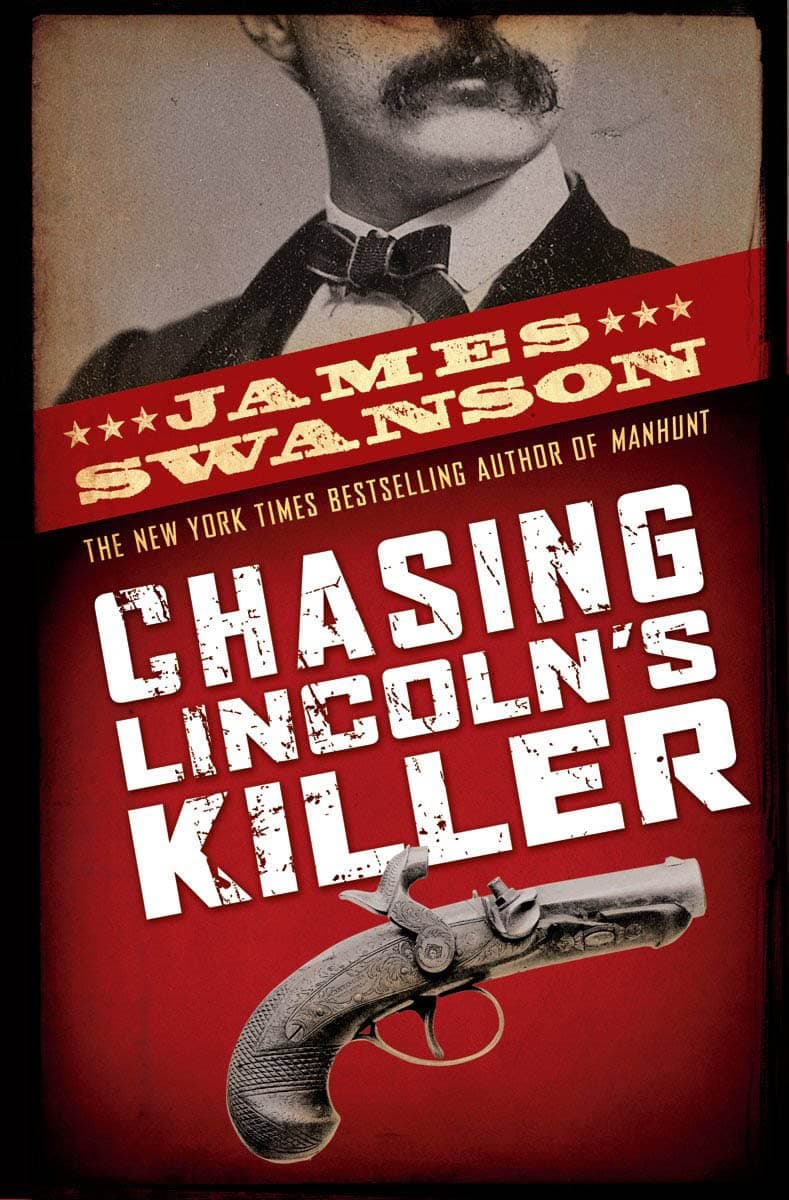
- The Deringer pistol: A risky, single-shot weapon that mirrors Booth’s love of drama and all-or-nothing gambles.
- Blood: On uniforms, dresses, pillows—it stains every scene, stripping away romanticism and confronting readers with physical, human cost.
Style & Technique
A ticking-clock structure drives tension, timestamping each move as the story sprints toward 10:13 p.m. Cinematic cross-cutting between theater, cabinet room, city streets, and the Seward home creates simultaneity and dread. Dramatic irony saturates Lincoln’s cheerful day, while foreshadowing glimmers in his dream of a vessel bound for an “indefinite shore.” Vivid sensory detail—powder smoke, the click of a misfire, the “gooey” clot Leale removes—anchors mythic history in bodily reality.
Key Quotes
“We must both be more cheerful in the future.” Lincoln’s intimate hope with Mary frames the night in heartbreaking irony. The line humanizes him at the threshold of death and contrasts directly with Booth’s looming spectacle.
“You sockdologizing old mantrap.” The play’s biggest laugh masks Booth’s shot. The joke’s timing shows how noise and performance create cover, turning theatercraft into a weapon.
“Sic semper tyrannis!” Booth claims the mantle of republican virtue while committing monarchical violence. The motto reveals his need to recast murder as public justice—and to stage himself as history’s actor.
“The South is avenged!” This declaration exposes Booth’s ideology as personal theater: vengeance packaged as honor, a slogan substituting for strategy or mercy.
“Stop that man!” Rathbone’s cry punctures the stage illusion and yanks the audience into real danger. It is the moment the public witnesses transfers from comedy to calamity.
Why This Matters and Section Significance
These chapters establish the crime, the culprits, and the counterforce that shapes the rest of the book. They map every crucial location, fix the timeline to the minute, and introduce the figures who will drive the twelve-day chase—assassin, victims, rescuers, and the state’s chief pursuer. The result is a taut launch: Booth and Herold on the run, the government reeling yet mobilized under Stanton, and a nation transformed overnight into a theater of pursuit.