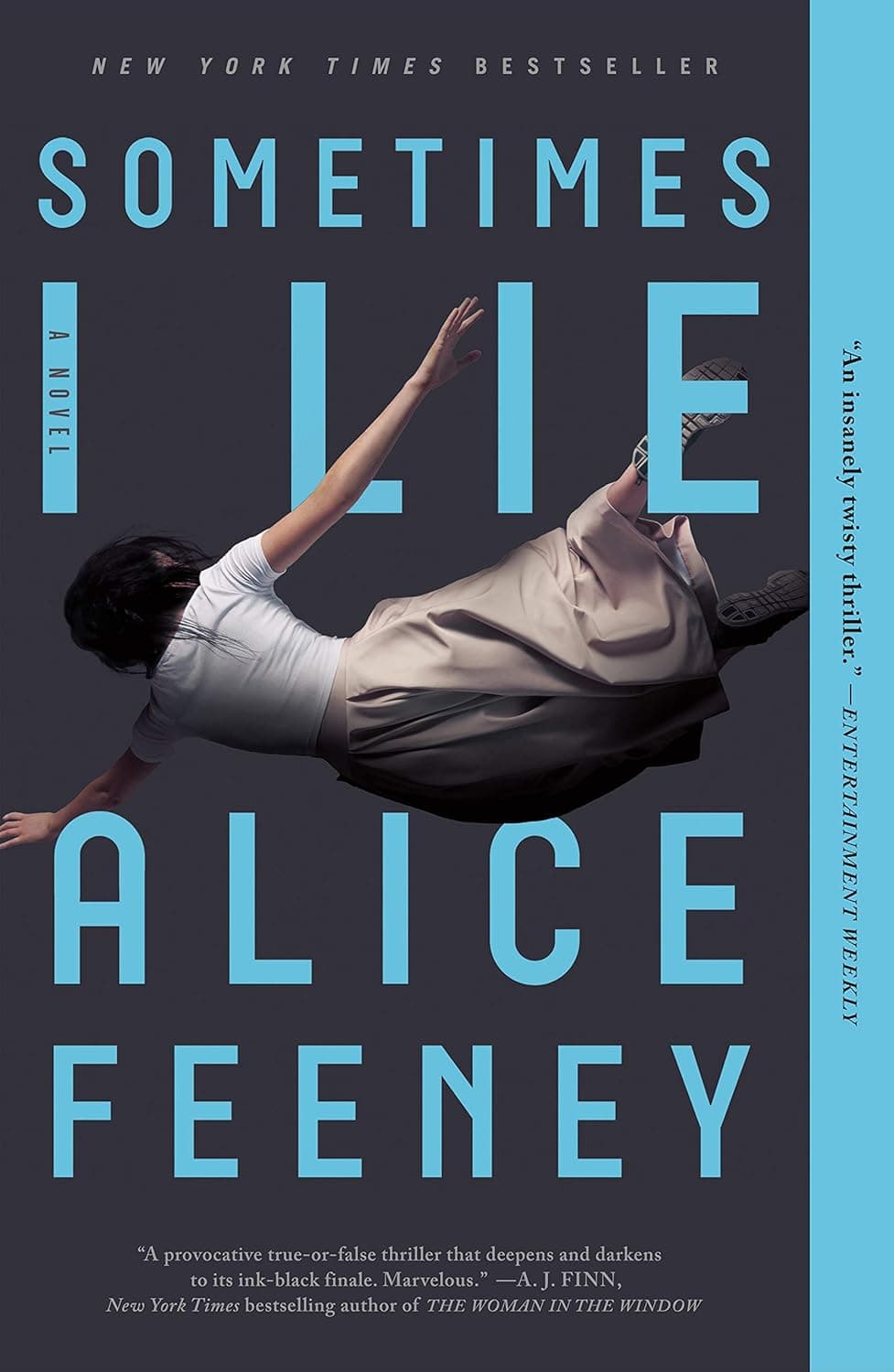
Opening
These chapters push Amber Reynolds from domestic unease into a spiraling psychological nightmare. While she lies trapped in a hospital bed, the hours before the crash unravel into betrayal, missing people, and a sinister presence that suggests the truth is bigger—and darker—than jealousy.
What Happens
Chapter 11: Then (Tuesday, December 20, 2016—Afternoon)
Amber comes home to an empty house and tries to quiet her thoughts in the kitchen, where a robin abruptly flies into the patio door and dies. The shock freezes her; a friend once told her robins carry messages from the dead, and she can’t face the small body outside. The house feels watched.
Her sister, Claire, startles her by walking in through the back. Their conversation bristles with subtext and old rivalries. Claire says she’s worried—Amber hasn’t answered calls—so Amber mentions running into her university ex, Edward Clarke. Claire claims not to remember him, then quickly pivots to ask if Amber plans to have an affair. Amber throws a dart of a line: Paul has spent more time with Claire lately than with her. The accusation lands; Claire retreats with a chilling promise—she’s “only around the corner.” After she leaves, Amber forces herself to dispose of the robin and compulsively scrubs her hands, rattled by how easily life is tossed away.
Chapter 12: Now (Wednesday, December 28, 2016—Morning)
Locked inside her body, Amber endures Confinement and Powerlessness. Two nurses she nicknames “Northern Nurse” and “Forty-a-Day Nurse” clean her after she soils herself. The dignity of their careful hair-brushing grazes against the humiliation of their task. Then Paul arrives and tells her the police have released him but still suspect him; he begs her to wake.
As he reads bleak human-interest stories aloud, Amber feels phantom hands close around her throat—pressure, panic, then nothing. Did it happen? The doubt gnaws at her, amplifying Deception and Unreliable Narration for both her body and her memories. Claire enters, and instead of crackling tension, Amber senses warm complicity; Paul and Claire hug. Excluded, she tumbles back to childhood, where Claire’s birth made her the “invisible daughter,” a role that still defines the shape of her rage.
Chapter 13: Then (Tuesday, December 20, 2016—Evening)
Determined to reset the day, Amber returns from grocery shopping and arranges every item with meticulous care, planning a special dinner. When she goes to fetch Paul from his writing shed, it’s empty. She calls his phone; the ringtone leads her upstairs, into his wardrobe. Inside a jacket pocket: his phone. Beneath hanging clothes: a gift bag with expensive black lingerie that isn’t her size.
Her stomach drops again downstairs—there’s a half-empty bottle of Claire’s favorite white wine in the fridge. Amber walks to Claire’s house and spots Paul’s green MG Midget parked outside. But Claire’s husband, David, opens the door furious and confused; Claire hasn’t been home all day. He thought she was with Amber. Both Paul and Claire are missing.
Chapter 14: Before (Wednesday, November 13, 1991)
In a diary entry from the month Amber turns ten, she vents about her mother, who returns from parents’ night excited not by Amber’s grades but by meeting the mother of “Taylor,” a girl she wrongly assumes is Amber’s new friend. Without asking, Amber’s mother schedules a playdate.
Amber feels unseen and managed—forced to be “like the other kids” instead of herself. She lists why she hates her mother: she drinks too much, she lies all the time, she wishes Amber were different. The entry lays bare the roots of Amber’s fractured Identity and Self-Perception and the Trauma and its Lasting Effects that carry into adulthood: neglect, manipulation, and a love that feels conditional.
Chapter 15: Now (Wednesday, December 28, 2016)
Amber’s parents arrive at the hospital, but their visit is cold and performative. They reminisce about Claire, “Princess,” while Amber, “Peanut,” lies ignored. Paul and Claire are present too; then all four leave together for food, abandoning her again. Jealousy and fury crest.
In a fierce, lucid vision that blurs Memory and Reality, Amber is back at the roadside after the crash beside a little girl in a pink dressing gown. Tree roots snake out, pinning them, while the girl sings a warped “Twinkle Twinkle Little Star” and points to the car. A shadowy figure climbs out of the driver’s seat and walks away—someone else was there. The hospital door unlocks, snapping her back. An unknown man enters, rifles her bag, and finds her phone. He listens to voicemails—one from himself: “I’m sorry about what happened. It’s only because I love you.”—then deletes it. He leans close and whispers that this wasn’t an accident. Amber did this to herself.
Character Development
Ties inside and outside Amber’s hospital room tighten into a noose. The personal fractures—marriage, sisterhood, family—align with a growing sense that someone is orchestrating her downfall.
- Amber Reynolds: Her anxiety hardens into conviction as concrete details pile up—the wrong-sized lingerie, Claire’s wine, the missing car, the erased voicemail. She relies on control rituals (pantry organization, compulsive hand-washing) to manage stress, while flashbacks expose the childhood source of her invisibility and anger.
- Paul Reynolds: He shifts from beleaguered husband to suspect. His empty shed, abandoned phone, and closeness with Claire contrast with his desperate bedside pleas.
- Claire: She moves from concerned sister to possible co-conspirator. Her evasions, proximity to Paul, and mysterious absence deepen the sense that her loyalties lie anywhere but with Amber.
- The Unknown Man: His careful intrusion and intimate voicemail establish a hidden antagonist who knows Amber and the crash. He reframes the story from triangle to trap.
Themes & Symbols
These chapters braid domestic dread with psychological warfare. Amber’s efforts to assert control collide with systems—and people—who deny her agency, whether in a hospital bed or in the middle of her own marriage.
- The dead robin: A sudden, violent death against a clean pane of glass. It marks the thinness of safety—the pane that separates warm kitchen from brutal impact—and mirrors Amber’s guilt over discarding what’s fragile, including the truths she can’t face.
- The lingerie: Tangible proof of betrayal that doesn’t fit. The wrong size signals “another woman,” narrowing that woman to someone in Amber’s life and turning suspicion into physical evidence.
- The crash vision: A live-wire confrontation with memory, where roots hold her down and a third figure walks away. The little girl in the pink dressing gown becomes a haunting avatar of innocence and loss, while the shadow walker suggests conspiracy.
- Sisterhood and Sisterhood and Toxic Relationships: Amber’s lifelong invisibility resurfaces as Claire bonds with Paul over her bed. Childhood favoritism and adult triangulation replicate the same wound in new forms.
- Control and Manipulation and Control: From the nurses handling her body, to Claire and Paul’s shared glances, to the unknown man deleting proof, power is exercised in silence and proximity.
Key Quotes
“Remember I’m only around the corner.”
Claire’s exit line functions as both threat and promise. Physical closeness becomes psychological pressure; the neighborly phrase cloaks surveillance in friendliness.
“You tell me, you’ve spent more time with him than I have lately.”
Amber’s accusation punctures small talk and exposes the triangle. The line signals a turning point: paranoia gives way to confrontation, and silence to stakes.
“I’m sorry about what happened. It’s only because I love you.”
The voicemail folds affection into harm, a classic manipulator’s alibi. Love is weaponized to excuse damage and to bind Amber to secrecy.
“This wasn’t an accident... You did this to yourself.”
The unknown man redirects blame to Amber, casting doubt on her memory while asserting control over the narrative. It widens the mystery beyond infidelity to coercion and cover-up.
The little girl sings “Twinkle Twinkle Little Star.”
A nursery rhyme curdles into an omen. The child’s song turns the crash into a ritual of remembrance and points Amber toward the driver who walked away.
Why This Matters and Section Significance
This stretch transforms a story about marital suspicion into a full-bore psychological thriller. The evidence in Amber’s home collides with her coma-bound perceptions to raise sharper questions: Where were Paul and Claire that night, who was the third person at the crash, and who is erasing Amber’s proof?
The structural weave—Then, Now, Before—layers immediate peril over formative trauma, making Amber’s unreliability both a symptom and a strategy of survival. With the unknown man’s intrusion, the frame widens from jealousy to orchestration; control, not love, emerges as the operative force. The result is a taut escalation: a locked-room mind, a house of mirrors, and the chilling sense that the truth is being managed from just around the corner.