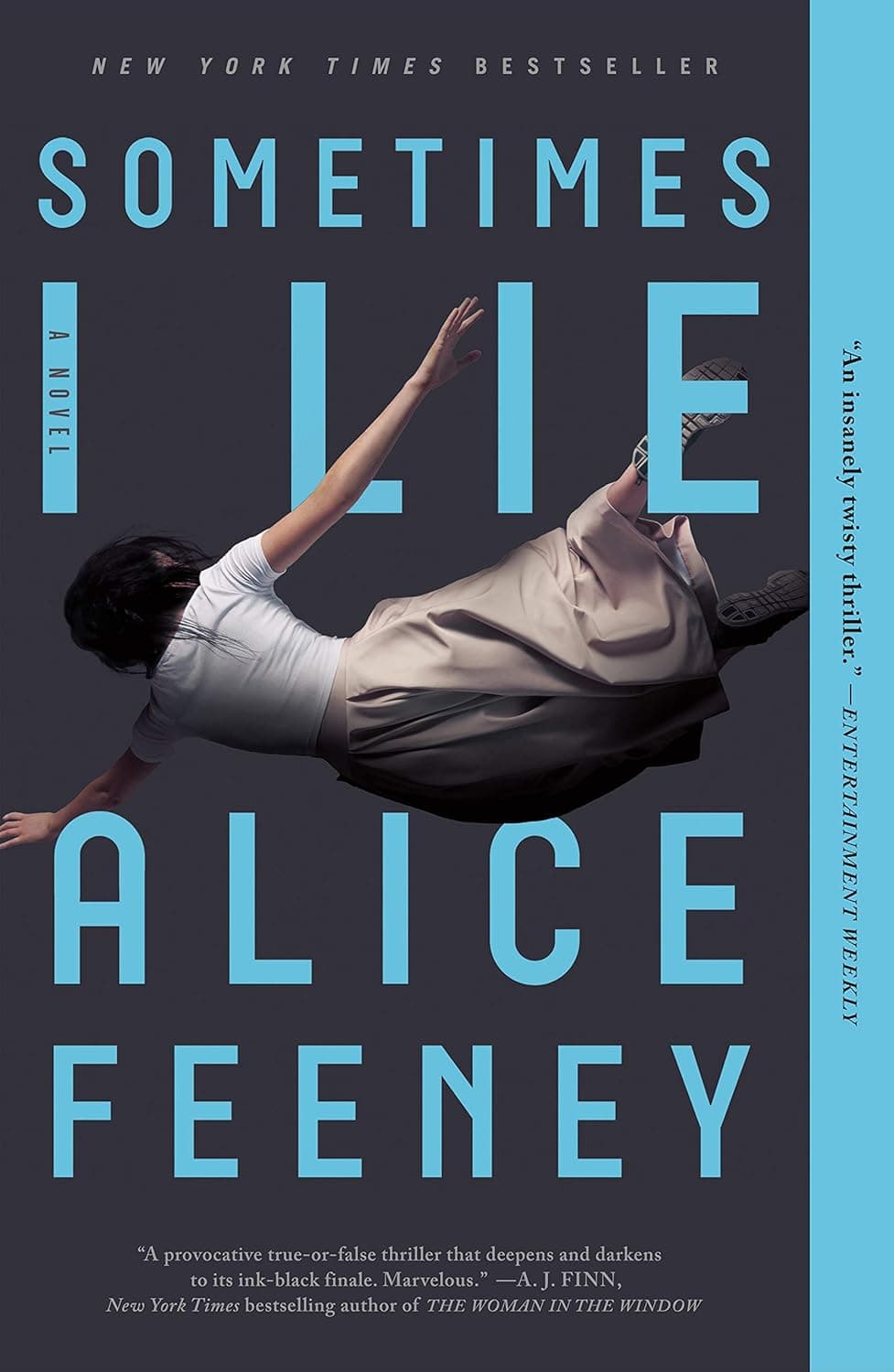
Opening
A web of past injuries tightens around Amber Reynolds as guilt, desire, and vengeance collide. Across “Before,” “Then,” and “Now,” a buried childhood catastrophe surfaces, an ex reveals his danger, a rival is destroyed live on air, and a tiny finger twitch promises that Amber is not gone.
What Happens
Chapter 26: An Old Mistake
Then — Thursday, December 22, 2016. Amber meets her ex, Edward Clarke, telling herself it’s harmless. After steadying a wave of nausea in the bathroom, she joins him at the bar. He’s as handsome as ever; the conversation clicks back into place with the ease of old muscle memory and alcohol. She feels the temptations and risks coiling under the table—“a tiny tear” could rip her life apart.
Edward leads her to a discreet members-only restaurant, all candlelight and privacy. He shares that he’s a doctor now and mentions a girlfriend he “doesn’t see often.” When Amber asks whether his girlfriend knows about tonight, he counters: does her husband? He’s right—no. Outside, his charm hardens. He insists on walking her to the station, then presses her to miss her train and check into a hotel. His grip tightens, the possessive look she once buried resurfaces, and he tells her she’s unhappy and they should get back together. Amber snatches her hand free, says she’s married, and runs for the train, certain she’s made a mistake.
Chapter 27: An Easily Broken Thing
Before — Wednesday, October 14, 1992, Amber’s eleventh birthday. She forgets to remove Taylor’s gold bracelet. When her mother notices, Amber lies, claiming it’s a gift from Taylor’s mum, a moment that seeds Deception and Unreliable Narration. Her mother calls to confirm and exposes the lie.
The confrontation explodes at the top of the stairs. Her mother slaps her; Amber, shocked, pushes back. Her mother tumbles down the entire staircase. In her diary, Amber insists it’s an accident, a core shock that becomes the bedrock of Trauma and its Lasting Effects. At the bottom, her mother groans about “the baby.” Amber’s father, passive until now, drives her to the hospital without a word to Amber. Alone, Amber stares at the blood on the carpet, eats birthday cake, and sobs over a card from Taylor. The day brands her with enduring Guilt and Blame.
Chapter 28: She’s Still Here
Now — Amber lies in her hospital bed while Paul Reynolds and Claire sit in a wordless stalemate on either side of her, a “prison” of truths and lies. Paul breaks the silence: “It was a girl.” A lost memory slams back—Amber was pregnant, and the baby is gone. Grief floods her, mixing with jealousy as she imagines Claire comforting Paul, her mind buckling under Memory and Reality.
A hallucination swallows her: she lies in an open coffin while Paul, Claire, Jo, and Edward shovel dirt over her—pure Confinement and Powerlessness. A little girl in a pink dressing gown is placed beside her, softly singing “Silent Night.” The child tells Amber she can escape if she points to a green exit sign buried in the dirt. The vision lurches into the miscarriage: blood slick on Amber’s hands as life slips away. With the girl urging her, Amber gathers everything she has and forces her finger to point. In the room, Claire sees the movement. “Look! Her hand, she’s pointing her finger.” “It means she’s still here.”
Chapter 29: About Time
Then — Friday, December 23. Sick at work, Amber realizes she is thirteen weeks pregnant. In the bathroom, her boss and rival, Madeline Frost, shakes as she confesses she’s been receiving threatening letters. Amber begins a calculated campaign of Justice and Revenge—and cool Manipulation and Control.
She uses producer Matthew’s unlocked phone to send herself a text about a “new presenter,” then makes sure Madeline sees it. Later, while Madeline prepares to appear live for Crisis Child, Amber offers to attach her mic and battery pack. After the segment, Amber pretends the feed is dead and coaxes Madeline into talking. Believing she’s off-air, Madeline unleashes a vile rant—calling vulnerable children “little shits” and advocating forced sterilization for people with low IQs. It broadcasts live, nationally. Back in the office, Madeline strides in, oblivious—until shouting from Matthew’s office tells her everything has changed.
Chapter 30: I. Hate. You.
Before — Friday, October 30, 1992. Amber’s mother has been in the hospital for two weeks. In her absence, Taylor’s mother cares for Amber, and Amber defends Taylor from bullies in the school toilets, deepening their bond into a sanctuary shaped by Sisterhood and Toxic Relationships.
When her mother returns, she looks spectral—skinny, empty, and dangerous. She corners Amber, who refuses to flinch. In the kitchen, her mother clamps Amber’s chin, forcing her face up. Amber snarls back the only power she has: “I. Hate. You.” Her mother bellows up the stairs that Amber is never to see Taylor again. Amber retreats to her room, shattered, as her brief peace collapses.
Character Development
Amber’s three timelines expose her contradictions: a traumatized child who learns to lie to survive, a sharp adult who can and will destroy an enemy, and a trapped consciousness thrashing toward life and love.
- Amber Reynolds: In “Then,” she shows ruthless intelligence and a taste for retribution; in “Before,” she’s a child marked by guilt and parental violence; in “Now,” grief and jealousy roil beneath her first sign of will to live.
- Edward Clarke: The charming nostalgia cracks to reveal possessiveness and control, reframing him as a threat rather than a lost love.
- Paul Reynolds: His four words unlock Amber’s buried memory and grief, casting him as both messenger and unintended tormentor.
- Claire: Outwardly supportive, she becomes a focus of Amber’s jealousy and suspicion, complicating loyalties at the bedside.
- Jo: Present in Amber’s nightmare burial, she’s folded into Amber’s fear that friends may become executioners.
- Madeline Frost: A brittle professional veneer gives way to bigotry; Amber’s trap exposes who she is when she thinks no one is listening.
- Amber’s mother: Violence, loss, and bitterness harden into punitive control, aimed squarely at her daughter.
Themes & Symbols
These chapters braid generational injury with agency. Trauma’s aftershocks ripple from 1992 into adult choices: Amber learns to lie, anticipates betrayal, and seizes control where she can—at work, against Madeline; at the station, escaping Edward; even in a coma, fighting to move a finger. Manipulation and vengeance become survival strategies that blur moral lines, asking whether justice delivered privately is justice at all.
Memory fractures under pressure. The revelation of the lost pregnancy, the coffin hallucination, and the child guide collapse inner and outer worlds until Amber’s mind forges its own exit. Powerlessness is literal (the hospital bed) and metaphorical (a child under a violent parent), yet across timelines Amber resists confinement—sometimes through compassion, sometimes through cruelty.
- The little girl in the pink dressing gown: Part lost baby, part lost childhood, part guardian—she embodies grief and guidance, transforming horror into a path toward awakening.
- The “hot” microphone: A truth-serum device that turns private ugliness public, it weaponizes authenticity and shows how reputations hinge on what the world hears.
- The broken bracelet repaired with a safety pin: A fragile bond mended and strengthened, it mirrors Amber and Taylor’s friendship—resilient, loyal, and vulnerable to parental control.
Key Quotes
“It would take just a tiny tear to rip through the fabric of the life I have now.”
Amber recognizes the precipice she’s approaching with Edward. The line frames desire as a threat to domestic stability and foreshadows how quickly memory and loyalty can unravel.
“I didn’t mean for her to fall down the stairs, it was an accident.”
The diary insists on innocence while confessing catastrophic harm. This plea becomes the seed of lifelong guilt and shapes how Amber narrates—and possibly edits—her own history.
“It was a girl.”
Paul’s blunt truth detonates a missing memory. The baby’s gender makes the loss specific and personal, transforming abstract grief into a haunting presence in Amber’s visions.
“Look! Her hand, she’s pointing her finger.” / “It means she’s still here.”
Claire’s observation marks the first measurable sign of consciousness. The moment bridges Amber’s inner nightmare and the outer world, proving that will—and witness—matter.
“Little shits.”
In one hate-fueled phrase, Madeline authorizes public condemnation. The live microphone turns careless cruelty into career-ending testimony.
“I. Hate. You.”
Amber’s declaration reclaims power in a house defined by fear. It’s both liberation and provocation, triggering a punishment that targets the one relationship that sustains her.
Why This Matters and Section Significance
These chapters deliver the novel’s foundation: the childhood fall and miscarriage explain Amber’s lifelong guilt and her mother’s cruelty, reframing every later betrayal. In the present, Amber’s first movement shifts the “Now” timeline from static dread to urgent possibility—she can fight back. The Edward encounter proves the past is not just memory but an active threat. And Amber’s surgical takedown of Madeline expands the suspect pool while revealing how far she’ll go when cornered.
Together, “Before,” “Then,” and “Now” align into a single pulse: a woman shaped by trauma choosing, again and again, whether to be buried by it—or to claw her way out.