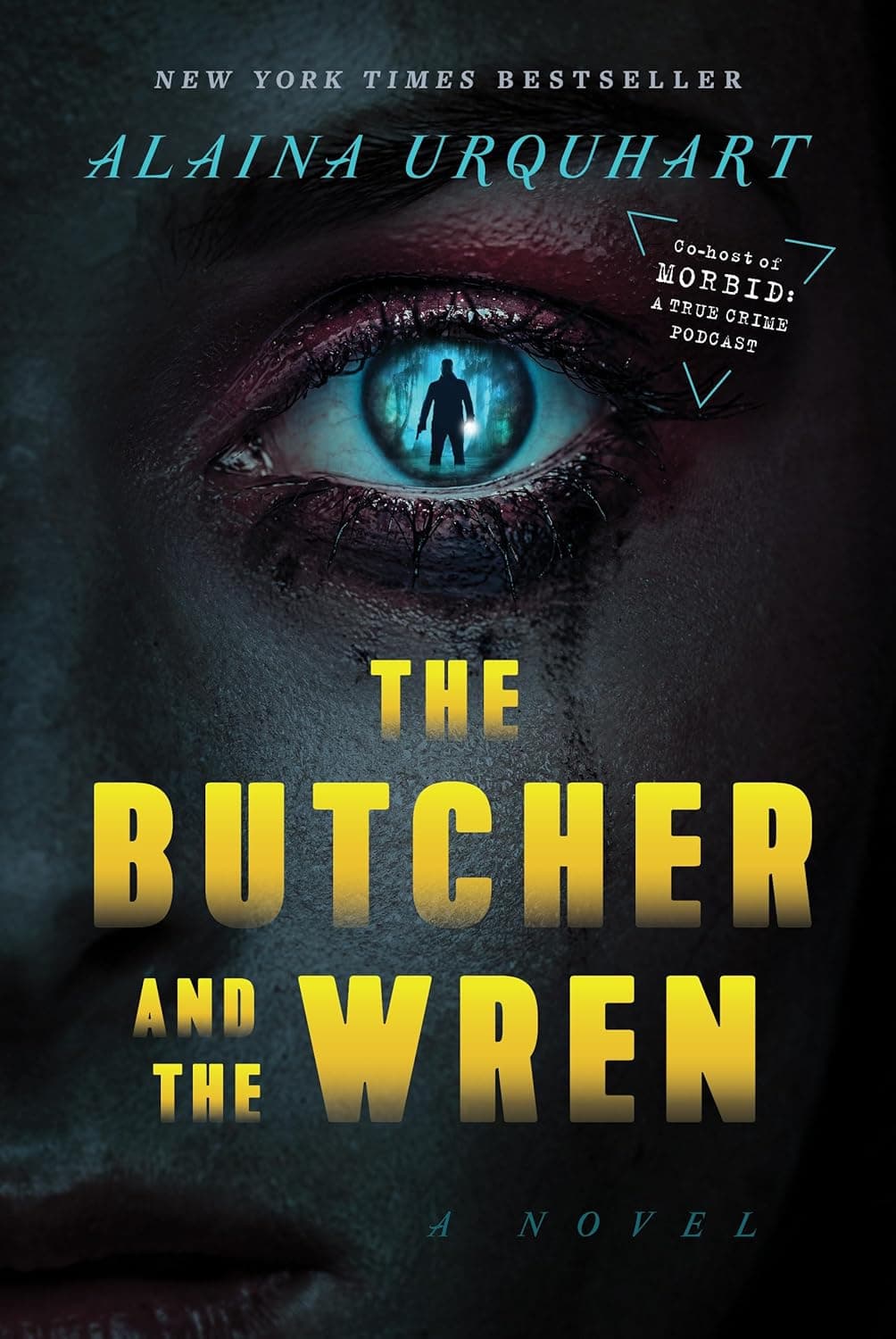
Opening
A crowded festival in New Orleans turns into a hunting ground as forensic pathologist Dr. Wren Muller and Detective John Leroux follow the smell of death to a brutalized victim and a taunting timer. Meanwhile, Jeremy Rose stalks captives through the bayou, weaponizing chemistry, anatomy, and fear. The section hurtles toward a coffin and a countdown, transforming the case into a race against the clock.
What Happens
Chapter 16: The Scent of Death
Amid a packed music festival, Wren smells what others miss: the faint ester-sweet scent of human decomposition. With her uneasy tech and Leroux pushing through the crowd, she tracks a “thin black cloud” of blowflies to a small stage and persuades security to let them through. The odor grows stronger beneath the platform; Wren crawls into the dark lattice of beams and finds a young woman’s body—throat lacerated, skin marked by violence—left where no one was meant to look.
Two clues jump out. Clutched in the victim’s stiff hand is a tourist map of St. Louis Cemetery No. 1, a red X marking plot 1503. On her wrist: a pristine, white smartwatch. Wren tries the plot number as the passcode—1503—and the watch unlocks to a single app: an alarm set to ring in 45 minutes. The message lands hard. This body is a signpost, and the countdown means someone else is in imminent danger. Wren and Leroux tear away from the stage and head for the cemetery.
Chapter 17: Jake Leg
Jeremy hunts two captives—Katie and Emma—through the bayou, the steady pulse of “(Don’t Fear) The Reaper” in his ears. He has dosed Katie with a neurotoxin derived from tricresyl phosphate, the same chemical that once crippled drinkers of contaminated “jake” during Prohibition. As the poison takes hold, Katie’s leg goes numb and she collapses, helpless.
Emma tries to help, but Jeremy knows how survival instinct works—and how to break it. He chambers a round and blasts Katie’s kneecap. The scream cleaves Emma’s resolve; she runs. Jeremy kneels beside Katie, pushes hair from her face, whispers “Shhh,” and draws his bowie knife across her throat. He listens to the bayou and his music as she dies, then rises, savoring the control, and turns his attention to finding Emma.
Chapter 18: A Race Against Time
Sirens wail as Wren and Leroux tear through New Orleans toward St. Louis Cemetery No. 1. Wren’s voice stays professionally even as she calls for an ambulance to meet them; Leroux white-knuckles the wheel, cursing the traffic and voicing the dread gnawing at them both: is this a rescue or a trap designed for their panic?
Wren keeps them focused. Trap or not, someone may be buried alive. She cracks a dry joke about Detective William Broussard and his “shiny youths” handling backup, and Leroux almost smiles. Their rapport holds under pressure as they brake beside the cemetery’s white walls. They are entering a city of the dead to stop a death.
Chapter 19: The Final Girl
Jeremy closes in on Emma, taunting her as his “final girl” and firing into the air to drive her into a sprint. She reaches a perimeter fence—a glinting promise of escape—and grabs for it. Electricity slams her backward. Jeremy strolls up, chiding her for not expecting an electrified barrier, then drags her into a chokehold as she tries to crawl.
He doses her eyes with tropicamide to blur her vision and lectures her on spinal cord injuries: “C4, breathe no more,” “C5, stay alive.” He frames it as mercy—he won’t kill her by asphyxiation—then proves it’s a different cruelty. He drives the bowie knife into her lower back, severing her spinal cord. Emma convulses, alive but paralyzed. The choice is his, and he takes everything.
Chapter 20: The Ticking Timer
At the cemetery, Broussard’s team has the site locked down. Wren and Leroux reach plot 1503 and find a fresh mound and an old egg timer ticking down from twenty minutes. Everyone drops to the dirt—detectives, uniforms, paramedics—digging with shovels and bare hands. The only sounds are lungs and metal on earth.
With four minutes left, a shovel thuds against wood. They clear soil, heave on the handle, and lever the casket up just enough. Wren and Leroux wrench the lid. Inside lies a young woman, face smeared with grime and dried vomit, shirt bloodstained, silent and still. As they see her, the egg timer screams. Time is up.
Character Development
Pressure exposes who these people are and what they’re becoming.
- Wren Muller: Cool-headed and incisive, she trusts her senses, crawls into danger, and thinks laterally—flies to stage, map to passcode, timer to rescue. She steadies Leroux and drives the team at the grave, leadership anchored in science and grit.
- Jeremy Rose: A sadist who exalts intellect, he curates death as performance—obscure toxins, anatomy lectures, timed puzzles. His pleasure is absolute control over bodies, environments, and the investigators’ clock.
- John Leroux: Frayed but fierce, he shows his cracks—rage at traffic, fear of a trap—yet channels panic into action. In the dig, he becomes pure will.
- Emma: Defined by the will to live, she makes the impossible choice to run. Her resilience collides with a predator who wields knowledge as a weapon, turning survival into a tragedy of stolen agency.
Themes & Symbols
Two hunts entwine to form The Hunt: Predator vs. Prey. Jeremy stalks in the wild, engineering fear and pain; Wren and Leroux hunt through a city, following data, odors, and insects. Each side chases life or death, and each becomes prey to the other’s design—Jeremy to detection, the investigators to his ticking traps.
Jeremy embodies Intellectual Pride and The God Complex. He lectures about “jake leg” and spinal mnemonics not to educate, but to coronate himself as judge and executioner. His toys—the electrified fence, the watch passcode, the egg timer—turn knowledge into theater, with police as captive audience.
Control and Powerlessness pervades every page. Katie’s poisoned leg, Emma’s severed spine, the buried woman’s dwindling air—each is a system Jeremy controls. Even Wren’s team must submit to the killer’s schedule. Against this, Science vs. Instinct collides: Wren’s forensic logic and Emma’s survival drive strive to beat Jeremy’s perverted science.
Symbol: the ticking clock. The smartwatch alarm and egg timer compress time into a weapon. They convert investigation into crisis, forcing choices under duress and amplifying dread with every second that falls away.
Key Quotes
“A thin black cloud”
The blowflies are Wren’s first proof that death hides in plain sight. In a joyful, crowded space, nature still testifies—and Wren knows how to read it.
“Shhh.”
Jeremy’s hush over Katie as he cuts her throat is intimacy turned monstrous. It reveals a predator who craves not just killing, but choreographing the moment of death.
“Final girl.”
By naming the trope, Jeremy seizes narrative power and mocks Emma’s hope. He reframes the genre’s promise of survival as another stage for his control.
“C4, breathe no more” and “C5, stay alive.”
Anatomy mnemonics become a manifesto of selective mercy. Jeremy turns clinical knowledge into a scalpel for fate, choosing paralysis over death to prolong domination.
The timer rings.
The shriek of the egg timer collapses hope into uncertainty. It’s not just a deadline—it’s the killer’s applause line, punctuating the investigators’ helplessness.
Why This Matters and Section Significance
These chapters shift the book from investigation to pursuit. The dual perspectives lock the reader into a relentless tempo: Jeremy orchestrates cruelty while Wren and Leroux answer to his clock. The section deepens Jeremy’s psychology—violence as pedagogy, murder as proof of mastery—and elevates stakes with a live victim and a real-time deadline. The coffin opening on the timer’s ring leaves the fate of the buried woman unresolved and marks a pivotal turn: the case is no longer about catching a killer after the fact, but about outthinking one before the next second runs out.